
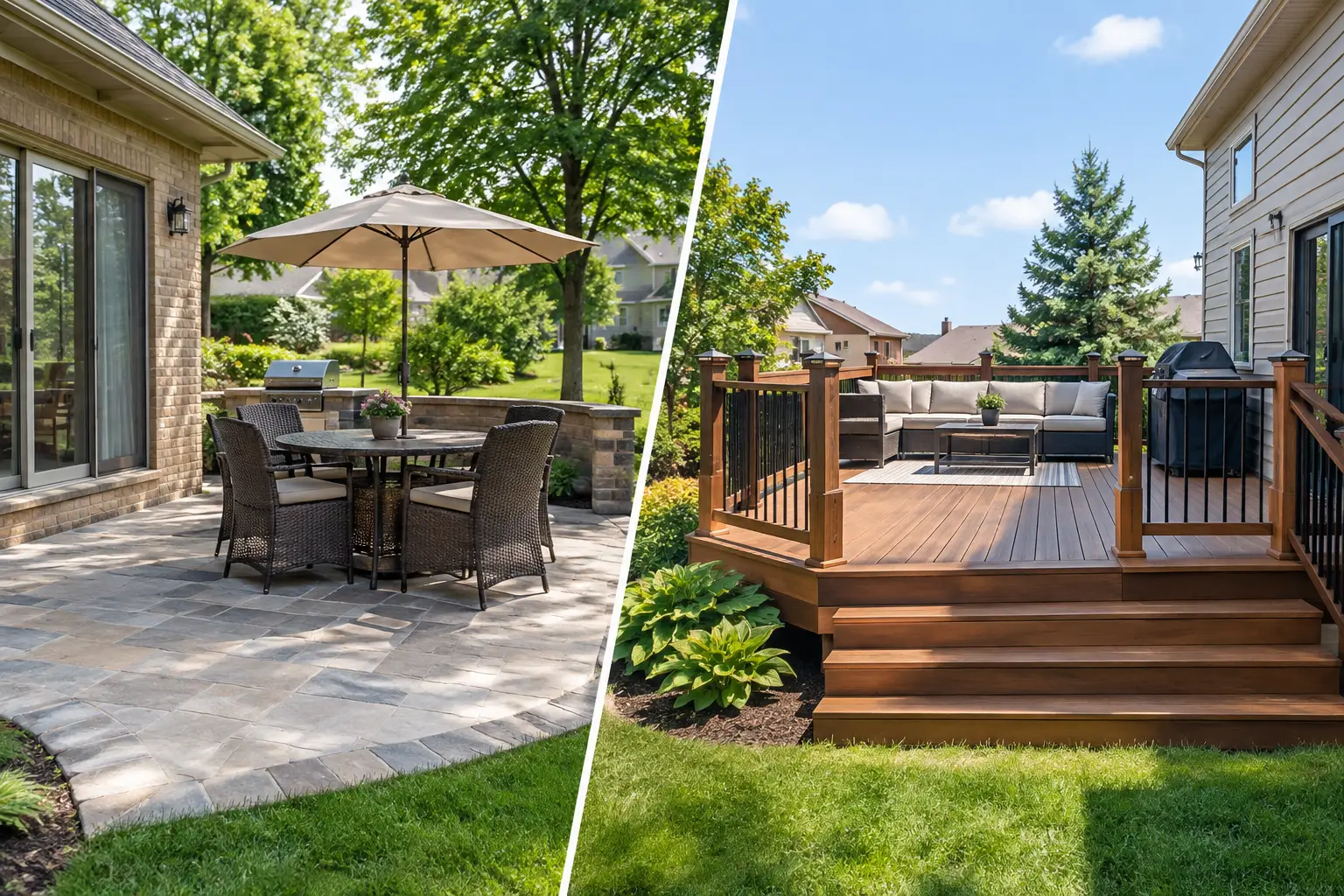
A backyard can look great on a drawing and still feel wrong once it is built. Maybe the door sits high above the yard, the lawn stays soggy after a storm, or the sunny spot you pictured turns into a puddle every spring. That is why the patio versus deck decision is about more than choosing pavers or boards. It is about how your Illinois yard works, how your family uses it, and what will hold up through real Chicagoland weather.
For some homes, a paver patio is the clear winner. For others, a deck makes better use of the space and gives you a much more natural transition from the house to the yard. Here is what to look for before making the call.
Patio Versus Deck: Start With Your Yard
The first question is not, “Which one looks better?” It is, “What is this yard asking for?” A good outdoor space should look nice, but it also needs to work.
A patio is built at or near ground level. It usually uses pavers, natural stone, or concrete set over a carefully prepared base. Patios tend to fit homes where the back door is only a few steps above grade and there is enough reasonably level space to create a solid surface.
A deck is raised above the ground on a structural frame. It is often the better fit when the back door is several feet above the yard, when a home has a walkout basement, or when a sloped lot would make a ground-level patio feel disconnected from the house. Instead of building up the yard with a large retaining wall and fill, a deck can meet the door height and step down toward the lawn.
This is where many homeowners run into trouble: they choose the material first, then try to force it into a yard that has drainage or grade issues. In the Chicago suburbs, that can create expensive problems later. Water needs a clear path away from the home, not a place to collect under a deck or alongside a patio.
When a Patio Makes the Most Sense
A patio gives a yard a grounded, finished feel. It can connect naturally with paver walkways, landscape beds, fire features, pergolas, and outdoor lighting. For Naperville-area homes with a mostly level rear yard, a patio often creates an easy outdoor room that feels like part of the landscape rather than an add-on.
Pavers are especially popular because they offer a clean look and can be arranged in many colors and patterns. If a section ever needs adjustment because of settling or access to an underground utility, individual pavers can often be lifted and reset. That is a real advantage over a large poured concrete slab.
Patios are also a good choice for homeowners who want a broad, open entertaining area at ground level. Moving from the patio to the lawn is easy for kids, pets, and guests. There are no stairs or railings breaking up the space.
The patio trade-off: base work and drainage matter
A patio is only as good as what is underneath it. Illinois freeze-thaw cycles are hard on poorly built hardscapes. If the base is not excavated correctly, compacted in layers, and graded properly, pavers can shift, edges can move, and low spots can develop.
Drainage needs extra attention when the patio sits near the home. The finished surface should guide water away from the foundation. Depending on the yard, that may mean adjusting the grade, adding a drainage system, or tying the design into downspout drainage. You do not want water sitting near your foundation just because a patio was installed without a full plan.
A patio can also feel very warm on a sunny July afternoon. Shade from a pergola, a mature tree, or a well-planned structure can make a major difference. Lighting is worth considering early, too. The right path lights and low-voltage lighting can make the space safer and far more useful after sunset.
When a Deck Is the Better Choice
A deck is often the most practical answer for homes with a raised back door. Rather than walking down a tall set of stairs to a patio below, you can step right outside onto a usable platform. That makes everyday life easier, whether you are carrying dinner outside, watching children in the yard, or taking the dog out in the morning.
Decks can also work well on uneven ground. On a sloped western suburbs property, posts and framing can support a level outdoor area without regrading a large section of the yard. The space underneath may be left open, screened with landscaping, or designed as a dry storage area if the structure and drainage plan allow for it.
For homeowners who enjoy a view of their backyard, a deck has another benefit: elevation. Sitting a few feet higher can make a smaller yard feel more open and can put you closer to the tree canopy rather than down at lawn level.
The deck trade-off: maintenance and structure
Wood decks have a classic look, but they need regular attention. In Illinois, snow, rain, sun, and temperature swings can wear on wood. Depending on the material and finish, cleaning, staining, and board repairs may be part of long-term ownership.
Composite decking reduces much of that ongoing work and resists rot and splintering better than traditional wood. It still needs periodic cleaning, and it generally has a higher upfront material cost. It can also get hot in direct summer sun, especially in darker colors.
Decks have safety items that patios do not. Railings, stair layout, footing depth, framing, and connections to the house all matter. Local building requirements can vary by community, so a professional should account for permits and code requirements before construction begins. Those details are not exciting, but they are what make a deck feel solid and safe for years.
Compare Long-Term Upkeep, Not Just the First Build
It is tempting to compare only the initial estimate. A better way to think about patio versus deck is to consider the next 10 years of use.
A well-installed paver patio may need occasional cleaning, joint sand maintenance, and possibly minor resetting over time. Its biggest long-term risk is usually poor preparation or poor drainage from the start. Concrete can be a simpler surface, but cracks can be harder to disguise or repair cleanly after Illinois winters.
A wood deck usually requires more regular care, while composite decking shifts more of the investment to the beginning and less to routine refinishing. Hardware, railings, stairs, and structural components should still be inspected over time.
Neither option is maintenance-free. The right choice depends on what kind of upkeep you are comfortable with and how you plan to use the space. A family that grills outside several nights a week may value direct access from the kitchen. A homeowner focused on a low, open gathering area may prefer pavers and a fire pit.
Think About Water Before You Pick a Surface
Drainage is one of the biggest factors in outdoor projects across Chicagoland, especially on properties with heavy clay soil or yards that hold snowmelt. A patio can direct water beautifully when it is graded correctly. It can also send water toward the house if it is not.
A deck lets rain pass through the boards, but that does not mean the area below can be ignored. Water may hit the ground, wash mulch away, create mud, or collect near the foundation. The ground below and around the deck still needs a clear drainage plan.
Before building either one, look at where downspouts discharge, where water stands after a hard rain, and how the yard slopes from the house. If your lawn is already muddy or your basement has had moisture concerns, solve those issues as part of the project rather than covering them up. A beautiful outdoor space should protect the property, not add another headache.
A Few Questions That Make the Choice Clearer
Picture a normal Saturday at home. Are you stepping outside from a high kitchen door? Do you want one level surface that flows into a lawn? Is your yard flat, sloped, wet, shaded, or exposed to afternoon sun? Will the space be mostly for grilling, larger gatherings, quiet coffee, or kids playing nearby?
Also think about the details around the main surface. A patio may pair naturally with a paver walkway, seating wall, landscape beds, and a pergola. A deck may benefit from lighting on stairs, privacy screening, and landscaping below to soften the structure. These pieces should be planned together so the finished yard feels intentional.
For Downers Grove homeowners and others throughout the Chicago suburbs, the best answer is often based on elevation and drainage first, then appearance and maintenance preferences. There is no prize for picking the trendiest option if it does not fit the property.
If you are standing in your backyard trying to picture the right setup, start with the door height, the slope, and where water goes after a storm. From there, a thoughtful plan can turn an underused yard into a space that is comfortable, safe, and easy to enjoy. Revive Your Lawn can help homeowners look at the full picture before the first paver is set or the first board is installed.


