We don't guess, we diagnose and fix the root problem.
Figure Out the Cause (In 60 Seconds)
Match your symptom to the likely cause, then let us confirm it on-site for free.
Water Near Foundation
Likely caused by downspouts dumping too close, poor grading, or hydrostatic pressure. Left unchecked, this risks basement seepage and structural damage.
Low Spots Puddling
Your yard has grading dips that collect water. A catch basin and underground pipe to a discharge point will fix this permanently.
Whole Yard Stays Soggy
Clay-heavy soil and high water table trap moisture. A French drain or subsurface drainage system collects and moves groundwater away.
Water Rushing from Neighbors / Driveway
Surface runoff from adjacent properties or hard surfaces overwhelms your yard. Swales, regrading, or collection systems redirect the flow.
No two yards drain the same, your solution shouldn't either.
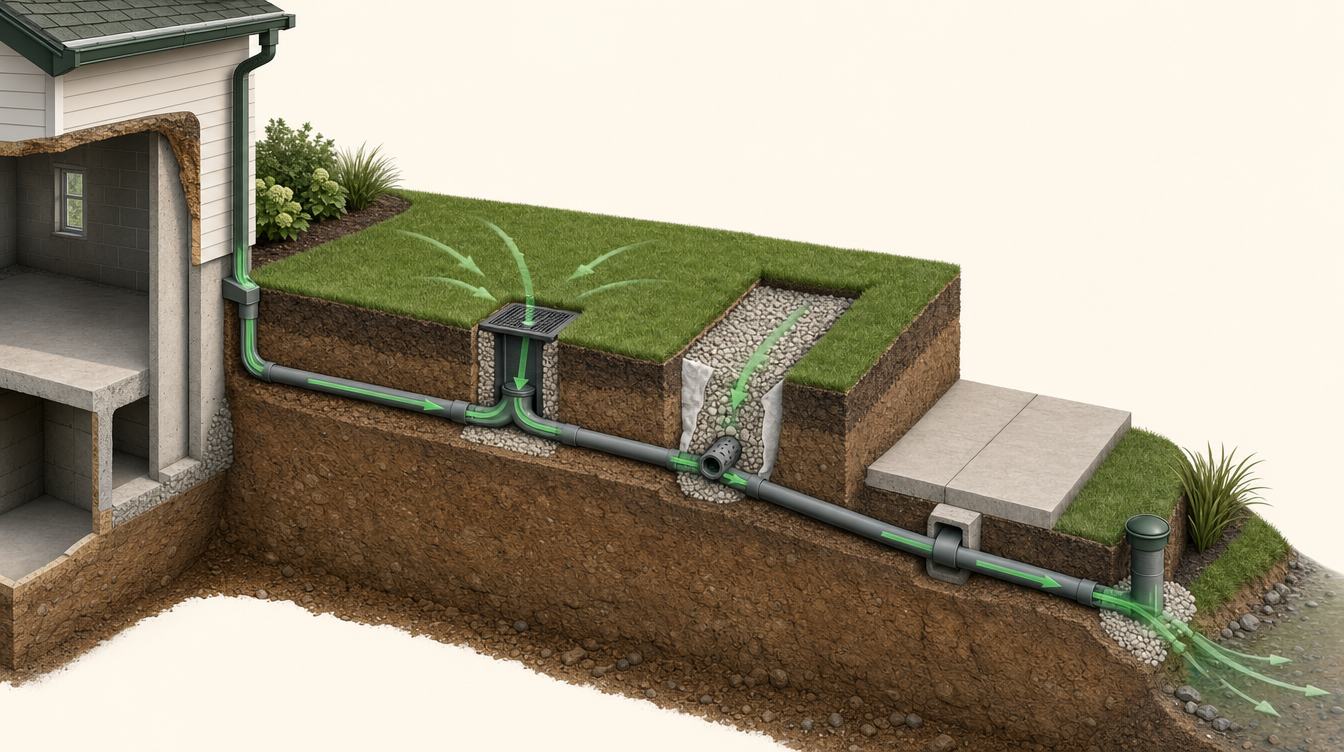
How the pieces work together: roof runoff, surface water, and subsurface water all routed to safe discharge points.
French Drains
Best for: Groundwater / yard saturation
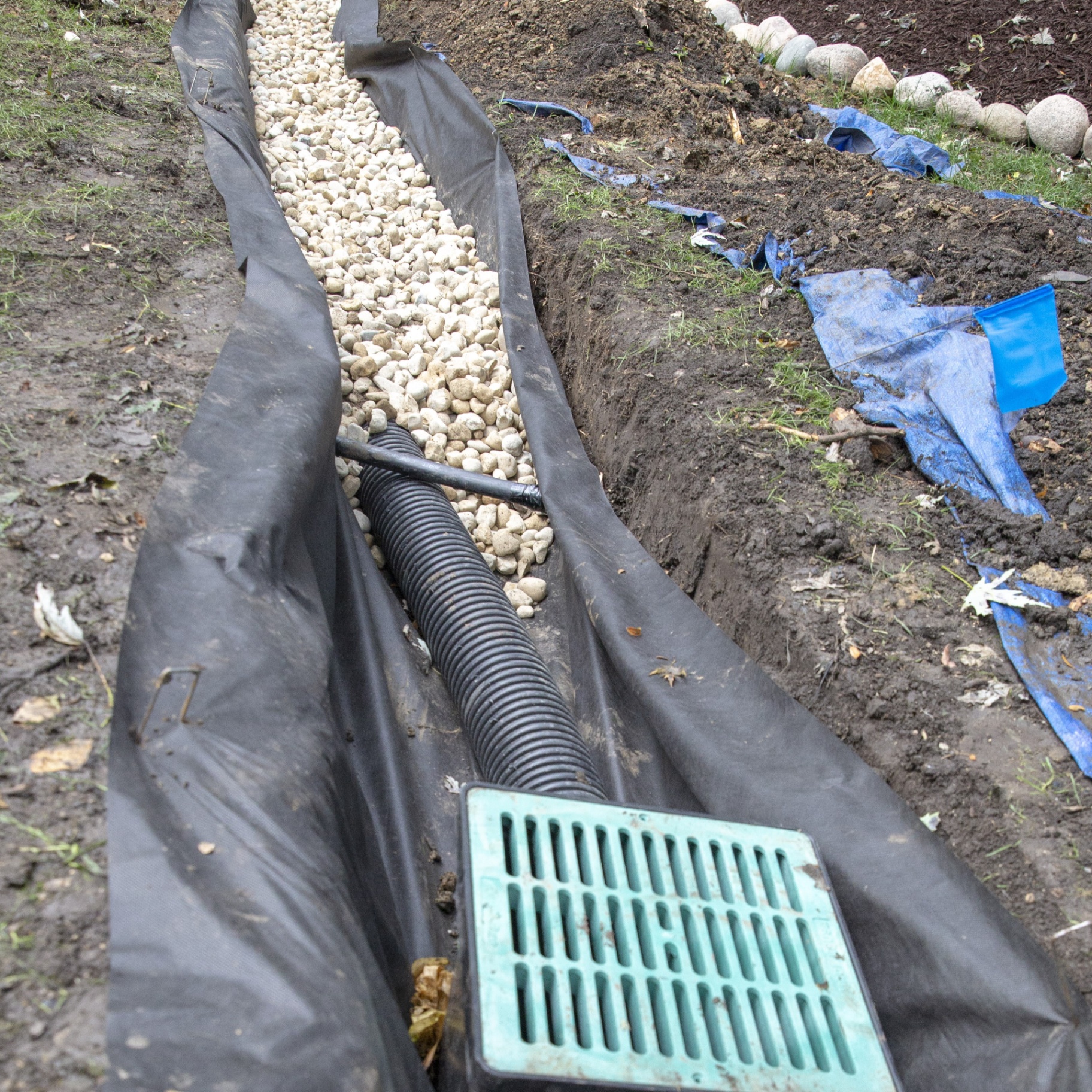
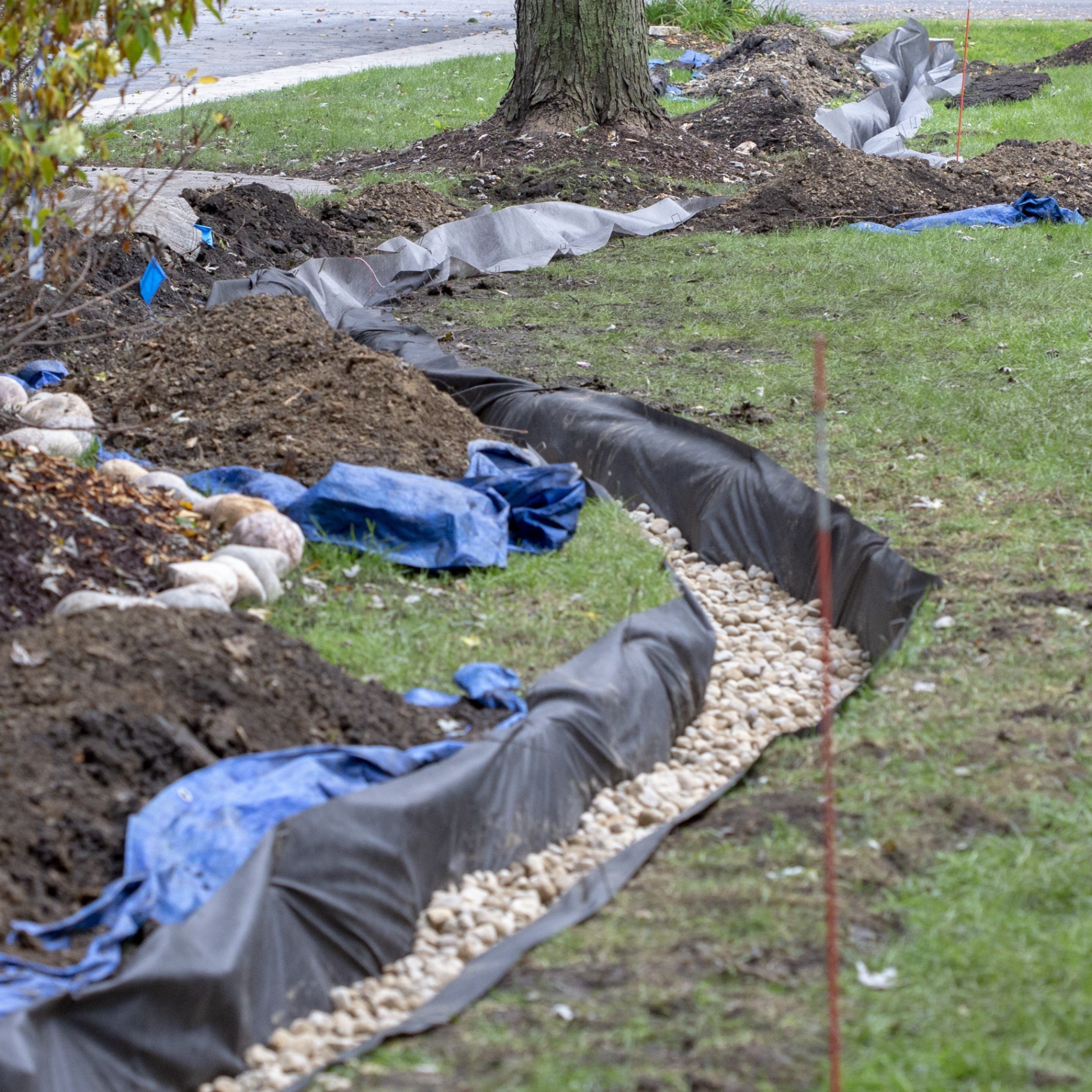
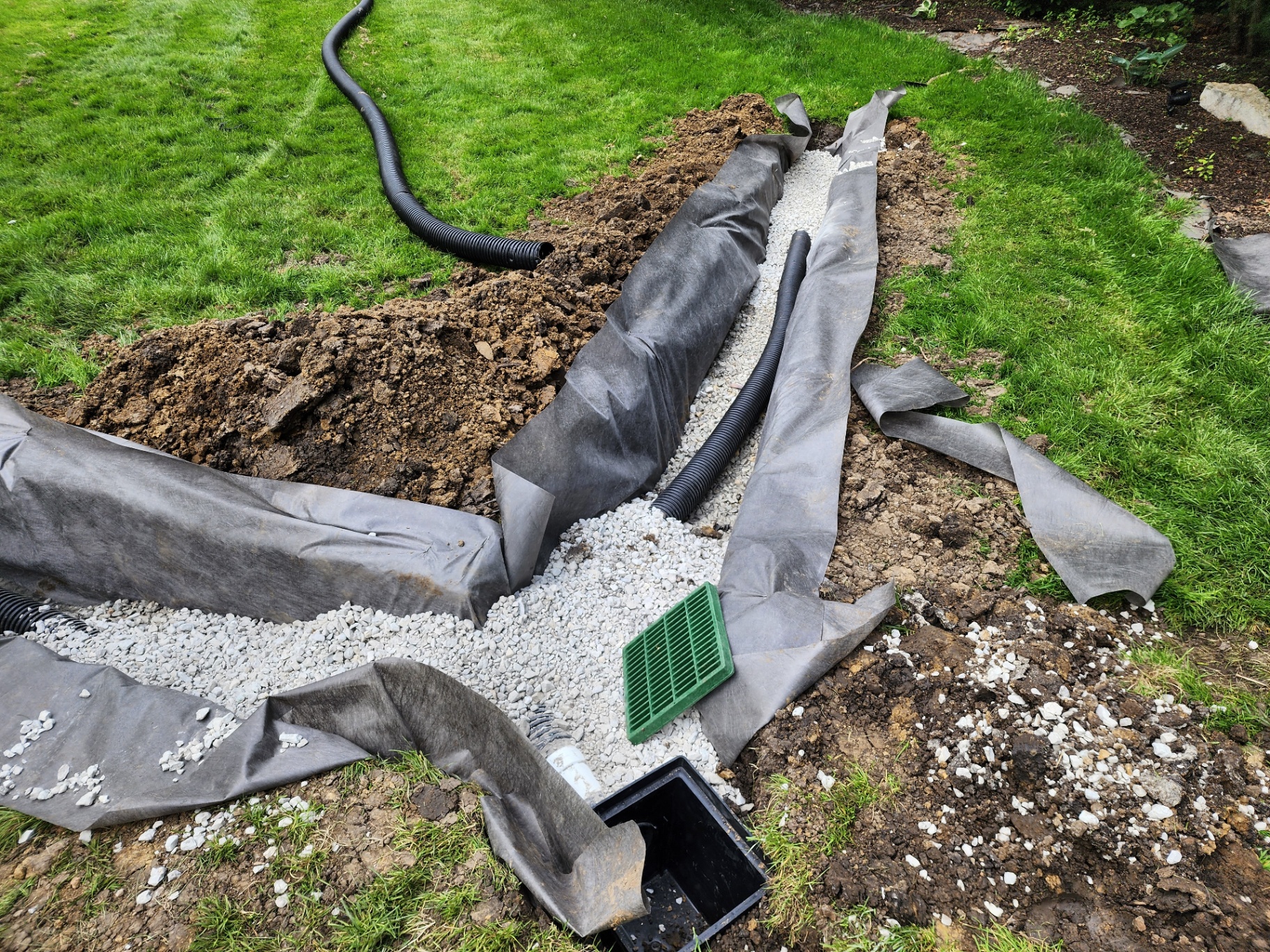
Collects subsurface water via perforated pipe in a gravel-filled trench and redirects it to a safe discharge point.
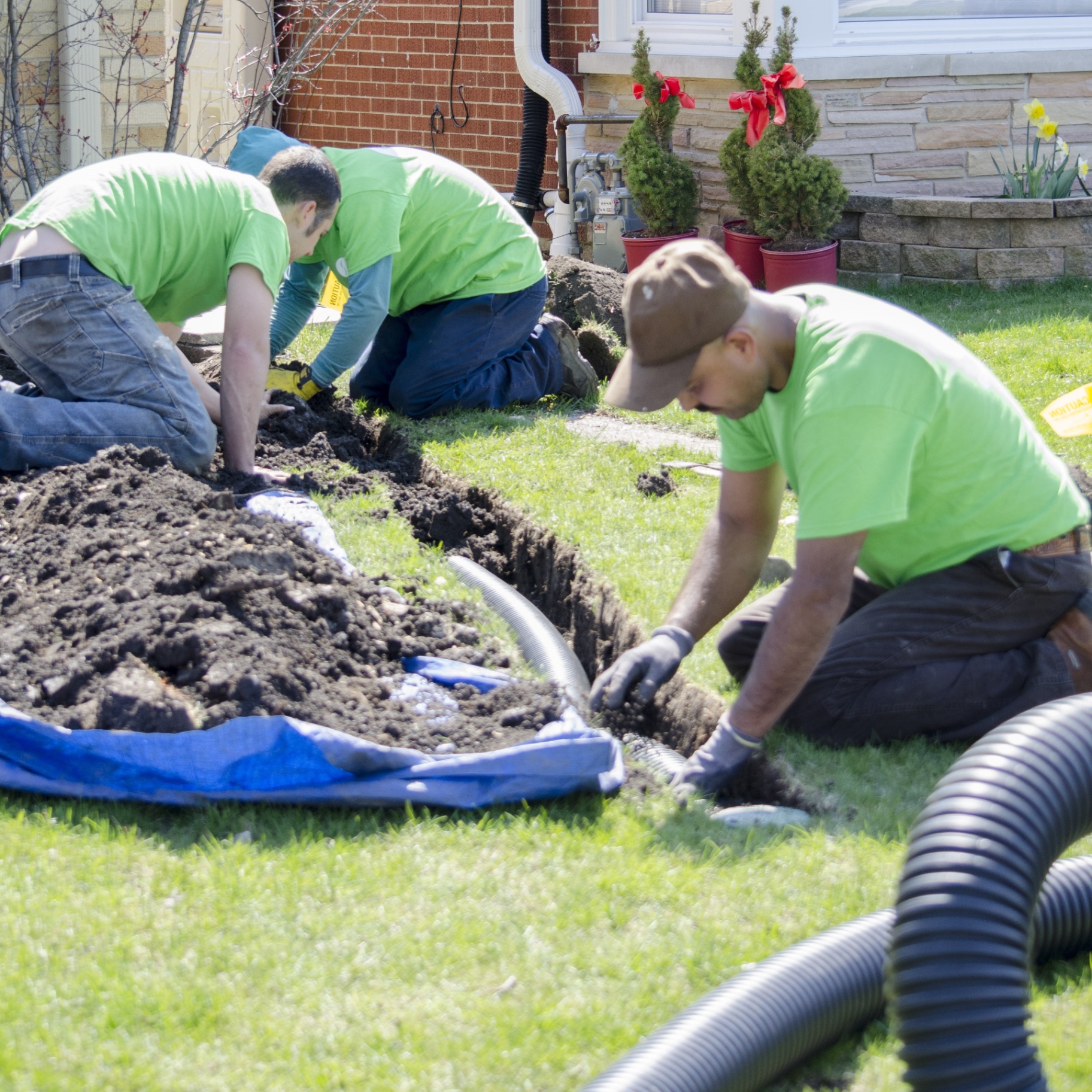
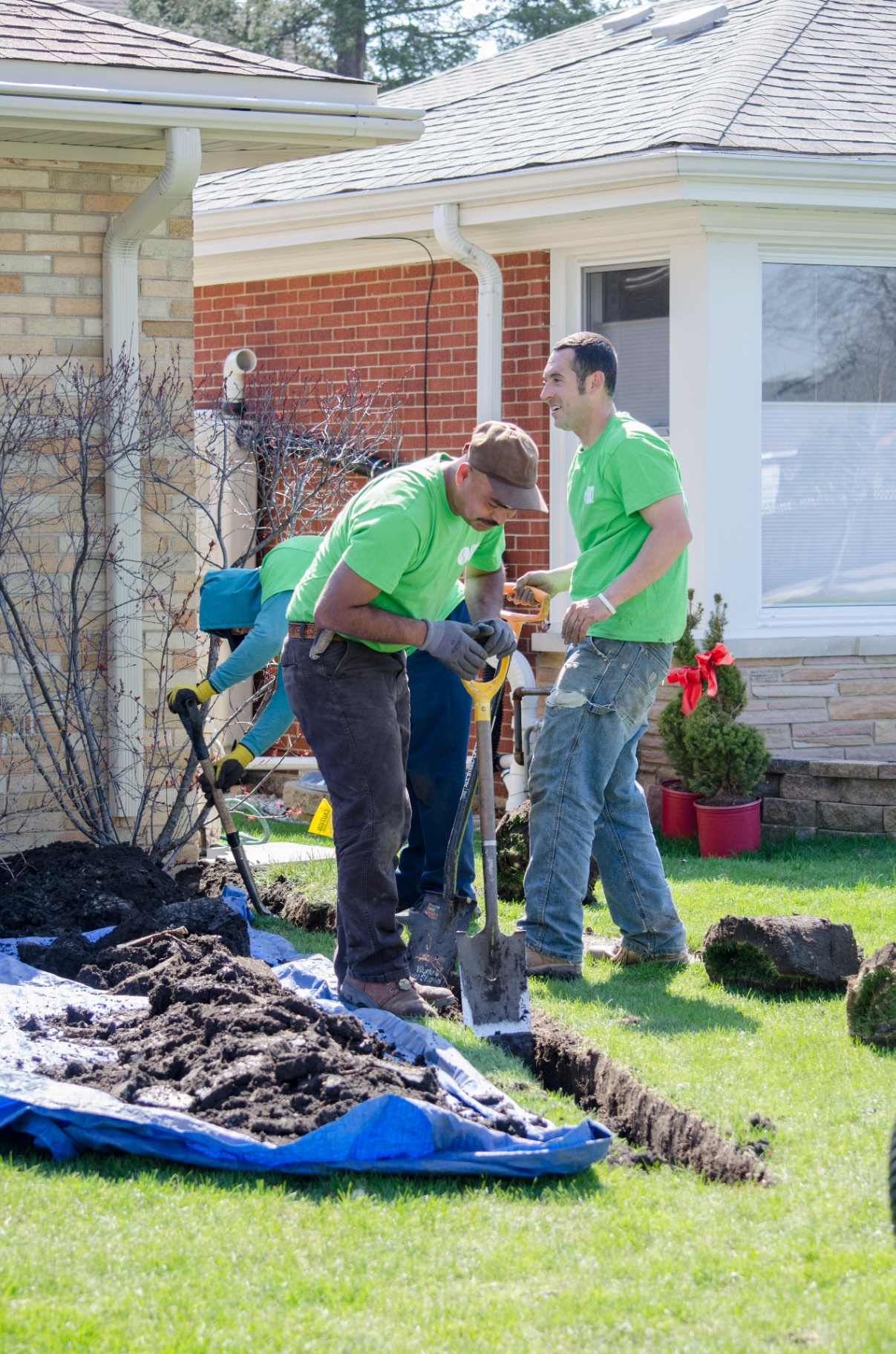
What to expect: Trenching, gravel bed, perforated pipe, fabric, backfill, and lawn restoration.
Catch Basins
Best for: Surface pooling in low spots
Captures standing surface water through a grate and routes it underground to a discharge location.
What to expect: Basin installation at grade, underground pipe run, and a discharge point (pop-up emitter or dry well).
Underground Downspout Extensions
Best for: Roof runoff near foundation
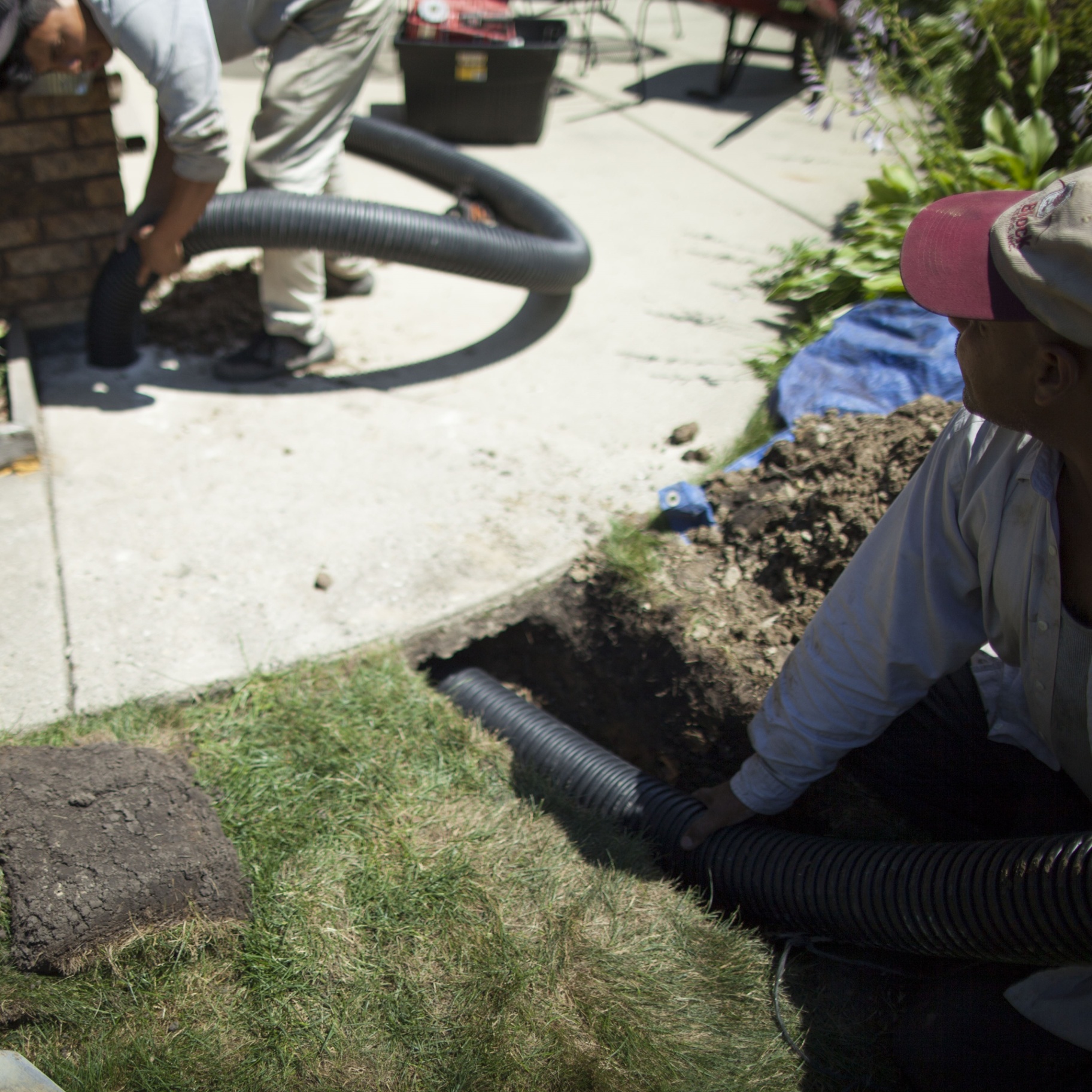
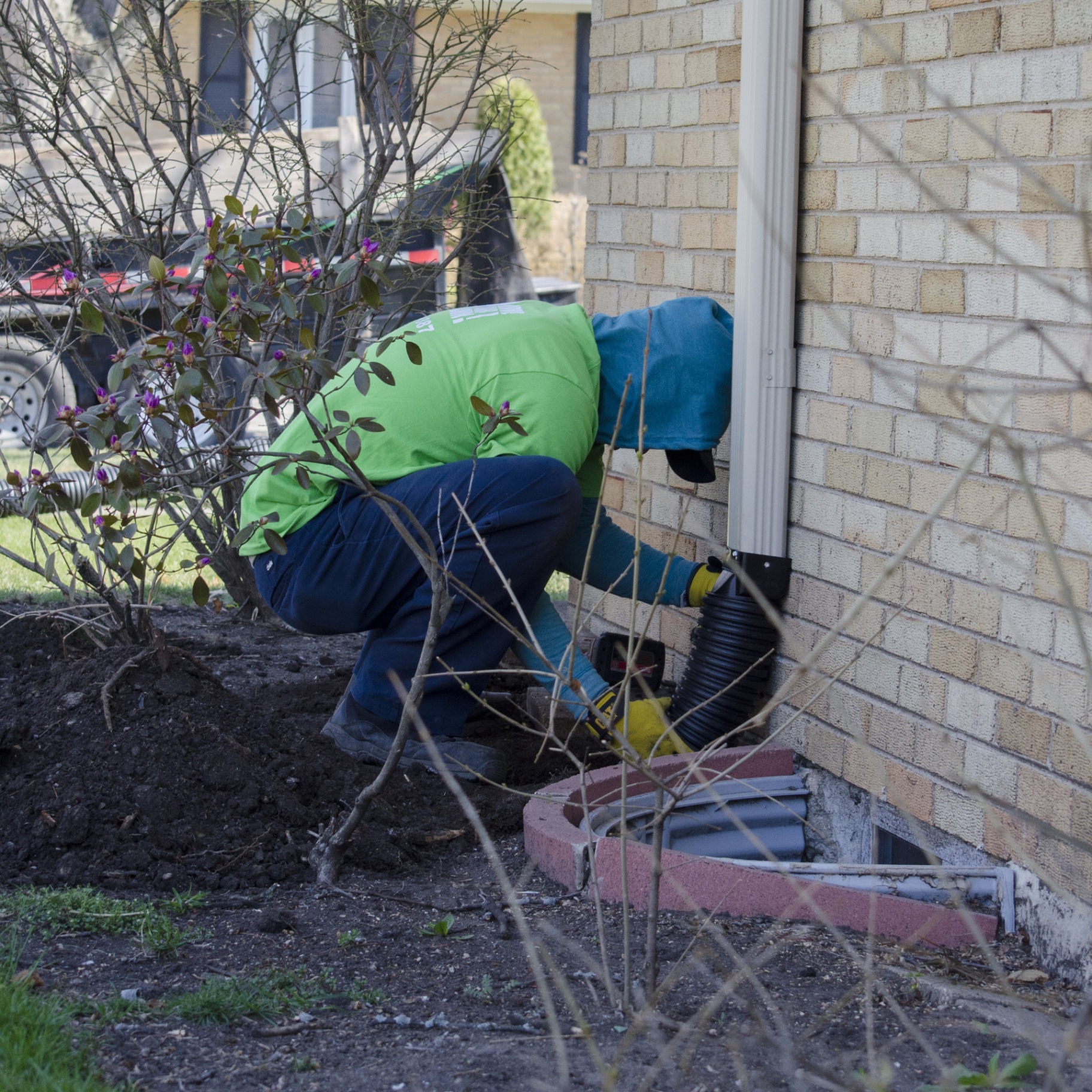
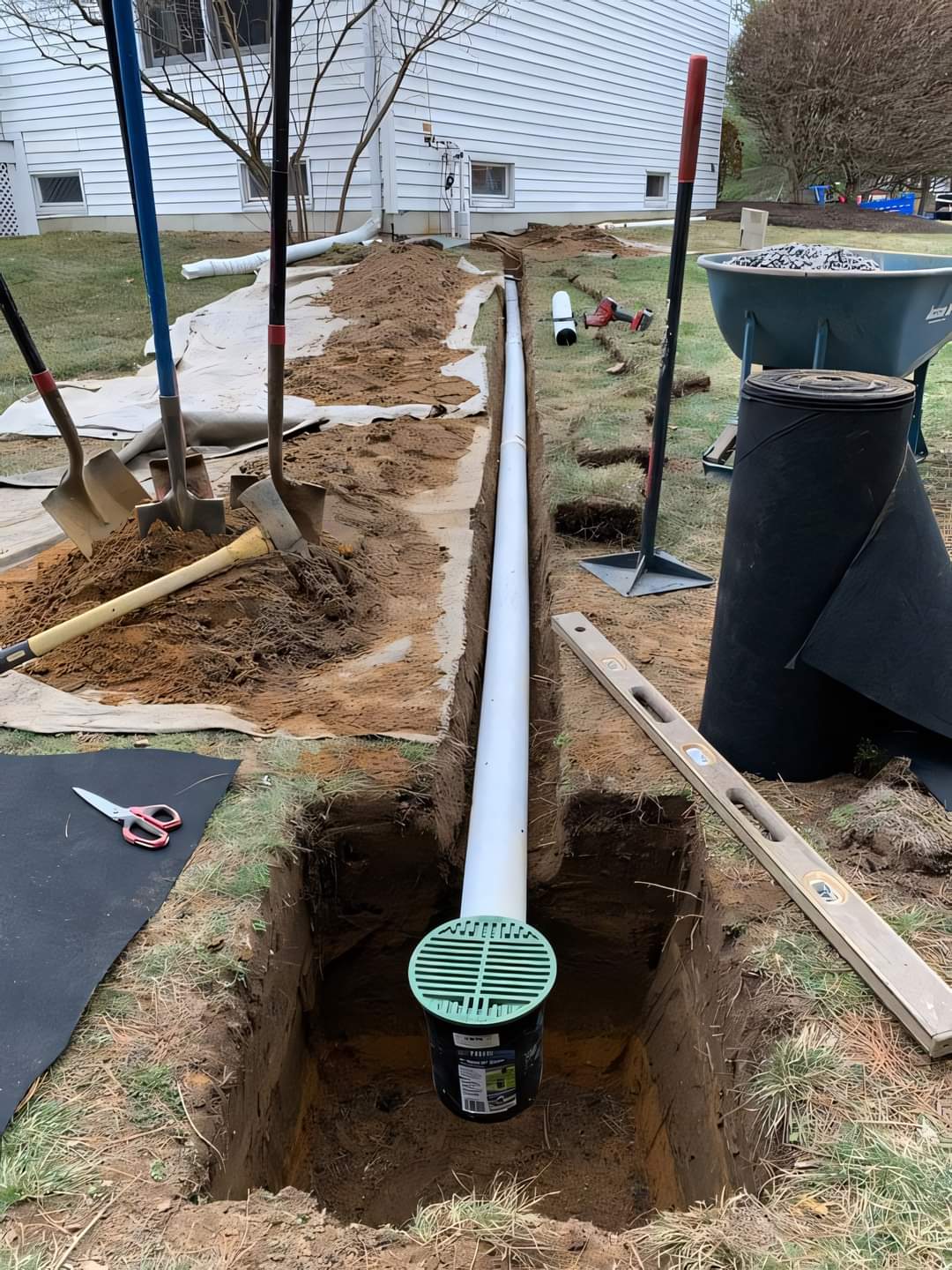
Moves gutter discharge far from the house to prevent foundation saturation and basement seepage.
What to expect: Buried solid pipe from each downspout to a pop-up emitter or discharge point 10-20+ ft away.
Sump Pump Discharge Lines
Best for: Redirecting sump pump output
Routes sump pump water away from the foundation instead of dumping it near the house.
What to expect: Buried discharge pipe to a safe exit point, often combined with a pop-up emitter.
Yard Regrading & Swales
Best for: Poor grading / natural water flow
Reshapes the yard to create positive drainage slope, directing water away from structures.
What to expect: Soil removal/addition, shaping swales, compaction, and seeding or sodding.
Dry Wells
Best for: Dispersing excess water underground
Collects water and slowly releases it into the surrounding soil, ideal where there's no storm sewer access.
What to expect: Excavation, aggregate-filled chamber or prefab dry well, and pipe connections.
Drain Tile / Subsurface Systems
Best for: Widespread yard saturation
Network of underground pipes that systematically collects and moves water across large areas.
What to expect: Multiple trench runs, pipe layout, gravel, fabric, and full lawn restoration.
Erosion Control / Runoff Management
Best for: Slope erosion and unmanaged runoff
Stabilizes slopes and redirects surface water to prevent soil loss and property damage.
What to expect: Rip-rap, retaining solutions, swales, plantings, and drainage integration.
Best Fixes for Common Drainage Problems
A catch basin collects surface water through a grate, then an underground pipe carries it to a discharge point, either a pop-up emitter at the yard's edge or a dry well. For larger low areas, we may combine a catch basin with regrading to ensure water flows toward the basin reliably.
This usually means clay soil is trapping water or a high water table is pushing moisture up. A French drain, a perforated pipe in a gravel-filled trench, collects groundwater and redirects it. For widespread saturation, we install subsurface drain tile systems spanning the affected area.
The most common culprit is downspouts dumping too close to the house. We bury downspout extensions 10-20+ feet from the foundation with pop-up emitters. If grading is the issue, we regrade the soil to slope away from the house (minimum 1 inch per foot for the first 6 feet).
While interior waterproofing is a specialty trade, many basement moisture problems originate outside, from surface water saturating the soil against the foundation. We redirect surface water via downspout burial, regrading, and French drains to relieve exterior pressure. This often resolves or significantly reduces interior seepage.
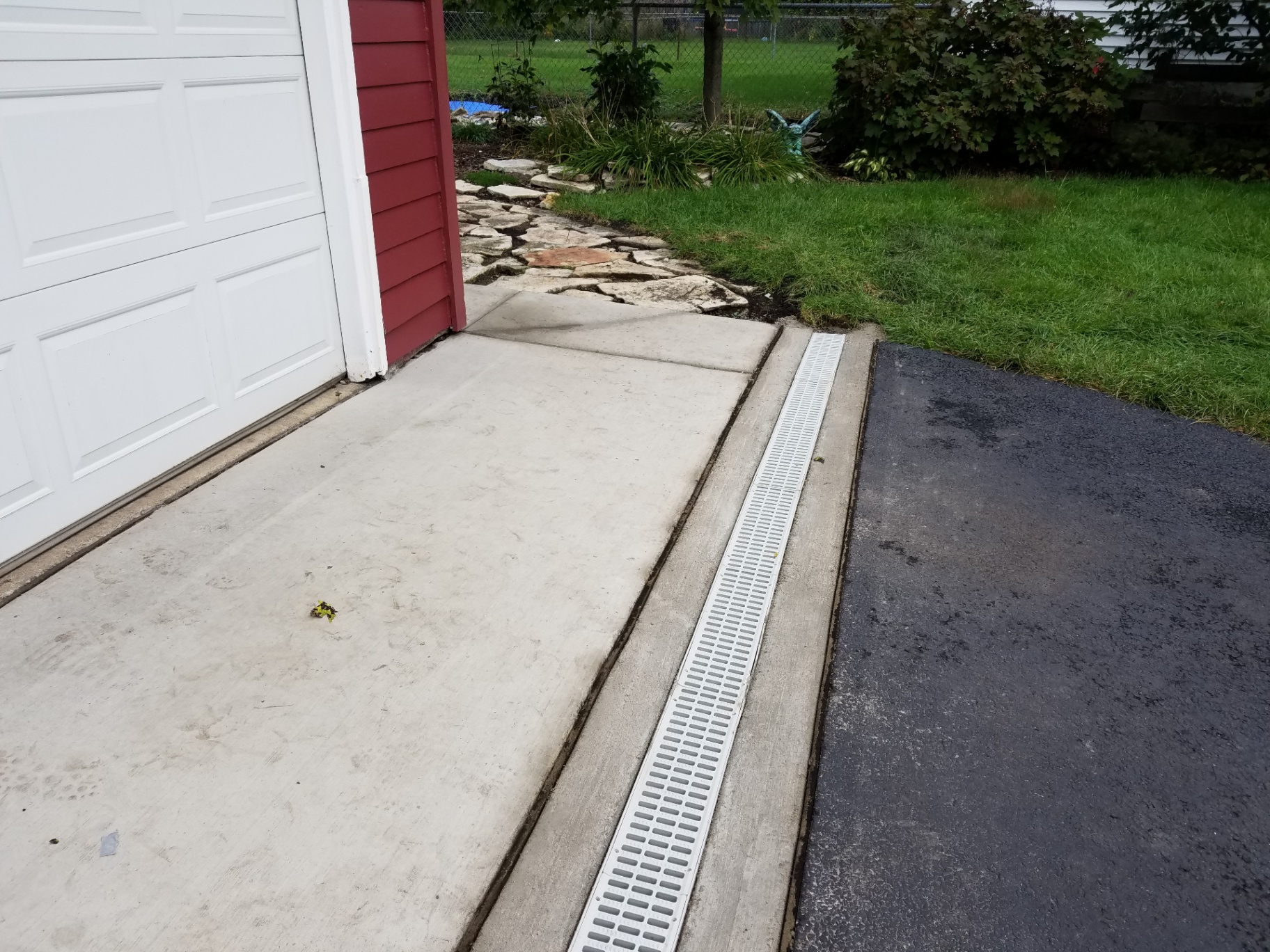
Hard surfaces like driveways and neighboring roofs channel water into your yard fast. We install swales (shallow graded channels), catch basins, or trench drains to intercept and redirect the flow underground to a safe discharge point.
We confirm the real cause during your free on-site drainage review, no guesswork.
How Much Does Yard Drainage Cost in Chicagoland?
Every yard is different. Here's what impacts your price and what you can typically expect.
What Drives the Cost
Property size & accessAmount of trenching requiredNumber of pipe runs & basinsDischarge location & distanceCore drilling under sidewalks/drivewaysLawn restoration (sod, seed, topsoil)
Downspout Burial / Discharge Improvements
$1,500 – $3,500
Per downspout line, typical
Catch Basin + Pipe Run
$2,000 – $5,000
Single basin with discharge, typical
French Drain / Subsurface System
$3,500 – $15,000+
Varies by length and complexity
Regrading / Swales
$2,500 – $8,000
Depends on area size and soil work
Most projects start at $2,500.
These are typical ranges, not binding quotes. Your price depends on your specific site conditions. We provide a clear, written quote after your free on-site review.
Our Drainage Build Standards (So It Works Long-Term)
1
Proper pitch and discharge planning, we map where every drop of water goes before we dig
2
High-quality pipe + fittings, with cleanouts where needed for long-term maintenance access
3
Gravel + fabric where appropriate (French drains) to prevent sediment clogging
4
Catch basins set to correct height and grade so water enters efficiently
5
Pop-up emitters / daylight discharge done cleanly, no eyesores in your yard
6
Core drilling under sidewalks and driveways when needed for a seamless connection
7
Lawn restoration: sod, seed, or topsoil, we leave your yard looking great
8
Complete jobsite cleanup at the end of every workday
Drainage-First Mindset
We'd rather solve a water problem now than patch it later. Every project starts with understanding where water comes from and where it needs to go, then we build the system to match. That's why our installs hold up season after season, even through heavy rain and freeze-thaw.
How Our Drainage Process Works
Step 1
Schedule Your FREE Drainage Review
Book online or call. We'll set up a time that works for you.
Step 2
On-Site Evaluation
We assess water flow, grading, downspouts, soil absorption, and problem areas, then diagnose the root cause.
Step 3
Clear Plan + Options + Quote
You get a written scope, prioritized options, and transparent pricing. No surprises.
Step 4
Installation Day(s) + Communication
Our crew installs your system cleanly and keeps you updated throughout the process.
Step 5
Final Walkthrough + Lawn Restoration
We walk you through the completed work, restore disturbed lawn areas, and leave your property clean.
Proudly Serving All Areas in the Following Illinois Counties
Cook County
DuPage County
Grundy County
Kane County
Kendall County
Lake County
McHenry County
Porter County
Will County
We Produce Stunning Landscaping Results in the Chicagoland and Chicago Suburbs Area.
From quick refreshes to full outdoor transformations, our team serves homeowners throughout Chicagoland with professional crews, clear timelines, and results you'll be proud of.
Arlington Heights, ILBolingbrook, ILBurr Ridge, ILChicago, ILCrystal Lake, ILDowners Grove, ILElmhurst, ILFrankfort, ILGlenview, ILHawthorne Woods, ILHinsdale, ILLemont, ILNaperville, ILNew Lenox, ILOrland Park, ILPlainfield, ILSt. Charles, ILWestern Springs, ILWestchester, ILWheaton, IL...and more!
If your yard stays soggy long after rain stops, or water seems to seep up from below rather than pool on the surface, you likely have a groundwater or clay-soil saturation issue. A French drain collects subsurface water through a perforated pipe in a gravel trench and redirects it. We confirm the diagnosis during your free on-site review.
A French drain collects groundwater (subsurface water) through a perforated pipe buried in gravel. A catch basin collects surface water through a visible grate. French drains handle saturation; catch basins handle puddles in low spots. Many projects use both together.
Water is routed through underground pipes to a safe discharge point, typically a pop-up emitter at the yard's edge, a dry well, daylight discharge at a slope, or (where code allows) a storm sewer connection. We plan the discharge location before we dig.
Many basement moisture issues originate from exterior water saturating the soil against the foundation. By burying downspouts, regrading, and installing French drains to redirect surface and subsurface water away from the house, we can often significantly reduce or eliminate exterior-caused seepage. Interior waterproofing is a separate specialty.
Most drainage projects take 1-3 days depending on the scope, a simple downspout burial may take a day, while a full French drain system with multiple catch basins could take 2-3 days. We provide a clear timeline in your proposal.
Absolutely. Lawn restoration is built into every project. We backfill trenches properly, add topsoil, and finish with sod or seed depending on the situation. Our goal is for you to barely notice we were there within a few weeks.
Yes, and clay soil is one of the main reasons drainage systems are needed in Chicagoland. Clay doesn't absorb water well, so it pools and saturates. French drains, catch basins, and proper grading are specifically designed to solve clay-soil drainage problems.
Our systems are installed below the frost line where possible and use materials rated for freeze-thaw cycles. Pop-up emitters are designed to handle seasonal ground movement. Spring melt is actually when these systems prove their value most, redirecting snowmelt before it floods low spots.
In most Chicagoland municipalities, standard residential drainage work does not require a permit. If your project involves connecting to a municipal storm sewer or significant grading changes, permits may be needed. We handle permit research for your specific location.
Yes. Underground downspout extensions and sump pump discharge lines are among our most common installations. We connect directly to your existing downspouts and sump pump outlets and route the water safely away from your foundation.
Very little. Keep catch basin grates clear of leaves and debris. French drains with proper fabric and gravel need minimal attention. We install cleanouts where appropriate so the system can be flushed if ever needed. An annual visual check after heavy rain is a good habit.
Yes. We offer flexible financing options through our lending partners to help make drainage projects affordable. Ask about payment plans during your free consultation.
Stop Water Problems Before the Next Storm
Don't wait for the next heavy rain to remind you. Schedule a free drainage review and get a clear plan to fix your yard, for good.
We’ve helped hundreds of Chicagoland families eliminate standing water, protect their homes, and restore their lawns with custom drainage solutions.
Call us at (630) 523-8700 or Contact Us Here to book your no-pressure, no-obligation consultation.
Whether you’re dealing with a soggy yard or want to prevent costly damage before it starts, we’re here to help.
Our solutions combine modern materials, proven methods, and local expertise to handle Chicagoland’s heavy rains and clay-heavy soil.