If you are tired of dragging out ladders every November, a permanent exterior lights review is worth your time. For a lot of Chicagoland homeowners, the big question is not whether these systems look good. It is whether they hold up through Illinois winters, stay subtle the rest of the year, and actually make life easier instead of adding one more thing to manage.
That is the real test.
Permanent exterior lighting has gotten a lot better over the last several years. Early versions sometimes looked bulky, too bright, or too obvious during the daytime. Newer systems are cleaner, smarter, and built to blend into the roofline much better. But they are still not all the same, and this is where many homeowners run into trouble. A nice demo photo is one thing. Living with the system on your actual house through snow, rain, heat, and wind is something else.
Permanent exterior lights review – what matters most
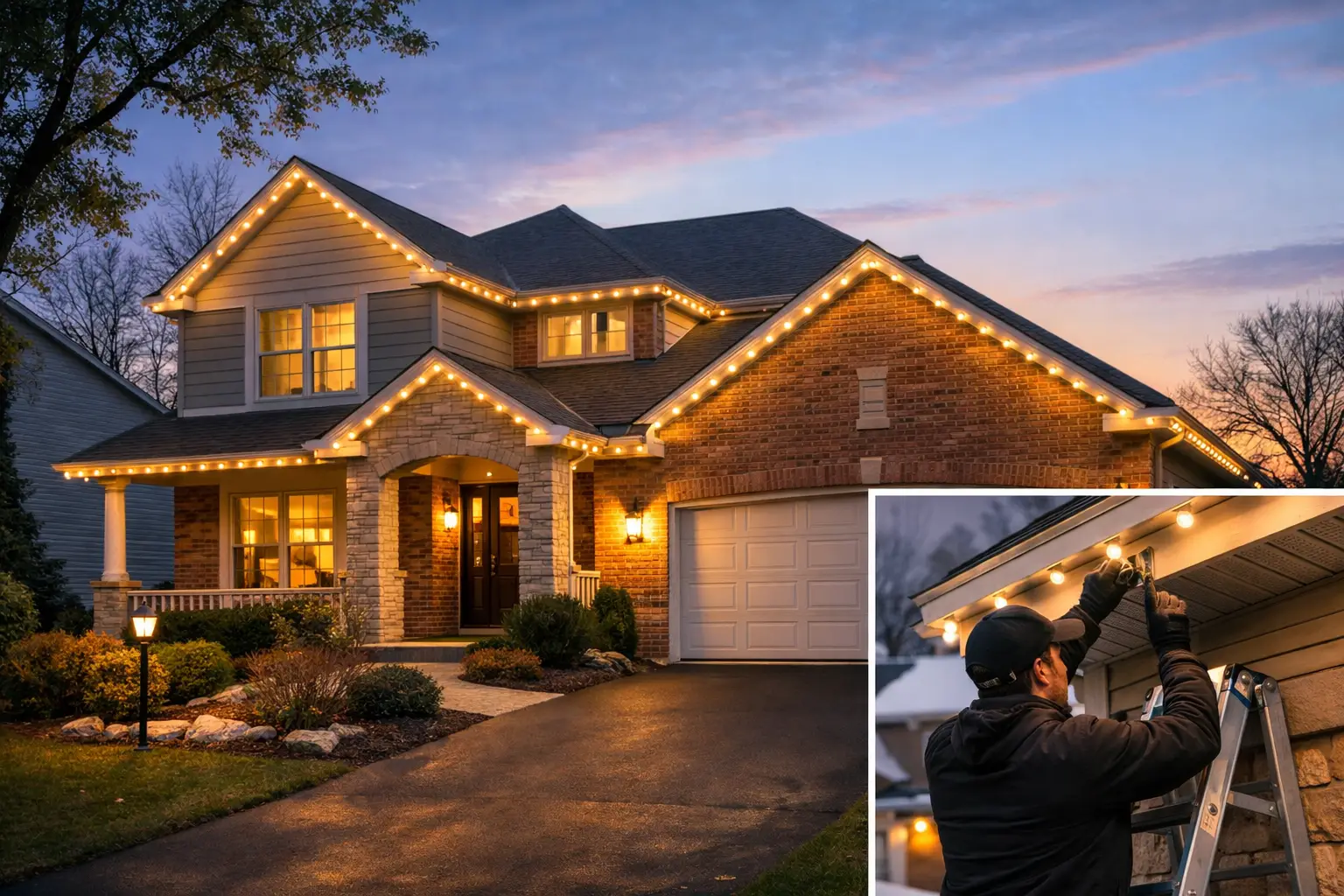
The first thing most homeowners care about is appearance. That makes sense. If you are putting lighting on your home year-round, you do not want it to look like holiday decorations got left up by accident. A good permanent lighting system should sit neatly under the soffit or along the roofline and stay fairly hidden during the day. At night, it should give you clean, even lines of light instead of a spotted or uneven look.
Color quality matters too. Good systems give you warm, soft lighting when you want a simple accent look and bright color options when it is time for holidays, game days, birthdays, or special events. Cheap-looking color can make even a nice home look off. The better systems have richer tones and smoother transitions.
Then there is control. Most permanent exterior lights now use an app, which is convenient, but not every app is easy to use. Homeowners usually want something simple. Set a schedule, pick colors, save favorite patterns, and be done with it. If the app feels clunky or confusing, people stop using the features they paid for.
Durability is a big one in Illinois. In places like Naperville, Downers Grove, and the western suburbs, lighting systems have to deal with freeze-thaw cycles, heavy rain, summer heat, snow buildup, and windy weather. That means the housing, wiring, clips, and installation method all matter just as much as the lights themselves. A system can look great on day one and still be a headache later if the install was rushed or the materials were not meant for Midwest weather.
How permanent lights perform in real life
Here is the honest version. When a quality system is installed correctly, permanent exterior lighting is a strong upgrade for convenience and curb appeal. Most homeowners love not climbing ladders, storing bins of lights, or dealing with half a strand going out in December.
The flexibility is a bigger benefit than many people expect. Yes, people think about Christmas first. But these systems can also be used for Halloween, Fourth of July, graduation parties, backyard gatherings, and simple everyday accent lighting. Some homeowners in the Chicago suburbs keep a clean warm-white setting on certain evenings just to make the home feel finished and welcoming.
That said, it depends on the house and the homeowner. If you want dramatic lighting on every roof edge, dormer, and peak, the system design has to be planned carefully so it enhances the home instead of overpowering it. Bigger is not always better. A balanced design usually looks cleaner and more high-end.
There is also a difference between wanting holiday color and wanting architectural lighting. Some homeowners want both, and that is where permanent systems shine. But if you only want lights for two weeks in December, a full permanent setup may be more than you need. It really comes down to how often you will use it and how much value you place on convenience.
The trade-offs homeowners should know
A fair permanent exterior lights review should talk about trade-offs, not just the upside.
One trade-off is cost. Permanent lighting is an investment, and it is more involved than hanging temporary strands from a big-box store. You are paying for a permanent system, a clean install, controls, planning, and long-term appearance. For busy homeowners, that trade-off often makes sense because it saves time every year and avoids the usual hassle. Still, it is not the right fit for every budget.
Another trade-off is visibility during the day. Even the best systems are not completely invisible. They are designed to be discreet, not magic. On most homes, especially with a color-matched track and thoughtful placement, they blend in well. But if someone tells you that you will never notice them at all, that is probably overstating it.
Maintenance is another area where expectations should stay realistic. Permanent lights are low-maintenance compared with seasonal lights, but that does not mean zero maintenance forever. Outdoor systems can still need occasional service, software updates, or inspection after major weather events. In Illinois, this matters because ice, snow, and seasonal expansion and contraction can test any exterior product over time.
What to look for before you install
The best permanent exterior lights review is the one that helps you ask better questions before the project starts. Start with the product itself, but do not stop there. Installation quality is just as important.
Ask how the system is mounted and how visible it will be from the street. Ask whether the track or housing is color-matched to your home. Ask how the wiring is protected and how the layout is planned around peaks, garage lines, and entry areas. A clean install should feel intentional, not pieced together.
You also want to know how the controls work. Can you create simple schedules? Can you save presets for holidays or events? Is the app easy enough that everyone in the house can use it? Fancy features sound nice, but easy everyday use is what really matters.
Warranty and service support matter too. A lighting system is only as dependable as the company standing behind it. If something needs adjustment, you want a local team that answers the phone, communicates clearly, and knows the product. That matters a lot more than a sales pitch.
Why Illinois homes need a practical approach
In Illinois, exterior improvements have to do more than look nice. They have to work. Just like drainage, gutter protection, or landscape lighting, permanent lights need to be planned for the actual conditions around the home.
Snow loads, icy eaves, and temperature swings can expose weak installation fast. So can older fascia, roofline details, or previous repairs that were never done quite right. That does not mean permanent lights are a problem for Illinois homes. It just means the installer should pay attention to the home itself, not treat every property the same.
This is especially true on older homes in established suburbs where trim details, rooflines, and access can vary a lot. A cookie-cutter installation can leave you with uneven spacing or a result that feels out of place. A good installer looks at the house as a whole and plans around it.
Is it worth it?
For many homeowners, yes. If you want a cleaner look, less seasonal hassle, and lighting you can use beyond the holidays, permanent exterior lights are a smart upgrade. They can make a home feel more finished, improve evening curb appeal, and take a yearly chore off your plate.
But worth it does not just mean buying the product. It means choosing a system that fits your goals and having it installed the right way. The best outcomes usually come from homeowners who care about long-term appearance, want dependable function, and prefer getting it done once instead of wrestling with lights every year.
Around the Chicago suburbs, that mindset is pretty common. People are busy. They want their property to look sharp, work well, and stop creating extra weekend projects. That is exactly where permanent exterior lighting makes sense.
If you are considering it, focus less on flashy demos and more on the basics. Does it look clean in daylight? Will it hold up in Illinois weather? Is the control system easy to use? And is the installer treating your home like a custom project instead of just another address on the schedule?
That is usually where the right decision becomes clear.