A fence can make a yard feel finished, private, and safer for kids and pets. But a good fence material comparison is about more than picking the color you like best. In the Chicago suburbs, your fence has to handle freeze-thaw cycles, wet springs, heavy snow, summer storms, and the occasional baseball or soccer ball from next door.
The right choice depends on what you need the fence to do. Some homeowners want backyard privacy. Others need a clean boundary line, a pool enclosure, or a safe place for a dog to run. Here is how we help Chicagoland homeowners think through the major options before a fence project begins.
Start With the Job Your Fence Needs to Do
Before talking about materials, get clear on the main purpose. A six-foot privacy fence and a four-foot decorative boundary fence are very different projects. Height, local rules, gates, layout, and the slope of your yard all matter just as much as the material itself.
For example, a wood or vinyl privacy fence may make sense if neighboring windows look directly into your patio. Aluminum may be the better fit if you have a nice view of a landscaped yard, pond, or mature trees that you do not want to block. Chain link can be a practical option for a side yard or dog run where security matters more than appearance.
This is where many homeowners run into trouble. They select a fence style online, then find out their lot slopes, their municipality has height limits, or the fence will interfere with drainage. In Illinois, this matters because water needs a place to go. You do not want a new fence line trapping runoff near your foundation, gate area, or low spot in the yard.
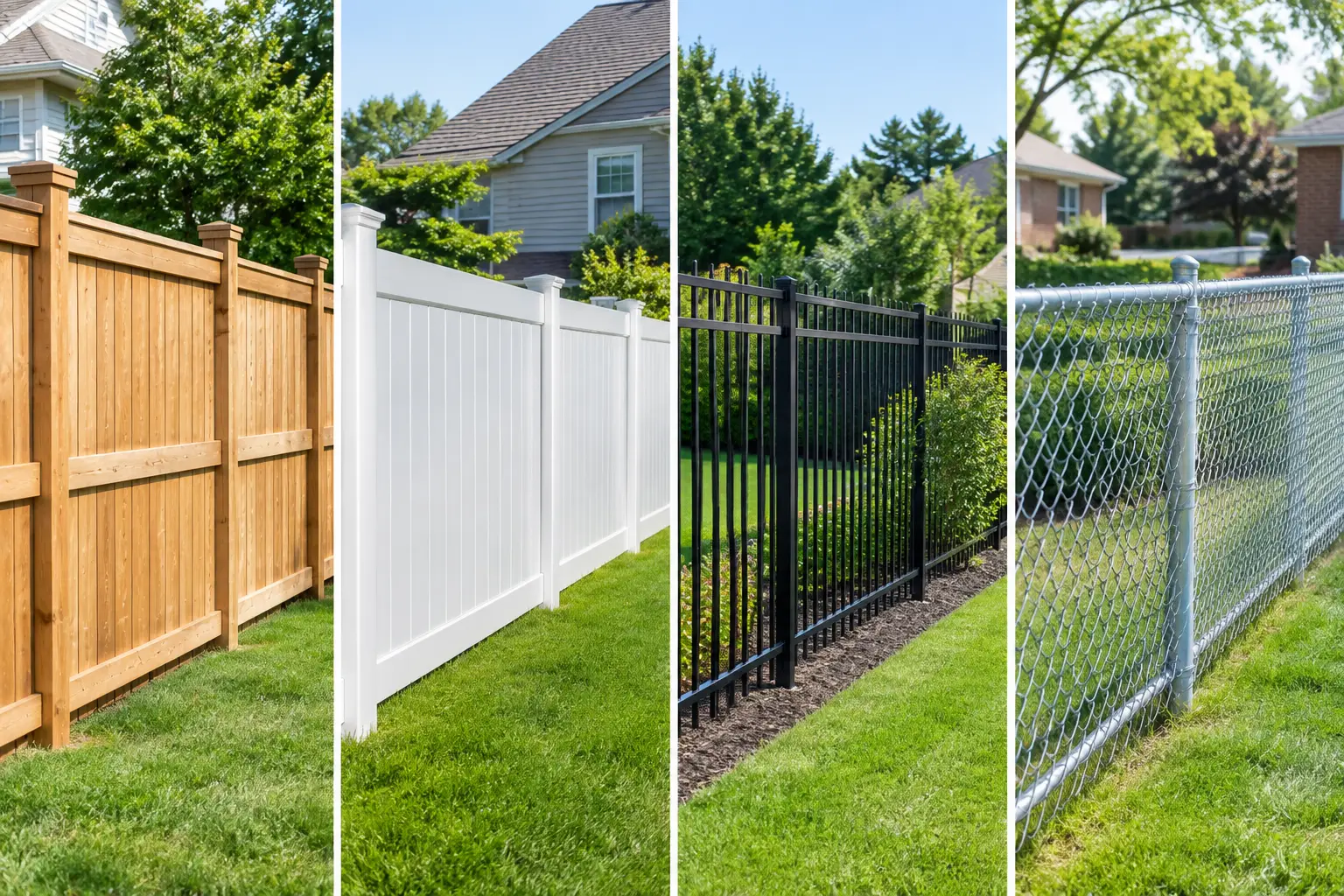
Fence Material Comparison: Wood, Vinyl, Aluminum, and Chain Link
Each material has a place. The best one is usually the one that fits your property, upkeep preferences, and long-term plans for the yard.
Wood fencing: classic privacy with more upkeep
Wood remains a popular choice around Naperville, Downers Grove, and the western suburbs because it looks warm and natural. It works well with traditional homes, mature landscaping, patios, pergolas, and garden spaces. Wood is also flexible from a design standpoint. You can choose solid privacy panels, shadowbox styles that look good from both sides, picket fencing, or more custom designs.
The trade-off is maintenance. Illinois moisture, snow, and temperature swings can cause wood to expand, shrink, fade, warp, or split over time. A quality installation and proper post setting make a major difference, but wood still needs attention. Plan on cleaning, staining, or sealing it as needed to protect the appearance and help it last.
Wood can be a smart fit when privacy and curb appeal are the priorities, especially if you are comfortable with periodic maintenance. It may not be ideal for a homeowner who wants to install a fence and rarely think about it again.
Vinyl fencing: clean appearance and low routine maintenance
Vinyl fencing is often chosen by busy families who want a solid privacy fence without the regular staining or painting that wood requires. It has a neat, consistent look and holds its color well. For a backyard with kids, pets, and weekend gatherings, vinyl can provide the enclosed feeling many homeowners want with less seasonal work.
That said, low maintenance does not mean no maintenance. Vinyl can still get dirty from grass clippings, pollen, mud, and algae in shaded areas. A basic wash usually handles it. It can also become brittle in very cold conditions, so installation quality and selecting a product suited for Midwest weather are important.
Vinyl is generally less forgiving than wood when it comes to repairs or changes. If a section is damaged, matching an older style or color may be harder than replacing a few wood boards. It is also important to plan gate locations carefully from the start. A gate that is too narrow for a mower, snowblower, or future patio work becomes a daily annoyance.
Aluminum fencing: open views with a polished look
Aluminum fencing is a strong option when you want definition and security without closing off the yard. It is common around pools, front yards, patios, and properties with attractive views. The narrow pickets create a clean, more upscale look while still allowing light and airflow through.
For Illinois homes with slopes, aluminum is often easier to work with than a rigid privacy material. Many aluminum fence systems can follow the grade of the land more naturally. That helps avoid awkward gaps under the fence, which can matter if pets are part of the plan.
Aluminum does not rust like traditional iron, and it requires very little routine upkeep. The main limitation is privacy. If you can see through it, so can your neighbors. Some homeowners use aluminum along the front or side yard, then combine it with landscaping, shrubs, or a privacy screen around a patio. A good landscape should look nice, but it also needs to work, so that planting plan should leave room for fence access and future trimming.
Chain link fencing: practical, durable, and straightforward
Chain link is often the most practical choice for containing pets, enclosing a large yard, or securing a commercial property. It is durable, open, and efficient for areas where visibility matters. Modern black vinyl-coated chain link can look cleaner and less industrial than the silver chain link many people remember.
The biggest benefit is function. A properly planned chain link fence creates a secure boundary without blocking sightlines. It can be a good choice behind a home, around a side lot, or for a dog area that needs to stand up to daily use.
The trade-off is appearance and privacy. While black-coated options can blend into the background better, chain link does not provide the finished privacy look of wood or vinyl. Homeowners sometimes add landscaping around it, but plants take time to grow and still need room to stay healthy.
Do Not Overlook Posts, Gates, and Yard Conditions
The visible panels get most of the attention, but the posts and gates do much of the hard work. A fence is only as dependable as its foundation. Posts need to be set correctly for the material, soil conditions, height, and local weather. Chicago-area freeze-thaw conditions can move poorly installed posts over time, leading to leaning sections and gates that no longer latch correctly.
Gates deserve extra planning because they get used more than any other part of the fence. Think about how you move through the yard. Do you need space for lawn equipment? Will a crew need access for landscaping, drainage work, or a future patio? Are you trying to keep a dog in while giving a child easy access to the driveway? These details are easier and cleaner to solve before installation.
Also look for low spots and downspout outlets. If your yard already gets muddy or holds water, address that concern as part of the overall exterior plan. A new fence should work alongside drainage, grading, landscaping, and walkways, not create a new problem.
How to Choose the Right Fence for Your Illinois Home
If privacy is your top concern, wood and vinyl are usually the first materials to consider. Wood offers a more natural look and design flexibility, while vinyl reduces the need for refinishing.
If you want to preserve views, define a property line, or enclose a pool area, aluminum is often the better direction. It gives the yard a finished edge without making it feel boxed in.
If you need dependable containment at a practical level, chain link is worth considering, particularly for dogs, larger lots, and utility areas. The right color and landscaping around it can improve the overall appearance.
There is no one material that wins every fence material comparison. A family in Hinsdale looking for a private patio retreat may make a different choice than a homeowner in Plainfield with two active dogs and a sloped yard. Both can be right when the fence is planned around the property instead of picked from a catalog first.
A thoughtful walkthrough can catch the details that affect the finished result: property lines, grade changes, gate swing, drainage paths, local permit requirements, and how the fence will look next to your home and landscaping. At Revive Your Lawn, we look at the full yard so the fence supports the way you actually use your outdoor space.
The best fence is one that gives you more comfort in your own yard, holds up through Illinois seasons, and still looks like it belongs with the rest of your property.