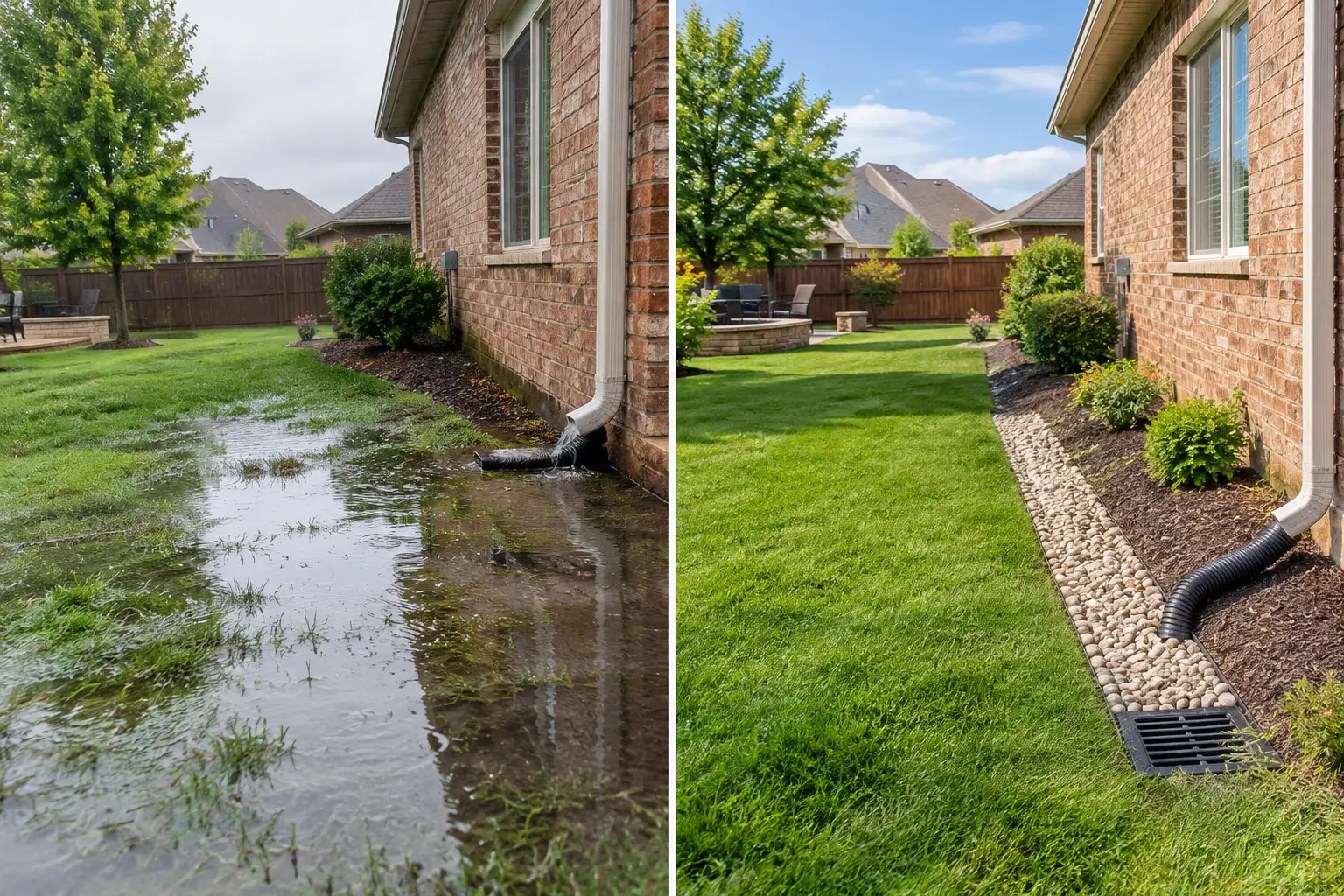
A wet backyard can make a nice Naperville home feel like a problem waiting to happen. This Naperville drainage project example shows how a thoughtful plan can move water away from the house, dry out a muddy lawn, and still leave the yard looking clean and usable.
The homeowner had a familiar western suburbs issue: after a heavy rain, water pooled along the back of the house and collected near a patio. The grass stayed soft for days. The lower part of the yard was muddy, the kids avoided it, and the homeowner worried about water sitting too close to the foundation.
This was not a situation where adding a little topsoil or planting new grass would solve the problem. The yard needed a drainage plan that worked with the way water naturally moved across the property.
The Problem Behind This Naperville Drainage Project Example
The home sat on a fairly typical suburban lot with a gently sloped backyard. On paper, the slope looked helpful because it ran away from the home. In real life, a few things were working against it.
First, two downspouts emptied near the rear corners of the house. During a strong Illinois storm, they sent a large amount of roof water into the same area already struggling to drain. Second, the patio edge and nearby landscape beds acted like small barriers, slowing water before it could reach the lower part of the yard. Finally, the soil was compacted. Instead of soaking in, rainwater sat on top and looked for the easiest low spot.
This is where many homeowners run into trouble. They see standing water and assume the low spot is the only issue. Often, the puddle is just where the water ends up. The real cause may be roof runoff, grading, hardscape edges, or several smaller issues working together.
Before recommending a fix, the drainage crew walked the yard, looked at the downspout locations, checked the slope around the foundation, and identified where water could safely discharge. A good drainage system needs a destination. Moving water from one bad spot to another is not a solution.
The Plan: Collect Water, Move It, and Protect the Yard
The right approach for this property was a combination of downspout extensions, buried solid pipe, and a French drain in the consistently wet section of the backyard.
The solid pipe handled the roof runoff. It connected to the downspouts and carried water underground toward an approved outlet area away from the home. Solid pipe is useful when you already know where the water is coming from and need to move it efficiently without letting it leak into the surrounding soil.
The French drain addressed the soggy lawn. A French drain is a gravel-filled trench with a perforated pipe inside. Water in the soil enters through the gravel and pipe, then travels downhill to a discharge point. It is not meant to catch a rushing stream of water from a downspout. It is meant to relieve wet ground that stays saturated after rainfall.
In this case, the drainage line was placed along the edge of the lowest, muddiest part of the lawn. The crew shaped the trench with the proper pitch, meaning a slight downhill slope that lets water flow instead of sitting inside the pipe. The trench was filled with clean drainage stone and finished in a way that blended into the lawn.
The patio and planting bed edges also needed attention. Rather than tearing out the entire patio, the plan included targeted grading beside it. Soil was adjusted so surface water could continue away from the house instead of getting trapped along the hardscape. That saved the homeowner from a much larger project while addressing the part of the patio area that was contributing to the problem.
Why One Drainage Method Was Not Enough
Homeowners often ask whether they need a French drain, a catch basin, or buried downspouts. The honest answer is that it depends on where the water starts and how it behaves.
A catch basin can make sense where surface water rushes across a driveway, patio, or swale and needs a place to enter the system. Buried downspouts are a good fit for concentrated roof runoff. A French drain helps with wet soil and slow-draining lawn areas. Regrading may be enough for a minor surface-water issue, but it will not solve every foundation or downspout problem.
For this Naperville-area home, using one method alone would have left part of the problem behind. A French drain without downspout management would still receive too much water near the house. Downspout extensions without a lawn drain would not dry out the saturated low area. The combination gave each source of water a clear path.
In Illinois, this matters because we get periods of heavy spring rain, summer storms, and freeze-thaw cycles that can expose weak spots in a yard. Snowmelt can also add water when the ground is still partly frozen and cannot absorb much of it. You do not want that water sitting near your foundation, patio, or walkways.
What the Finished Yard Looked Like
Once the drainage work was complete, the crew restored the disturbed lawn areas with topsoil and seed. The goal was not just to install pipe and leave a trench scar across the backyard. The homeowner wanted a yard that looked like a yard again.
Over time, the benefits were practical and easy to notice. The rear lawn did not stay muddy as long after rain. Water from the gutters was directed away from the home instead of dumping beside the foundation. The patio edge dried out more quickly, and the family could use the backyard with less worry about tracking mud indoors.
It is worth being realistic here. No drainage project makes a yard instantly perfect after every major storm. During a long, hard rain, grass can still be wet and low areas may still hold some temporary water. The goal is to prevent water from lingering, reduce pressure around the foundation, and help the property recover faster.
What Homeowners Can Learn From This Example
If your yard looks similar, start by paying attention after the next rain. Notice where the downspouts release water, where puddles form first, and how long those puddles remain. Also look for washed-out mulch, moss, soggy grass, water marks on the foundation, or patio areas that stay slippery.
A few simple observations can help point a contractor in the right direction. Still, drainage work is not a good place for guesswork. Pipe needs the right slope, outlets need to be planned carefully, and grading near a foundation needs to be handled correctly. A system that is installed too flat, too shallow, or without a proper discharge point can create a bigger mess later.
At Revive Your Lawn, we look at the full exterior picture because drainage affects more than the lawn. It can affect your landscape beds, hardscape, walkways, foundation area, and how much you enjoy the yard. Sometimes the best answer is a simple downspout correction. Other times, the property needs a more complete plan.
If water keeps returning to the same part of your yard, take a few photos during or right after rainfall and have the area evaluated. A clear plan now can help protect your Illinois home and give you a backyard that feels usable again.