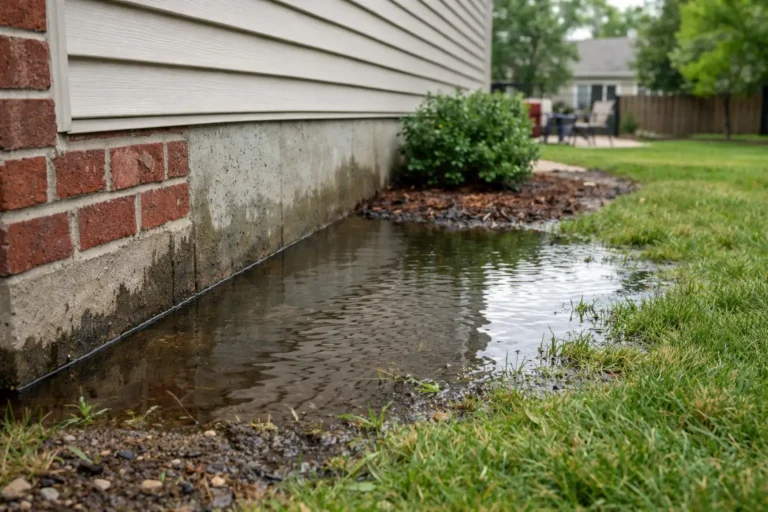
When a yard slopes toward the house, you usually see the problem before you understand it. The grass stays soggy, mulch washes out, puddles form near the foundation, and one hard Illinois rain turns the yard into a mess. If you are looking for the right drainage solution for sloped yard trouble, the big thing to know is this – the fix depends on where the water starts, where it collects, and where it can safely go.
A lot of homeowners in the Chicago suburbs assume a slope is the problem by itself. It is not always that simple. A sloped yard can work just fine if water is directed the right way. Trouble starts when runoff moves too fast, settles in low spots, or pushes water toward your home, patio, walkway, or neighbor’s property.
Why sloped yards cause drainage problems
Gravity does what it does. On a slope, water picks up speed and follows the path of least resistance. That might mean down a bare patch of lawn, through a mulch bed, across a sidewalk, or straight toward the foundation.
In Illinois, this matters because our yards go through a lot. Spring rains can saturate the soil fast. Summer storms can dump a surprising amount of water in a short time. Then in winter, freeze-thaw cycles shift soil and can make drainage issues worse over time. What looked like a minor wet spot in April can turn into erosion, muddy ruts, or standing water by the next season.
This is where many homeowners run into trouble. They try one small fix, like adding dirt to a low area or extending a downspout a few feet, but the water is coming from more than one source. If the grade is wrong, or if runoff from the roof is adding to the problem, that simple fix usually does not hold up.
The best drainage solution for sloped yard issues depends on the cause
There is not one universal answer. A good drainage plan usually combines grading, collection, and discharge. In plain English, that means shaping the yard, catching water where needed, and moving it away to a better location.
Regrading the slope
Sometimes the best fix is also the most basic. If the yard pitches toward the house, the grade may need to be reshaped so water moves away from the foundation first. Even a subtle change can make a big difference.
This is often the starting point because no drain system works well if the surface is still sending water the wrong way. A good landscape should look nice, but it also needs to work. If the grade is off, you are fighting the yard every time it rains.
French drains
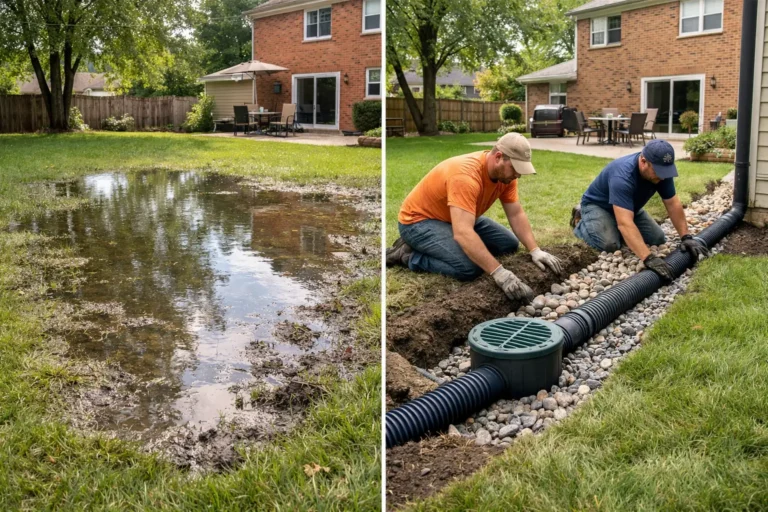
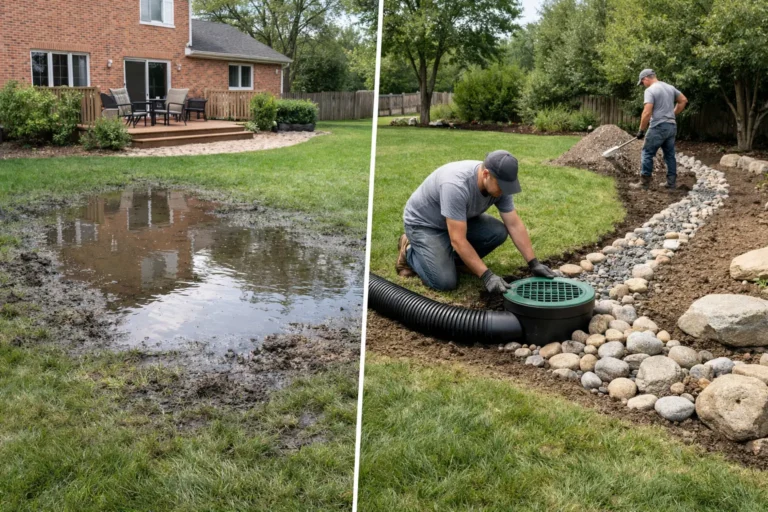
A French drain is one of the most common answers for a sloped yard, but only when it is installed in the right place. It is basically a gravel-filled trench with a perforated pipe that collects water from the soil and moves it away.
This works well when water is soaking into a hillside and then surfacing lower down, or when an area stays wet long after rain stops. It is not magic, though. If the pipe has nowhere proper to discharge, or if it is buried too shallow or too deep, it can fail. That is why layout matters just as much as the drain itself.
Catch basins and channel drains
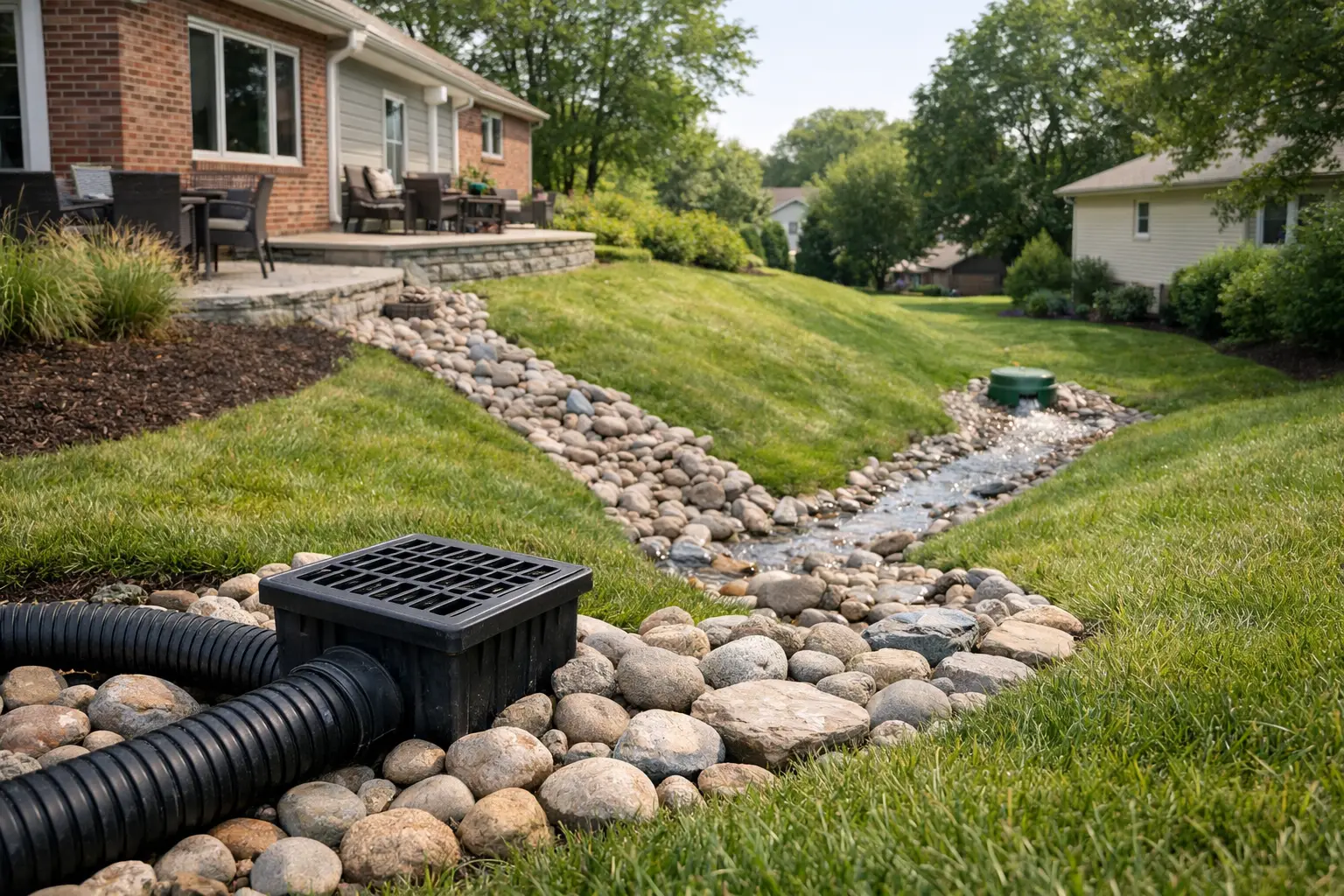
When water is moving across the surface, a catch basin or channel drain may be the better fit. These systems collect runoff before it floods a patio, walkway, driveway, or low corner of the yard.
For example, if a sloped side yard sends water toward a gate or sidewalk, a surface drain can intercept that flow and carry it underground to a safer outlet. This is a cleaner solution than letting water cut through the lawn year after year.
Downspout extensions and underground drain lines
Sometimes the slope problem is really a roof water problem. If downspouts dump near the house on sloped ground, all that water gets concentrated in one spot and starts racing downhill.
You do not want water sitting near your foundation. Extending downspouts farther out, or tying them into underground drain lines, can take a lot of pressure off the yard. In many cases, this is one of the simplest upgrades that makes the rest of the drainage system work better.
Dry creek beds and swales
If you want something that helps with drainage and looks natural, a swale or dry creek bed can make sense. A swale is a shallow, shaped channel that guides water along a controlled path. A dry creek bed does the same thing with stone, which can also help slow erosion and dress up an area that would otherwise look washed out.
These are often a smart fit for larger yards in the western suburbs where there is enough space to redirect water without making the yard feel overly engineered. They also work well when homeowners want drainage help without turning the lawn into a construction zone full of visible pipes and grates.
Signs your yard needs more than a quick fix
If you only see water during a major storm, the problem may be minor. But if your yard stays muddy for days, mulch keeps washing away, or you notice water near the foundation, it is time to take a closer look.
Other red flags include grass that never seems to thicken, mosquito-heavy wet spots, soil erosion along the slope, icy patches on walkways in winter, or a sump pump that seems to run nonstop after rain. These are usually signs that water is not leaving the property the way it should.
The biggest mistake is waiting too long because the damage is not always obvious at first. Water does a lot of its work slowly. It softens soil, shifts pavers, stains concrete, and creates conditions that make the whole yard harder to maintain.
What a good drainage plan looks like
The right drainage solution for sloped yard conditions should solve the problem without creating a new one somewhere else. That means looking at the full property, not just the wet spot.
A proper plan usually starts with the roofline, downspouts, slope direction, low areas, and how water leaves the yard now. From there, the solution may involve reshaping part of the lawn, adding a drain line, protecting planting beds from washout, or improving how water moves around a patio or walkway.
For many Chicagoland homeowners, the best result comes from combining drainage with landscape improvements. If a yard already needs new sod, bed cleanup, edging, or hardscape adjustments, it often makes sense to address those items together. That way the property not only drains better but also looks finished when the work is done.
Drainage in Illinois takes local experience
Soil and weather matter. In the Chicago suburbs, heavy clay soil is common, and clay does not drain quickly. That changes how water behaves on a slope. Instead of soaking in, runoff often moves across the surface or sits on top of compacted ground.
That is why a drainage approach that sounds fine on paper does not always work in an Illinois yard. You have to account for snowmelt, spring saturation, summer downpours, and the way freezing and thawing can shift grading over time. A system needs to be designed for how this region actually behaves, not how an ideal yard behaves.
It also helps to work with someone who understands the balance between function and appearance. Most homeowners do not just want a dry yard. They want a yard that is easier to use, easier to maintain, and better looking from the street.
When to call for help
If you have tried small fixes and the same spots keep staying wet, it is worth having the property looked at as a whole. The earlier you catch a drainage problem, the easier it usually is to correct before it affects your foundation, lawn, or hardscaping.
At Revive Your Lawn, this is the kind of issue we help Illinois homeowners sort through all the time. Some yards need a simple grading adjustment. Others need a more complete system. The goal is not to oversell a big project. It is to figure out what the water is doing and give it a better path.
If your sloped yard has become the part of the property you avoid after every storm, that is a sign the layout is not working for you. Water should move through your yard quietly, not take it over every time it rains.