A landscape design consultation review should help you feel more certain about your yard, not more confused. When someone walks your property and discusses plants, patios, lighting, or drainage, you should come away knowing what problem is being solved, what the finished space may look like, and what needs to happen before the work begins.
For Chicagoland homeowners, a good consultation is about much more than picking mulch color. Our freeze-thaw winters, spring rain, clay-heavy soil, mature trees, and tight suburban lot lines can all affect the right plan. A good landscape should look nice, but it also needs to work.
What a Landscape Design Consultation Should Cover
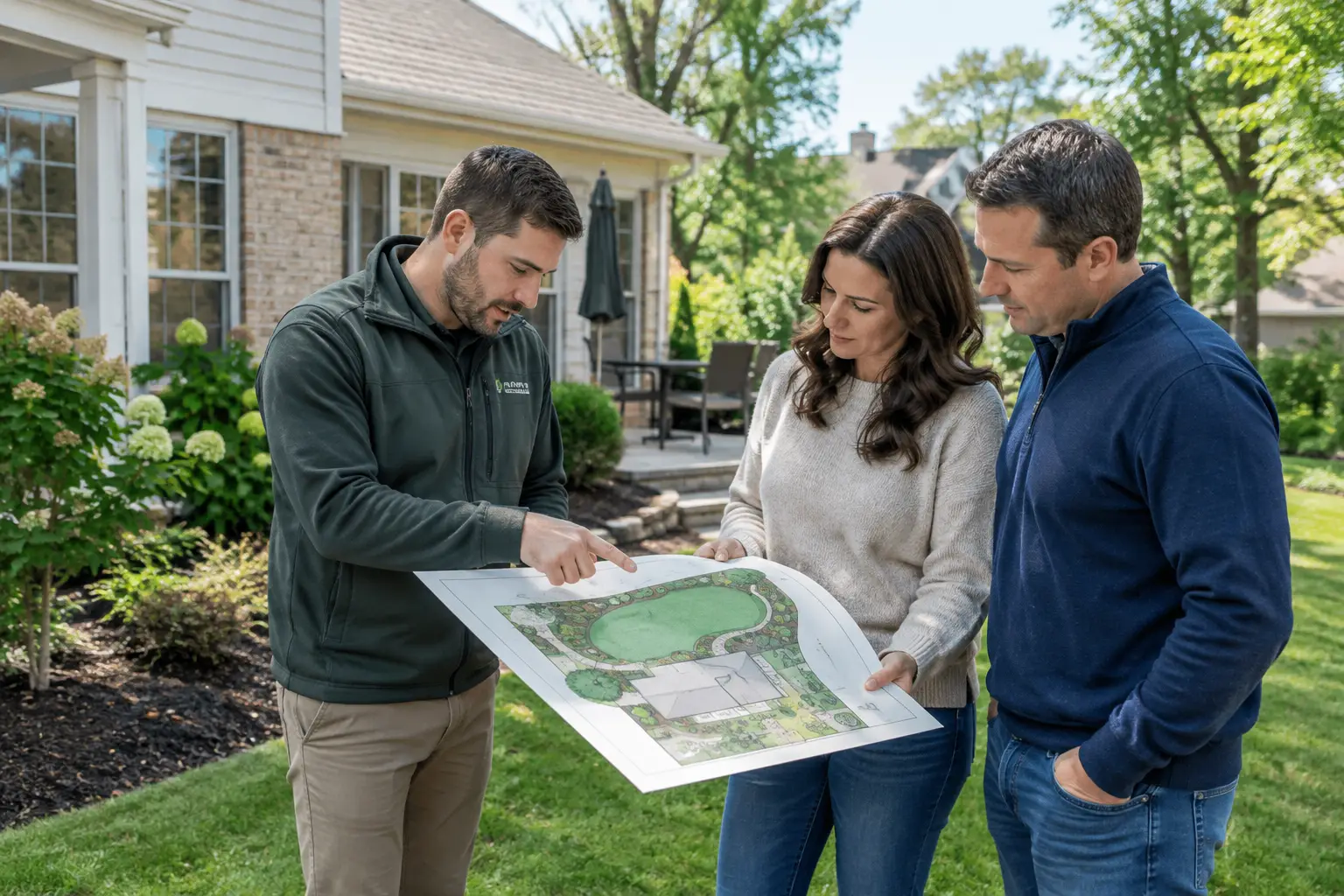
The best consultations start with a conversation, then move into a careful look at the property. Your contractor should ask how you use the yard, what frustrates you now, and what you want to change. Maybe the front beds look tired, the backyard is too wet to enjoy, or you need a safer walkway from the driveway to the front door.
They should also look beyond the obvious. Water flow, downspout locations, slopes, sun exposure, soil conditions, existing trees, and access for equipment all matter. A beautiful planting bed will not hold up well if roof water dumps straight into it. A new patio can create trouble if it sends water toward the house instead of away from it.
In Illinois, this matters because water has a way of finding the low spot. You do not want water sitting near your foundation, pooling on a paver patio, or turning a side yard into mud every spring. A contractor who notices these concerns during the consultation can often build the solution into the design instead of treating it as a surprise later.
Your Landscape Design Consultation Review Questions
As you look over a proposed design, focus first on the purpose behind each part of the plan. You do not need to know every plant name or construction term. You do need clear answers in plain English.
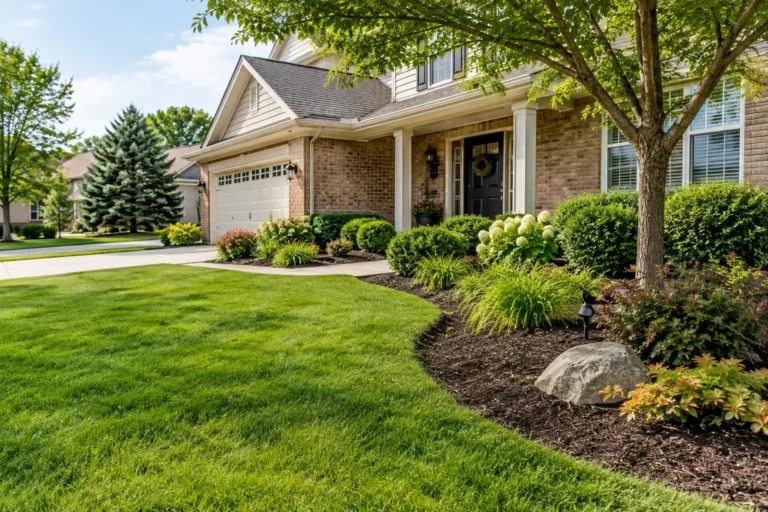
Ask what the main goal is for each area. For example, is the front landscape meant to improve curb appeal and make the entry easier to see at night? Is the backyard plan focused on creating a usable space for family dinners? Is a drainage change needed before new sod, plantings, or a patio can be installed?
It also helps to ask how the design fits your level of upkeep. Some homeowners enjoy seasonal color and hands-on gardening. Others want neat, durable landscaping that requires less weekend work. Neither choice is wrong, but the plan should match real life. If you travel often, have young kids, or simply do not want to spend Saturday mornings trimming shrubs, say so during the walkthrough.
A reliable contractor should explain what is included and what is not. That means discussing removal, grading, drainage materials, edging, plant material, mulch or stone, lighting, cleanup, and any hardscape work. Clear scope prevents the kind of misunderstanding that can make a project feel stressful.
Look at the Yard as One System
This is where many homeowners run into trouble. They hire one company for a patio, another for gutters, and someone else for landscaping, but no one is looking at how those pieces affect each other.
A patio, walkway, fence, pergola, lighting plan, and planting beds all need to work together. The patio should have the right slope. Downspouts should not empty onto the new walkway. Lighting should make steps and transitions easier to see without shining into a neighbor’s windows. Trees and shrubs need enough room to mature without crowding the house, fence, or air-conditioning unit.
A full-property conversation is especially useful for Naperville-area homes and other established western suburb neighborhoods, where mature landscaping may hide grading issues or block important sight lines. Sometimes the right answer is a major redesign. Other times, it is a targeted drainage improvement, refreshed beds, strategic lighting, and a better walkway. It depends on the property and how you plan to use it.
Pay Attention to Drainage Before Appearance
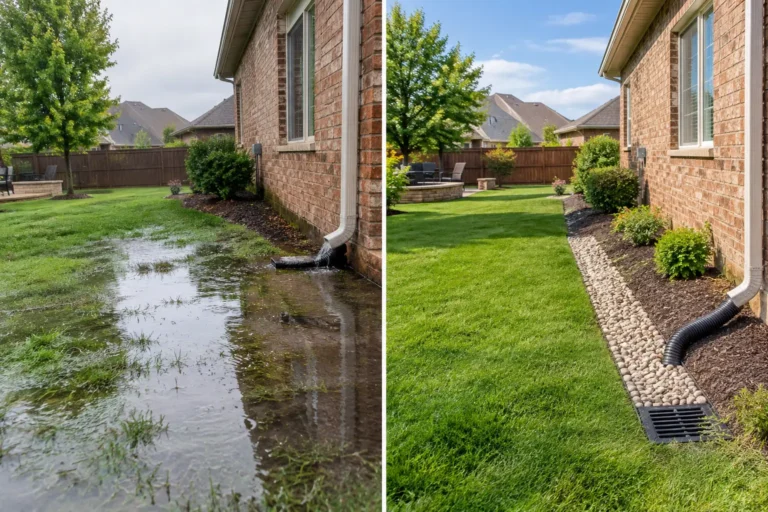
Curb appeal is important, but water management should be part of the conversation from the start. If you have standing water, soggy grass, washed-out mulch, basement dampness, or ice near a walkway in winter, bring it up during the consultation.
The solution might involve extending downspouts, adjusting grades, adding a drainage line, or choosing a different layout for beds and hardscapes. There is no single fix for every wet yard. A small low spot in a side yard is different from water coming off a roof or a backyard that sits below neighboring properties.
Be careful with any plan that promises to make a drainage issue disappear without first looking at where the water starts and where it can safely go. Good drainage work is practical problem-solving. It should protect the home while keeping the yard usable and attractive.
Ask How the Design Will Handle Illinois Weather
Chicago suburbs weather can be hard on outdoor work. Plants need to handle cold winters, hot summer stretches, heavy rain, and wind. Pavers, retaining features, and walkways need a proper base so they are less likely to shift with seasonal ground movement.
Ask which areas get full sun, partial shade, or deep shade. A bed that looks great in May can struggle in July if the plant choices do not fit the light and moisture conditions. The same goes for turf. If dense shade under mature trees is causing thin grass, adding more seed may not be the long-term answer.
For hardscapes, ask how water will move off the surface and what preparation is planned underneath. You do not need a technical lecture. You just want confidence that the contractor has considered the ground conditions, drainage, and the expected use of the space.
Know What to Expect Before Work Begins
A good consultation should lead to a clear next step. Depending on the size of the project, that may be a written estimate, a design concept, material selections, or a follow-up meeting to refine the plan. Larger projects often need more detail than a straightforward bed refresh or sod installation.
Before you approve work, make sure you understand the work area, access needs, and what happens to existing materials. Ask where crews will enter, whether equipment needs gate access, and how nearby landscaping will be protected as reasonably as possible. Clean crews and good communication matter, especially on tight lots in Downers Grove, Hinsdale, and similar neighborhoods.
It is also fair to discuss priorities. If the full vision includes drainage, a patio, lighting, and landscaping, you may decide to complete it in phases. The key is planning those phases in the right order. Usually, work below or at ground level, such as drainage and grading, should happen before finished landscaping. You do not want to install beautiful new beds and then tear them up to fix a water issue.
Signs You Are Getting Helpful Advice
You should feel comfortable asking questions without being rushed. Good advice is specific to your property, explains the trade-offs, and does not pretend every homeowner needs the biggest possible project.
Watch for a contractor who listens to your goals, points out concerns honestly, and offers options where they make sense. Maybe a full paver walkway is the right fit, or maybe a smaller repair and landscape refresh will solve the immediate issue. Maybe permanent outdoor lighting fits how you use the home, or maybe a few well-placed landscape lights are enough.
The right plan is one you understand and can feel good about. It should improve the way your property looks, but it should also make everyday life easier – less mud, safer paths, better use of the yard, and fewer loose ends to manage.
If you are planning an outdoor improvement in the Chicago suburbs, start by walking the yard with someone who sees both the visual side and the practical side. A thoughtful consultation gives you the chance to ask the right questions before the first shovel goes into the ground.