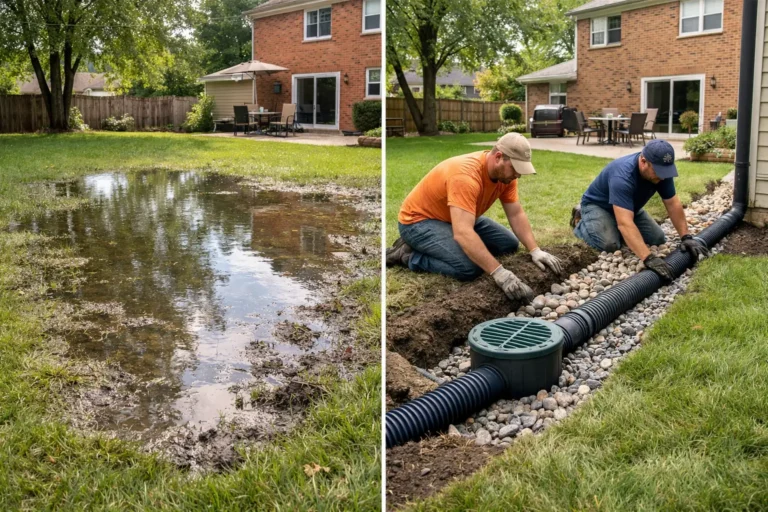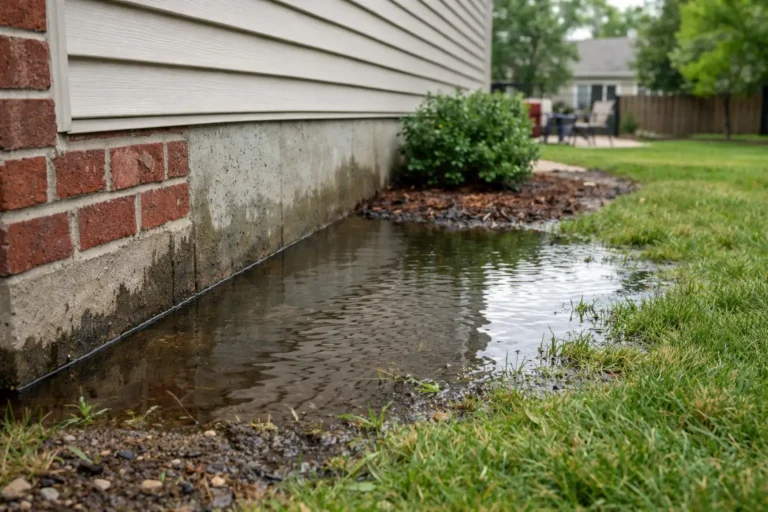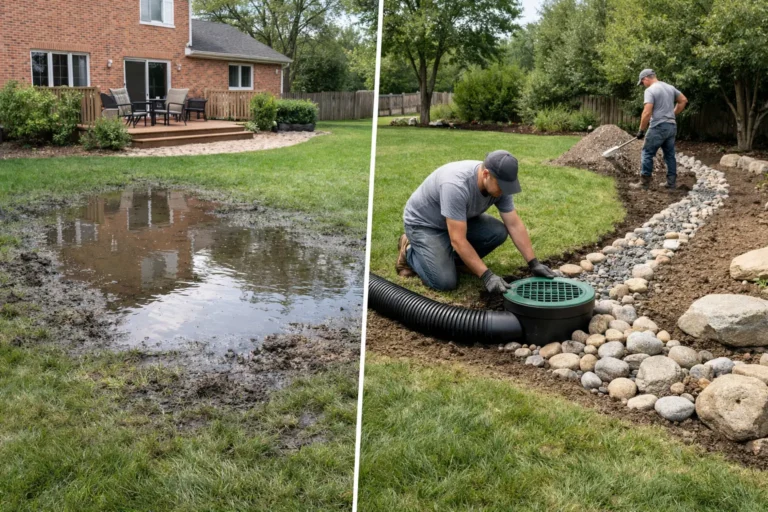
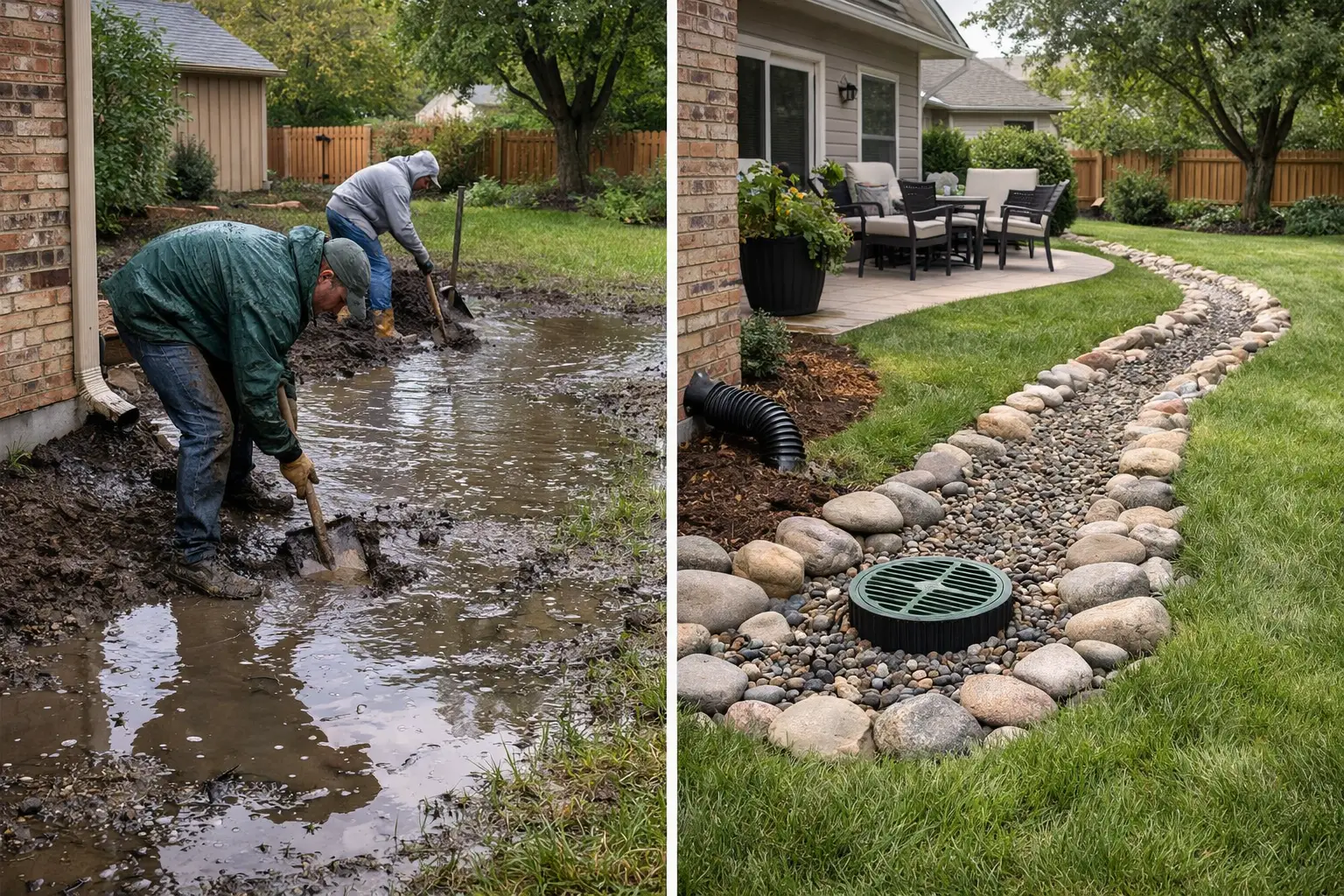
If your backyard stays muddy for days after a rain, that is not just a nuisance. It is usually a sign that the water has nowhere good to go. This backyard drainage planning guide is meant to help Illinois homeowners figure out what is really happening in the yard before spending money on the wrong fix.
Around the Chicago suburbs, we see this all the time. Heavy spring rain, clay soil, flat lots, freeze-thaw cycles, and downspouts that dump too much water in one area can all turn a usable backyard into a soggy mess. A good landscape should look nice, but it also needs to work.
What a backyard drainage plan should do
A real drainage plan is not just about moving water away fast. It should protect your foundation, reduce standing water, keep grass and planting beds healthier, and make the yard easier to use. You do not want water sitting near your foundation, pooling by a patio, or turning walkways slick and messy.
The best plan also looks at the whole property. This is where many homeowners run into trouble. They fix one wet spot, but the water simply shows up somewhere else. In Illinois, this matters because many homes have compacted soil and limited slope, so water needs to be guided carefully.
Start with where the water comes from
Before you talk about solutions, it helps to identify the source. In most backyards, water problems come from one or more of the same few places.
Roof runoff is a big one. If gutters and downspouts are sending a lot of water into one corner of the yard, that area can get overwhelmed quickly. Surface runoff is another common issue, especially if your property sits lower than a neighbor’s yard or if water rolls off a driveway, patio, or side yard and collects in back.
Then there is the soil itself. A lot of Chicagoland homes sit on heavy clay soil, which drains slowly. Even if the yard looks mostly level and neat, the ground may hold water much longer than you expect. Add in low spots from settling, worn turf, or poor grading from an old project, and the problem gets worse.
Walk the yard after a rain
One of the smartest things you can do is look at the yard during or right after a decent rain. You will learn more in ten minutes than you will from guessing on a sunny day.
Pay attention to where water stands, where it flows, and how long it sticks around. Look near downspout outlets, fence lines, the back edge of patios, window wells, and any spot where the lawn feels spongy underfoot. If one area stays wet more than a day or two while the rest dries out, that is usually a clue.
Also notice whether the problem changes by season. In early spring, frozen or partly thawed ground can keep water near the surface. In summer, hard dry soil can cause runoff instead of absorption. The pattern matters because the right fix depends on whether the issue is constant or seasonal.
Backyard drainage planning guide: what to check first
When homeowners are planning drainage, I usually suggest looking at the property in a simple order. Start at the house and work outward.
First, check the gutters and downspouts. If they are clogged, undersized, or dumping too close to the house, the backyard may be getting more roof water than it should. Next, look at the grading. The ground should gently slope away from the home. It does not need to be dramatic, but it should not trap water against the foundation.
Then look at hard surfaces like patios, walkways, and driveways. These can either help direct water properly or create a problem if they pitch the wrong way. After that, evaluate the lawn and planting areas. Thin grass, exposed roots, mulch washout, and muddy spots often point to drainage trouble.
Finally, consider what is happening at the property lines. If water is entering from a neighboring yard, easement, or common area, your plan needs to account for that too. You may not be able to stop the water at the source, but you can often redirect it safely.
Choose the right fix for the actual problem
Not every drainage issue needs a big system, and not every wet yard can be solved with a simple extension on a downspout. It depends on how much water you are dealing with, how often it happens, and where that water can realistically go.
If the issue is mainly roof runoff, extending downspouts or tying them into buried drain lines may solve a lot of it. If the yard has a low area that collects water, regrading may be the better answer. If water moves across the surface and needs to be intercepted, a swale can help. That is just a shallow, shaped channel that guides water in a controlled way.
For spots that stay saturated below the surface, a French drain may make sense. That system collects water underground and moves it away through a gravel-filled trench and pipe. It can work well, but only if it has a proper outlet. That is an important point. A drain system without a good place to discharge the water is often money wasted.
Sometimes the answer is a combination. For example, a backyard in Naperville or Downers Grove might need better downspout routing, a grading adjustment near the patio, and a drainage line along the fence where water enters from a neighboring lot. One fix by itself may only partly help.
Do not forget how drainage affects the rest of the yard
Drainage planning is not separate from landscaping. It affects how your lawn grows, how long mulch stays in place, whether your patio stays clean, and whether the backyard feels like a place you actually want to use.
A soggy yard can kill grass, stain hardscaping, attract mosquitoes, and create ruts from foot traffic or mower tires. If you are already thinking about a new patio, sod, planting beds, or outdoor lighting, it often makes sense to address drainage first. Otherwise, you may end up protecting a nice new landscape with an old water problem still underneath it.
This is also why a full-property view matters. A drainage solution should fit the look of the yard, not leave you with something that feels patched together. Good work solves the problem and keeps the property looking clean.
Common planning mistakes homeowners make
The biggest mistake is treating the symptom instead of the cause. A muddy spot may seem like the main issue, but the real problem could be two downspouts emptying behind the house or a patio that pitches the wrong direction.
Another common mistake is assuming more gravel will fix it. Gravel can help in the right application, but dumping stone into a low area usually does not solve the water issue by itself. It often just creates a wet rock pit.
Homeowners also run into trouble when they move water without thinking about where it ends up. Sending runoff toward a neighbor, across a walkway, or back toward the foundation creates a new headache. In the western suburbs especially, where many lots are fairly tight and grades can be subtle, that kind of shortcut tends to show up fast.
When to bring in a drainage contractor
If water is getting near the foundation, leaking into a basement, pooling around a patio, or staying in the yard for days, it is worth having a professional take a look. The same goes if you have tried smaller fixes and the problem keeps returning.
A good contractor should not rush straight to one product or one system. They should look at the slope, roof runoff, soil conditions, hard surfaces, and how water moves across the whole yard. They should also explain the trade-offs clearly. Some solutions are more visible but cost less. Others are cleaner-looking but require more excavation. The right choice depends on your yard, your goals, and your budget.
That is a big part of what we talk through with Chicagoland homeowners at Revive Your Lawn. The goal is not to overbuild. It is to come up with a smart plan that protects the property and makes the yard easier to enjoy.
Backyard drainage planning guide for long-term results
The best backyard drainage planning guide is the one that keeps you from making a rushed decision after the next heavy storm. Start by watching where water goes. Figure out whether the source is roof runoff, grading, soil, or neighboring flow. Then match the fix to the real issue.
In Illinois, drainage problems rarely improve on their own. Usually they get more noticeable over time, especially as seasons shift and the yard settles. If your backyard has become a muddy zone, a problem patio, or a place your kids and pets avoid after rain, that is your sign to plan it out before doing anything else.
A dry, usable backyard does not happen by accident. It starts with paying attention to how the property works and making sure the water has a better path than straight into your lawn.