A winter storm can turn a normal workday into a property problem before the first employee arrives. A slippery front walk, snow piled across accessible parking, or an uncleared delivery area can disrupt business quickly. The best commercial snow practices are not just about pushing snow after it falls. They start with a plan that keeps people moving safely, protects the property, and gives managers a clear point of contact when Illinois weather changes overnight.
For businesses in the Chicago suburbs, snow service needs to account for more than total inches. Wind, freezing rain, refreezing, rush-hour traffic, and tight parking lots can all change the job. Here is what a dependable commercial snow plan should include.
Start With a Site Plan Before the First Storm
The best time to make snow decisions is when the pavement is dry. Before winter, walk the property with your snow contractor and identify the areas that matter most: entrances, sidewalks, fire exits, loading areas, accessible parking spaces, drive lanes, dumpster access, and high-traffic walkways.
This is also when you decide where snow can be piled without creating new problems. Snow stacks should not block sight lines near exits or intersections. They should stay away from fire hydrants, parking spaces, drainage structures, and landscaped areas that could be damaged by heavy piles or salt runoff.
A good site plan also accounts for how the property is actually used. A medical office may need patient walkways cleared early in the morning. A retail center may need priority service before customers arrive. An industrial property may need special attention around docks and truck routes. There is no one-size-fits-all route, and that is where many properties run into trouble.
Set Clear Priorities for Lots, Walks, and Entrances
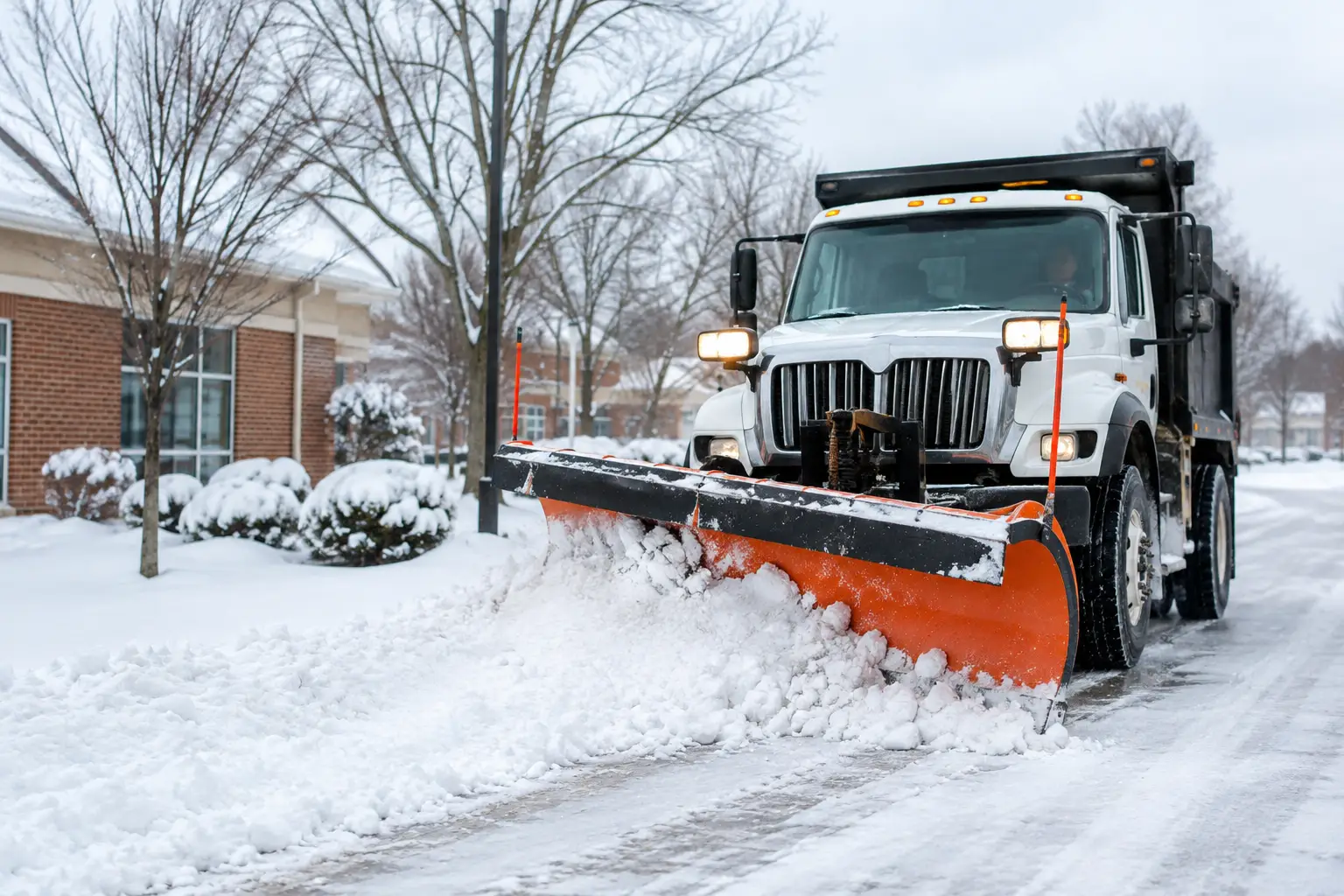
During a heavy storm, a large lot cannot always be fully detailed at the same moment. Smart commercial snow management works in layers. The first priority is usually safe access: main drives, entrances, emergency routes, and the walkways people use most.
After that, crews can open additional parking areas, clean around curbs, clear secondary walks, and tighten up snow left behind by plows. This approach is especially useful during long, steady snowfall. Trying to make every square foot perfect while snow is still coming down can waste time and allow key access points to worsen.
Property managers should make these priorities clear before the season begins. If there is a tenant with early hours, a daycare entrance, or a high-volume customer pickup area, say so. A contractor who understands the order of importance can respond more effectively when conditions get busy.
Treat Ice as a Separate Safety Issue
Plowing handles snow. It does not automatically solve ice.
In Chicagoland, freeze-thaw cycles are common. Snow melts during the day, water runs across the pavement, and temperatures drop after sunset. By morning, a lot that looked clear may have thin, hard-to-see ice. Refreezing often shows up near downspouts, curb lines, shaded sidewalks, low spots, and entrances where snow gets tracked in.
Deicing material helps, but the right application depends on the weather and the surface. Too little product may not provide enough traction. Too much can be wasteful, messy, and harder on nearby turf, concrete, and landscaping. The goal is not to spread material everywhere without thought. The goal is to treat the places where people walk and vehicles stop, turn, and unload.
Good commercial snow practices include monitoring conditions after the plow leaves. A property may need a follow-up visit after freezing rain, a temperature drop, or a day of melting snow. That is why reliable communication matters as much as equipment.
Plan for Drainage and Refreezing Problems
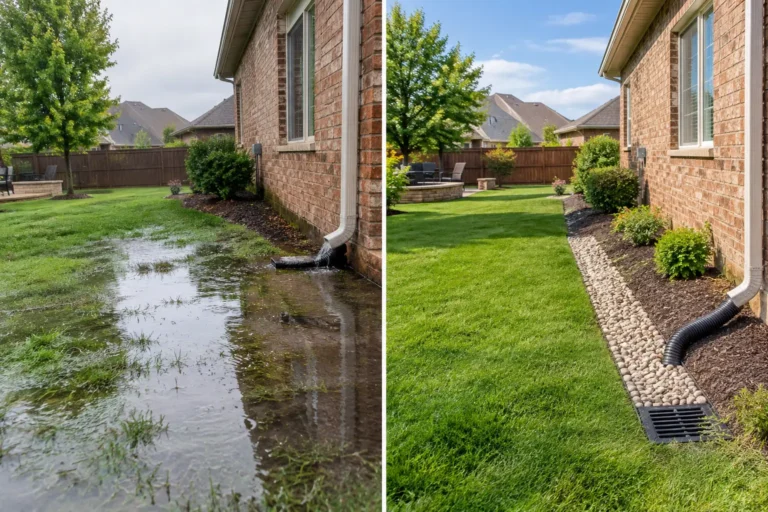
Snow removal often exposes problems that started long before winter. If water sits in a low area after rain, it may become a skating rink after a freeze. If downspouts discharge across a sidewalk, that runoff can create repeated ice near the building.
In Illinois, this matters because our winter weather changes fast. A drainage issue that seems minor in October can become a daily safety concern in January. Property owners should pay attention to recurring wet spots, areas where plowed snow melts across pedestrian routes, and pavement that freezes sooner than the rest of the lot.
Sometimes the answer is a better snow-pile location. Other times, the property may need a drainage adjustment, downspout extension, grading correction, or repair to a damaged catch basin. A good landscape and exterior contractor looks at the full picture instead of treating every icy spot as a salt problem.
Keep Snow Piles Out of the Way
Where snow goes is just as important as where it comes from. Large piles take up parking spaces, reduce visibility, and can create runoff problems when temperatures rise. They can also bury shrubs, damage turf, and leave behind sand, salt, and debris when spring arrives.
Choose snow storage areas that are out of traffic but still accessible to plow equipment. Keep piles away from building entrances and pedestrian crossings. Avoid pushing snow toward storm drains, since melting snow can carry debris into the drainage system and may refreeze around the grate.
For tighter commercial sites in Naperville, Downers Grove, and other established Chicago suburbs, storage space can be limited. In those cases, the service plan may need to include relocation or hauling when piles become too large. It depends on the layout, snowfall totals, and how much parking the business needs to keep open.
Communicate Before, During, and After Storms
A snow contract works better when everyone knows what to expect. Property managers should provide current contacts, gate codes, tenant schedules, special instructions, and information about areas that need to stay open. Contractors should explain service triggers, priorities, and how storm updates will be handled.
It also helps to identify one person who can make quick decisions if conditions change. For example, a business may need extra attention before an event, an early delivery, or a busy weekend. Clear communication prevents last-minute confusion and keeps the snow crew from guessing.
After a storm, report concerns promptly. A blocked drain, damaged curb, missed icy area, or shifted parking sign is easier to address when it is caught right away. Documentation also matters. Service records and clear notes help property managers understand what was done and when, especially after a major weather event.
Protect the Property While Clearing It
Commercial snow work is tough on pavement, curbs, turf, and landscaping. Plow operators need visible markers around islands, curbs, hydrants, light poles, speed bumps, and delicate landscape beds. Without them, snow can hide obstacles that are easy to strike in low light.
Spring damage is not always avoidable, but good preparation reduces the risk. Freshly planted beds, decorative stone edges, paver areas, and irrigation components deserve extra attention. If a site has tight turns or raised curbs, the contractor should know that before the first storm instead of finding out at 4 a.m. under six inches of snow.
This is one advantage of working with a company that understands landscaping, drainage, and exterior maintenance along with snow removal. At Revive Your Lawn, we look at how winter work affects the property once the snow is gone, not just what the lot looks like during the storm.
Review the Plan as Winter Goes On
The first snow event usually teaches everyone something. Maybe snow piles are taking up too much parking. Maybe one entrance gets icy after every thaw. Maybe a tenant’s delivery schedule creates a conflict with the normal route. Those details should be adjusted as the season continues.
A quick midseason review can make the rest of winter easier. Look at service notes, recurring trouble spots, tenant feedback, and any areas where water or ice keeps returning. Small changes in plow routes, salt placement, snow storage, or drainage can make a noticeable difference.
The best commercial snow practices come down to preparation, attention, and follow-through. When your lot, walks, and entrances have a clear plan behind them, your property is better prepared for whatever a Chicago-area winter decides to bring next.