
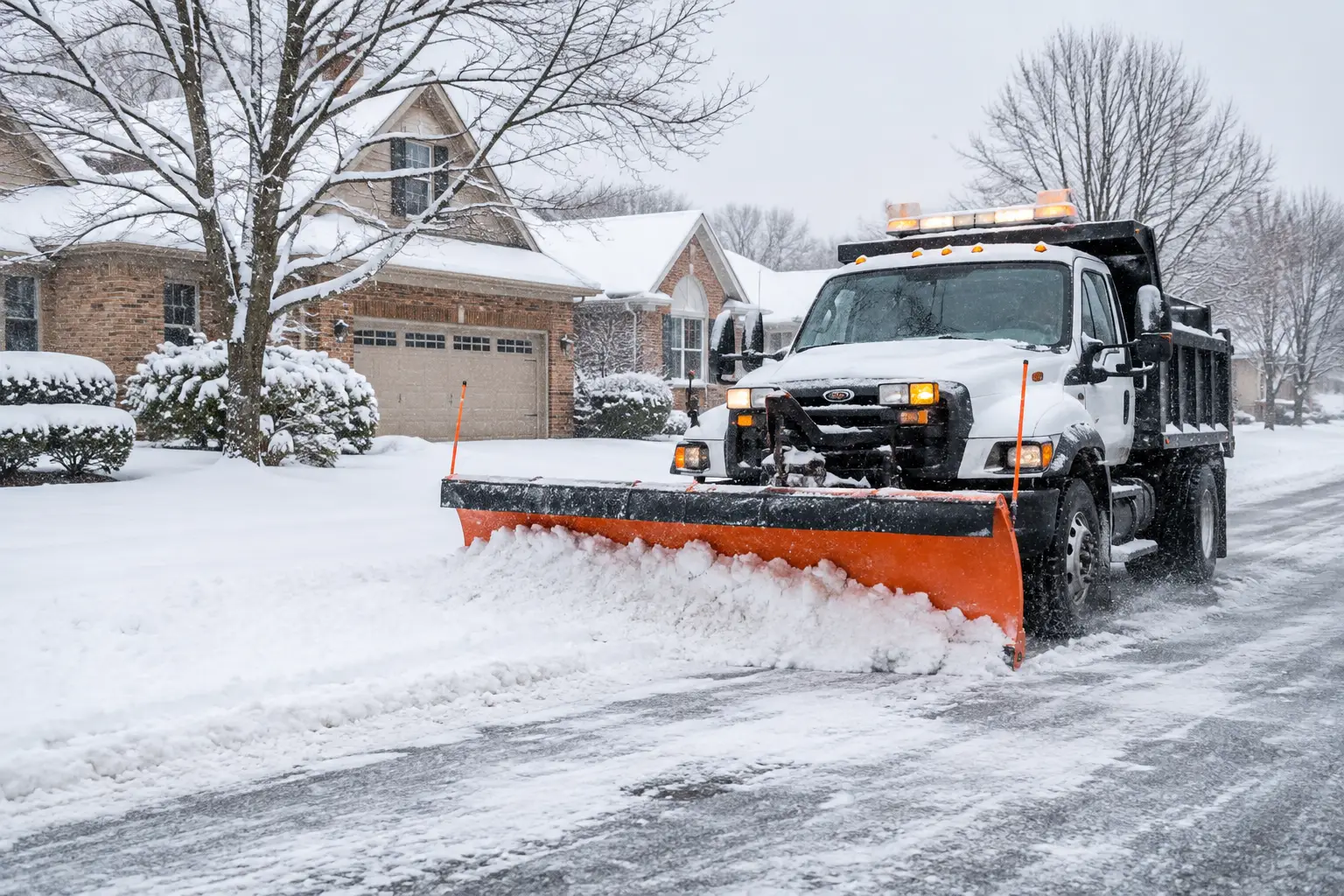
A 6 a.m. snowfall can turn a normal workday into a property problem fast. Employees need a clear path from the parking lot, customers need safe entry, and a manager may be getting calls before the doors even open. A good commercial snow service example shows why snow removal is more than sending out a truck after the storm has already piled up.
For commercial properties in the Chicago suburbs, the right plan is built around the people using the site, the layout of the property, and the kind of winter weather Illinois is known for. That may mean dry powder snow one week, then heavy wet snow, freezing rain, and refreezing temperatures the next.
Here is what a practical commercial snow service plan can look like, along with the details that help a property stay safer, cleaner, and easier to manage all winter.
A Commercial Snow Service Example: A Busy Office Property
Picture a two-story medical and professional office building in the western suburbs. The site has a large parking lot, two main entrances, a rear employee entrance, sidewalks along the building, accessible parking spaces, and a dumpster enclosure. Patients begin arriving at 7:30 a.m., and some tenants stay open into the evening.
This property cannot wait until a storm is completely over before anyone responds. It also cannot have piles of snow blocking parking spaces, corners, fire lanes, or the entrance ramp. The service needs to be planned before the first snowflake falls.
Before winter, the snow contractor walks the property with the manager. They identify where snow can be stacked without blocking sightlines or taking up too many parking spaces. They mark curbs, landscape beds, hydrants, speed bumps, drains, islands, and other areas that can disappear under snow. They also talk through priority areas.
For this office property, the main entrance, accessible spaces, front walk, and primary driving lanes come first. The rear employee entrance and secondary parking sections may be completed right after those critical areas are open. That order matters. It keeps the property usable while the crew continues working through the site.
Before the Storm: Watching, Planning, and Pretreating
A dependable commercial snow service does not start when the manager calls in the morning. The crew watches the forecast and makes decisions based on expected timing, temperature, snowfall totals, and the chance of ice.
If light snow or freezing rain is expected overnight, the lot may be treated ahead of time with salt or another ice-melt product. Pretreatment can help keep snow and ice from bonding tightly to the pavement. It does not make a property magically dry during a storm, but it can make plowing and deicing more effective afterward.
In Illinois, this matters because temperatures often move above and below freezing in the same storm cycle. Meltwater can run across pavement during the day and turn to ice after sunset. A lot that looked clear at 3 p.m. may be slick by 7 p.m. if it is not monitored and treated properly.
The property manager should also know who to contact and what updates to expect. Clear communication is a big part of commercial service. Nobody wants to wonder whether the crew is coming while their front entrance is covered.
During the Storm: Keeping the Property Functional
Let’s say snow begins around 1 a.m. and continues through the morning commute. Rather than waiting for eight inches to build up, the crew may make multiple passes through the lot. The goal is to keep driving lanes open and prevent packed snow from becoming hard, rutted ice.
Plows clear the main travel lanes and parking rows according to the agreed plan. Sidewalk crews shovel or use snow blowers where appropriate, paying close attention to doorways, ramps, stairs, and curb cuts. Ice-melt material is applied to high-traffic walking areas, especially where people may step out of a car and walk directly onto a slick surface.
Snow is placed in the preplanned stacking areas. This is where many properties run into trouble. If snow gets piled near an exit, intersection, or pedestrian crossing, drivers can lose visibility. If it is stacked over a catch basin or too close to a building, melting snow can create drainage headaches later.
A good contractor looks beyond getting snow out of the way. The crew needs to think about where the snow will go when it melts.
What Happens After Plowing Is Finished
The final plow pass is not always the end of the visit. Cars may leave behind packed snow in parking stalls. Wind can blow snow back across open pavement. Temperatures can fall quickly after a wet storm, creating black ice near shaded sidewalks or building entrances.
For the office property, a follow-up check may focus on the front doors, accessible routes, curb ramps, and any spot where meltwater tends to collect. If the forecast calls for a sharp temperature drop, an additional deicing visit may be needed. The right approach depends on the weather and how the property is being used that day.
Commercial clients also benefit from service records. A basic record should show when the crew arrived, what work was performed, and what material was applied. This is helpful for property management, tenant communication, and keeping an organized record of winter maintenance.
What a Snow Plan Should Cover Before Winter Arrives
Every commercial property is different, but a clear service agreement should answer the questions that matter when the weather turns. It should spell out the service areas, such as parking lots, sidewalks, entrances, loading areas, and private drives. It should also explain trigger depths or when service begins, how ice control is handled, where snow will be placed, and who has authority to request extra service.
A walkthrough should identify site conditions that can affect service. Tight parking lots, decorative pavers, steep drive lanes, older curbs, poor drainage, and low-hanging branches all deserve attention. For example, a retail center with constant customer traffic may need more frequent sidewalk checks than a small office building that opens later in the morning.
It is also smart to discuss overflow snow early. In a heavy Chicagoland winter, snow piles can grow high enough to reduce parking, block visibility, or slow down melting. Some sites may need snow relocation after major events. That is not necessary for every property, but it should not be a surprise if winter brings repeated storms.
Common Gaps That Create Winter Problems
The biggest issue is often not the plowing itself. It is a vague plan. A property owner assumes the back entrance is included, while the contractor assumes only the front walk is covered. Or a manager expects salt after every storm, but the service agreement only includes plowing.
Another common issue is ignoring drainage. A low area in a parking lot may look harmless in October, then become a recurring ice patch after every thaw and refreeze. Snow service can help manage the ice, but a long-term drainage correction may be the better answer. A good exterior contractor will point that out instead of treating the same problem forever without a conversation.
Finally, do not overlook landscaping and hardscape features. Plow markers, careful routing, and trained operators help protect curbs, lawn edges, lighting, signs, and paver walks. Winter work is tough on a property, but unnecessary damage should never be treated as normal.
Choosing Service Based on Your Property, Not a Generic Route
A small daycare, a church, a warehouse, and a medical office may all need snow removal, but their priorities are different. A daycare may need sidewalks and drop-off areas clear before parents arrive. A warehouse may need loading access and wide truck lanes. A medical office needs safe walking paths for patients who may have limited mobility.
That is why a site visit matters. The best snow plan is not copied from another property. It is built around your entrances, traffic patterns, operating hours, problem spots, and expectations for communication.
Revive Your Lawn works with commercial properties throughout the Chicago suburbs with that practical mindset. The goal is simple: help keep the property open, safer to use, and professionally maintained when winter weather shows up.
Before the first major storm, walk your site with a contractor and ask the straightforward questions. Which areas get cleared first? Where will snow be stacked? Who gets updates? What happens if ice forms after the initial service? Getting those answers early gives you one less thing to worry about when the forecast turns white.


