A patio can look beautiful on its own, but the walkway is what makes the space easy to use. If you are wondering how to plan patio walkway access around your home, start with how people actually move through the yard. A good path should feel natural underfoot, keep shoes out of mud, move water the right way, and hold up through Chicago-area rain, snow, and freeze-thaw weather.
This is where many homeowners run into trouble. They pick pavers they like, then build a path that is too narrow, awkwardly placed, or pitched toward the house. A good landscape should look nice, but it also needs to work.
Start With the Route People Will Actually Use
Before choosing colors or materials, stand at your doors and walk the route you expect people to take. Think about the trip from the driveway to the front door, from the back door to the patio, and from the patio to the grill, garage, gate, or play area.
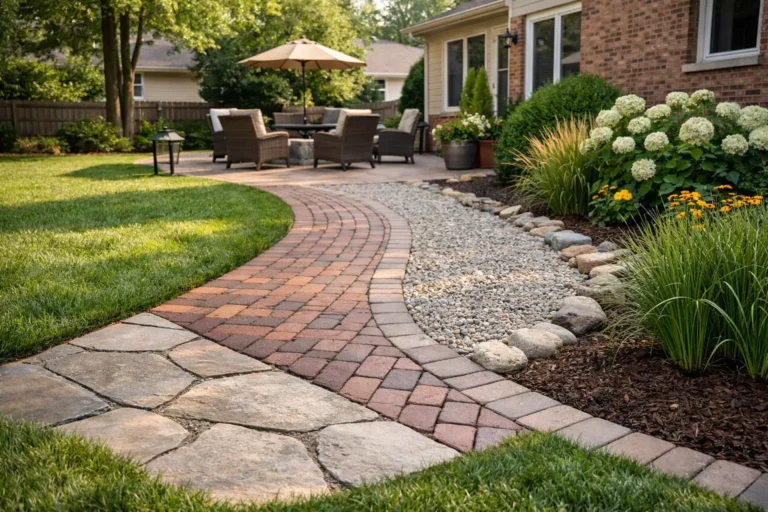
The shortest route is not always the best route. A straight walkway works well when it lines up naturally with an entry or patio opening. A gentle curve can make more sense when you need to move around a planting bed, mature tree, downspout outlet, or grade change. The goal is not to force a fancy shape. It is to create a route people will use instead of cutting across the lawn.
Pay attention to traffic patterns at different times of year. In summer, families may walk from the patio to the yard several times a day. In winter, you may need a clean path from the garage or rear entry that is easy to shovel and does not lead across a slick slope. For Chicagoland homeowners, year-round use matters.
Give Your Patio Walkway Enough Room
Walkway width changes how the whole space feels. A narrow path can work for a simple side-yard connection, but it may feel cramped between a house and fence or when two people pass each other.
For most homes, a 3-foot walkway is the practical minimum for one person. A 4-foot-wide path is more comfortable and gives the area a more finished look. If the walkway is a main route from a driveway or back door to a patio, going wider may be worth it, especially for families carrying groceries, rolling trash bins, or moving outdoor furniture.
The patio opening also matters. A broad patio with a tiny walkway attached to it can feel like a bottleneck. Try to match the scale of the path to the patio and the home. At a larger Naperville-area home, a wider entry path often looks more balanced than a narrow strip of pavers.
Plan Drainage Before the Pavers Go In
Water is one of the biggest reasons hardscape projects fail. You do not want water sitting near your foundation, washing out joints, or freezing on the walkway in January.
A patio walkway needs a slight slope so rainwater moves away from the house and toward an area that can handle it. That may be a lawn area, a properly designed drainage route, or a landscape bed that is graded to drain well. The right answer depends on the shape of the yard, soil conditions, downspout locations, and where neighboring properties sit.
In Illinois, this matters because clay-heavy soil is common in many western suburbs. Water can linger on top of compacted soil instead of soaking in quickly. If a walkway crosses an area that already gets muddy, the pavers alone may not solve the problem. The base, grading, and sometimes a drainage solution need to work together.
Here is what to look for before planning the layout:
- Downspouts that empty near the proposed walkway or patio
- Low spots where water stands after a hard rain
- Soil that stays soft or muddy for days
- A walkway route that would direct water toward the house
- Existing patios or steps that already hold water or ice
A contractor should look at the full water picture, not just the paver pattern. Sometimes moving a downspout outlet or correcting a small grade issue protects the new walkway and helps the rest of the yard work better too.
Choose Materials That Fit Your Home and Maintenance Goals
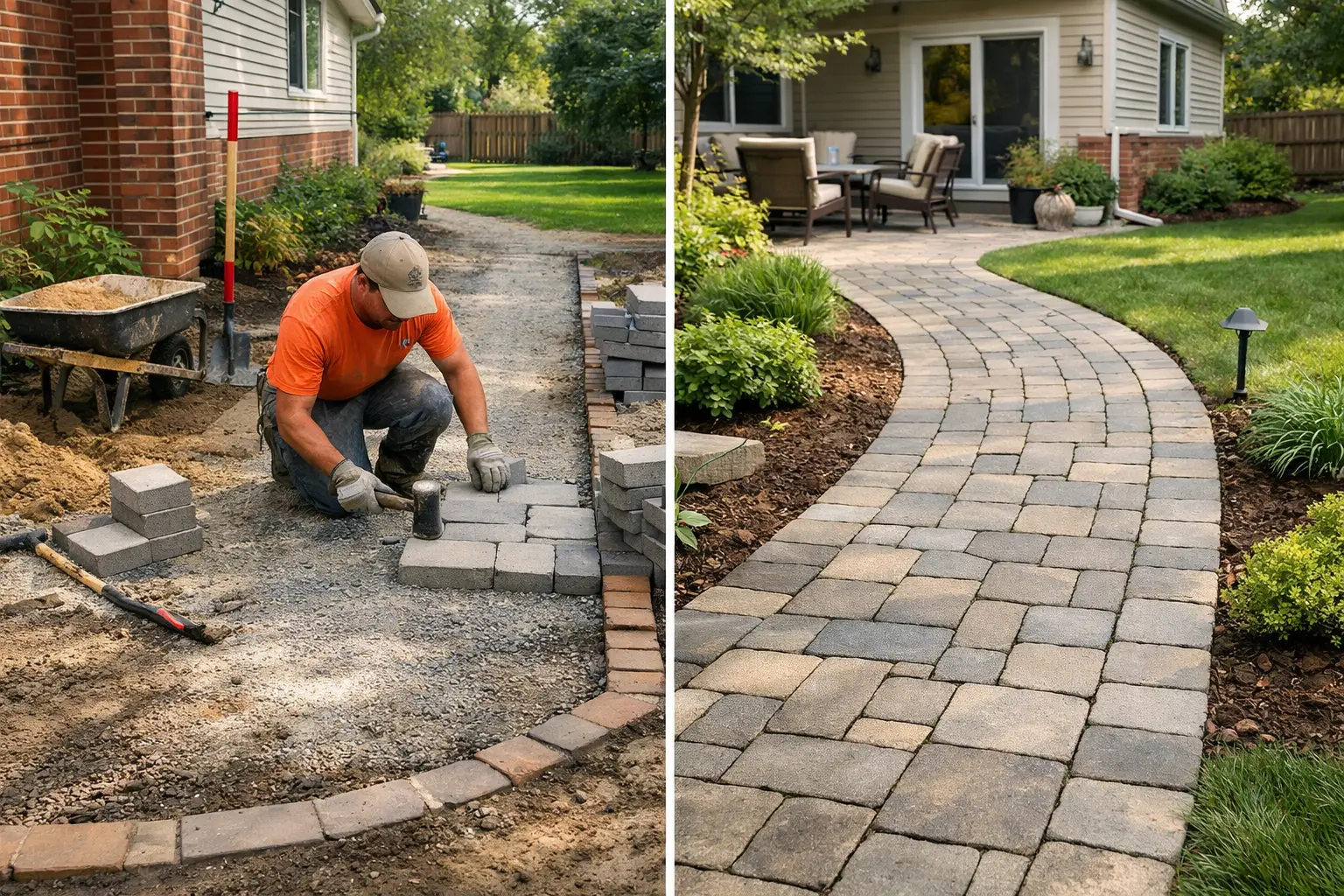
Pavers are a popular choice for patio walkways because they offer plenty of style options and can be repaired section by section if settling ever occurs. They work well with traditional brick homes, newer construction, and many of the mixed exterior styles found across the Chicago suburbs.
Natural stone can create a more casual, classic look, but every stone type behaves differently. Some surfaces are more uneven, and some may be less comfortable for wheeled carts or people who need a very stable walking surface. Concrete can be a good fit for certain designs, especially when you want a clean, simple path. It still needs proper base preparation and control joints so it can manage seasonal movement.
The best choice depends on the home, the patio style, and how the walkway will be used. A front entry path needs to be safe and easy to clear after snow. A garden path can have a softer, more relaxed feel. Around a patio, many homeowners prefer materials that coordinate with the patio itself so the space feels planned rather than pieced together over time.
Color is worth thinking about beyond curb appeal. Very light surfaces can show dirt and leaf stains. Very dark materials can show salt residue in winter. A blended mid-tone color often works well for busy Illinois properties because it hides normal outdoor wear without looking flat.
Build the Base for Illinois Weather
What is below the pavers matters as much as what you see on top. Our freeze-thaw cycles can cause problems when a walkway is installed over weak, poorly compacted ground. The surface may settle, shift, or develop dips that collect water.
A proper installation begins with excavation, a compacted stone base, and a level setting layer beneath the pavers. Edging is also important because it holds the walkway in place and helps prevent the outside pavers from spreading apart over time.
The exact base depth depends on soil, drainage, traffic, and the design. A simple footpath does not have the same needs as an area that may occasionally support a loaded wheelbarrow or equipment. This is one reason a site visit is helpful. What works in one Downers Grove backyard may not be right for a sloped lot in Hinsdale or a yard with heavy clay in Plainfield.
Think Through Steps, Transitions, and Safety
A walkway should not create a tripping hazard where it meets the patio, driveway, lawn, or doorway. Small elevation changes need to be handled intentionally. If there is a meaningful drop or rise, a properly sized step is safer than trying to stretch a steep slope into a short distance.
Avoid making a single step blend into the same color and pattern as the walkway if it will be hard to see at dusk. A contrasting border, a light, or a clear change in material can help people recognize the edge. This is especially useful near back patios, where guests may be unfamiliar with the yard.
If the route is used at night, plan lighting before installation is complete. Low-voltage path lights, step lights, or carefully placed landscape lighting can make the walkway safer without turning the yard into a runway. Good lighting also highlights the patio, planting beds, and architectural features around the home.
Leave Room for Landscaping Without Creating Extra Work
Walkways look best when they are framed by the rest of the landscape, but plants should not spill so far into the path that they make it feel narrow. Leave enough room for shrubs and perennials to reach their mature size. A plant that looks small at installation can crowd a walkway in a few seasons.
Keep the edges practical. If a walkway borders lawn, consider how you will mow along it. If it borders planting beds, use edging that helps keep mulch and soil off the pavers. For busy homeowners, a clean transition means less weekend cleanup and a property that stays neat longer.
You can also use the walkway project to solve nearby issues. Maybe the patio needs a small seating wall, the side yard needs better drainage, or the route would benefit from a gate, pergola, or lighting plan. Looking at the whole exterior at once often creates a better result than treating every feature as a separate project.
How to Plan a Patio Walkway With a Clear Budget
Start by deciding what matters most: safer access, a cleaner connection to the patio, improved drainage, better curb appeal, or all of the above. That helps you make smart choices when comparing widths, materials, borders, lighting, and landscaping.
It is usually worth investing in the parts you cannot easily see later, such as grading, base preparation, and drainage corrections. Decorative upgrades can often be adjusted to fit the plan. For example, a simple paver field with a tasteful border may provide the look you want while keeping more room in the budget for a properly built base and drainage work.
Ask for a clear scope of work so you understand the planned route, materials, excavation, base, edging, drainage considerations, and cleanup. A dependable contractor should be able to explain the plan in plain language and point out any site conditions that could affect the final design.
A patio walkway is a small part of the yard on paper, but it gets used constantly. When the route is comfortable, drainage is handled, and the materials fit the home, it becomes one of those improvements you appreciate every time you step outside. For homeowners across the Chicago suburbs, that is the kind of practical upgrade that makes the entire property easier to enjoy.