If you have typed gutter guard installation near me after cleaning wet leaves out of your gutters for the third time this year, you are not alone. Around the Chicago suburbs, gutters take a beating. Heavy spring rain, summer storms, falling maple seeds, and a long stretch of leaves in the fall can turn a simple gutter system into a headache fast.
That is usually when homeowners start asking the right question. Not just who installs gutter guards, but what kind actually makes sense for an Illinois home. Here’s what to look for, where many homeowners run into trouble, and why the right installation matters just as much as the product itself.
Why gutter guards matter on Illinois homes
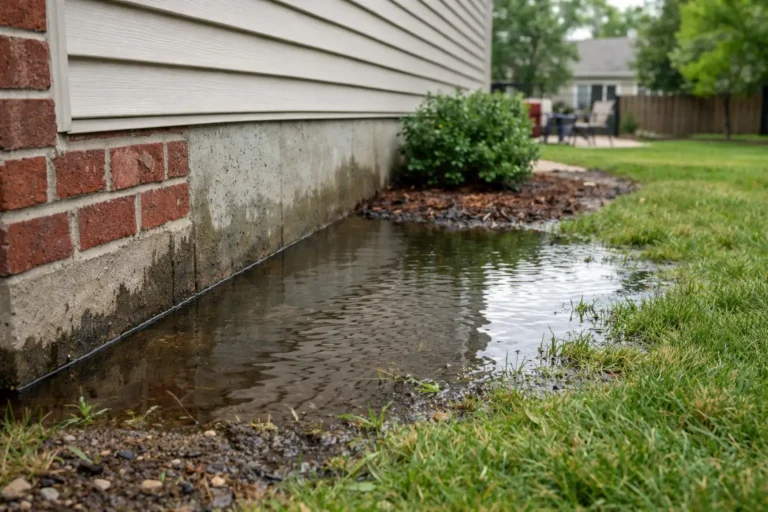
In Illinois, this matters because water does not just disappear once it spills over the side of a clogged gutter. It lands near your foundation, runs across walkways, washes out mulch, and can leave low spots in your yard muddy for days. In winter, it can also contribute to ice buildup around roof edges and entry paths.
A lot of homeowners first think about gutter guards as a way to avoid cleaning. That is part of it, but the bigger reason is protection. A working gutter system helps move water away from your house. When gutters clog, that whole system starts failing.
You do not want water sitting near your foundation. You also do not want it pouring over the front gutter and staining siding, soaking landscape beds, or dripping right where people walk. A good gutter guard helps your gutter system keep doing its job with less maintenance in between cleanings.
What to expect from gutter guard installation near me
When people search for gutter guard installation near me, they usually want a quick fix. Sometimes that is possible. But a good contractor should first look at the full gutter system, not just the top edge where the guard goes.
That means checking whether the gutters are pitched correctly, whether downspouts are carrying water where they should, and whether there are existing clogs, loose sections, or areas that overflow because of roof valleys. If those issues are ignored, adding guards can cover up a problem instead of solving it.
This is where many homeowners run into trouble. They assume any guard will fix every gutter issue. It will not. If your gutters are sagging or the downspouts are undersized, a guard alone will not make water flow better.
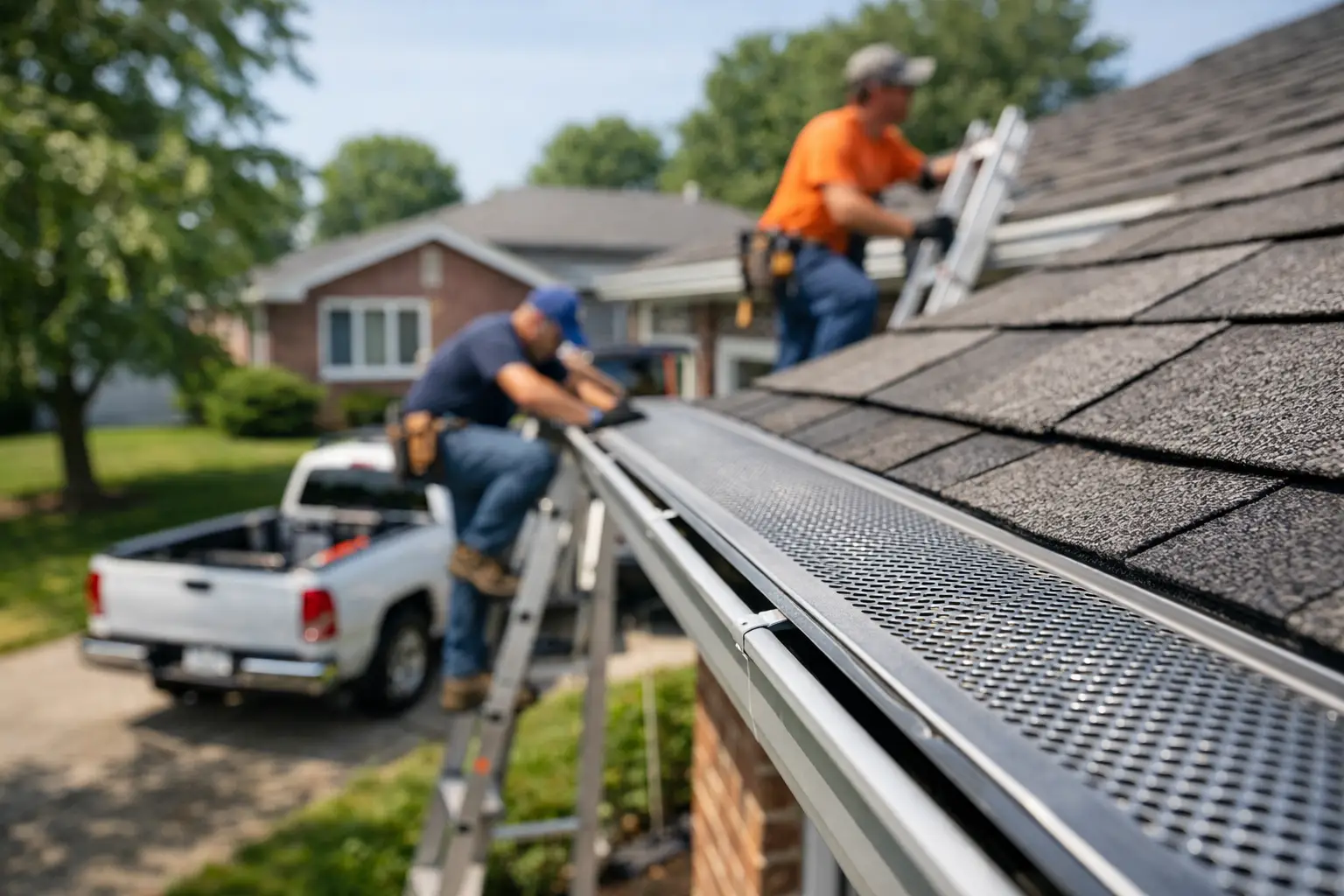
A proper installation usually starts with cleaning out the existing debris, inspecting the gutters and fasteners, making any needed adjustments, and then fitting the guard so it works with the roofline and gutter shape. The goal is simple – keep the larger debris out while still letting water enter and move through the system.
Not all gutter guards work the same
There is no one perfect gutter guard for every house. It depends on the roof, tree cover, gutter style, and how much debris your property gets through the year.
Some guards are made with a metal mesh that filters out leaves, seed pods, and small debris while letting rainwater pass through. Others use a screen design with larger openings. Surface-tension styles are built to guide water around a curved edge and into the gutter while debris falls off the front.
Each type has trade-offs. Fine mesh can do a better job with small debris, but if it is installed poorly or paired with the wrong roof setup, it can struggle during heavy rain. Larger screen systems may handle water flow well but allow more small debris through. Surface-tension systems can work nicely on some homes, but they need to be matched carefully to roof conditions.
That is why local experience matters. A product that sounds great in a brochure may not be the best fit for a tree-heavy lot in Downers Grove or a steep-roof home in Naperville with fast water runoff during storms.
The biggest installation mistakes to avoid
Most gutter guard complaints come back to one of two things – the wrong product or poor installation.
One common mistake is installing guards over gutters that were already failing. If the gutter pitch is off, water may still sit in sections or spill over during a storm. Another issue is forcing a guard into place without considering the roof edge, shingles, or gutter size. That can create gaps where debris sneaks in or cause water to overshoot the gutter entirely.
You also want to be careful with companies that treat this like a one-size-fits-all add-on. A ranch home with light tree cover is different from a two-story home under mature oaks. The right recommendation should match the property, not just the product sitting on the truck.
Clean workmanship matters too. Homeowners notice when crews leave metal scraps, bend drip edges, or damage existing gutters during installation. A cleaner-looking property and a system that works together should both be part of the job.
Signs your home is a good candidate
Most homes in Chicagoland can benefit from gutter guards, but they are especially helpful if you already deal with repeated clogs or hard-to-reach gutters.
You may be a strong candidate if your property has mature trees, second-story gutter lines, frequent overflow during storms, or landscape beds getting washed out by runoff. They also make sense for busy families who do not want to spend weekends dragging out a ladder every spring and fall.
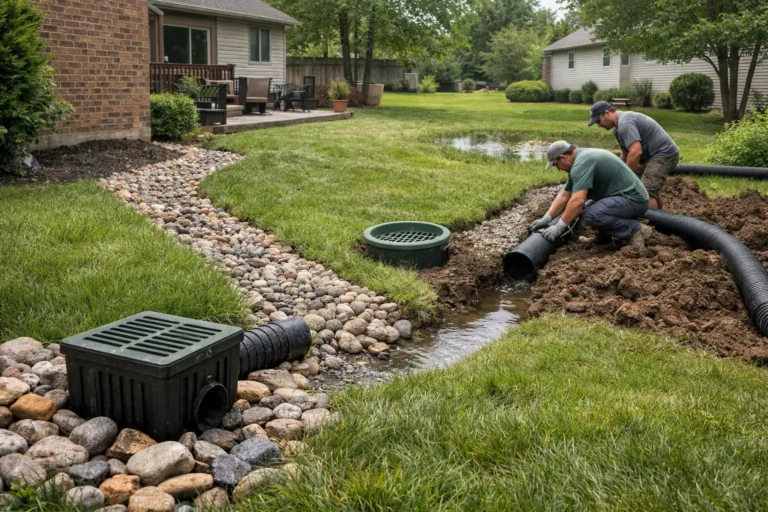
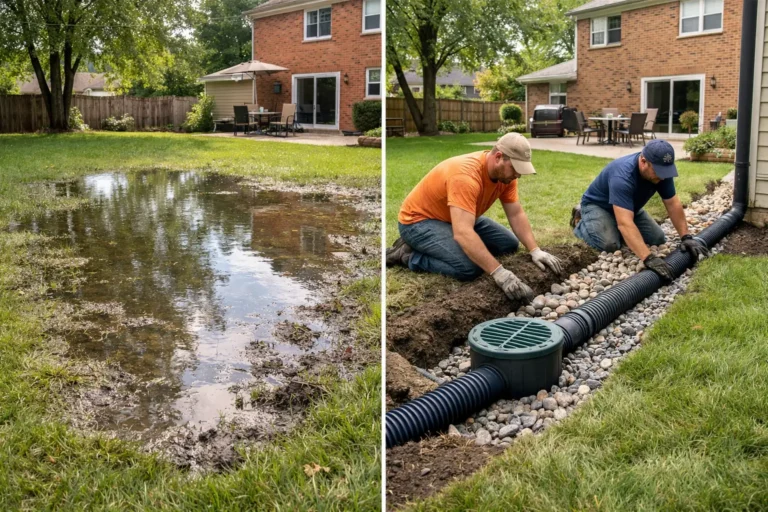
If your main issue is not debris but water backing up because of grading or poor drainage in the yard, gutter guards may only be part of the answer. A good contractor should be honest about that. Sometimes the real problem continues after the gutter line, where downspouts discharge too close to the house or low spots hold water.
A good landscape should look nice, but it also needs to work. Gutters, downspouts, drainage, and grading all affect each other.
How to choose the right local installer
When comparing options for gutter guard installation near me, do not just ask what product they use. Ask what they check before installing it.
A solid local contractor should be able to explain how the guard works, what kind of debris it handles best, and where it may have limitations. They should also look at your roofline, gutter condition, and water flow patterns around the property.
For Chicagoland homeowners, local knowledge really helps. Freeze-thaw cycles, wet leaves, spring storms, and heavy fall debris create a different set of demands than warmer parts of the country. You want someone who understands how Illinois homes behave through all four seasons.
It is also worth paying attention to communication. Do they show up for the estimate? Do they explain things clearly? Do they point out related issues like splash areas near the foundation or clogged downspout extensions? Those details usually tell you a lot about how the project will go.
What happens after installation
Gutter guards can cut down on cleaning, but they do not make your gutters maintenance-free. That is a promise homeowners should be cautious about.
You may still need occasional inspections, especially after major storms or during the fall if your home sits under heavy tree cover. Small debris can collect on top of some systems, and downspouts still need to be flowing properly. The good news is that maintenance is usually easier and less frequent when the right guard is installed correctly.
This is also where working with a company that handles more than one exterior service can help. If your gutter issue is tied to drainage near the foundation, standing water in the yard, or erosion in the beds, it helps to have someone who can look at the full picture instead of treating the gutter line like a separate problem.
A smart upgrade that protects more than gutters
For many Illinois homeowners, gutter guards are not really about the gutters. They are about protecting siding, landscape beds, walkways, and the foundation while cutting down on one more recurring chore.
That is why the best projects start with a simple conversation about what your home is dealing with. Maybe it is overflowing gutters every fall. Maybe it is muddy mulch beds near the front porch. Maybe it is ice and dripping near the garage entry once winter hits. The right solution should fit the house, not just the search term.
If you are looking for gutter guard installation near me in the Chicago suburbs, focus on a contractor who looks at water flow, debris load, gutter condition, and the property as a whole. That is usually where better results start.
A well-installed gutter guard will not solve every exterior problem, but it can take one messy, frustrating task off your plate and help your home handle Illinois weather a whole lot better.