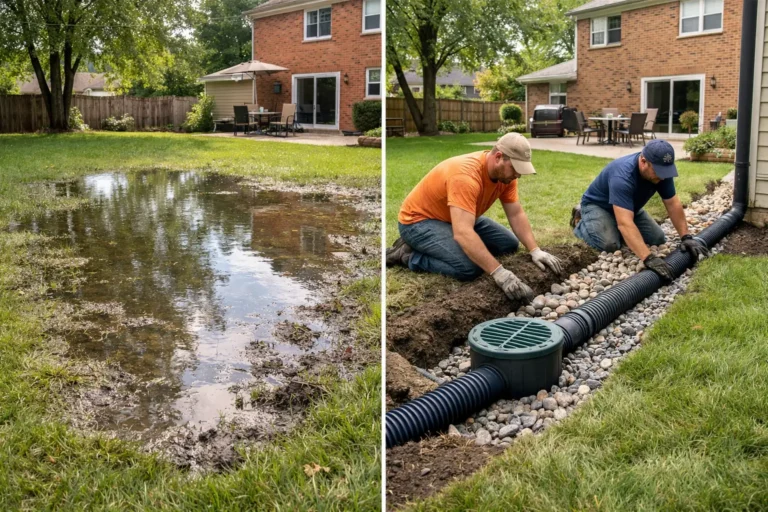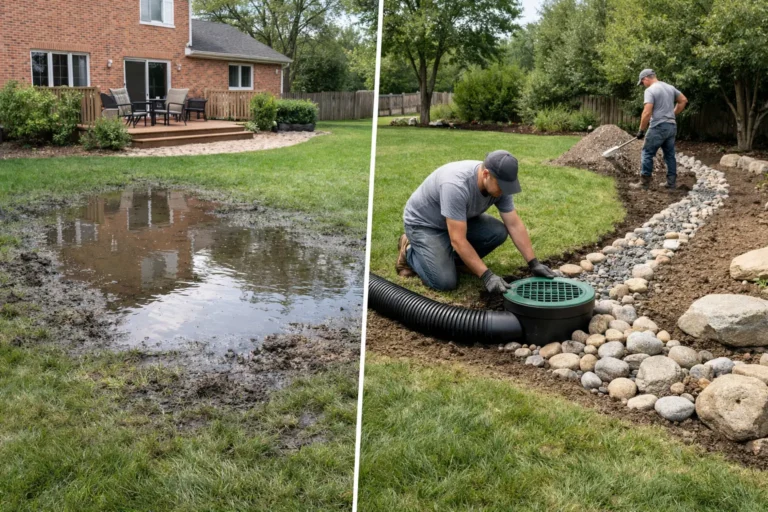
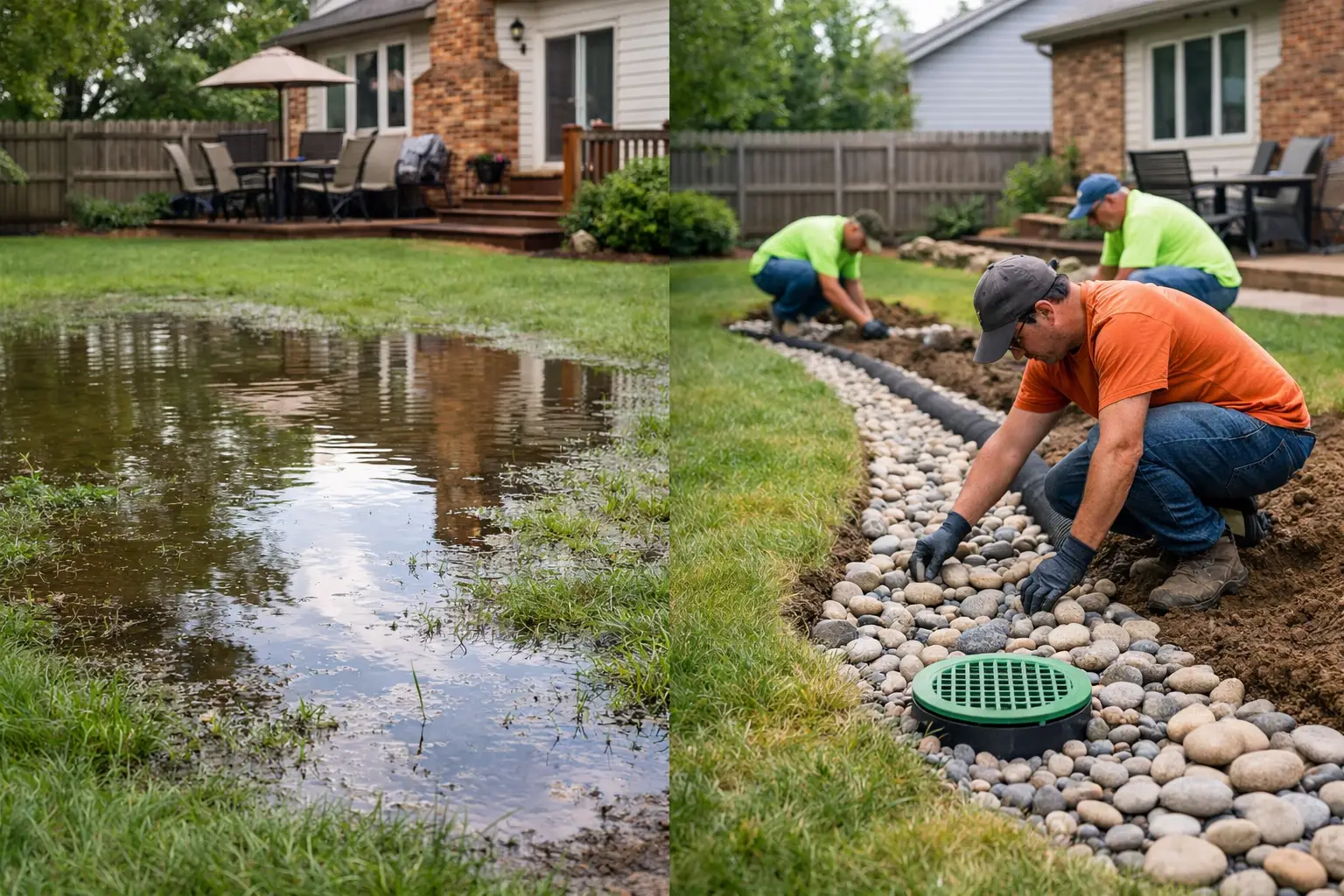
A backyard can look fine from the patio door, then turn into a muddy mess the minute you step on it. If you are dealing with puddles that hang around for days, soft spots near the house, or grass that never seems to recover, you are probably searching for real standing water in yard solutions, not another temporary fix.
In the Chicago suburbs, this problem shows up all the time. Heavy spring rains, flat lots, clay-heavy soil, melting snow, and older grading around Illinois homes can all work against you. The frustrating part is that water usually does not collect for just one reason. That is why the right fix starts with understanding what is actually causing it.
Why standing water happens in Illinois yards
Here’s what to look for first. If water pools in the same spot after every storm, there is usually a drainage or grading issue. If the whole lawn feels soggy, the soil may be compacted and not letting water soak in fast enough. If the worst area is near your house, downspouts, patio, or walkway, runoff may be dumping more water there than the yard can handle.
In Illinois, this matters because many properties have dense clay soil. Clay holds water longer than looser soil, so even a moderate rain can leave puddles behind. Add in freeze-thaw cycles, settled ground, and years of landscaping changes, and the yard may no longer slope the way it should.
This is where many homeowners run into trouble. They see standing water and think the answer is always a drain. Sometimes it is. Sometimes the bigger issue is that the yard is pitched wrong, gutters are pushing water to the wrong place, or a low area was created over time.
The best standing water in yard solutions depend on the cause
A good drainage plan is not one-size-fits-all. A fix that works in one backyard can fail in another if the water source is different. The goal is simple – move water away from the house, keep it from sitting on the lawn, and protect the parts of the property you actually use.
Regrading the yard
If your lawn slopes toward the home or has a bowl-shaped low spot, regrading is often the first thing to consider. This means reshaping the surface so water flows away instead of settling in place.
For many Chicagoland homeowners, this is one of the most effective long-term fixes because it deals with the root problem. The trade-off is that grading can affect nearby landscaping, edging, or sod, so it needs to be planned carefully. A good landscape should look nice, but it also needs to work.
French drains and underground drainage
A French drain is a gravel-filled trench with a pipe that collects and redirects water underground. This can work well when water consistently gathers in one area or moves across the yard in a predictable path.
These systems are useful, but only when they are installed with the right slope and a real discharge point. If a drain has nowhere to send the water, it will not solve much. That is why layout matters as much as the pipe itself.
Catch basins and channel drains
When water builds up on hard surfaces like patios, paver walkways, or driveways, surface drains may be the better option. A catch basin collects runoff from a low point, while a channel drain captures water before it spreads across a larger area.
This is often the right call when puddles create slippery walkways or collect near an entry path. It is not just about the lawn at that point. It is about safety and protecting the hardscape too.
Downspout extensions and gutter improvements
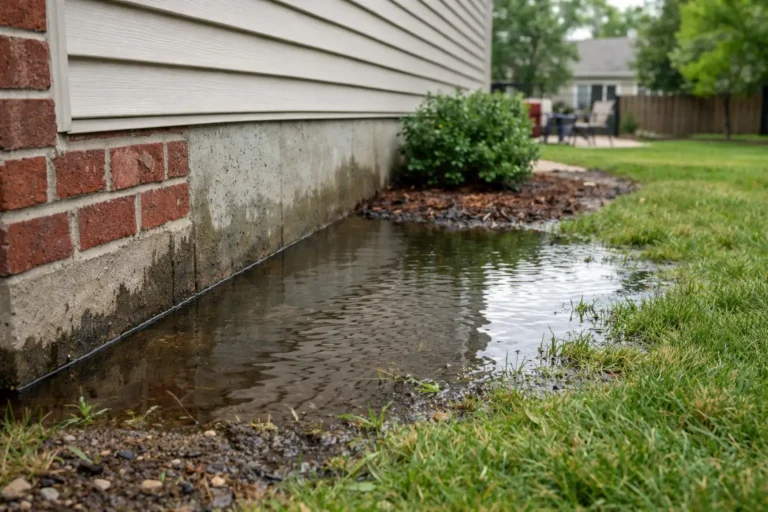
Sometimes the yard is not the original problem. Roof runoff is. If downspouts empty right next to the foundation or into a planting bed that cannot handle the volume, water will keep pooling nearby.
You do not want water sitting near your foundation. Extending downspouts, tying them into underground drain lines, or improving gutter performance can make a major difference. It is a simple idea, but it gets overlooked all the time.
Dry creek beds and drainage swales
For some yards, a more natural-looking solution makes sense. A drainage swale is a shallow, sloped channel that helps guide water across the property. A dry creek bed does a similar job but uses stone to make the drainage path look intentional and attractive.
These can be great options when homeowners want drainage help without making the yard look overly engineered. They need enough slope to function well, though, so they are not just decorative.
Soil improvement and aeration
If your yard is mostly flat and the water issue is spread out rather than concentrated in one spot, compacted soil may be part of the problem. Core aeration can help loosen the soil and improve how water moves into the ground.
This works best when compaction is mild to moderate. It is not a cure for major grading problems, but it can absolutely help lawns that stay soggy because the surface is too tight. In many Illinois lawns, aeration is part of the bigger solution, not the entire solution.
Signs you may need more than a quick fix
A puddle after a hard storm is not always a red flag. But if water sits for more than a day or two, grass starts dying, mosquitoes become a problem, or mulch keeps washing out, the yard is telling you something.
Watch for water near the foundation, soft areas around patios, erosion along fence lines, and sections of lawn that stay muddy long after the rest of the property dries out. These are signs that the problem is affecting both appearance and function.
In the western suburbs and across Chicagoland, we also see drainage issues show up after new construction, patio installation, or years of small landscaping changes. One project by itself may seem harmless, but over time, those changes can alter how water moves through the yard.
What not to do with standing water in your yard
The biggest mistake is treating the symptom and ignoring the cause. Filling a low spot with topsoil might help for a while, but if runoff keeps heading there, the issue usually comes back. The same goes for adding seed every spring without fixing why the lawn stays wet.
Another mistake is choosing a drainage product before evaluating the property. Homeowners often ask for a French drain because they have heard the term before. But a French drain is a tool, not a diagnosis. If the yard really needs regrading or downspout rerouting, installing the wrong system can waste time and money.
It is also worth being careful with heavy DIY trenching near utilities, foundations, and hardscaping. Drainage work looks simple until slope, water volume, and soil conditions start working against you.
How to figure out which solution fits your property
Start by paying attention after a storm. Notice where the water begins, where it travels, and where it stops. See whether the problem is isolated to one corner, tied to roof runoff, or spread across a large part of the lawn.
Then think about how you use the space. A soggy area in a far back corner may be frustrating, but standing water by the foundation, front walk, patio, or play area usually deserves faster attention. Those spots affect home protection, safety, and everyday use.
This is also where local experience matters. Illinois yards bring a specific mix of clay soil, spring downpours, snowmelt, and suburban lot layouts. The right fix should match those conditions, not just look good on paper.
When to call a pro
If water is getting close to your house, killing sections of lawn, or making outdoor spaces hard to use, it is time to get a second set of eyes on it. The best drainage solutions come from looking at the whole property – roof runoff, grading, low spots, soil condition, and how the space is used.
A contractor who handles both drainage and landscaping can usually help more than someone looking at only one piece of the puzzle. That matters because the goal is not just to move water. It is to leave you with a yard that drains better, looks cleaner, and takes less effort to deal with.
For many homeowners in Naperville, Downers Grove, and nearby Chicago suburbs, the right answer ends up being a combination of solutions rather than one big dramatic fix. That might mean adjusting grade near the home, extending downspouts, and improving drainage in the lawn at the same time.
If your yard stays wet long after the rain is gone, do not assume you have to live with it. A wet yard is annoying, but it can also point to bigger issues if it keeps getting ignored. The good news is that most standing water problems can be improved with the right plan, and the best first step is simply figuring out where the water is coming from and where it should go instead.