If your backyard stays soggy days after a rain, or you keep stepping into the same muddy patch near the downspout, you are not dealing with a small annoyance. You are dealing with a drainage problem that usually gets worse over time. The right yard drainage solutions can protect your foundation, save your lawn, and make your outdoor space usable again.
Around the Chicago suburbs, this comes up all the time. We get heavy spring rain, summer storms, and freeze-thaw cycles that can shift soil and change how water moves across a property. A yard that looked fine a few years ago can suddenly start holding water in all the wrong places.
Why drainage problems happen in Illinois yards
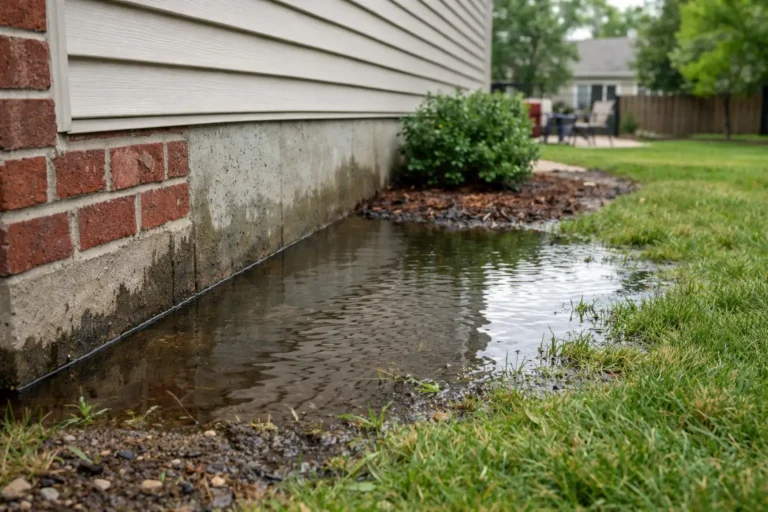
Most homeowners first notice the symptoms, not the cause. You see puddles that do not dry out, mulch washing away, soggy grass, or water creeping toward the house. Sometimes the problem shows up as a cracked walkway, a sinking patio edge, or basement moisture after a hard rain.
In Illinois, this matters because our clay-heavy soil does not always drain well on its own. Clay tends to hold water instead of letting it move down through the ground quickly. Add in flat lots, newer subdivisions, short downspout extensions, or a yard that was graded poorly years ago, and water starts collecting where you do not want it.
This is where many homeowners run into trouble. They try one quick fix, like adding a little topsoil or moving a splash block, but the real issue is often bigger than one low spot. Water follows the easiest path, and if the property is not directing it away correctly, it keeps coming back.
The best yard drainage solutions depend on the problem
There is no one-size-fits-all answer. A good drainage plan starts with watching how water behaves on your property. Where is it starting? Where is it collecting? How close is it getting to the house, garage, patio, or sidewalk?
Some yards need a simple correction. Others need a combination of yard drainage solutions working together. That is usually the difference between a short-term patch and a fix that actually holds up.
Regrading the yard
If the slope of the yard is wrong, water will move toward the house or settle in low areas. Regrading means reshaping the soil so water flows away from structures and toward a safe discharge area.
This is often one of the most important fixes, especially near the foundation. You do not want water sitting near your foundation. Even a small grading issue can create long-term trouble if runoff keeps heading back toward the home.
That said, regrading is not always a full-yard project. Sometimes the issue is just one side yard, one swale, or the area around a patio. A good contractor should look at the whole picture and only change what needs to be changed.
Downspout drainage extensions
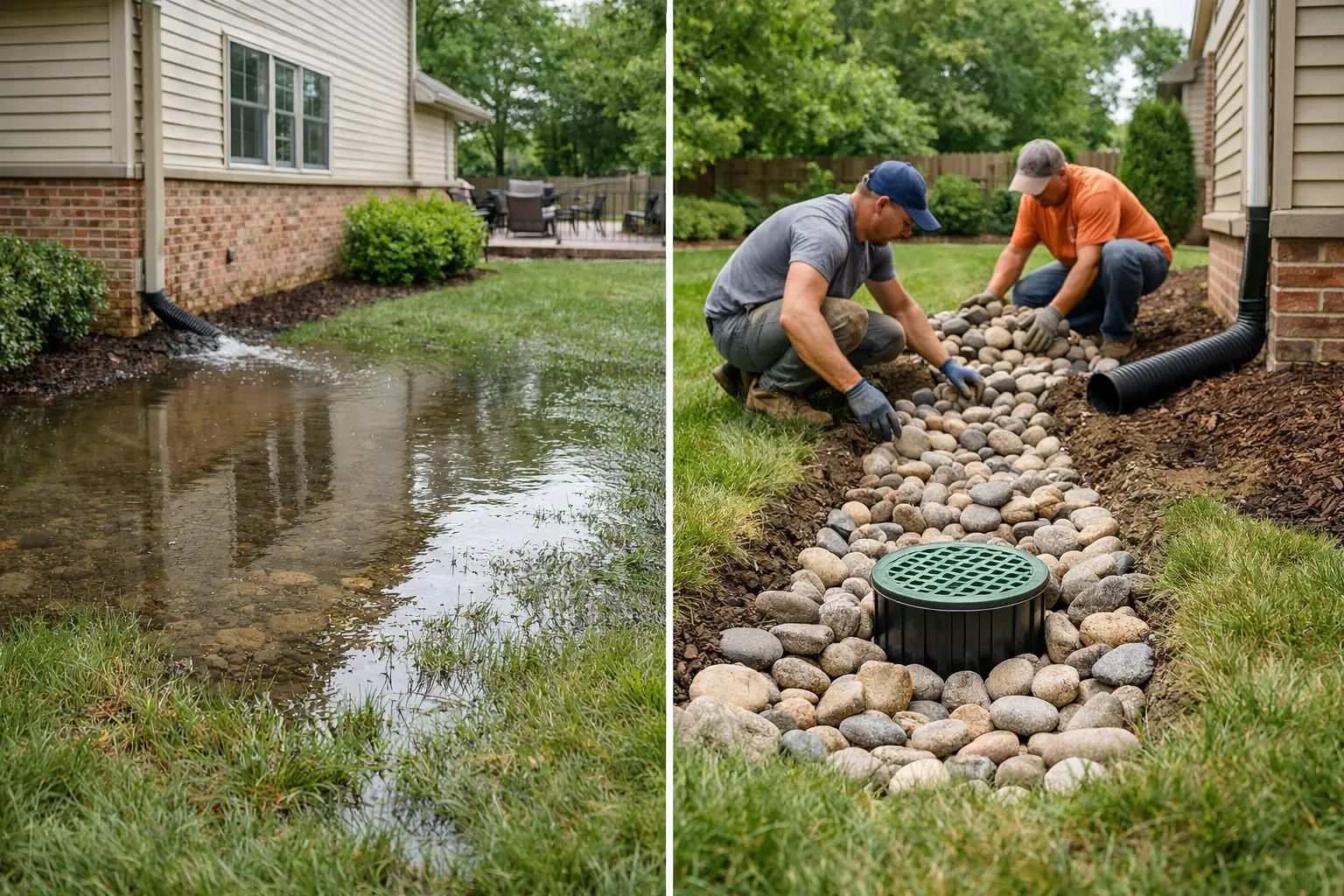
A lot of drainage trouble starts at the roofline. Gutters collect a huge amount of water, and if the downspouts dump that water too close to the house, it can soak the same area over and over.
Extending downspouts is one of the most practical yard drainage solutions because it deals with water before it becomes a yard-wide problem. The water can be redirected farther out into the yard, into a buried drain line, or toward an area designed to handle runoff.
This sounds simple, and sometimes it is. But placement matters. If a downspout extension sends water right into a neighboring low spot or onto a walkway that freezes in winter, you have just traded one problem for another.
French drains and buried drain lines
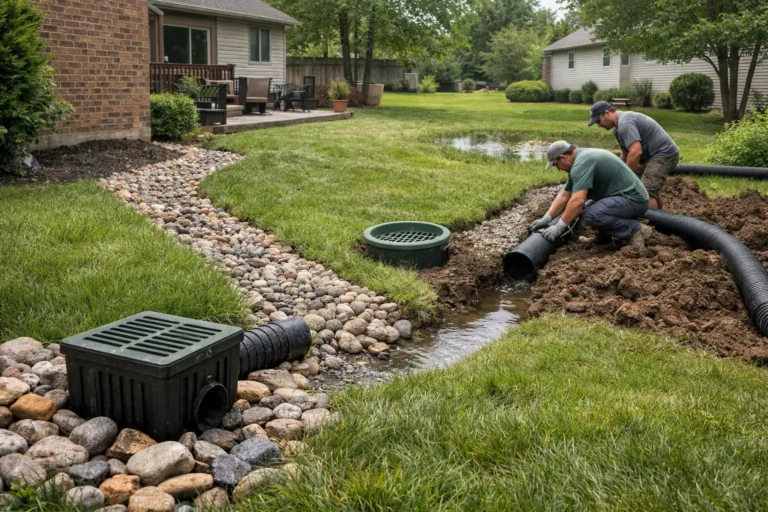
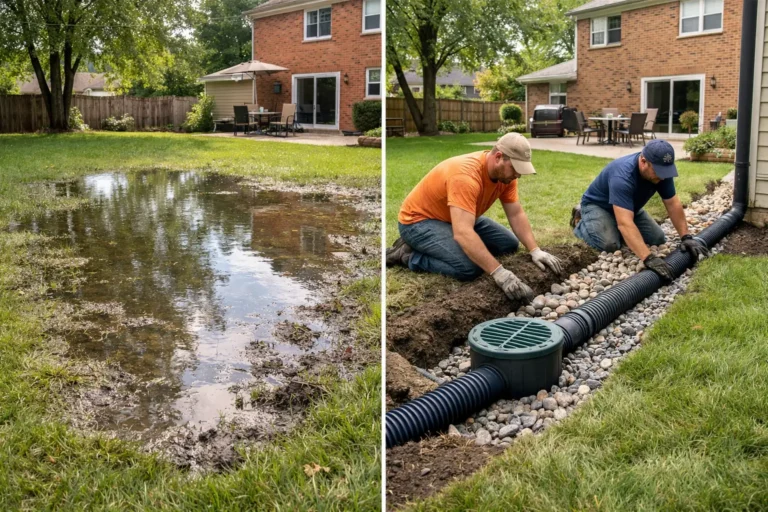
When water collects below the surface or keeps saturating a section of lawn, a French drain can help. In plain English, this is a gravel-filled trench with a perforated pipe that collects and moves water away.
These systems are useful in side yards, low spots, and areas where water keeps pooling after storms. They can also be paired with surface drains to catch runoff faster.
The trade-off is that they need to be designed correctly. Depth, slope, outlet location, and surrounding soil all matter. If the pipe does not have a place to discharge properly, the system will not do much good.
Catch basins and surface drains
If you have water rushing across a driveway edge, patio, or low lawn area, a surface drain may be the better option. These drains collect water from the top and move it into a buried pipe system.
They are especially helpful where water shows up fast during heavy rain. For example, if a paver patio sits lower than the surrounding yard, a catch basin may help keep water from sitting along the edge and working its way under the hardscape.
Again, this works best when it is tied into an overall drainage plan. A drain that catches water still needs somewhere safe to send it.
Dry creek beds and landscape drainage features
Some drainage fixes can solve a problem and improve the look of the yard at the same time. A dry creek bed is a shallow, rock-lined channel that helps guide water through the landscape in a controlled way.
This can be a smart choice if you have a natural drainage path and want something that looks intentional instead of purely functional. A good landscape should look nice, but it also needs to work. In the right yard, this kind of feature can reduce erosion and add character at the same time.
It is not the right answer for every property, though. If water is standing against the house or saturating a flat area with nowhere to go, decorative rock alone will not fix the issue.
Signs you need professional help with yard drainage solutions
A few wet spots after a storm are normal. Ongoing drainage problems are not. Here is what to look for if you are trying to decide whether the issue is serious.
If water stands for more than a day or two, if grass keeps dying in the same places, if your mulch or soil washes out, or if water is getting close to the foundation, it is time to take a closer look. The same goes for slippery walkways, mosquito-heavy puddles, or a yard your kids and pets cannot use because it stays muddy.
For many Chicagoland homeowners, the biggest red flag is repeat trouble. If you keep fixing the symptoms every season, there is usually an underlying drainage pattern that needs to be corrected.
How to choose the right fix for your yard
Start with the cause, not the product. That is the best advice I can give a homeowner during a walkthrough. Before you install a drain or move soil around, make sure you understand where the water comes from and where it needs to go.
This is also why the cheapest fix is not always the smartest one. A small surface change can help for a while, but if roof runoff, poor grading, and compacted soil are all working together, you need a plan that accounts for all of it.
In many western suburb yards, the right answer is a combination: improve the slope near the home, extend downspouts, and add a drain in the area that stays wet longest. That kind of layered approach tends to work better than relying on one product to solve everything.
Yard drainage solutions should protect more than grass
Most people call because they are tired of mud, but drainage is really about protecting the whole property. Water can damage turf, weaken hardscape edges, stain concrete, wear out mulch beds, and create icy hazards in winter.
It can also keep you from enjoying your yard. A patio is not much use if the surrounding area stays soggy. A lawn does not add much curb appeal if it has bare, wet patches all season. Solving drainage often improves the function and appearance of the yard at the same time.
That is one reason homeowners in places like Naperville, Downers Grove, and nearby suburbs often deal with drainage as part of a bigger outdoor plan. Once the water issue is fixed, it becomes much easier to install landscaping, protect a walkway, or keep the yard looking clean without constant rework.
What a good drainage plan looks like
A good drainage plan is not flashy. It simply makes the property work better after every rain. Water moves away from the house, problem areas dry faster, walkways stay safer, and the lawn has a better chance to stay healthy.
It should also fit the yard you actually have. Some homes need a simple runoff fix. Others need grading, drainage pipe, and landscape improvements that all support each other. The best results usually come from looking at the full exterior, not treating drainage like an isolated issue.
If your yard keeps holding water, do not wait for the next heavy storm to tell you the same thing again. Walk the property, pay attention to the patterns, and get a real plan in place. A dry, usable yard is not just nicer to look at. It makes your home easier to maintain and a lot more enjoyable to live with.