A gutter packed with maple leaves may look like a small chore, but the water has to go somewhere. On a Chicago-area home, it often spills over near the foundation, floods a planting bed, stains siding, or freezes on a walkway once temperatures drop. The right gutter guard options can cut down on clogs and ladder time, but the best choice depends on your roof, trees, existing gutters, and how water moves around your property.
For many Chicagoland homeowners, gutter guards are not just about keeping out leaves. They are part of protecting the exterior of the home. A good system keeps water moving toward the downspouts, where it can be directed away from the foundation instead of creating another drainage problem.
Why gutter guards matter in the Chicago suburbs
Illinois weather puts gutters through a lot. Spring brings seed pods, small twigs, and heavy rain. Summer storms can fill a gutter quickly. Fall leaves are the obvious issue, especially around mature oaks and maples in Naperville, Downers Grove, and older western-suburb neighborhoods. Then winter adds snow, ice, and repeated freeze-thaw cycles.
When gutters clog, water can run behind the gutter or over the front edge. That can damage fascia boards, wash out mulch, and leave muddy spots below the roofline. More seriously, water sitting near the foundation can add to basement moisture or drainage trouble. You do not want water sitting near your foundation, no matter how nice the landscaping looks.
A gutter guard does not make a home completely maintenance-free. It does, however, keep larger debris out of the gutter channel and reduce how often the system needs attention. The key is choosing a guard that fits the conditions around your home instead of picking one based only on a picture or a low initial price.
The main gutter guard options
Most gutter guards fall into a few basic categories. They all work differently, and each has a place.
Basic screens
Screen guards sit over the opening of the gutter. They are usually made from plastic, vinyl, or metal, with larger openings that allow water through while blocking bigger leaves and sticks.
These can be a reasonable option for homes with mostly large leaves and light debris. The downside is that small seeds, pine needles, and roof grit can still get through. Leaves can also collect on top of a flat screen and need to be brushed away after a storm.
For a home with only a few trees nearby, a quality metal screen may be enough. For homes under heavy tree cover, screens often need more upkeep than homeowners expect.
Perforated metal guards
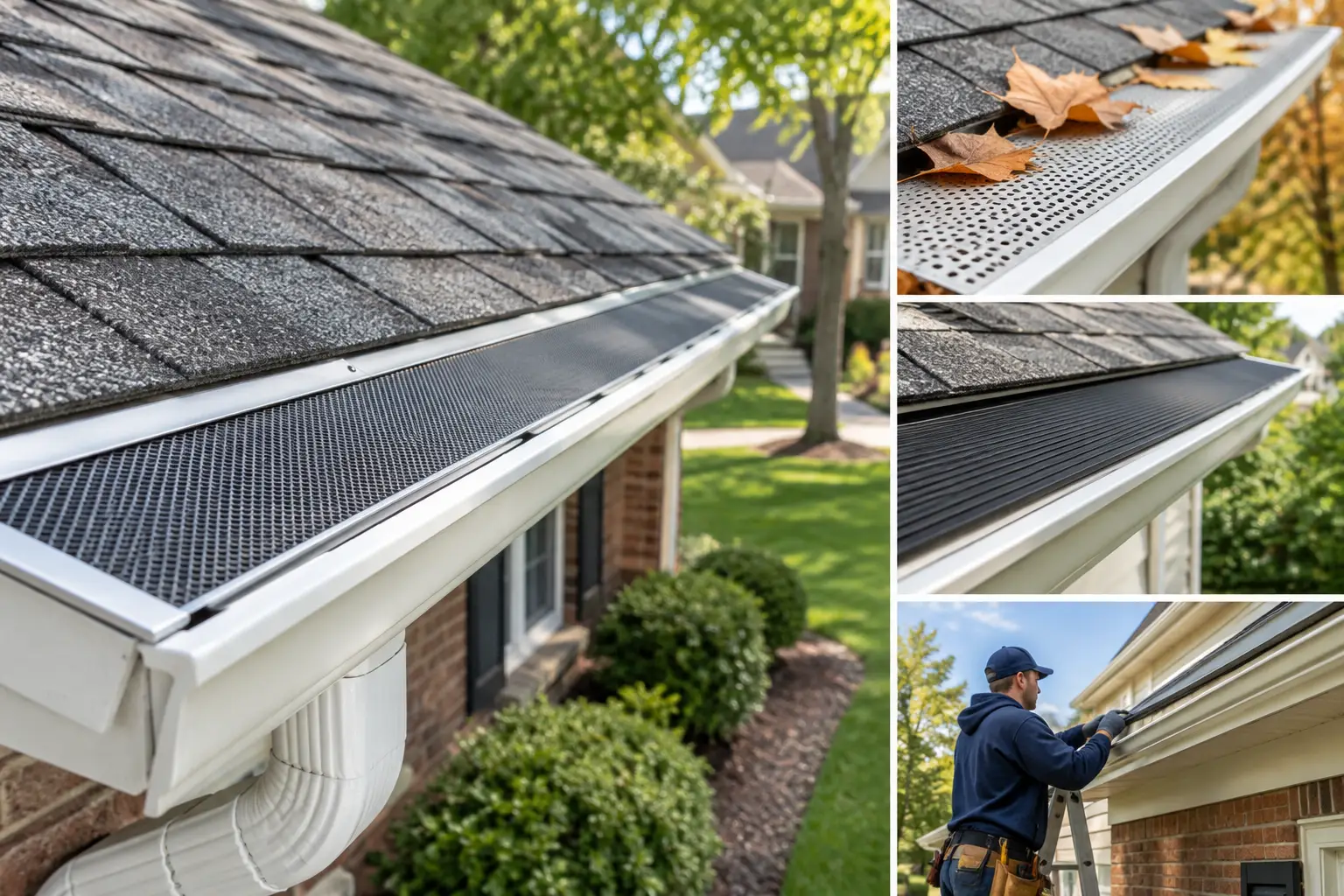
Perforated guards are solid metal panels with small holes punched across the surface. They are generally stronger and more durable than basic screens, and their low-profile look can work well with many rooflines.
This style blocks larger debris while allowing rainwater into the gutter. It can be a good middle-ground choice for homeowners who want a sturdier cover without going to an ultra-fine mesh system. Still, very small debris can pass through, and debris may build up on top if the roof is surrounded by pine trees or heavily shedding trees.
The installation matters here. A guard that is not secured correctly can shift, bend, or create gaps where debris finds its way in.
Micro-mesh gutter guards
Micro-mesh guards use a very fine stainless steel or metal mesh. They are designed to keep out smaller debris, including shingle grit, maple seeds, and pine needles that can get past larger screens.
For many Illinois homes with mature trees, micro-mesh is one of the strongest gutter guard options. It provides good filtration without relying on a large opening. The best versions are supported by a sturdy frame so they do not sag under snow or debris.
There are trade-offs. Fine mesh can collect pollen, tiny debris, or wet leaf matter on the surface, especially where a roof valley dumps a heavy amount of water and debris in one spot. It may need an occasional rinse or professional cleaning. But compared with routinely cleaning clogged gutters, that is usually far less work.
Reverse-curve or surface-tension guards
Reverse-curve guards use a shaped cover that guides water around a small opening and into the gutter. The idea is that leaves and debris continue over the edge while water follows the curve.
These systems can work well in the right setting, but they need to be fitted carefully to the roof and gutter. During a hard Chicagoland downpour, a poorly sized or poorly installed system may allow water to overshoot the opening. They also tend to be more visible than low-profile mesh guards, which can matter on a home where curb appeal is a priority.
This is not a one-size-fits-all system. Roof pitch, gutter size, and the amount of water coming off the roof all need to be considered before choosing this style.
Foam inserts and brush guards
Foam inserts and brush-style guards sit inside the gutter rather than covering it. They are often sold as an easy solution because they are simple to place in the gutter channel.
In practice, they are usually not the best long-term fit for Illinois homes. Debris can settle into or on top of the material, and moisture can stay trapped. Over time, the insert itself may become part of the clog. Brush guards can also collect leaves and twigs between the bristles.
They may serve as a short-term stopgap, but homeowners looking for dependable, lasting gutter protection should usually consider a well-installed metal screen, perforated guard, or micro-mesh system instead.
What to look at before choosing a system
The trees around your property are the first thing to consider. Large oak or maple leaves are different from pine needles, helicopter seeds, cottonwood fluff, and roof grit. A guard that handles large leaves may not stop the smaller material common in another yard.
Next, look at the roof itself. Steeper roofs move water faster, while roof valleys can send a concentrated rush of water into one small section of gutter. That area may need special attention, even if the rest of the house has no issues. A good installer looks at where the water actually lands, not just the total length of gutter.
Your existing gutters also matter. If they are pulling away from the fascia, rusting, undersized, or pitched incorrectly, adding guards alone will not fix the underlying problem. Water needs a clear path through the gutter and downspout. Before installing guards, it makes sense to make sure the gutter system is sound and that downspouts carry water far enough away from the home.
This is where many homeowners run into trouble: they solve the leaf issue but overlook where the water goes next. If a downspout empties beside the foundation or onto a sloped walkway, gutter guards can keep more water moving through a system that is still sending it to the wrong place. Gutter protection and yard drainage often need to work together.
Winter conditions deserve a realistic view
Gutter guards can reduce clogs, but they do not prevent ice dams. Ice dams are usually related to heat escaping through the roof, snow melt, refreezing, and cold roof edges. No guard can correct an attic insulation or ventilation issue.
That said, clean, properly flowing gutters are still helpful before winter. Standing water and wet debris can freeze in a gutter, add weight, and create blockages. A durable guard secured to a properly functioning gutter is better prepared for the season than an open gutter full of leaves.
Be cautious with any product that promises to eliminate all winter gutter problems. Illinois winters are too variable for that kind of promise. The goal is a system that sheds debris, handles rainfall, and gives water the best chance to move where it should.
Professional installation is about more than attaching a cover
Some guards simply clip on, while others are fastened to the gutter or tucked under the roof edge. That difference affects durability, appearance, and how well the guard handles wind and snow. It can also matter for your roof system if the installation is not done carefully.
A professional evaluation should include the roofline, gutter condition, trees, downspout locations, and obvious drainage concerns below. The crew should also clean out existing debris before installing the guards. Covering a gutter that is already packed with sediment does not solve anything.
At Revive Your Lawn, we look at gutter protection as part of the full exterior picture. If water is overflowing near a foundation, washing out a bed, or creating slick areas near an entry, the right answer may include guards along with downspout improvements or a drainage solution.
Choose the option that solves your actual problem
For a lightly wooded property, a durable screen or perforated metal guard may provide all the protection you need. For homes under heavy tree cover, or homes dealing with pine needles and small seed debris, a supported micro-mesh system is often worth a closer look. If your roof has steep sections or valleys that release heavy flows of water, installation design matters just as much as the guard style.
The best choice should make your weekends easier while helping protect the parts of your property that water can quietly damage. Start with a clear look at your gutters, your trees, and where each downspout sends water. That gives you a much better answer than choosing a gutter guard based on the box alone.