
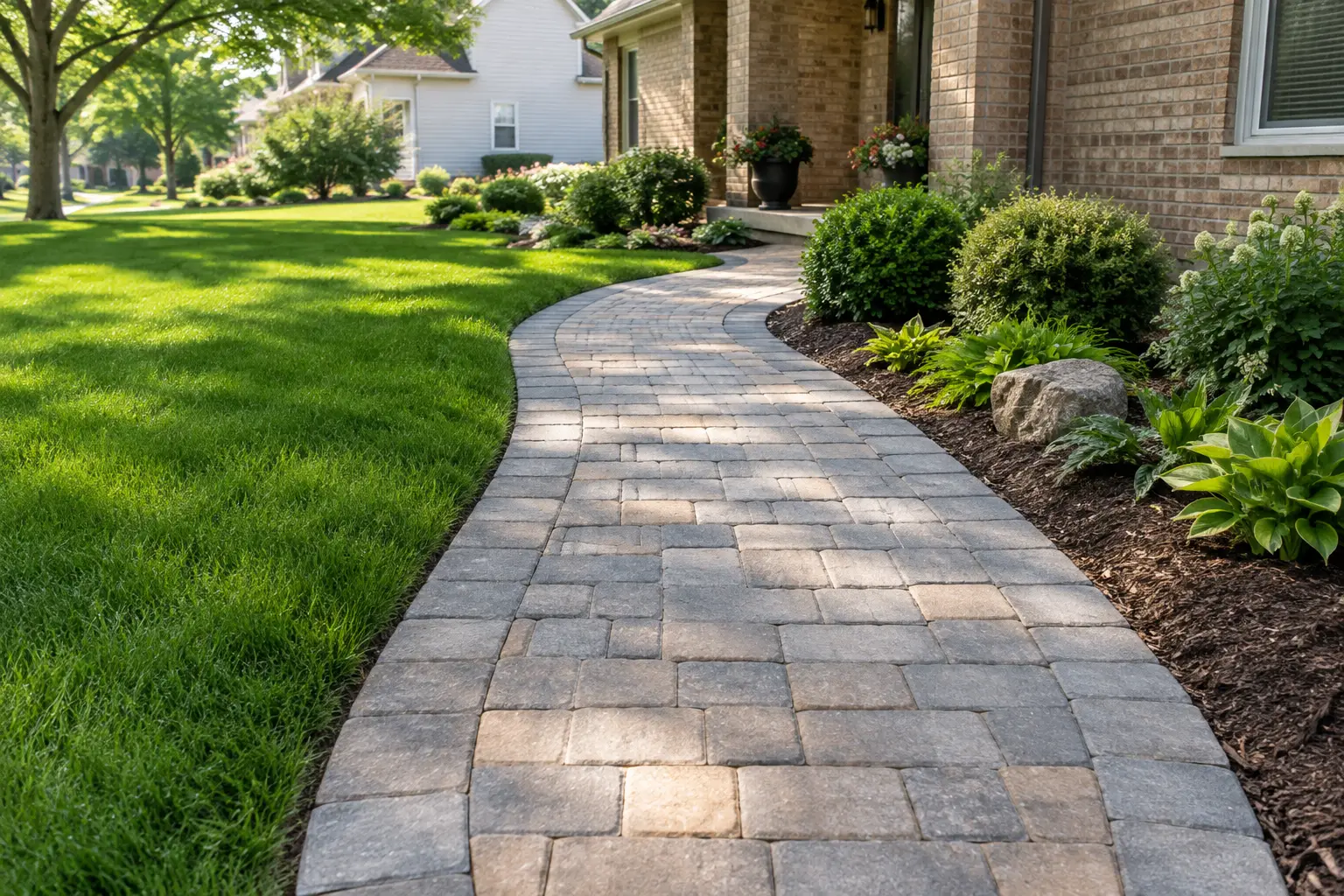
A paver walkway does more than get people from the driveway to the front door. It sets the tone for the whole property. When homeowners ask us how to design a paver walkway, we start with one simple question: What needs to work better in this yard? The answer might be a safer route, less mud by the garage, better curb appeal, or a path that fits a new front landscape.
In the Chicago suburbs, a good-looking walkway also has to handle real weather. Freeze-thaw cycles, spring rain, settling soil, snow shovels, and foot traffic can expose weak planning quickly. A good landscape should look nice, but it also needs to work.
Start With the Way People Actually Move
Before choosing paver colors or patterns, look at how people use the property. Where do family members, guests, delivery drivers, and pets naturally walk? If everyone cuts across the lawn from the driveway to the porch, that is often where the walkway belongs.
A straight path can look clean and formal, especially on a symmetrical front yard. A gentle curve can soften the look of a wider lawn, guide people around a planting bed, or make a long route feel more natural. The right choice depends on the home and the space. A curve should have a purpose, though. Too many tight turns can feel forced and make the path harder to walk or shovel.
Width matters more than many homeowners expect. A narrow walkway may save a little room, but it can feel cramped when two people pass each other. For a main front walk, a width around four feet often feels comfortable. Side-yard routes may work well at a smaller width, depending on how they are used. If the path connects the driveway, backyard patio, gate, or pool area, think about whether people will carry groceries, garbage bins, lawn equipment, or furniture along it.
Check Water Before You Design a Paver Walkway
This is where many homeowners run into trouble. A walkway can be beautifully installed and still become a problem if it sends water toward the house or sits in a low, soggy part of the yard.
In Illinois, this matters because heavy spring rain and winter thaw can leave water sitting where it should not. You do not want water collecting along the foundation, running across the walkway, or washing out the soil beside the pavers. The finished surface should slope gently away from the home so water has a clear direction to travel.
Pay attention to downspouts, too. A downspout that dumps water directly beside a new walkway can cause settling, ice buildup, and stained pavers. Sometimes the best walkway plan includes extending a downspout, reshaping a small area of grade, adding a drainage solution, or choosing a permeable paver approach. There is no one answer for every yard. The goal is to make the walkway and drainage plan work together.
If your front yard already has standing water, soft spots, or erosion near the driveway, solve those concerns before installing hardscape. Covering up a drainage issue rarely fixes it.
Choose Pavers That Fit the Home
Pavers come in a wide range of shapes, sizes, textures, and colors. The best choice is usually not the boldest one in the showroom. It is the one that fits the house, the neighborhood, and the amount of upkeep you are comfortable with.
For a traditional brick home, warm clay, charcoal, and blended earth tones often feel right. For a newer home with black trim, gray, natural stone, or clean rectangular pavers may create a sharper look. A paver walkway does not need to match the home exactly. It should complement it without competing with the front door, siding, or existing stonework.
Texture is practical as well as visual. A paver with some surface grip is helpful during wet weather and light snow. Very smooth materials can look elegant, but they may be less forgiving around an entry where shoes bring in rain, slush, and salt.
Consider how the walkway will connect to nearby features. If there is an existing paver patio, driveway border, retaining wall, or front steps, repeating one color or accent tone can make the property feel planned instead of pieced together. You do not need every hardscape surface to be identical. Coordinated is better than overly matched.
Plan the Pattern, Border, and Transitions
The laying pattern affects both the look and the strength of a walkway. Running bond, basketweave, and herringbone patterns each create a different feel. A simple running bond is clean and classic. Herringbone has more movement and can be a strong option in high-traffic areas. Larger-format pavers can give a walkway a modern look, but they need a well-prepared base to stay even over time.
Borders are one of the easiest ways to make a paver walkway look finished. A contrasting edge can frame the path, tie into the home’s trim color, and help define curves. It also gives the eye a clear stopping point between the hardscape and surrounding lawn or planting beds.
Think carefully about transitions at the porch, driveway, and lawn. A walkway should meet steps and landings at a safe, comfortable height. It should not leave a toe-catching lip at the driveway or an awkward gap at the front stoop. Small details at these connection points often make the difference between a walkway that looks installed and one that looks built for the property.
The Base Is What Keeps Pavers in Place
The pavers are the visible part of the project, but the base underneath does the heavy lifting. In Chicagoland, soil movement and winter weather can cause pavers to settle or shift when the ground below is not properly prepared.
A dependable installation starts with excavation, grading, compacted base material, bedding sand, solid edge restraints, and careful compaction. The exact depth and approach depend on soil conditions, the walkway location, nearby drainage, and whether the area will ever see vehicle traffic. A path beside a driveway may need different planning than a quiet garden walk.
Skipping base work is not a smart shortcut. It can lead to low spots, loose edges, puddles, and uneven pavers that become harder to shovel and less safe to walk on. Clean workmanship below the surface matters just as much as the finished color and pattern above it.
Leave Room for the Landscape Around It
A walkway is not meant to sit alone in a sea of mulch. The surrounding landscape should help it feel welcoming without crowding it. Low plantings near the edge can soften the pavers, while larger shrubs should stay far enough back that they do not spill into the walking area a few years from now.
For Naperville-area homes and other western suburb properties, choose plants that can handle Illinois seasons and give the path structure from spring through winter. Foundation plantings, ornamental grasses, evergreens, and flowering perennials can all play a role when they are spaced correctly. Good spacing also makes maintenance easier and keeps the walkway clear.
Lighting can add another practical layer. Low-voltage path lights, step lights, or soft uplighting near the entry can make the route easier to see after dark. The goal is not to light up the whole yard like a parking lot. It is to help guests find their way and make the front of the home feel cared for.
Design for Snow, Salt, and Everyday Maintenance
Downers Grove homeowners know that a walkway gets tested in winter. Keep the route wide enough to shovel comfortably and avoid unnecessary tight corners where snow piles up. Make sure the paver edge is secure so a snow shovel does not catch and loosen it.
Use de-icing products carefully. Some harsh products can be rough on certain materials and may affect nearby plants. Sand can help with traction, especially during icy stretches. For cleaning, regular sweeping and occasional rinsing go a long way. If joint sand begins to wash out or weeds appear between pavers, addressing it early is much easier than waiting for the walkway to loosen.
A well-designed paver walkway should make the property easier to use, not give you another weekend project. If you are planning a new front walk, side path, or connection to a patio, Revive Your Lawn can help you look at the full picture – layout, drainage, hardscape, landscaping, and lighting – before work begins. The best path is one that feels like it has always belonged there.


