
A lawn can look thin, tired, and full of weeds even when it gets regular mowing and fertilizer. Often, the real problem is under your feet. If you are searching for how to revive compacted lawn areas, the goal is not simply to add more grass seed. You need to open up the soil so air, water, and roots can move where they need to go.
In the Chicago suburbs, lawn compaction is common. Heavy clay soil, spring rain, kids and pets, mowing equipment, and years of foot traffic can press the ground tight. When that happens, grass roots stay shallow, water runs off instead of soaking in, and the lawn has a harder time handling summer heat or a wet Illinois spring.
Signs Your Lawn Soil Is Compacted
Here is what to look for. A compacted lawn often feels firm or hard when you walk across it, especially along sidewalks, play areas, and the route from the driveway to the backyard. You may see puddles after a normal rain, while other parts of the lawn turn brown quickly during a dry stretch.
Thin grass is another clue. If the lawn struggles year after year despite fertilizer and watering, the roots may not have enough room to grow. Moss, weeds, and bare patches can move in because they are better at taking advantage of weak turf than your grass is.
A simple check is to push a screwdriver into moist soil. In healthy soil, it should slide in several inches without a major fight. If it stops near the surface, compaction may be part of the problem. This does not replace a full site review, but it gives you a useful starting point.
Why Compaction Is So Common in Chicagoland
Many Illinois homes sit on dense clay-heavy soil. Clay can hold water, which is helpful in moderation, but it also packs down easily. After a rainy spring, equipment, foot traffic, and even repeated mowing patterns can squeeze the air spaces out of the soil.
This is where many homeowners run into trouble. They see standing water and assume they should water less or add more seed. Those steps may help a little, but they will not fix soil that cannot absorb water properly. A good lawn needs room below ground just as much as it needs healthy grass blades above it.
Compaction can also point to a bigger drainage issue. If water consistently collects in one area, near a downspout, at the bottom of a slope, or close to the foundation, aeration alone may not be enough. You do not want water sitting near your foundation, and you do not want the same wet spot ruining a new lawn every season.
How to Revive a Compacted Lawn Step by Step
The best approach depends on how severe the compaction is, how much shade the lawn gets, and whether drainage is contributing to the issue. Still, most successful lawn recoveries follow the same order: relieve the soil pressure, address water problems, then rebuild the grass.
Start with Core Aeration
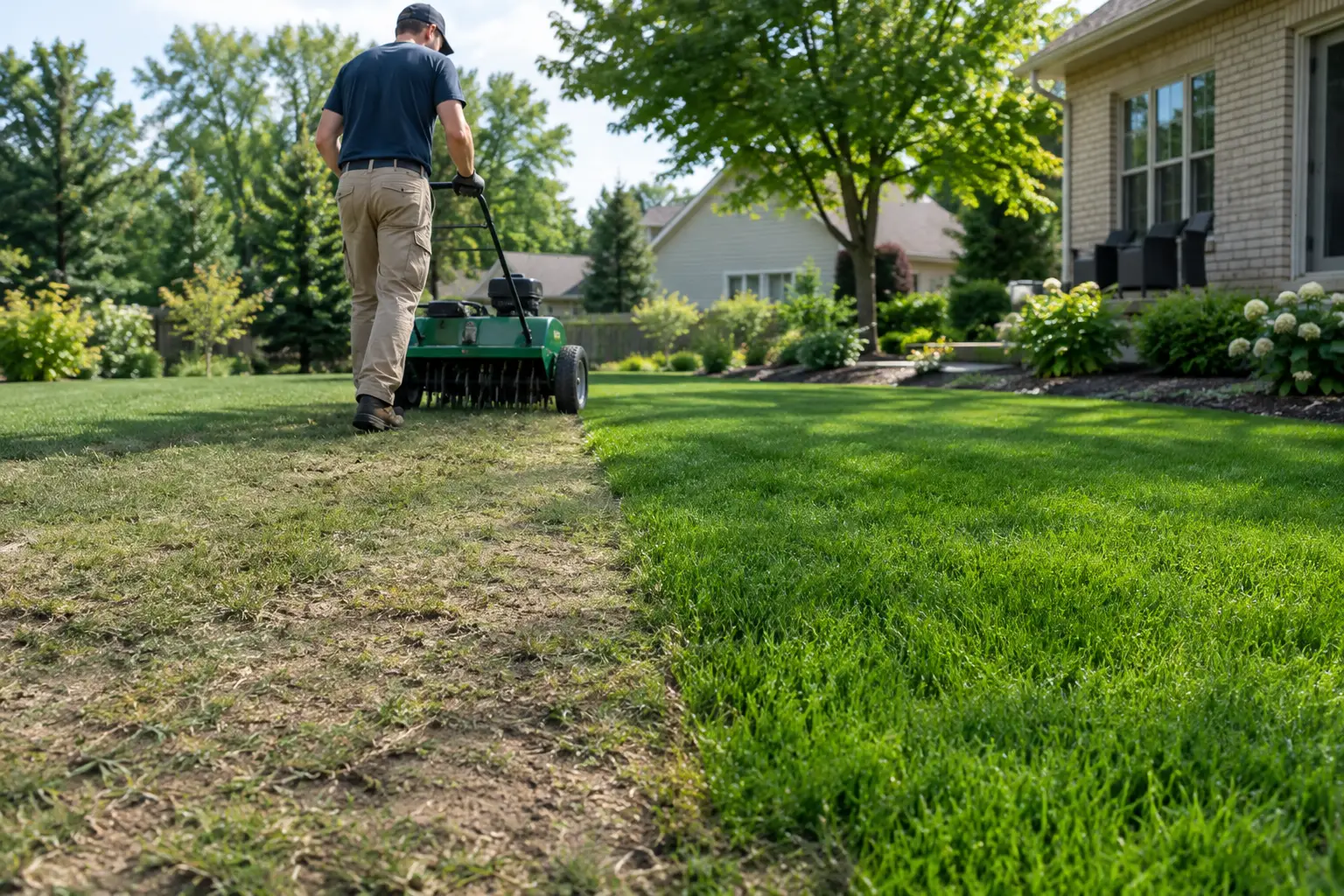
Core aeration is usually the most effective first step for a compacted lawn. A core aerator pulls small plugs of soil from the ground. Those openings let oxygen, water, and nutrients move deeper into the root zone. They also give roots room to spread.
This is different from simply poking holes with a spike tool. Spike aeration can make a lawn look better for a short time, but it may press the surrounding soil tighter. Core aeration actually removes soil, which is why it is the better choice for many compacted Chicago-area lawns.
For cool-season grass in Illinois, early fall is often the best time to aerate because the soil is still warm and grass is entering a strong growing period. Spring can work as well, especially when the lawn needs attention after winter. The ground should be moist, not muddy. Aerating saturated soil can create ruts and make a mess of the yard.
The plugs left on the lawn are normal. Let them break down naturally over the next week or two. They return soil and organic material to the surface.
Check for Thatch Before Adding Seed
Thatch is the layer of dead grass stems and roots that builds up between green grass and the soil. A thin layer is normal. A thick, matted layer can keep water and seed from reaching the soil, which makes compaction problems worse.
If thatch is more than about a half-inch thick, dethatching may be helpful before overseeding. But it is not something every lawn needs. Aggressive dethatching can stress turf, especially during hot weather or on a lawn that is already thin. A property walkthrough can help determine whether the lawn needs dethatching, aeration, or both.
Fix Water Problems Before They Keep Coming Back
If water pools in the same part of the yard after every storm, treat that as a clue. The lawn may be compacted, but the water may also be coming from a downspout, a poor grade, a low spot, or runoff from a neighboring area.
For smaller issues, extending downspouts or adjusting where water exits may help. Larger or recurring problems may call for grading, catch basins, or a buried drainage solution that moves water to a proper outlet. The right answer depends on the property. In Naperville-area homes and across the western suburbs, it is common to find more than one cause at work.
Getting drainage right protects more than grass. It can reduce muddy areas, keep walkways safer, and help protect the home from water sitting too close to the foundation.
Overseed While the Soil Is Open
After core aeration, the lawn is in a good position for overseeding. New seed has more places to settle into the soil, and existing grass has better growing conditions. Choose a cool-season seed blend suited to Chicagoland weather, not a one-size-fits-all mix meant for a completely different climate.
Seed-to-soil contact matters. Spread seed evenly, then keep the top layer of soil consistently damp while it germinates. That usually means light, regular watering for the first few weeks, adjusted for rainfall and temperature. Once the new grass is established, shift to deeper, less frequent watering to encourage roots to grow down.
Do not expect every bare spot to fill in overnight. Fall seeding often has the best chance because new grass has time to establish before summer stress arrives. If you seed in spring, watch for early heat and weeds competing with young grass.
Feed the Lawn Based on Its Needs
Fertilizer can support recovery, but it cannot loosen compacted soil by itself. Applying too much fertilizer to a struggling lawn can lead to fast top growth without solving the weak root system underneath.
A soil test is the most accurate way to find out what your lawn needs. At a minimum, use a measured fertilizer plan that fits the season and the grass type. Slow, steady improvement is better than pushing a lawn too hard. Healthy roots, proper mowing, and good water movement do more for long-term turf strength than a quick green-up.
Keep the Lawn from Packing Down Again
Once you improve the soil, a few habits can help maintain it. Avoid mowing when the lawn is very wet, and change your mowing pattern so equipment is not rolling over the same tracks every week. Keep mower blades sharp and avoid cutting grass too short. Taller grass shades the soil and develops stronger roots.
Try to limit repeated traffic across the same area. If children, pets, or guests always use one route through the yard, consider a paver walkway or stepping-stone path. A good landscape should look nice, but it also needs to work for the way your family uses the property.
Annual or every-other-year aeration can be worthwhile for lawns with heavy clay soil, frequent use, or recurring drainage concerns. There is no single schedule that fits every property. A level, well-drained lawn with light traffic may need less attention than a busy yard with dogs, play equipment, and dense soil.
When It Makes Sense to Bring in a Professional
A homeowner can spot compaction and improve basic lawn care, but some situations deserve a closer look. Call for help when you have recurring standing water, bare areas that do not respond to seeding, soil that stays hard after aeration, or water collecting near the house.
At Revive Your Lawn, we look at the full picture: soil condition, slope, downspouts, drainage paths, turf health, and how the yard is actually used. That matters because a thicker lawn will not last if water is still moving the wrong way or the soil is still packed tight below the surface.
A compacted lawn is frustrating, but it is usually a fixable problem when you start below ground. Give the soil room to breathe, make sure water has somewhere to go, and let the grass rebuild from the roots up. That is how a worn-out yard becomes a lawn you can enjoy again.


