
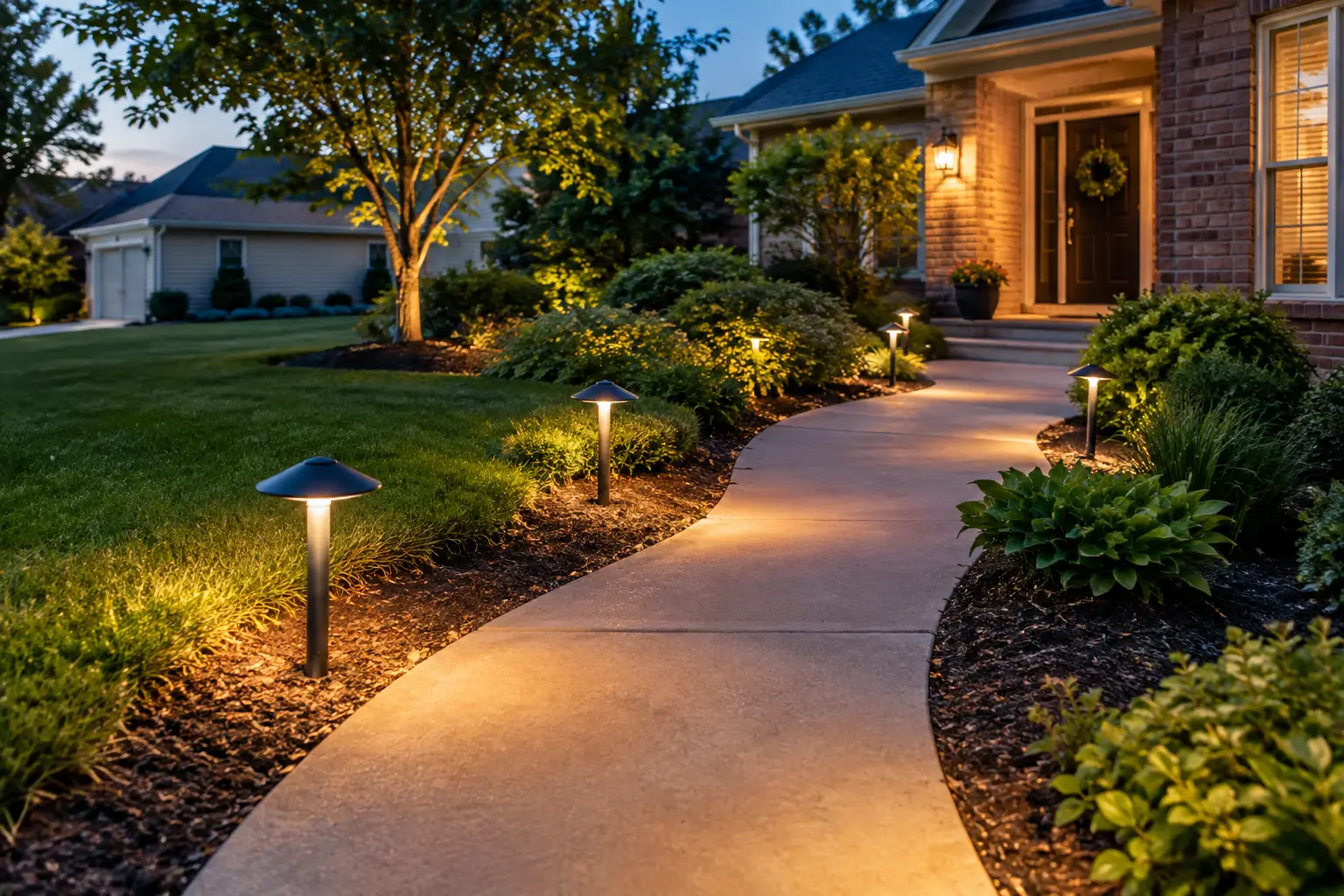
A dark front walk can make an otherwise well-kept home feel unfinished. More importantly, it can hide uneven pavers, icy spots, and the last step before the porch. The best walkway lighting ideas make it easier for family and guests to get around while giving your home a warm, polished look after sunset.
For Chicagoland homeowners, lighting needs to do more than look nice for a few summer evenings. It needs to handle rain, snow, freeze-thaw cycles, leaf cleanup, and the occasional shovel or snowblower working nearby. Here is what to look for when planning a safer, better-looking path.
Start With Safety, Then Build the Look
A good landscape should look nice, but it also needs to work. Before choosing fixture styles, walk from the street or driveway to your front door after dark. Notice where the path disappears, where the grade changes, and where someone could step off the edge.
Most homes do not need bright lights placed every few feet. In fact, too much light can create glare and harsh shadows. The goal is a gentle, even path of light that shows where to walk without shining into a neighbor’s window or directly into someone’s eyes.
In Illinois, placement matters just as much as the fixture itself. A light installed too close to a lawn edge can get bumped by mowing equipment. One set where snow gets piled up may be buried or damaged in winter. Planning around the way your property is actually used saves headaches later.
12 Walkway Lighting Ideas That Work in the Chicago Suburbs
1. Low path lights along a front walk
Low path lights are the classic choice for sidewalks leading from the driveway to the front door. They cast light downward and outward, helping people see the walking surface and the path edges.
They work especially well beside paver walkways, curved paths, and planting beds. Keep them set back slightly from the edge so they do not feel crowded or become an obstacle during routine lawn care. Staggering fixtures from one side to the other often gives a softer, more natural result than lining them up like runway lights.
2. Recessed lights in paver borders
For a clean, built-in look, recessed lights can be installed in the border of a paver walkway or patio. These fixtures sit nearly flush with the hardscape, so there is less to catch a foot, mower tire, or snow shovel.
This is a strong option for modern homes and tight front entries where standard path lights may make the walkway feel busy. It does require careful planning during a new paver installation or when sections of an existing walk are being reset. Drainage also needs attention so water does not sit around the fixture.
3. Step lights for stairs and grade changes
Any outdoor step deserves extra attention. A small recessed light on the riser, retaining wall, or nearby sidewall makes the change in elevation much easier to see.
This is where many homeowners run into trouble. The main walkway may be well lit, but the two steps into the porch stay dark. Step lighting helps reduce that blind spot and creates a sharp, finished detail around the entry.
4. Bollard lights for wider paths
Bollards are short, sturdy posts that throw light downward around a wider walking area. They are a good fit for a long side-yard path, a shared access walk, or a commercial property entrance where a small path light could get lost.
Because they are more visible than low fixtures, spacing and style matter. A few properly placed bollards can look clean and intentional. Too many can make a residential walk feel more like a parking lot.
5. Downlighting from trees or eaves
Not every walkway light has to come from the ground. A fixture mounted in a mature tree, on a pergola, or under an eave can cast a soft wash of light onto the path below.
Downlighting is useful when planting beds are narrow or when you want fewer fixtures at ground level. It can also highlight the texture of a stone walk without making the source of the light obvious. The trade-off is that tree-mounted lighting needs room for growth and should be checked as branches are trimmed over time.
6. Lighted retaining walls
If your walkway runs beside a retaining wall, built-in wall lights can do double duty. They show the edge of the path while making the hardscape feel warmer and more inviting.
This approach works well near raised front beds, patio steps, and sloped yards. It is usually easiest to plan while building the wall, though some existing walls can be updated depending on their construction. The light should point down and across the walking surface, not straight outward.
7. Lantern-style fixtures near the entry
A lantern-style fixture at the beginning or end of a walk creates a stronger focal point than a row of small lights. It can frame a gate, driveway entrance, or front stoop and add a traditional look that fits many Naperville-area and western suburban homes.
Use this idea as an accent rather than the only source of walkway lighting. A decorative lantern may look great from the street but still leave the middle of a long path too dark.
8. Lighting under handrails
Handrail lighting is one of the most practical choices for stairs, especially near a back patio, deck, or side entrance. The light sits under the rail and shines directly onto the treads without glaring at the person using the stairs.
This is a subtle detail, but it makes a big difference during late-night dog walks, winter evenings, and backyard gatherings. It also keeps fixtures protected from foot traffic.
9. Soft lighting at gates and side yards
Side-yard gates are easy to overlook until you are carrying trash cans, groceries, or yard equipment through a dark passage. A small downlight at the gate or a shielded fixture along the fence can make this everyday route much easier to use.
Avoid placing a bright fixture directly across from a neighbor’s window. Warm, downward-facing light is usually enough for a narrow space.
10. Fixture lighting around a driveway-to-door route
Many homes have a clear front walkway, but the route from the driveway to the side door or garage entry is poorly lit. This is often the path the family uses most.
A combination of path lights, step lights, and a properly aimed wall fixture can make this route feel safer without overlighting the property. Think about where passengers get out of the car and where snow or ice tends to collect.
11. Pair lighting with planting beds
Walkway lights can do more than mark a route. When placed carefully near ornamental grasses, evergreens, stone edging, or low shrubs, they add depth to the front landscape after dark.
The key is restraint. The fixture should still light the path first. If every shrub is spotlighted, the front yard can look cluttered instead of inviting. A few well-chosen accents create more impact than dozens of lights.
12. Use a layered plan for long walks
Long front walks and large corner lots often need more than one type of light. You may use low path lights for direction, step lights at changes in grade, and a focal fixture near the porch or driveway.
Layering gives you better coverage with less glare. It also helps the property look balanced from the street rather than leaving one bright area surrounded by darkness.
Choose Fixtures Built for Illinois Weather
Chicago suburbs see heavy rain, summer heat, wind, snow, and repeated freezing and thawing. Outdoor fixtures need sealed connections, durable finishes, and a solid installation. Cheap fixtures may work for a season, then tilt, fade, corrode, or stop working after water gets where it should not.
Low-voltage LED systems are a popular choice because they use less energy and offer good control over light level and color. Warm white light usually feels best around homes. Very cool blue-white light can make stone, brick, and snow look harsh.
A professional plan also keeps wires protected and connections accessible for future service. If you are already installing a paver walk, patio, drainage solution, or new planting beds, that is an ideal time to think through lighting. Coordinating the work upfront can avoid tearing up finished areas later.
Common Walkway Lighting Mistakes to Avoid
The biggest mistake is treating lighting as an afterthought. A fixture may look good in a catalog but be wrong for the location if it shines into eyes, sits in a low wet spot, or gets blocked by plants within a year.
Another common issue is inconsistent spacing. Fixtures do not always need to be evenly measured, especially around curves, beds, and steps. What matters is that the walking route reads clearly from start to finish.
Finally, do not forget seasonal maintenance. Leaves, mulch, and snow can cover fixtures. A quick check during spring cleanup and before winter helps keep the system working when you need it most.
If your front entry, side yard, or patio path feels dark, start by identifying the routes your family uses every day. A thoughtful lighting plan can make those ordinary trips safer while giving your Illinois home a welcoming look every night. Revive Your Lawn can help homeowners plan lighting that fits the walkway, landscape, and the way the property is used.


