
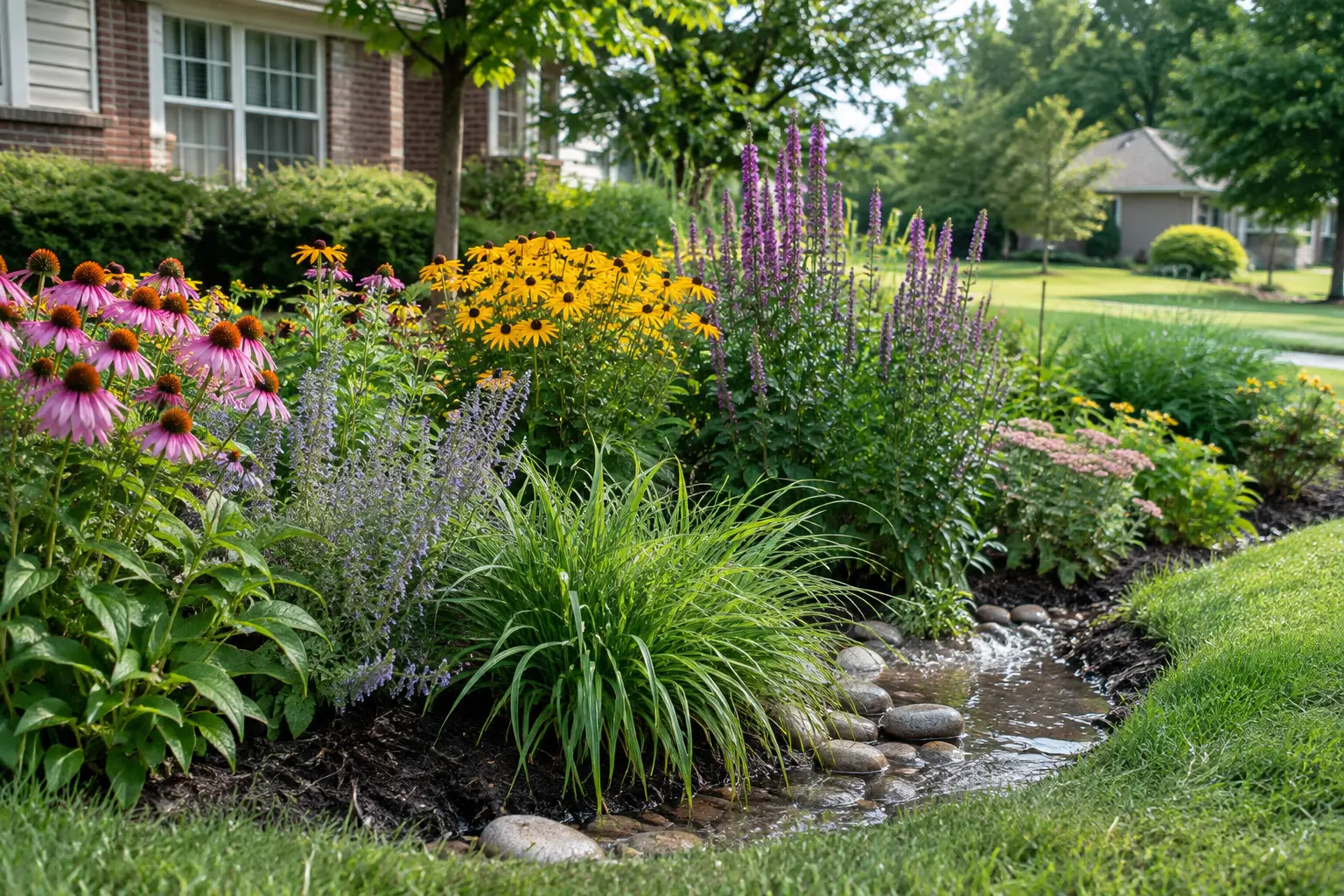
A rain garden should not look like a soggy patch you are trying to hide. Done right, it is a planted low area that catches runoff from a roof, downspout, or sloped lawn, then lets that water soak into the ground over time. The best rain garden plants for Chicagoland yards can handle a heavy spring rain, a few dry summer weeks, and a real Illinois winter without needing constant attention.
That flexibility matters. Our soil can be heavy with clay, our storms can drop a lot of water quickly, and frozen ground changes how a yard drains. A good rain garden adds color and curb appeal, but it also supports the bigger goal: moving water away from areas where it can create muddy turf, slippery walkways, or foundation concerns.
Start With Where the Water Sits
Before picking plants, look at how your yard behaves after a hard rain. A rain garden is usually built in a low spot that receives runoff, but it should be placed well away from the house. You do not want water sitting near your foundation or directing more water toward it.
The center of a rain garden stays wet the longest. The sides are moist after rain but dry out sooner. The outer edge may only get occasional runoff. This is where many homeowners run into trouble: they choose one attractive plant and put it everywhere. Most rain gardens work better with different plants in each zone.
A proper design also depends on grading, soil, downspout location, and how much water is coming off the roof or driveway. If water is pooling for days, killing grass, or getting close to your home, plants alone may not fix the problem. The drainage plan needs to work first, then the landscape can do its job.
The Best Rain Garden Plants for Illinois Conditions
The plants below are strong choices for Chicago suburbs and western suburban yards. Many are native or well-adapted to our climate. They bring different heights, bloom times, and textures, so the garden looks intentional instead of overgrown.
Plants for the wettest center
1. Blue flag iris
Blue flag iris is a great fit for the lowest part of a rain garden. Its upright, sword-like leaves add structure, and its blue-purple flowers show up in late spring. It likes consistently moist soil but can handle periods when the garden dries down. Give it room, since mature clumps can spread over time.
2. Swamp milkweed
Despite the name, swamp milkweed is one of the prettiest plants for a wet area. It produces pink blooms in summer and supports pollinators, including monarch butterflies. It prefers sun and moist soil, making it a dependable choice near the center or lower side of the garden.
3. Cardinal flower
Cardinal flower makes a strong visual statement with bright red blooms in mid to late summer. It does best in moist soil and part sun to full sun. This is a nice plant when you want the rain garden to feel more like a designed landscape bed, especially near a patio or front walk.
4. Tussock sedge
For a softer, grassy look, tussock sedge is a practical choice. It forms tidy clumps and handles wet soil well. Sedges also help fill in spaces around flowering plants, which can reduce bare soil and give the garden a more finished look through the growing season.
Plants for the middle of the garden
5. Joe Pye weed
Joe Pye weed is tall, sturdy, and covered in dusty pink flower clusters late in summer. It is a good fit for the back of a larger rain garden, where it has room to reach its full height. It tolerates moist soil and attracts plenty of butterflies, but it can overwhelm a small foundation bed.
6. New England aster
New England aster provides purple flowers when many other plants are fading. That late-season color is valuable in Illinois landscapes, especially as the weather starts to cool. It likes sun and moist to average soil. In a smaller garden, choose a more compact variety so it does not lean into a walkway.
7. Black-eyed Susan
Black-eyed Susan is familiar for a reason. It is tough, cheerful, and easy to work into a rain garden’s middle or outer zones. Its yellow flowers brighten the yard through summer, and it handles changing moisture better than many homeowners expect. It needs decent sun to perform its best.
8. Culver’s root
Culver’s root has tall white flower spikes that bring a clean, vertical shape to a planting. It works well with broader plants like milkweed and coneflower. It tolerates moist ground but does not need to sit in standing water, so it belongs slightly above the lowest section.
Plants for the outer edge
9. Purple coneflower
Purple coneflower is a solid outer-edge plant because it handles average soil and occasional dry spells once established. Its large purple blooms give the garden a familiar, polished look. Keep it out of the wettest basin, where its roots may stay too wet for too long.
10. Little bluestem
Little bluestem is a native ornamental grass that brings blue-green summer color and warm copper tones in fall. It is especially useful along the outer edge, where the soil dries more quickly. The upright form also gives the garden winter interest after flowers have faded.
11. Prairie dropseed
Prairie dropseed forms neat, rounded clumps with fine-textured leaves. It is a good choice near a sidewalk, driveway, or front-yard rain garden because it looks clean and intentional. Like little bluestem, it prefers the drier edge rather than the lowest wet section.
12. Bee balm
Bee balm adds bright red, pink, or purple flowers and a pleasant scent when brushed against. It performs well in moist, well-drained soil and is a favorite with bees and hummingbirds. It can spread, so it is best used where it has a little space or where you do not mind thinning it occasionally.
Build a Planting Mix, Not a Collection of Singles
A rain garden looks better and holds up better when plants are repeated in groups. Instead of placing one blue flag iris, one coneflower, and one grass all across the bed, use small drifts of three to seven plants. Repeating those groups gives the space a calmer, more professional look.
Think about height, too. Put taller plants such as Joe Pye weed and Culver’s root toward the back or center of a large bed. Use medium-height flowers in front of them, then edge the planting with shorter grasses, sedges, or ground-level perennials. This keeps views open from the street and makes maintenance easier.
Mulch is helpful during establishment, but it should not be piled against plant crowns or used to bury the whole bed too deeply. A light layer helps manage weeds and retain moisture. Once plants fill in, the garden should do more of that work naturally.
What to Expect in the First Two Years
Rain gardens are lower maintenance than a lawn area that stays muddy, but they are not maintenance-free. The first year is mostly about watering new plants during dry stretches, pulling weeds before they get established, and replacing anything that did not take.
By the second growing season, you will have a clearer picture of which areas stay wetter and which plants are happiest. Some shifting is normal. A plant that struggles in the bottom of the garden may do great a few feet higher on the slope.
It also helps to leave stems and seed heads standing through winter when possible. They add texture, catch snow, and provide habitat. In early spring, cut back the old growth before new shoots really get going. That simple cleanup keeps the bed looking cared for without turning it into another weekend-long chore.
For Naperville-area homes, Downers Grove homeowners, and other Chicagoland properties with recurring runoff, a rain garden can be a practical part of a larger drainage and landscape plan. The right plants make it beautiful, but smart placement and proper grading are what help protect the rest of the yard. If you are unsure where the water should go, start by watching the yard during the next hard rain. That tells you far more than a dry-day walkthrough ever will.