
A lawn can look thin, tired, and patchy even when you are watering and mowing it the right way. Often, the issue is not what is happening above ground. It is packed soil below the surface. Knowing when aerate lawns is especially useful for Chicagoland homeowners because our clay-heavy soil, summer foot traffic, and changing weather can make it hard for grass roots to get what they need.
Aeration gives your lawn room to breathe. It pulls small plugs of soil from the turf so water, oxygen, and nutrients can move down to the roots. The timing matters, though. Aerate at the wrong time and your lawn may not have enough growing weather left to fill in properly.
When to Aerate Lawns in the Chicago Suburbs
For most lawns in the Chicago suburbs, fall is the best time to aerate. The sweet spot is usually late August through October, depending on the weather and the condition of your grass. Early fall brings cooler days, warmer soil, and more reliable moisture. Those conditions help cool-season grasses, such as Kentucky bluegrass, perennial ryegrass, and fescue, recover quickly.
This is also when many homeowners see their lawn struggle after a long Illinois summer. Kids, pets, cookouts, mowing, dry spells, and heavy rain can all leave the soil compacted. Aerating in fall relieves that pressure before winter and gives grass a chance to build stronger roots.
Spring can work too, particularly from April into May once the ground has dried enough to walk on without sinking. Spring aeration is a reasonable choice for lawns that are heavily compacted or damaged by winter snow mold, plow piles, or drainage issues. The trade-off is that spring also brings weed growth. Opening the soil can create good conditions for weed seeds if the lawn is already weedy.
For that reason, fall is usually the better all-around choice. It lines up well with overseeding and gives your turf the best chance to thicken up before the following summer.
Avoid Aerating During Summer Stress
In the western suburbs and across Chicagoland, July and August can bring heat, dry soil, and sudden heavy storms. Aerating a lawn that is already stressed from heat or lack of water can do more harm than good. The plugs may be difficult to pull, and the grass may be slow to recover.
It is also best to avoid aerating frozen ground, muddy ground, or soil that is soaking wet after a major rain. Wet soil can smear and compact rather than break apart cleanly. If your yard stays soggy for days, the bigger question may be drainage, not aeration alone. You do not want water sitting near your foundation, and you do not want it sitting in the lawn either.
Signs Your Lawn Needs Aeration
Not every lawn needs aeration every year. A healthy lawn with loose soil and lighter foot traffic may only need it every two or three years. But many Naperville-area homes, especially properties with clay soil or active families, benefit from annual fall aeration.
Here is what to look for:
- Water puddles or runs off instead of soaking in after rain or watering.
- The ground feels hard underfoot, especially in play areas and along sidewalks.
- Grass looks thin or uneven despite regular mowing and feeding.
- Bare spots keep returning in the same places.
- You have a thick layer of thatch, which is the brown, spongy material between the grass blades and the soil.
- A screwdriver is difficult to push several inches into the ground when the soil is moist.
One sign by itself does not always mean your lawn needs aeration. For example, shade, grub damage, poor drainage, or tree roots can also cause thin turf. This is where many homeowners run into trouble. They aerate hoping to fix everything, when the lawn may need a different solution or a combination of services.
Core Aeration Is the Method That Counts
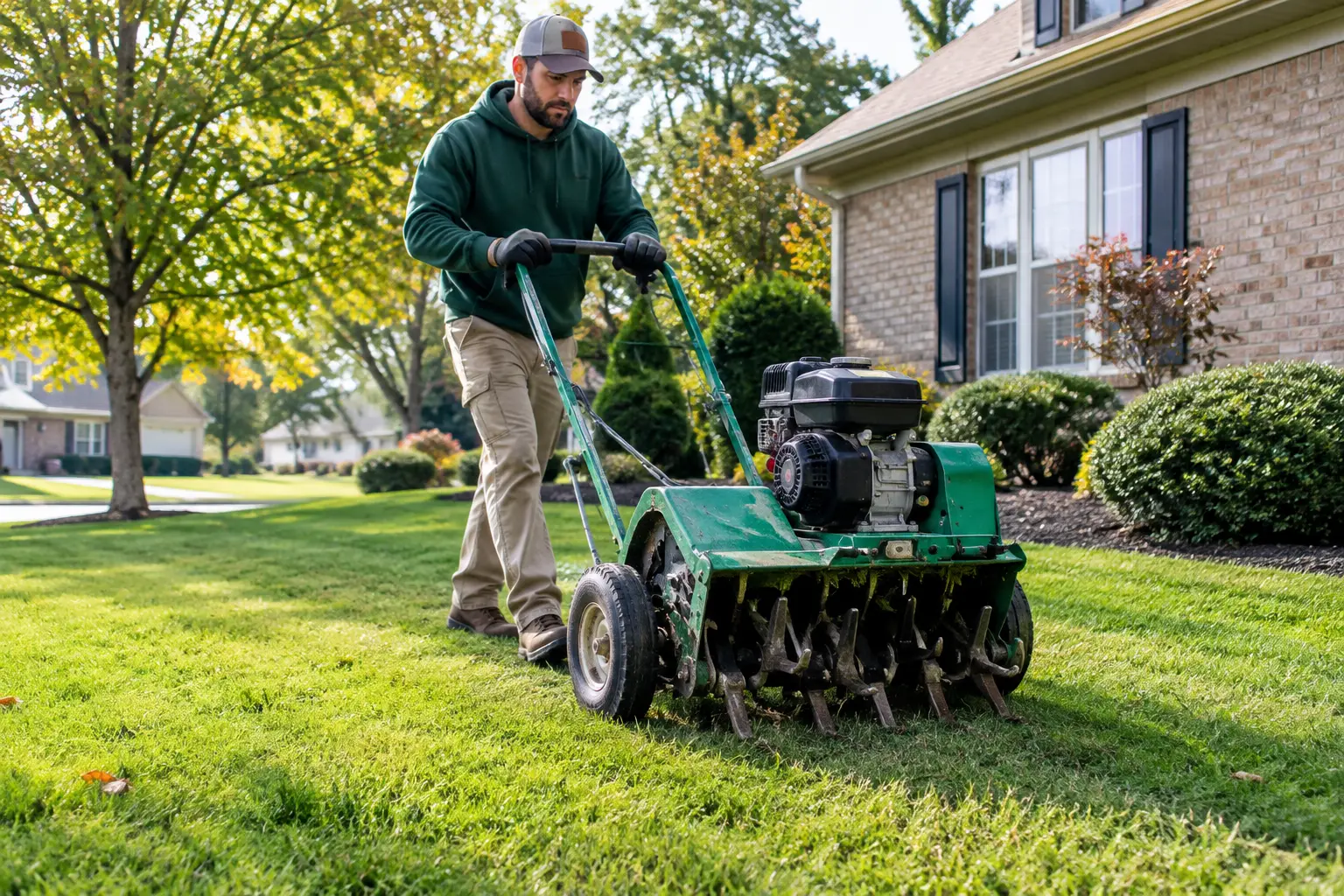
When people talk about lawn aeration, they usually mean core aeration. A core aerator removes small plugs of soil and leaves them on top of the lawn. The plugs look messy for a week or two, but they break down naturally with rain and mowing. That soil works its way back into the turf and helps reduce thatch over time.
Spike aeration, which simply pokes holes in the ground, has more limited results in compacted Illinois soil. It can temporarily make holes, but it does not remove soil or create as much lasting space for roots. For lawns with real compaction, core aeration is the more effective choice.
A properly aerated lawn may not look dramatically different the next day. The benefit happens underground. Roots can grow deeper, water can move into the soil instead of across it, and grass is better prepared for hot weather next year.
Pair Aeration With Overseeding for Better Results
Fall aeration and overseeding go together naturally. The holes left by the aerator give grass seed a protected place to settle, helping seed make better contact with the soil. This is especially helpful for thin lawns, high-traffic areas, and spots where summer stress has left bare patches.
For Chicago suburbs lawns, the timing is tight enough that planning matters. Seed needs time to germinate and establish before repeated freezes arrive. Aerating and overseeding in early fall is generally safer than waiting until late October, when the weather can turn quickly.
Watering is the part that makes or breaks overseeding. New seed needs consistent moisture near the surface, particularly during the first couple of weeks. That does not mean flooding the yard. It means light, frequent watering until the seed sprouts, followed by deeper and less frequent watering as the new grass develops.
If you are not overseeding, aeration still has value. It can help an established lawn use fertilizer and water more efficiently. But a thin lawn will usually see a more noticeable improvement when aeration is followed by the right seed and a sensible care plan.
Prepare the Lawn Before Aeration
A little preparation helps the job go smoothly. Mow the lawn a bit shorter than usual a day or two beforehand, but do not scalp it. The soil should be slightly moist, not muddy. If the weather has been dry, a good watering the day before can help the aerator pull clean plugs.
Mark sprinkler heads, invisible dog fence lines, shallow utility lines, and anything else hidden in the turf. Aeration equipment is built to penetrate the soil, so this step protects your property and prevents an expensive surprise.
After aeration, leave the plugs alone. They may look odd at first, but raking them up defeats part of the purpose. Keep regular foot traffic to a minimum while new seed is getting started, and hold off on aggressive weed treatments if you have recently overseeded.
Aeration Will Not Solve Every Lawn Problem
Aeration is one useful tool, not a cure-all. If water is pooling at the bottom of your yard, flowing toward the house, or washing mulch out of beds, a drainage solution may be needed before the lawn can truly improve. If large trees shade the grass most of the day, you may need to adjust expectations, prune selectively, or consider a more shade-tolerant grass mix.
Likewise, if the lawn has heavy thatch, dethatching may be a better first step or a companion service. Thatch is normal in a thin layer, but when it becomes thick and matted, water and nutrients can have trouble reaching the soil. A good landscape should look nice, but it also needs to work from the ground up.
At Revive Your Lawn, we look at the full picture: soil condition, traffic, sun, water flow, and the overall health of the property. That is how you avoid spending time on a service that does not match the actual problem.
If your yard feels hard, drains poorly, or never seems to fill in the way it should, take a close look this fall. A well-timed aeration can be a simple step toward thicker grass, less runoff, and a lawn that is easier to enjoy next season.


