
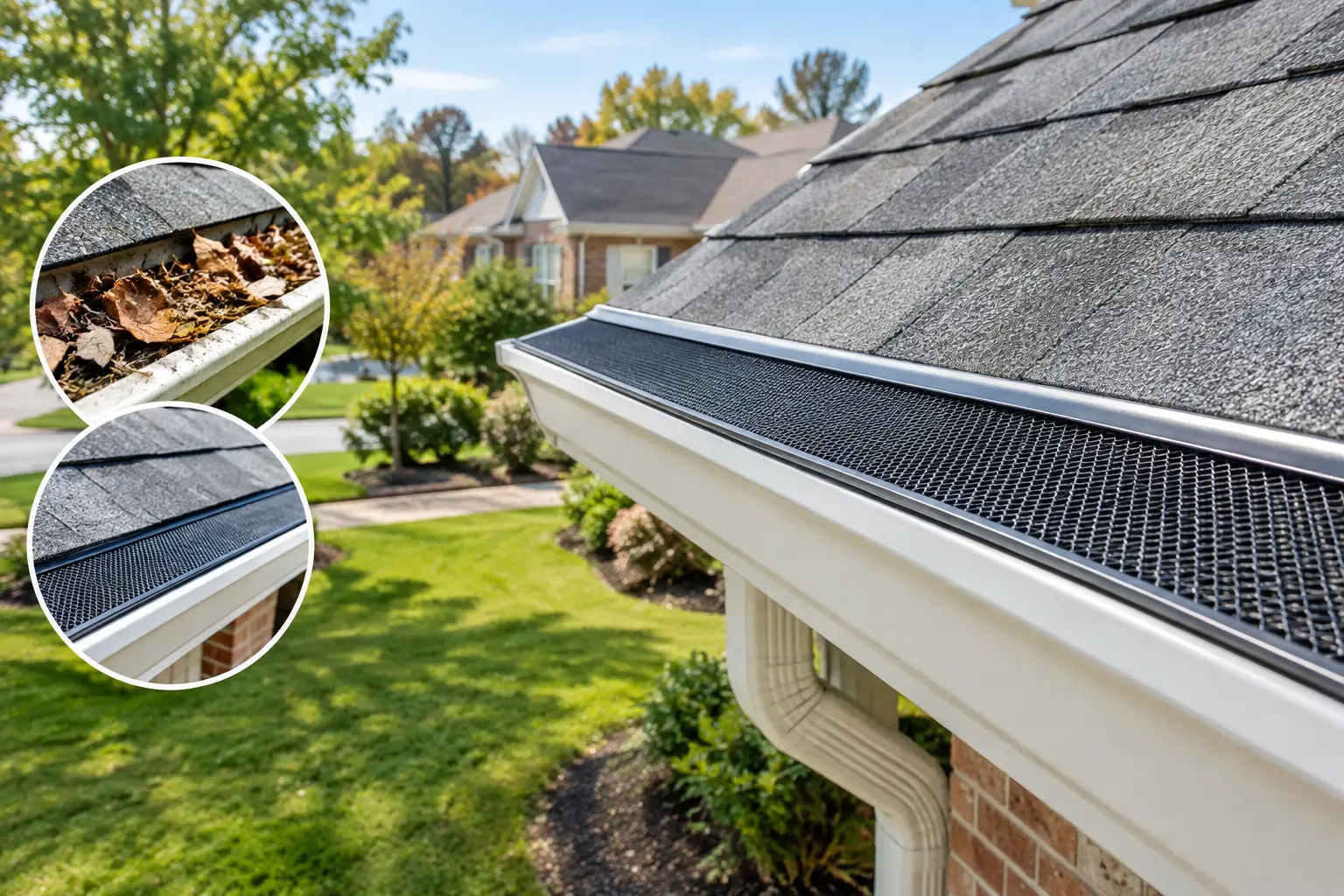
A gutter guard that looks good in a showroom can still be the wrong fit for your house. In this gutter protection systems review, we are looking at what matters for Chicagoland homeowners: leaf buildup, heavy summer rain, wet fall debris, snow, and freeze-thaw weather that can be tough on a roofline.
The goal is simple. Your gutters need to move water away from the roof and foundation without becoming another weekend chore. A good system can cut down on cleaning and help prevent overflow, but no guard makes a gutter completely maintenance-free. The right choice depends on your trees, roof, existing gutters, and how water moves around your property.
What a Gutter Protection System Should Do
Gutters are not there just to catch rain. They are part of your home’s water-management system. When they clog, water can spill over the edge, soak the mulch beds below, stain siding, wear away soil, and collect near the foundation. You do not want water sitting near your foundation, especially during a wet Illinois spring or a fast summer storm.
A well-installed gutter protection system should let water enter the gutter while keeping out the debris that causes blockages. It should also stay secure through wind, snow loads, and changing temperatures. That last part matters here. A guard that shifts, bends, or pulls away after a few winters is not doing much to protect your home.
Here is what to look for: a system that fits your gutter size, is installed without creating roof issues, handles the type of debris around your home, and still allows water to flow freely into clean downspouts.
Gutter Protection Systems Review: The Main Types
There is no single best guard for every home. Downers Grove homeowners with mature maple trees have different needs than a newer Naperville-area home with fewer trees but a steep roof that sends water down quickly. The basic types below each have strengths and trade-offs.
Basic screens and perforated covers
Screen-style guards sit over the top of the gutter and block larger leaves, twigs, and other debris. They are often a reasonable choice for homes with light leaf coverage and gutters that are otherwise in good shape.
The trade-off is that smaller debris, such as maple seeds, pine needles, roof grit, and shingle particles, can still get through. Debris can also collect on top of the screen. It may be easier to brush off than a full gutter cleaning, but it is still work. Screens can be useful, but they are not always the best fit beneath heavy tree cover.
Fine mesh and micro-mesh guards
Fine mesh systems use a tighter metal screen to keep out much smaller debris. For many Chicago suburbs homes, this is often the most practical category because it handles common leaf debris while allowing rainwater through.
The quality of the mesh and frame makes a big difference. Flimsy mesh can sag or become damaged over time. A stronger system should fit securely to the gutter and fascia area, with a design that supports steady water flow.
Micro-mesh is not a free pass to forget about your gutters forever. Fine particles can settle on the surface, especially near trees that drop seeds or pollen. Still, a well-chosen mesh system usually means far less debris inside the gutter and fewer messy cleanouts.
Surface-tension or hooded guards
These systems use a solid cover with a narrow opening. Water follows the curve of the guard into the gutter while leaves are meant to fall to the ground.
They can work well in certain situations, particularly when installed correctly and matched to the roof’s water flow. The concern is capacity. During a hard Chicagoland downpour, water coming off a steep or large roof section can move fast. If the opening is too limited or the pitch is not right, some water may shoot past the gutter instead of entering it.
This does not mean hooded guards are always a bad choice. It means the installer needs to look at the roof, not just the gutter. This is where many homeowners run into trouble with one-size-fits-all recommendations.
Foam inserts and brush-style guards
Foam and brush products sit inside the gutter rather than covering the top. They are easy to find and may seem like a simple solution, but they are usually not our first choice for long-term protection on Illinois homes.
Leaves, seeds, and roof grit can settle into the material. Over time, that buildup can hold moisture and make cleaning more difficult, not less. Freeze-thaw cycles can add another layer of stress. They may have a limited use in certain situations, but they do not provide the dependable, clean finish most homeowners are looking for.
Installation Matters as Much as the Guard
A quality product can still disappoint if it is installed over damaged gutters or connected to a drainage system that is already failing. Before adding guards, look at the whole picture.
Are the gutters pitched correctly toward the downspouts? Are brackets loose? Does water spill over in one specific area? Are downspouts carrying water far enough away from the foundation? If the answer to any of these is no, gutter guards alone will not solve the problem.
At Revive Your Lawn, we look at gutter protection as part of a larger exterior solution. Sometimes the issue is a clogged gutter. Other times, it is a short downspout, poor grading, or a landscape bed that is holding water against the home. A good landscape should look nice, but it also needs to work.
For example, a homeowner may install guards to stop overflowing water, then find puddles forming beside the foundation after every storm. The gutter may now be clear, but the water still needs a safe place to go. Extending downspouts or addressing drainage around the yard can make the protection system far more effective.
What Illinois Weather Changes
In Illinois, gutter protection has to stand up to more than leaves. Heavy spring rain, summer storms, fall leaf drop, snow, ice, and quick temperature swings all affect how the system performs.
Snow and ice are especially worth discussing honestly. Gutter guards do not prevent ice dams. Ice dams typically begin when heat escaping from the home melts snow on the roof, then the water refreezes near the colder roof edge. Attic insulation, ventilation, roof conditions, and weather all play a role.
A properly installed guard should be secure enough for normal winter conditions, but it should not be sold as an ice-dam cure. If you see repeated heavy icing along the eaves, it is worth looking beyond the gutters to find the actual cause.
Tree coverage also changes the recommendation. Large oaks can drop heavy leaves. Maples can send down small seed pods that find their way into open gutters. Pine needles are even more demanding because they can collect in small openings and create a dense mat. The debris around your home should guide the guard choice.
Questions to Ask Before You Choose
Before approving any gutter protection system, ask how it handles the debris you actually have, not just standard leaves. Ask whether the installer will inspect and clean the gutters first, how the guard attaches, and whether your gutters need repairs before installation.
It is also smart to ask how water will be tested after the work is done. A system should be evaluated for flow, not simply appearance. Finally, ask what ongoing care is realistic. A straight answer is better than a promise that you will never have to think about gutters again.
Be cautious with any pitch that focuses only on a lifetime claim without discussing fit, installation, and water flow. The best protection is the system that works on your home, in your yard, through Illinois weather.
A Practical Choice for Busy Homeowners
For many western suburbs homeowners, a durable fine-mesh gutter guard installed on clean, properly pitched gutters is a strong starting point. It offers good protection from common debris without relying on a tiny water-entry slot. But it depends on the roofline, tree coverage, and condition of the existing system.
If your gutters overflow, pull away from the house, or dump water near the foundation, start with a full assessment instead of choosing a guard from a photo. A few minutes spent looking at how water travels around your home can prevent bigger headaches after the next storm.
The right gutter protection system should give you more weekends back, keep the roofline cleaner, and help water move where it belongs. That is a practical upgrade that protects both the look of your property and the home underneath it.


