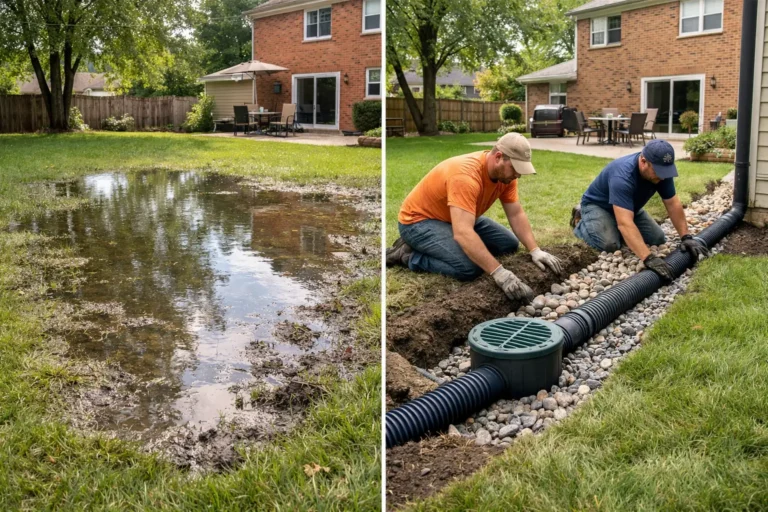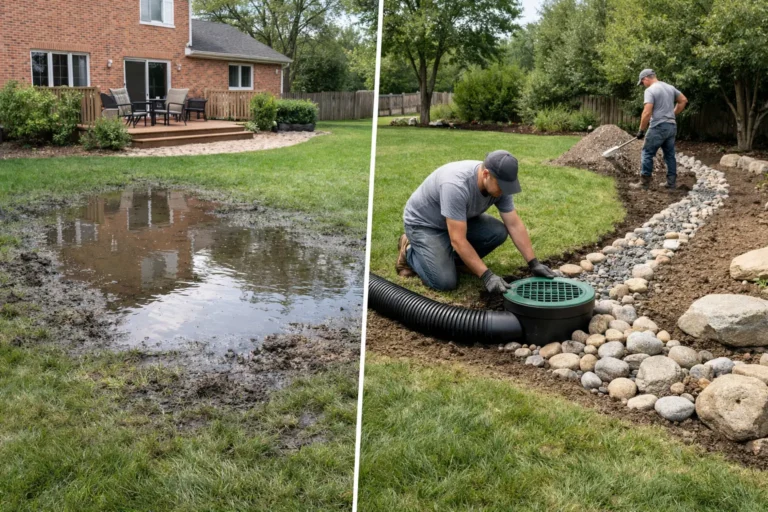
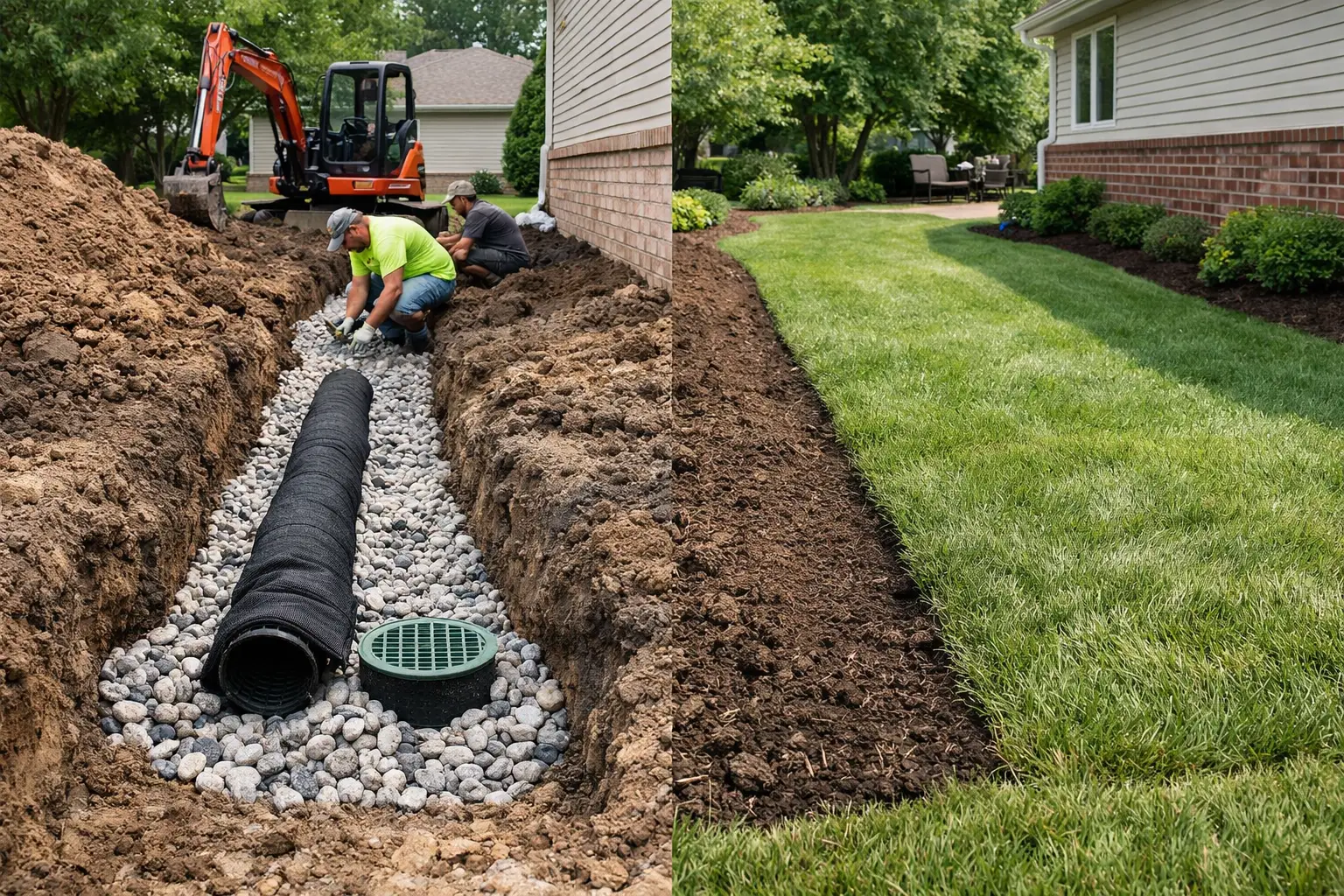
French drain installation cost in the Chicago suburbs depends on the size of the drainage problem, how deep the trench needs to be, where the water can safely discharge, and how difficult the yard is to access. A short, shallow drain in an open lawn costs much less than a deeper system near a foundation, patio, fence line, or tight side yard.
For planning purposes, many exterior French drain projects are priced by the linear foot, but the linear foot number only tells part of the story. In Chicagoland, clay-heavy soil, flat lots, buried utilities, hardscape edges, mature landscaping, and freeze-thaw conditions can all affect the final quote. The real question is not just, “How much pipe do I need?” It is, “What will actually move the water away from the house and keep it from coming back?”
Quick Answer: What Does A French Drain Cost?
A simple exterior French drain may cost a few thousand dollars. A longer, deeper, or more complicated drainage system can cost several thousand dollars more. Public cost guides often show exterior French drain installation around the low tens of dollars per linear foot on simple projects and much higher per foot for deeper or more difficult work, but your yard can land outside those ranges depending on access, depth, outlet, restoration, and the source of the water.
That is why a good drainage estimate should start with a site visit. If a contractor gives you a firm price without looking at slope, soil, downspouts, low spots, discharge options, and access, the number may not mean much.
Typical French Drain Cost Ranges For Illinois Homes
Every property is different, but it helps to think about French drain pricing in three broad buckets.
| Project type | What it usually involves | Why cost changes |
|---|---|---|
| Simple yard drain | A shorter shallow trench in an open lawn area with a clear outlet | Less digging, easier access, less restoration |
| Mid-range drainage system | Longer run, perforated pipe, washed stone, filter fabric, lawn repair, and planned discharge | More materials, more labor, more cleanup |
| Complex drainage project | Deep trenching, tight side-yard access, hardscape edges, multiple wet areas, downspout tie-ins, or foundation-adjacent work | More planning, slower excavation, careful routing, larger restoration scope |
For many homeowners around Naperville, Downers Grove, Elmhurst, Hinsdale, Western Springs, and nearby suburbs, the difference between a basic and complex project comes down to where the water starts and where it can legally and safely go. On a flat lot, that outlet question can be the most important part of the job.
What Affects French Drain Installation Cost?
Length of the drain
Longer drain runs need more pipe, stone, fabric, trenching, backfill, and cleanup. Length matters, but it should not be guessed from the wet spot alone. Sometimes the drain needs to intercept water before it reaches the low area. Other times it needs to carry water farther to a better discharge point.
Depth and trench conditions
A shallow yard drain is usually easier than a deeper system near a foundation or low side yard. Deeper work takes more time and more care. If the trench needs to pass near utilities, roots, patios, walkways, irrigation lines, or old landscape fabric, the crew has to slow down.
Soil type
Chicagoland clay soil can make drainage work more demanding. Clay holds water longer, gets heavy when wet, and can be slower to excavate than looser soil. It also makes proper stone, fabric, slope, and discharge planning more important because water does not naturally soak away quickly.
Access to the work area
Open backyard access is different from a narrow side yard between a house and fence. If material has to be moved by hand through a gate, around landscaping, or across finished hardscape, labor goes up. This is one reason two drains with the same length can have very different prices.
Discharge point
A French drain has to send water somewhere appropriate. That might mean daylighting to a safe slope, connecting to a drainage feature, routing to a dry well, or tying into a larger yard drainage solution. If the outlet is wrong, the drain can simply move the problem from one part of the yard to another.
Downspouts and roof runoff
If the wet area starts near the house, roof water may be part of the problem. Short downspouts, clogged gutters, or overflowing rooflines can overload a side yard fast. In that case, the quote may need to address buried downspouts, gutter improvements, or gutter guards along with the French drain.
Lawn and landscape restoration
A good drainage job should account for what the yard looks like afterward. Some projects need seed and soil. Others need sod, mulch bed repair, edging reset, or grading adjustments. If restoration is not included or clearly explained, the quote may look lower than the real finished cost.
Yard French Drain Vs Foundation Drain
When homeowners say “French drain,” they may be talking about different kinds of drainage work.
A yard French drain usually collects surface or near-surface water from soggy lawn areas, fence lines, low spots, or places where runoff crosses the yard. These systems are often used when the goal is to make the yard usable again and move water through the property in a controlled way.
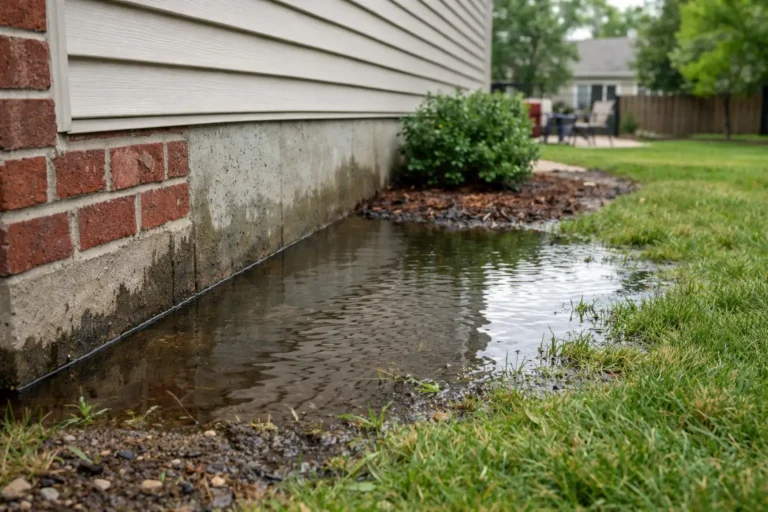
A foundation-adjacent drain is more sensitive. If water is sitting near the house, the contractor needs to figure out whether the issue is grading, downspouts, gutter overflow, hardscape pitch, groundwater, or a combination. Sometimes a French drain is part of that fix. Sometimes the better first move is regrading, extending downspouts, or correcting the source of the water.
If you are not sure what kind of problem you have, start with the broader guide on what causes yard flooding problems in the Chicago suburbs. It will help you think through where the water is coming from before you price a solution.
When A French Drain Is Worth The Money
A French drain is usually worth pricing when water keeps returning to the same area and is damaging something you care about: the foundation, basement area, patio, walkway, lawn, planting beds, fence line, or the part of the yard your family actually uses.
It may not be the right first fix if the issue is only a clogged gutter, one short downspout, a small grading dip, or compacted turf that could be improved with lawn repair. For soggy lawns where the cause is unclear, the related guide on standing water in your yard walks through several options besides a French drain.
The best value comes from matching the system to the cause. A French drain can be a strong solution, but it should not be treated like a one-size-fits-all product.
Want a realistic French drain price for your yard?
Revive Your Lawn can look at the wet area, check the slope, soil, downspouts, access, and discharge options, then explain whether a French drain is the right fix or whether another drainage solution makes more sense.
Questions To Ask Before You Approve A French Drain Quote
Before you approve the job, ask the contractor to walk you through the plan in plain English. You should understand what they are collecting, where the water is going, and what the yard will look like when the work is done.
If the answer to those questions is vague, pause before signing. Drainage is one of those projects where the hidden details matter. A clean explanation is usually a good sign that the contractor has thought through the whole system, not just the trench.
DIY French Drain Or Hire A Pro?
Some homeowners can handle a small drainage project on their own, especially if the area is open, the slope is obvious, the outlet is safe, and the work is far from the foundation. The risk is that the trench, pipe, fabric, stone, and discharge route all have to work together.
Call a pro sooner if water is near the house, the yard is flat, the outlet is unclear, the drain would cross utilities or hardscape, or the same area keeps flooding after every storm. It is also worth getting help if the project will disturb a visible part of the landscape and you want the yard restored cleanly afterward.
For many Illinois homes, drainage is not just a lawn issue. It connects to roof runoff, grading, soil, patios, planting beds, and foundation protection. A thoughtful plan can save you from paying twice for a fix that was too simple for the actual problem.
French Drain Installation Cost FAQ
How much does French drain installation cost in the Chicago suburbs?
The cost depends on length, depth, soil, access, discharge point, and restoration. A simple yard drain may cost a few thousand dollars, while a deeper or more complex system can cost several thousand more. A site visit is the only reliable way to price it.
Why do French drain prices vary so much?
Two yards can have the same wet spot but very different causes. Price changes when the project needs deeper digging, hand work, hardscape routing, downspout tie-ins, extra stone, a longer outlet path, or more lawn and landscape repair.
Is a French drain always the best drainage fix?
No. A French drain can be the right fix when it matches the water source and outlet path. Some yards need regrading, buried downspouts, catch basins, dry wells, swale repair, gutter work, lawn repair, or a combination of drainage solutions.
Can I install a French drain myself?
You may be able to handle a small, simple drain if the slope and outlet are obvious. Hire a pro when water is near the foundation, the yard is flat, the route is tight, utilities or hardscapes are involved, or the discharge point is unclear.
What should be included in a French drain quote?
A good quote should explain the layout, trench depth, pipe, stone, filter fabric, discharge point, cleanup, and surface restoration. It should also explain whether downspouts, gutters, grading, or other drainage issues need to be addressed.
Ready To Price The Right Drainage Fix?
If your yard keeps holding water after rain, start with the cause. Walk the property after a storm, notice where the water starts, where it collects, and how long it sits. Then get a drainage plan that matches the real water path.
Revive Your Lawn helps Chicagoland homeowners figure out whether a French drain, catch basin, buried downspout, dry well, grading adjustment, or a combination of fixes makes the most sense. Schedule a free drainage consultation and we will help you understand the options before you spend money on the wrong solution.