If your front yard looks tired, holds water after every storm, or just does not match the rest of your home, a good front yard renovation planning guide can save you a lot of frustration. Most homeowners do not run into trouble because they picked the wrong flowers. They run into trouble because they start with the fun parts before they deal with grading, drainage, walkway layout, or how they will actually maintain the space.
A front yard project should do more than look nice from the street. It should make your home easier to care for, safer to walk up to, and better protected from water problems. In the Chicago suburbs, that matters even more because we deal with freeze-thaw cycles, heavy spring rain, summer heat, and long winters that can be hard on lawns, plants, and hardscape surfaces.
How to use this front yard renovation planning guide
The best way to plan a front yard renovation is to think in layers. Start with what is not working. Then look at how people move through the space. After that, focus on appearance.
That order matters. If your yard has standing water near the front steps, a cracked walkway, poor grading, or beds that wash out during storms, new shrubs and fresh mulch will only hide the problem for a little while. A good landscape should look nice, but it also needs to work.
Start by walking your front yard like a visitor would. Park on the street or in the driveway and walk to the front door. Notice where the ground feels uneven, where water collects, where plants block windows, and whether the entry feels welcoming or cramped. Here is what to look for: worn grass paths, puddles near the house, edging that has shifted, overgrown foundation plants, poor lighting, and front beds that look patchy by midseason.
Start with the problems that affect the house
This is where many homeowners in Illinois should pause before making design choices. If water is moving toward your home instead of away from it, that needs attention first. You do not want water sitting near your foundation, pooling by the front walk, or turning your lawn into a muddy mess after every storm.
Sometimes the fix is simple, like adjusting grading or extending drainage away from the home. Other times it takes a fuller plan that includes downspout routing, drainage lines, bed reshaping, or changing how water moves across the property. The right answer depends on your lot, the slope, the soil, and how the front yard connects to the side and backyard.
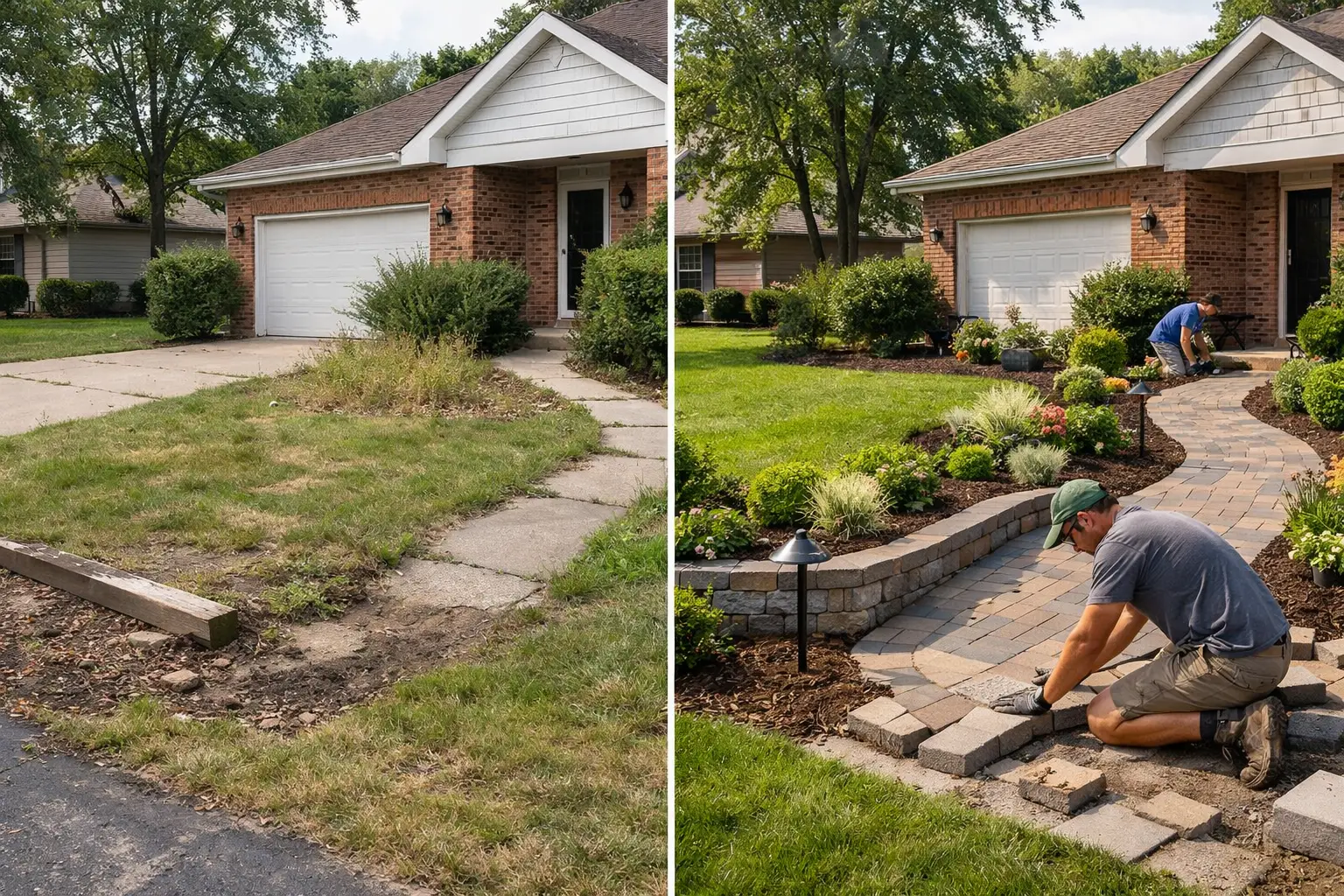
Walkways and entry steps should also come early in the plan. If the path to the front door is too narrow, uneven, or broken up from winter weather, it affects both appearance and safety. A wider paver walkway can improve curb appeal, but it can also make everyday use much better for guests, deliveries, and kids moving in and out of the house.
Build the layout around real life
A lot of front yards look cluttered because they were added to piece by piece over time. A tree went in one year, shrubs the next, then someone added edging and lights later. That is why a renovation plan should step back and look at the whole picture.
Think about how you use the front of the property. Do you want lower-maintenance planting beds so you are not spending weekends trimming and weeding? Do you need a more defined walkway from the driveway to the entry? Would landscape lighting make the property safer and cleaner-looking at night? Are there spots where snow piles up in winter and damage plants or block the walk?
In many Chicagoland homes, the front yard needs to do several jobs at once. It should frame the house, handle weather, direct people to the door, and still be manageable to maintain. That is why simple, clean layout decisions usually age better than crowded designs.
Front yard renovation planning guide for Illinois homes
In Illinois, plant and material choices should fit the weather, not just the photo you saw online. What looks great in a warm-weather inspiration picture may struggle here after one rough winter. The same goes for hardscape materials and low spots in the yard that seem harmless in July but turn into slush and ice trouble by January.
Foundation plantings should leave enough space for growth, airflow, and easy trimming. Beds should be shaped with maintenance in mind, not just appearance on day one. Lawn areas should be realistic for the sunlight and foot traffic they get. If a strip along the walk always burns out or gets trampled, it may make more sense to redesign that area instead of reseeding it every year.
This is also a good time to think about seasonal interest. A front yard should not peak for three weeks and then look flat the rest of the year. Evergreens, structured shrubs, clean bed lines, lighting, and strong hardscape features help the property still look polished in late fall and winter, which matters in the Chicago suburbs where dormant landscapes are part of the view for months.
Set priorities before you set a budget
Most homeowners do not have an unlimited budget, and that is fine. The key is knowing where your money will make the biggest difference first.
If your yard has drainage problems, poor grading, or failing walkways, those should usually come before decorative upgrades. If the front of the home is functionally sound but looks dated, then design improvements like new planting beds, fresh sod, lighting, or entry upgrades may move to the top.
Breaking the project into phases can be a smart move. Phase one might handle drainage, grading, and hardscape. Phase two could focus on planting and lawn work. Phase three might add lighting, a front seating area, or other finishing touches. A phased plan works best when it is mapped out in the right order from the start, so you are not redoing work later.
Choose features that reduce upkeep, not increase it
A front yard renovation should make life easier, not create a long list of chores. That is especially true for busy families and homeowners who want their property to look sharp without spending every Saturday working on it.
That does not mean the yard should be plain. It means every choice should have a purpose. Clean bed edges, sensible plant spacing, durable walkways, and well-placed lighting can make a property look finished without making it harder to maintain. Too many small beds, fussy plantings, or narrow mowing strips often become a headache.
You should also think about how the front yard connects to the rest of the property. If the front looks refreshed but the side drainage still dumps water into the lawn, or the backyard grading still pushes water toward the front walk, the whole system is off. The best results usually come when the renovation is planned as part of the full exterior, not as one isolated area.
Work with someone who can see both beauty and function
This is where many projects either come together or go sideways. Some contractors focus only on how the finished yard will look. Others focus only on problem-solving. The sweet spot is finding someone who can do both.
A strong front yard plan should account for drainage, grading, traffic flow, materials, plant spacing, maintenance needs, lighting, and curb appeal as one connected project. That is especially helpful for western suburb and Chicagoland homeowners who want one clear plan instead of trying to coordinate several companies with different ideas.
Ask practical questions during the planning stage. How will water move during a heavy rain? Will this walkway still make sense in winter? How much trimming will these shrubs need in three years? Will the lighting improve safety or just add decoration? Those answers tell you a lot about whether the plan is built for real life.
A smart plan makes the finished yard look better
The front yards that stand out are usually not the ones with the most features. They are the ones where everything feels thought through. The walkway is in the right place. The beds fit the house. The drainage works. The lighting helps at night. The property looks cared for without looking overdone.
If you are thinking about improving your front yard, slow down just enough to plan it well. Get clear on what is not working, what matters most, and how you want the space to function through all four seasons. A thoughtful plan now usually means fewer surprises later, better results, and a front yard that feels good every time you pull into the driveway.