A yard in the Chicago suburbs has to handle more than a few hot summer weekends. It has to stand up to heavy spring rain, clay soil, humid July heat, falling leaves, freeze-thaw cycles, and snow piled along the driveway. That is why good Chicago suburbs landscaping is not just about fresh mulch and pretty flowers. It is about creating an outdoor space that looks right, drains properly, stays safe, and fits the way your family actually lives.
For many homeowners, the trouble starts when one part of the yard is treated separately from the rest. A new planting bed may look great, but if water still pools beside the house, the bigger problem is not solved. A beautiful paver patio is less enjoyable if the path to it becomes slick or muddy. A good landscape should look nice, but it also needs to work.
Start With How Your Yard Handles Water
In Illinois, drainage should be one of the first things considered in a landscape plan. Many homes in the western suburbs sit on compacted or clay-heavy soil. Water does not always soak in quickly, especially after a hard spring storm or several days of rain. Add downspouts, low spots, neighboring grades, and melting snow, and it is easy to see why yards can stay wet.
Here is what to look for: water sitting near the foundation, soggy grass that never seems to recover, mulch washing out of beds, muddy spots by gates, or puddles along a patio or walkway. These are not just annoyances. Water sitting near your foundation is something you do not want to ignore, and wet ground can make outdoor areas harder to use.
The right solution depends on what is causing the issue. Some properties need downspout extensions or buried drain lines that move roof water farther from the home. Others need a catch basin in a low area, a grading adjustment, or a French drain that collects water below the surface. In some cases, improving the slope around a patio or walkway makes the biggest difference.
This is where many homeowners run into trouble. They spend money on new sod or plants before figuring out why the area stays wet. Those improvements may struggle until the water issue is addressed. A careful walkthrough of the whole property helps determine where water starts, where it travels, and where it can safely go.
Chicago Suburbs Landscaping Should Fit Real Life
A landscape plan should match the way you use your property, not just a photo you saw online. A busy family in Naperville may want a clean front entry, easier lawn care, and a backyard patio where the kids can play nearby. Downers Grove homeowners may be focused on replacing an aging walkway, improving drainage, or making a shaded yard feel more open and usable.
Start by thinking about the areas that affect your day-to-day routine. The front walk should feel welcoming and safe. The route from the driveway to the door should not become slippery in rain or covered in overgrown shrubs. The backyard should have a purpose, whether that means a place to grill, relax, host friends, or simply give the dog a cleaner route outside.
Hardscaping often brings structure to a yard that feels unfinished. A paver patio can create a true outdoor living area. A walkway can keep guests out of the grass and give the front of the house a more finished look. Retaining walls can help manage a slope while creating space for planting beds. The material, size, and layout all matter, but so does the base underneath. In the Chicago area, a hardscape needs proper preparation so it can better handle soil movement and winter weather.
There are trade-offs to consider. A larger patio gives you more room for furniture and entertaining, but it also reduces planting space and may change how water moves through the yard. A low-maintenance planting plan can cut back on weekly chores, but it still needs seasonal cleanup, pruning, and attention while plants get established. The best plan is usually one that balances appearance, upkeep, drainage, and budget instead of chasing every possible feature at once.
Build Curb Appeal From the Ground Up
Curb appeal is not only about making the front yard look polished. It can also make the property easier to maintain and safer to walk through. Clean bed lines, trimmed shrubs, healthy turf, and a defined entry create a cared-for look without making the home feel overdone.
For Chicago-area homes, plant choices should match the site. Sun exposure, soil conditions, drainage, and the amount of room plants will have at full size all matter. A shrub that looks small and tidy at installation can crowd a walkway or cover windows a few years later. That is why spacing and mature size should be part of the plan from the beginning.
Mulch has a role, too, but it should not be used to cover every problem. A proper mulch layer helps hold moisture, reduces weeds, and gives beds a clean appearance. Piling mulch high against tree trunks or siding can create problems instead. The goal is neat, healthy beds that complement the house and allow water to move as it should.
Lawn care is another part of the full picture. Aeration, dethatching, overseeding, sod installation, and regular mowing all have their place, depending on the lawn’s condition. If a lawn has thin spots because of shade, poor drainage, or compacted soil, mowing alone will not fix it. Looking at the cause first usually saves frustration later.
Make Outdoor Areas Safer After Dark
Landscape lighting is one of the most practical improvements homeowners can make. It helps people see steps, changes in elevation, walkways, and entry points after dark. It also adds a warm finished look to the property without turning the yard into a spotlight show.
A good lighting layout is usually subtle. Path lights can guide people to the front door or patio. Low fixtures can highlight a planting bed or the edge of a walkway. Accent lighting can bring attention to a mature tree, stonework, or the architecture of the home. The goal is useful light in the places you need it, with a balanced look from the street and from inside the house.
Permanent holiday lighting can also make seasonal decorating much easier for homeowners who are tired of climbing ladders in cold weather. When designed thoughtfully, it can blend into the roofline during the day and provide flexible color options when the season comes around.
Plan for the Work Between the Big Projects
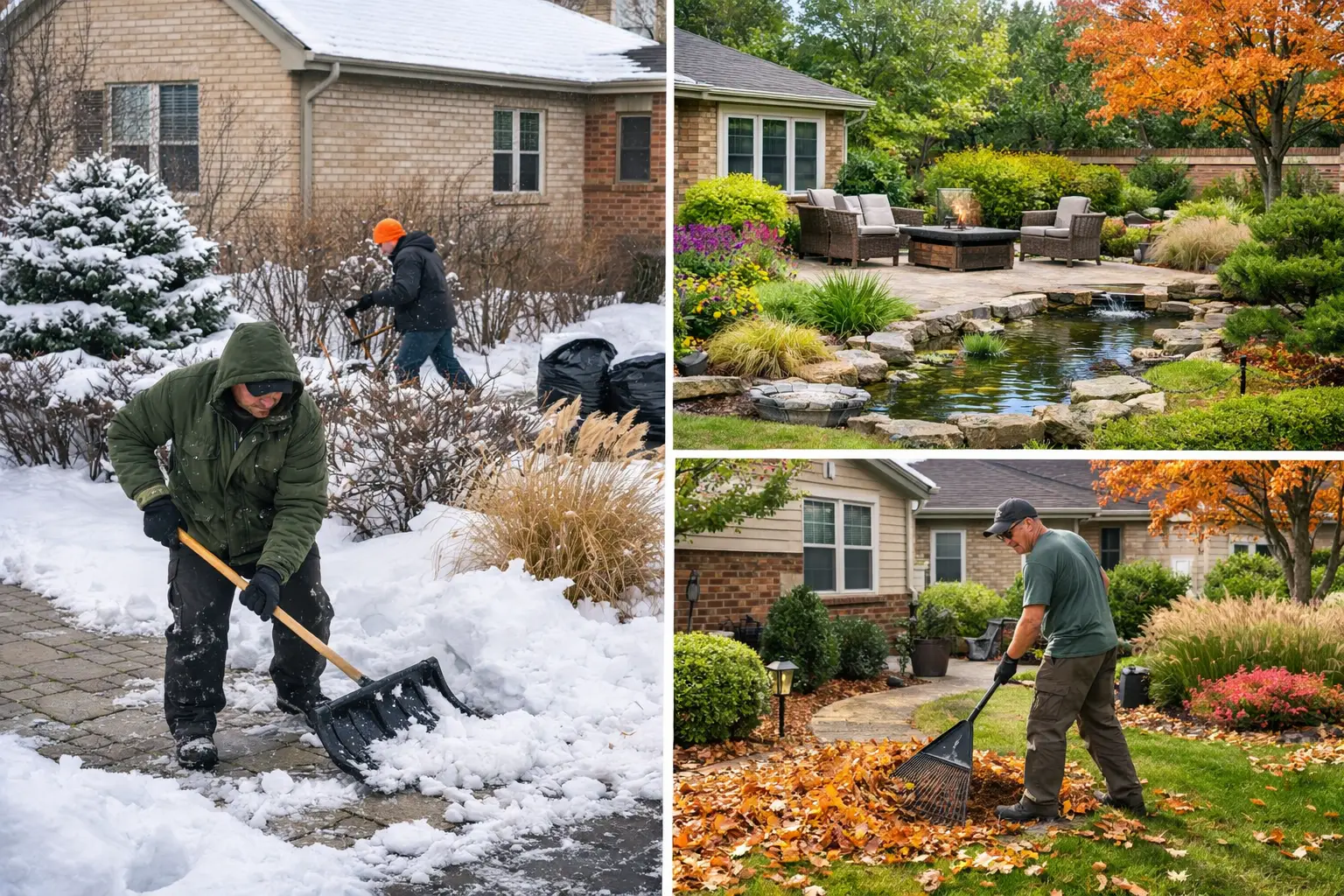
A new landscape installation is exciting, but long-term care is what keeps it looking good. Illinois yards change quickly through the seasons. Spring brings cleanup, edging, pruning, and attention to drainage after snowmelt. Summer calls for regular mowing, trimming, and watching for stressed turf. Fall means leaf cleanup and preparing beds and lawns for winter.
For busy homeowners, routine maintenance is often the difference between enjoying a yard and constantly chasing it. A clean crew on a regular schedule can keep grass under control, beds neat, and shrubs from taking over walkways. It also gives someone a chance to notice changes early, such as a drainage issue, dead branch, worn paver edge, or downspout that is no longer directing water correctly.
Winter deserves a plan as well. Snow removal is about more than clearing a path after a storm. Homes and commercial properties need dependable attention to driveways, sidewalks, entrances, and high-traffic areas. A property that is cared for year-round is easier to maintain and safer for family, visitors, customers, and delivery drivers.
Choose a Plan That Solves the Right Problems First
You do not need to redo the entire property at one time to make a meaningful improvement. In fact, a phased plan often makes more sense. Start with what protects the home or creates the biggest daily headache, such as drainage near the foundation, an unsafe walkway, or a backyard that cannot be used because it stays muddy. Then build toward the visual upgrades and outdoor features you want.
At Revive Your Lawn, we look at landscaping as part of the full exterior picture. That means considering the lawn, plant beds, drainage, hardscapes, lighting, and the maintenance the property will need after the work is done. It is a more practical way to plan because each part of the yard affects the next.
The best time to start is when you can still look at your yard honestly. Notice where water collects after rain, where you avoid walking, which plants have outgrown their space, and where the property feels unfinished. Those details give you a solid starting point for a yard that feels better to come home to in every season.