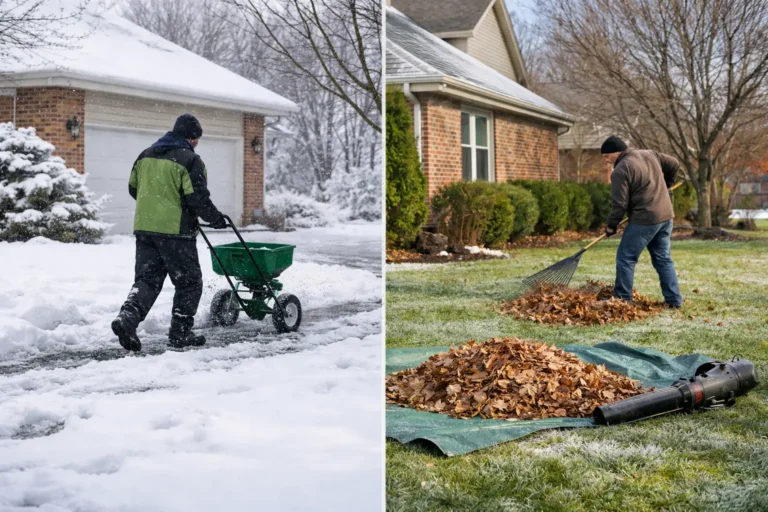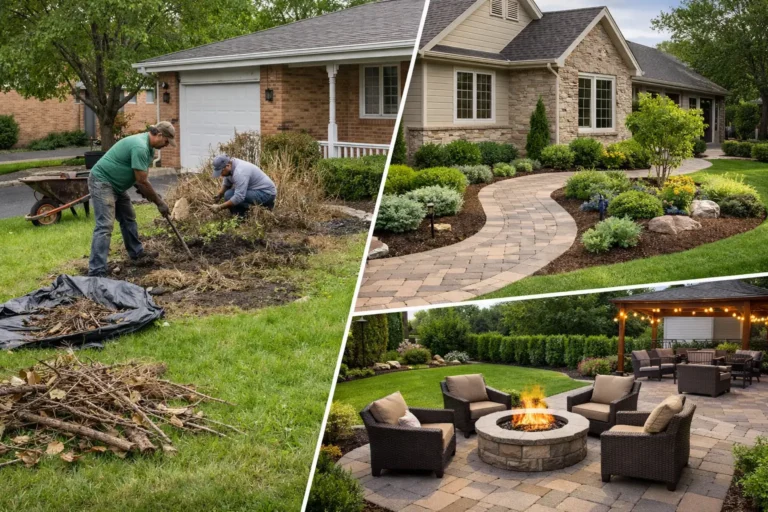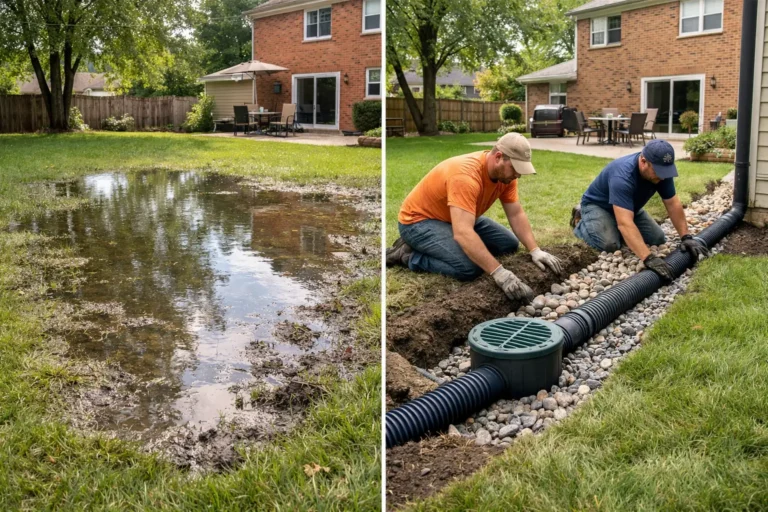
A patio usually looks great on paper. Then real life shows up. The grill needs more room, the kids cut through the planting beds, water puddles near the back door, and the sunny spot you picked turns into a hot plate in July.
That is why good hardscape patio design ideas need to do more than look nice. They need to fit how your family actually uses the yard. In the Chicago suburbs, they also need to handle freeze-thaw weather, spring rain, and the kind of foot traffic that comes with busy households.
Hardscape patio design ideas that start with function
The best patios usually begin with one simple question: what do you want this space to do? If the answer is dining, the layout should leave room to pull chairs out without stepping into grass or mulch. If the goal is lounging by a fire pit, the shape and size should support conversation, not just fill a corner of the yard.
This is where many homeowners run into trouble. They focus on the paver color first and the layout second. The result can still be pretty, but it may not work very well. A good landscape should look nice, but it also needs to work.
In Illinois, this matters because patios often have a shorter heavy-use season than people expect. You want every square foot to count from spring through fall.
1. Build around zones, not one big slab
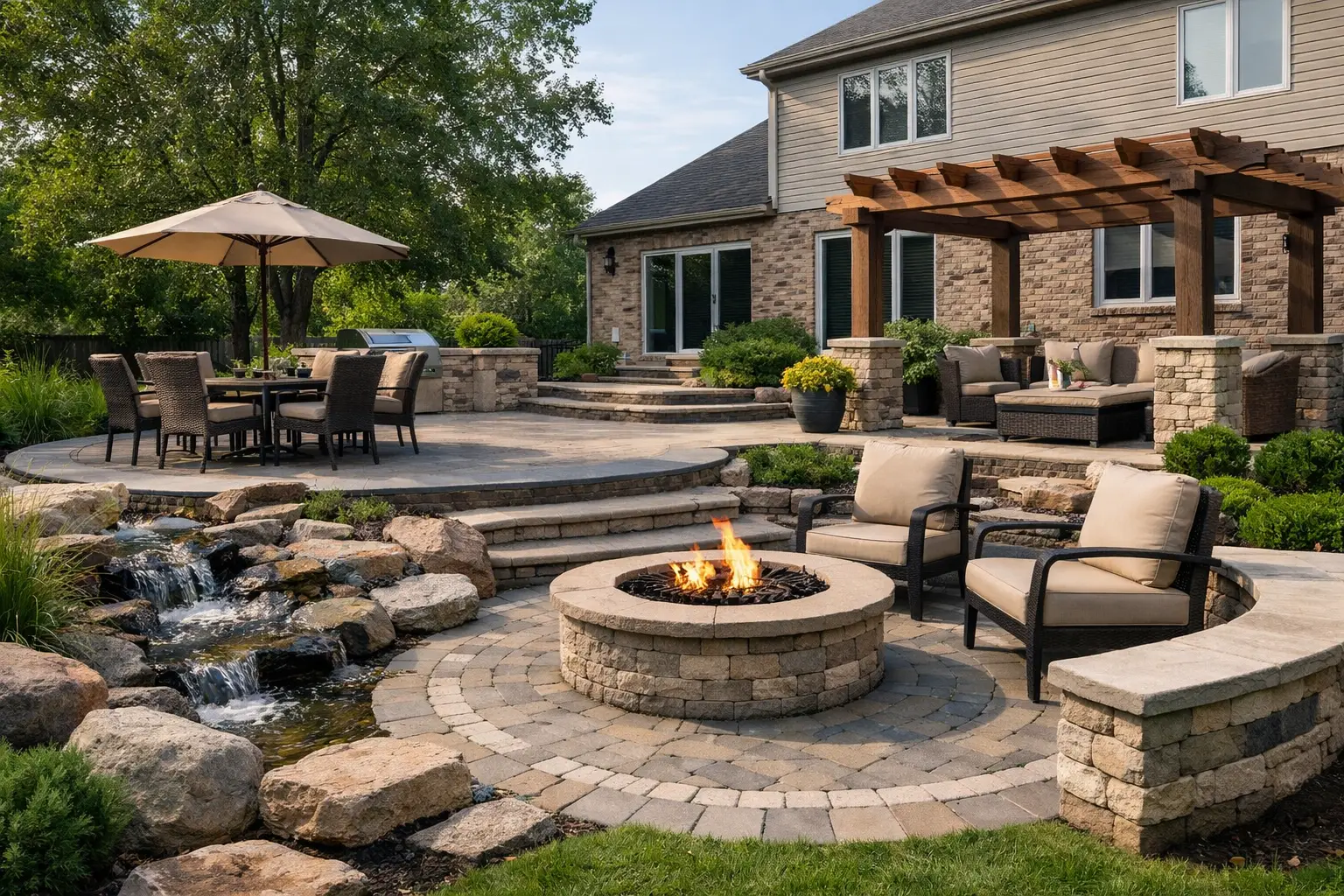
One of the smartest hardscape patio design ideas is breaking the space into use zones. Instead of a single rectangle, think in terms of a dining area, a sitting area, and a transition path. That can be done with shape changes, a small step, a border pattern, or a pergola overhead.
This makes the patio feel more custom without making it complicated. It also helps larger backyards feel connected instead of empty.
2. Keep the patio close enough to the house to be useful
A patio tucked far into the backyard can look charming, but it is not always practical for everyday use. If you are carrying food outside, keeping an eye on kids, or walking out with coffee in the morning, distance matters.
For many Chicagoland homeowners, the most-used patio sits right off the back door or just beyond the slider. You can still add a second feature space deeper in the yard, but the main patio should be easy to reach.
3. Choose pavers that fit the home, not just the trend
Modern large-format pavers can look sharp on newer homes. Tumbled pavers with softer edges may fit better with traditional brick houses or older suburban neighborhoods. Natural stone has a beautiful look too, but it comes with a different price point and a different feel underfoot.
There is no one right answer here. What matters is choosing a material that feels like it belongs with the house. A patio should look like part of the property, not like it was dropped in from a catalog.
Color matters too. In the western suburbs, we see many homes with brick, tan siding, gray roofing, or a mix of warm and cool tones. The best patio colors usually tie into those existing materials instead of fighting them.
4. Add a border for definition
A contrasting border is a small detail that makes a big difference. It frames the patio, gives it a finished look, and can help define curves or steps.
This is a good example of spending money where it shows. You do not need a complicated pattern across the whole patio. Often, a clean field of pavers with a darker border looks better and stays more timeless.
5. Plan for drainage from day one
This is the part homeowners cannot afford to ignore. You do not want water sitting near your foundation, and you do not want runoff turning your patio edge into a muddy mess.
A patio should be pitched so water moves away from the house in a controlled way. Sometimes that is enough on its own. Other times, especially in flatter yards or low spots, you may need added drainage work such as a catch basin, drainage pipe, or regrading nearby areas.
In Illinois, freeze-thaw cycles make drainage even more important. Water that sits under or around a patio can lead to movement over time. A beautiful patio with poor drainage is a headache waiting to happen.
6. Use seat walls when you want more than loose furniture
Seat walls are one of the most practical patio upgrades out there. They create built-in seating, define the edge of the patio, and make the whole area feel more grounded.
They are especially useful around fire pit spaces or where the patio meets a grade change. You do not need them everywhere. But in the right spot, they make the patio feel more finished and more usable when guests come over.
7. Mix in a walkway that actually guides traffic
A patio should not feel stranded in the yard. One of the better hardscape patio design ideas is tying it into the rest of the landscape with a paver walkway. That may connect the driveway to the backyard, lead to a side gate, or create an easy path to a shed, pool, or garden area.
This helps with appearance, but it also cuts down on worn grass and random footpaths through the lawn. For busy families, that is a real benefit.
8. Add a pergola if the yard gets strong afternoon sun
A lot of patios are underused for one simple reason: they are too hot. If your backyard gets strong west-facing sun, adding a pergola can make the space much more comfortable.
It also gives the patio a sense of structure. Even a simple pergola can help a plain paver area feel like an outdoor room. Some homeowners prefer an open-top look for light and airflow, while others want added shade features. It depends on the yard and how the space will be used.
9. Think about lighting before the patio is finished
Low-voltage lighting is easier to plan before everything is buttoned up. If you know you want lights on steps, along a seat wall, or around nearby planting beds, it makes sense to account for that during the design stage.
Lighting is not just for looks. It helps with safety, especially around level changes and walkways. It also extends the hours you can actually enjoy the space. In the fall, when the sun drops earlier, that matters.
10. Leave room for planting beds to soften the edges
A patio surrounded by nothing but open lawn can feel a little flat. You do not need a jungle of plants, but a few well-placed planting beds can soften the hard edges and help the patio blend into the yard.
This is also a good way to make the patio feel established. Shrubs, ornamental grasses, and hardy Illinois-friendly perennials can add color and texture without making the space feel crowded. The key is balance. Too many plants can make the patio feel boxed in and add more upkeep than you want.
11. Size the patio for real furniture, not guesses
This may be the most overlooked part of all. Homeowners often underestimate how much room furniture takes once people are actually using it. A table may fit on paper, but if chairs cannot slide out comfortably, the patio ends up feeling tight.
Before finalizing a layout, it helps to think about exact use. Do you want a table for six? Space for a grill? A couple of lounge chairs? A fire pit with room to walk around it? Those details shape the size more than the yard itself.
Common patio design mistakes in Illinois yards
The biggest mistake is building for appearance only. The second biggest is not accounting for the site. If your yard has a slope, low area, drainage issue, or a basement foundation that already sees water, the patio design needs to respond to that.
Another common issue is making the patio too small because the homeowner is trying to keep the project modest. That is understandable, but there is a point where a patio becomes too cramped to enjoy. It is usually better to build the right size once than wish it were bigger a year later.
Material choice can also cause problems if it does not match the home or the conditions. Some surfaces show dirt more. Some look better on modern homes than traditional ones. Some layouts need more cuts and complexity than others. A design that looks clean and simple is often the one that ages best.
What a well-designed patio should do
A good patio should make your yard easier to use. It should give you a clean place to gather, help guide movement through the space, and hold up through Illinois weather without becoming a maintenance headache.
It should also fit the bigger picture. Sometimes that means pairing the patio with drainage improvements. Sometimes it means adding landscape lighting, a pergola, or new planting around the space so the whole yard feels finished. That is often where homeowners see the best result – not from one feature alone, but from a design that solves problems and improves the way the property looks and functions.
If you are looking at your backyard and thinking something feels off, you are probably right. Usually it is not just about needing a patio. It is about needing the right patio in the right place, built to work with the yard you actually have. That is where smart planning pays off for years.