A wet spot near the back fence after a hard rain may not seem like much. But when that same spot stays soggy for days, kills grass, or sends water toward the house, it is time to pay attention. This outdoor drainage inspection homeowner guide will help Chicagoland homeowners see where water is going, what warning signs matter, and when a professional plan makes more sense than another bag of grass seed.
In the Chicago suburbs, drainage problems often show up after spring rain, fast summer storms, or a winter thaw. Our clay-heavy soil can hold water, and many neighborhoods have closely spaced homes, flat yards, downspouts, patios, and landscaping features that all affect the flow. A good landscape should look nice, but it also needs to work.
When to inspect your yard drainage
The best time to inspect is during a steady rain and again the day after. You do not need to stand outside in a thunderstorm. A light or moderate rain is enough to show where water leaves the roof, runs across the lawn, collects along a patio, or backs up near a foundation.
Also walk the property when the ground is dry. That gives you a clearer view of low spots, settled pavers, bare grass, washed-out mulch, and stains on concrete. Take a few photos from the same places after different storms. This is helpful because drainage issues can change with the season. What looks fine in August may become a muddy mess during an Illinois spring thaw.
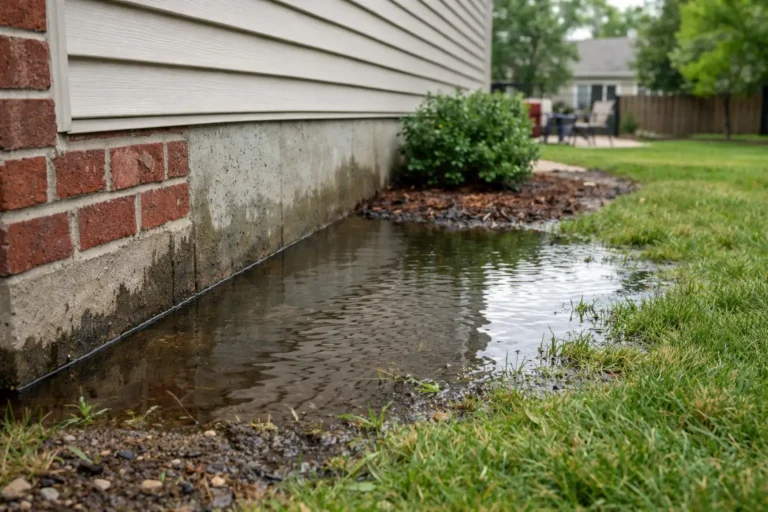
Start at the house and work your way outward. Water that sits near the home deserves attention before water at the far end of the yard. You do not want water sitting near your foundation, window wells, basement entry, or garage.
Outdoor drainage inspection: what to look for
Follow the water from the roof
Your gutters and downspouts are the first place to check. Look for overflowing gutters, loose connections, crushed downspout extensions, and outlets that stop right at the foundation. A clogged gutter can dump a surprising amount of water into one small area.
Watch where each downspout discharges. The goal is to move roof water away from the home and toward a safe area where it can drain without creating trouble for a neighbor, sidewalk, or lower part of your yard. Simply adding a longer plastic extension can help in some cases, but it is not always a long-term answer. Extensions can shift, crack, interfere with mowing, or dump water into a low spot.
If leaves and debris are repeatedly clogging the system, gutter protection may be part of the conversation. Keeping roof water moving is one of the simplest ways to reduce avoidable drainage headaches.
Check the grade around the foundation
Grade means the slope of the soil. Ground around the house should generally slope away so rainwater is not directed back toward the foundation. Walk along the perimeter and look for areas where mulch, soil, or stone has settled below the surrounding lawn.
Here is a common issue in Naperville-area homes: a homeowner adds mulch around the foundation every year, but the bed slowly becomes a shallow bowl. Water lands in the bed, has nowhere to go, and soaks the soil right beside the home. The fix may be as simple as reshaping part of the bed. In other cases, the yard needs a more complete grading plan.
Be careful not to pile soil or mulch too high against siding, brick vents, or window trim. Drainage improvements should protect the house, not create a new moisture or maintenance problem.
Find the low spots and soft ground
Walk the lawn in a grid pattern and pay attention to how it feels underfoot. Spongy turf, muddy patches, moss, thin grass, and puddles that last longer than a day or two are all clues. Look especially near swing sets, fence lines, patios, side yards, and the bottom of sloped areas.
A low spot does not always mean the entire yard needs to be regraded. Sometimes a small area has settled, or water is being concentrated there by a downspout or neighboring slope. This is where many homeowners run into trouble: they fill the depression with topsoil, only to find the water returns because the source was never addressed.
Look at patios, walkways, and driveway edges
Hardscape surfaces should shed water away from the house and toward an appropriate drainage area. If a patio or walkway slopes toward the foundation, water can collect where you least want it. Pavers that have settled unevenly may also create small channels or puddles.
Pay close attention to the space where a driveway meets the garage. Water flowing toward a garage door can become a bigger issue during a heavy storm or freeze-thaw cycle. In winter, pooled water can turn into ice and make a walkway or entry less safe.
You do not need to guess at every slope. A drainage contractor can check elevations and determine whether the issue is surface water, roof runoff, a hardscape slope, or a combination of all three.
Inspect window wells, basement stairs, and exterior drains
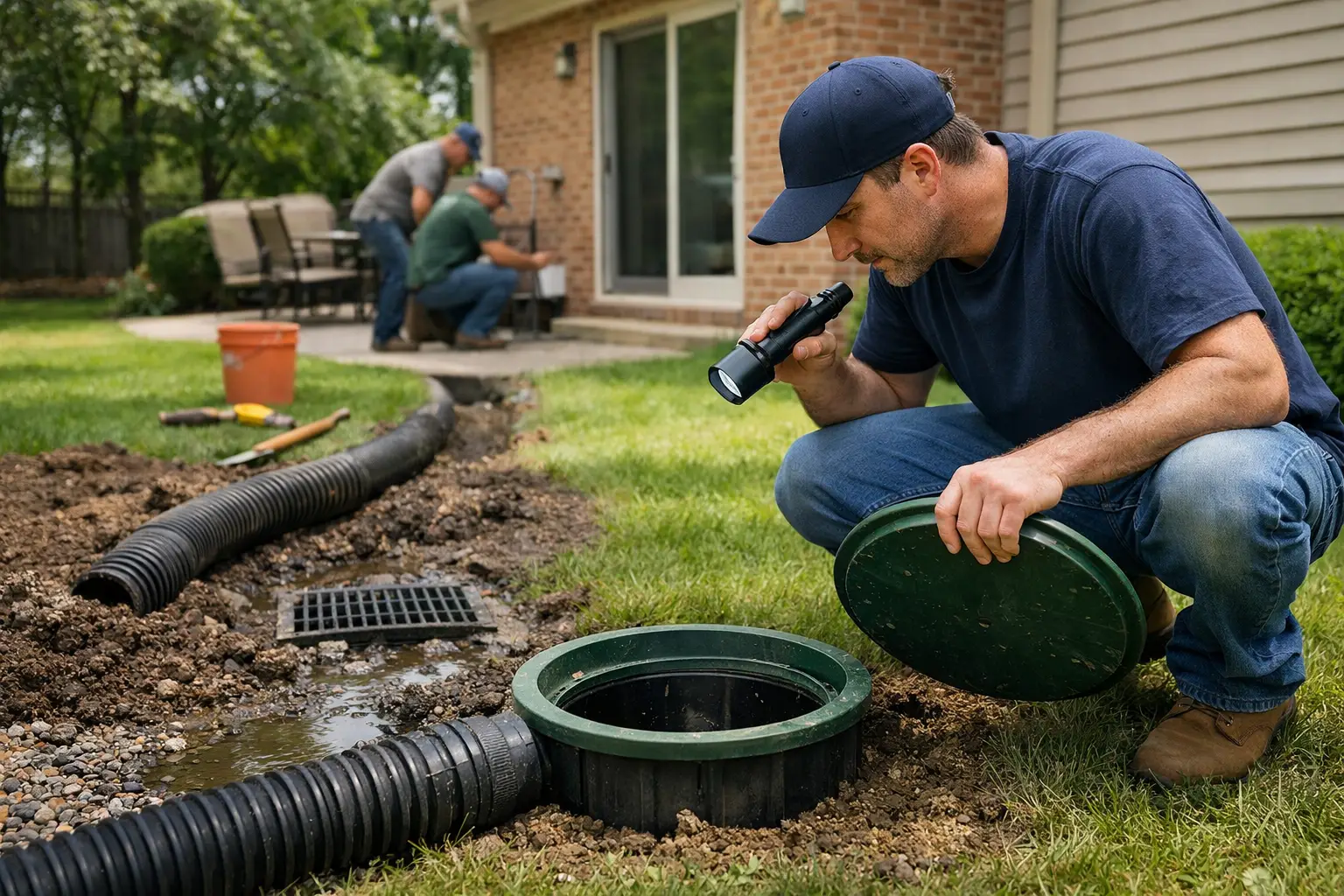
Clear leaves, mulch, and debris from window wells and basement stair drains. These areas are designed to collect water temporarily, but they cannot work when they are packed with debris or when the drain outlet is blocked.
If you see water in a window well after most storms, do not ignore it. Check whether the surrounding ground is directing water toward the well. Also look for cracked covers, loose grates, or soil that has washed down against the foundation. A cover may help keep debris out, but it will not solve a grading issue by itself.
Common drainage fixes and when they fit
The right solution depends on where the water starts, how much water is involved, and where it can safely go. There is no one-size-fits-all drain for every Illinois home.
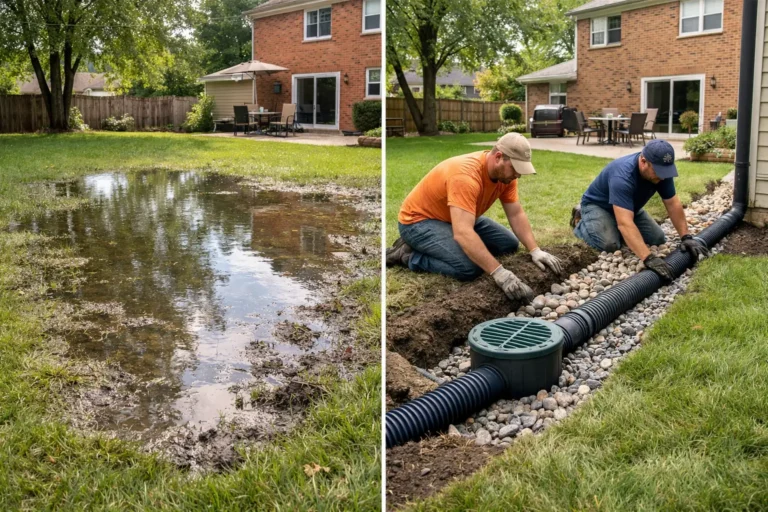
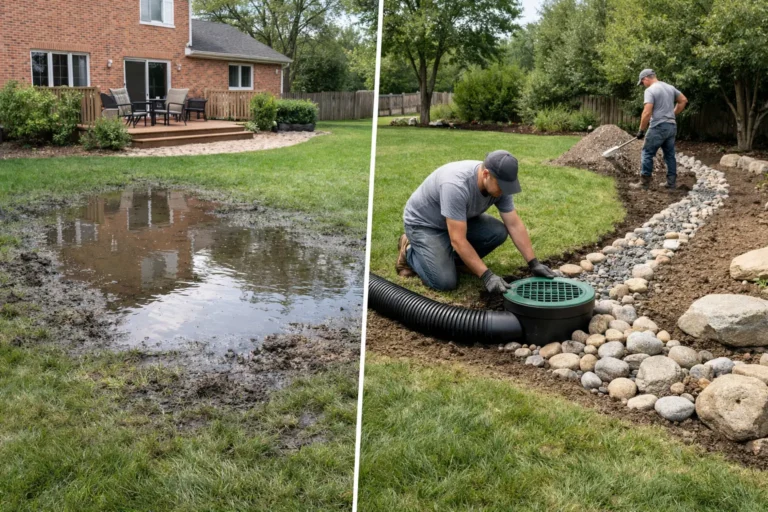
For roof runoff, buried downspout lines can move water farther from the house without leaving extensions across the lawn. For broad, shallow wet areas, reshaping the grade or adding a swale – a gently sloped channel in the yard – may guide water away naturally. For recurring standing water, a catch basin and underground drainage line may collect and direct surface water to a suitable outlet.
A French drain can be useful in certain situations, especially where water is moving through soil and creating a consistently wet area. It is not a magic fix for every puddle, though. If the property has no workable outlet or the problem is mostly from a patio sloping toward the house, another approach may be better.
Sometimes the best answer combines drainage work with landscape improvements. A properly rebuilt bed, adjusted paver edge, dry creek feature, or carefully planned planting area can help water move while also improving curb appeal. The goal is not to fill the yard with pipes. The goal is to make the property function better and still look like home.
What homeowners can do before calling for help
A basic inspection can give you useful information without turning into a major DIY project. Clear visible debris from gutters, downspout outlets, window wells, and drain grates. Make sure loose extensions are connected and pointed away from the home. Then document what happens during rain.
Write down a few details: where water first appears, how long it remains, whether it reaches the house, and whether the issue began after a new patio, fence, landscaping project, or neighboring construction. Photos and short videos are especially useful for problems that disappear before a contractor arrives.
Avoid covering a wet area with mulch, decorative stone, or new sod before you understand the cause. Those materials can make the yard look better for a while, but they do not change the direction of water. They can also hide a low spot that needs attention.
When to bring in a drainage professional
Call for a professional evaluation if water is reaching the foundation, entering a basement or garage, pooling near electrical equipment, undermining a patio, or repeatedly turning part of the lawn into mud. You should also get help if multiple downspouts, slopes, and hardscape surfaces appear to be contributing to the problem.
For Downers Grove homeowners and other Chicagoland properties with tight side yards, drainage planning matters even more. Water has less room to spread out, and a change on one side of the property can affect another area quickly. A proper walkthrough looks at the full picture: roof runoff, grading, existing drains, landscaping, patios, and how the yard is used by your family.
At Revive Your Lawn, that full-picture approach is how we look at outdoor problems. A clean-looking yard is great, but it should also keep water moving away from the places that matter most.
If your lawn stays wet long after the rain stops, trust what the yard is telling you. A careful inspection now can help protect your home, preserve your outdoor space, and save you from dealing with the same muddy corner season after season.