A backyard can look great on paper and still sit unused most of the summer. Maybe the patio gets too hot by noon, the seating area feels exposed, or there is simply no clear place to gather outside. If you are searching for pergola installation near me, you are probably looking for more than a decorative structure. You want a backyard space your family can actually use.
For Chicagoland homeowners, a pergola can create that missing outdoor room. It adds definition, shade, and visual interest without closing off the yard. But getting the right result comes down to more than choosing a style you like online. The location, materials, footing plan, drainage, and connection to the rest of your landscape all matter.
What a Pergola Can Do for Your Backyard
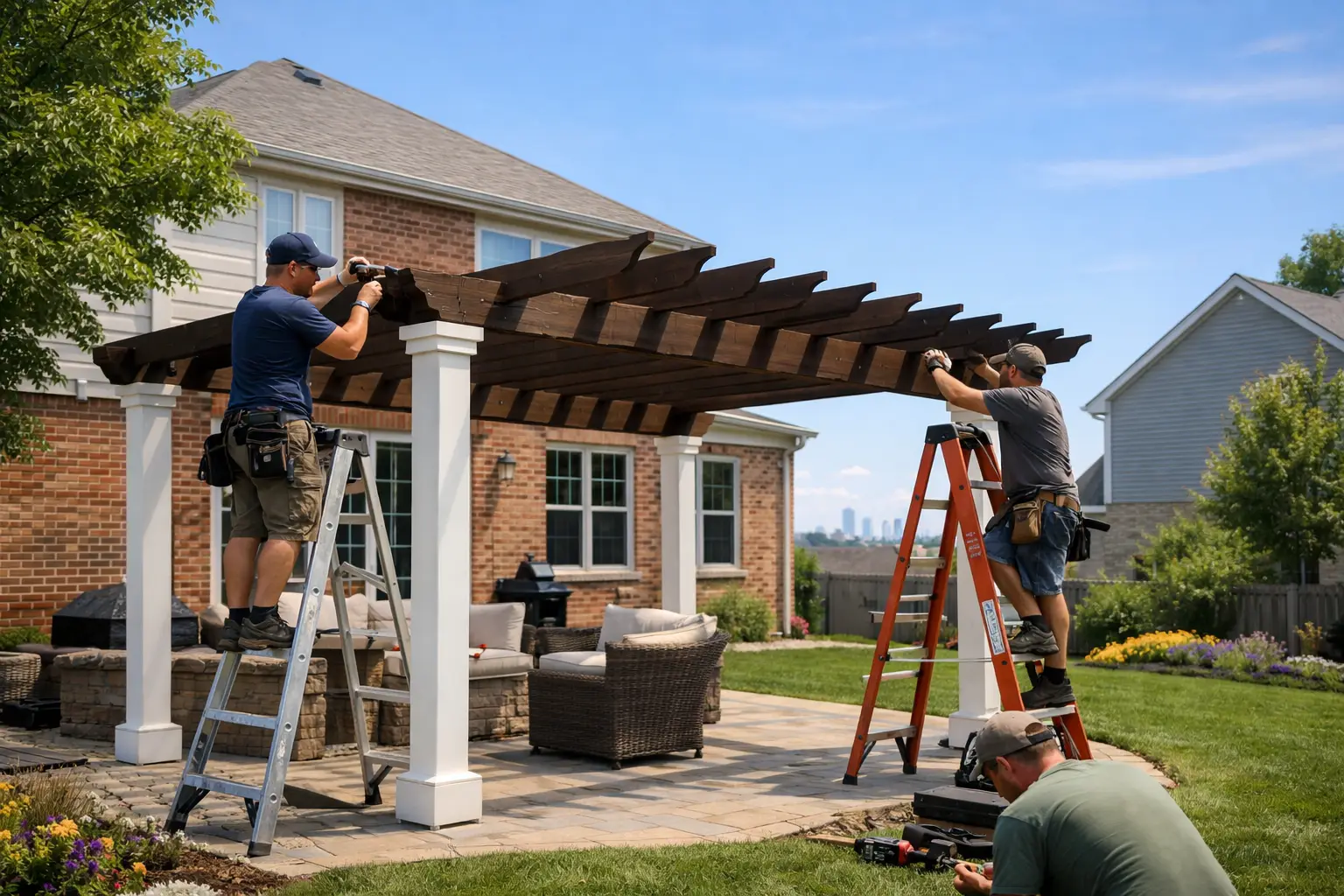
A pergola is an open-roof structure supported by posts and beams. It can stand over a patio, sit beside a pool, frame a fire pit, or create a destination farther out in the yard. The slatted roof provides partial shade, while optional canopy covers, louvers, curtains, or climbing plants can make the space feel more private and comfortable.
The biggest benefit is often how it changes the way a yard is used. A plain patio may be functional, but a pergola gives it purpose. It can make a dining set feel like an outdoor dining room or turn a corner of the yard into a spot for morning coffee.
It also helps tie separate outdoor features together. For example, a patio, paver walkway, landscape lighting, and pergola can feel like one complete design instead of several projects added over time. A good landscape should look nice, but it also needs to work for the way your household lives.
Pergola Installation Near Me: Start With the Site
This is where many homeowners run into trouble. They pick the pergola first and consider the yard second. A structure that looks right in a catalog may not fit the shape of your patio, the path of the afternoon sun, or the way water moves through the property.
Before installation, look at how you plan to use the area. If you want shade during dinner, pay attention to where the sun sits in the late afternoon. If the pergola will cover a grill or outdoor kitchen, leave enough room for safe movement and proper clearance. If it will be near a property line, fencing, or a mature tree, make sure there is room to build and maintain it without creating a tight, awkward space.
In Illinois, drainage deserves special attention. Our spring rains, heavy summer storms, and freeze-thaw cycles can expose problems quickly. You do not want water sitting near the pergola posts, pooling on a patio, or running back toward your foundation. In some yards, the pergola project is a good time to correct grading, add drainage, or improve a nearby downspout discharge.
A contractor should also check what is below the proposed post locations. Existing pavers, buried utility lines, irrigation, and old patio edges can all affect the installation plan. That early planning can prevent expensive changes once work is underway.
Choosing the Right Pergola Material
There is no single best pergola material for every Chicago suburb yard. The right choice depends on the style of your home, the amount of upkeep you are comfortable with, and the look you want long term.
Wood pergolas
Wood brings a warm, classic look that works especially well with traditional homes, natural stone, and established landscaping. It can be stained or painted to complement a fence, deck, or trim color. Wood does need regular care, though. Illinois moisture, sun, snow, and temperature swings can lead to fading, cracking, or movement over time if the structure is not built and maintained properly.
Vinyl pergolas
Vinyl offers a clean, bright appearance and requires less routine upkeep than wood. It can be a good fit for homeowners who want a simple, polished look without planning to stain or seal the structure. The trade-off is that vinyl has a more specific style, and not every home or patio design benefits from that look.
Aluminum pergolas
Aluminum is strong, low-maintenance, and often a good choice for modern designs or adjustable louvered roof systems. It handles weather well and can provide more control over shade and rain than a traditional open-slat pergola. These systems can be a bigger investment, so it helps to be clear about how often you will use the space and what features truly matter to you.
The material is only part of the decision. Proper footings, solid hardware, careful leveling, and a layout that fits the space are what make a pergola feel sturdy and intentional.
Think About Shade, Rain, and Wind Before You Build
A traditional pergola provides filtered shade, not full weather protection. That distinction matters. If your goal is to get relief from direct sun while still enjoying an open-air feel, standard slats may be exactly what you need. If you expect to sit outside during a light rain or want deeper shade, you may need a canopy, retractable cover, or louvered roof design.
Chicago-area weather can change quickly. A well-planned pergola should account for wind exposure, especially in open backyards or homes near fields, golf courses, and larger retention areas. Fabric covers and curtains can be useful, but they need to be selected and secured with local wind conditions in mind.
Lighting is another detail worth discussing early. Low-voltage landscape lighting around the patio, soft lighting on nearby paths, or fixtures integrated into the pergola can make the area safer and more inviting after dark. It is much easier to plan wiring before the final landscaping, pavers, or finishing details are in place.
Permits, Codes, and Property Lines Matter
Homeowners sometimes assume a pergola is too simple to require any paperwork. That is not always the case. Requirements can vary by municipality, homeowner association, structure size, and whether the pergola is attached to the home.
A freestanding structure may have different rules than one connected to a house. Setback rules can affect how close it can sit to a property line, and some communities have requirements for height, footings, or structural details. Downers Grove homeowners may face different local requirements than homeowners in Naperville, Hinsdale, or other western suburbs.
This is not meant to make the project sound complicated. It is simply a reason to work with a contractor who takes the planning side seriously. Clear communication about permits, site conditions, and the scope of work helps avoid surprises later.
How to Choose a Local Pergola Installer
When comparing options for pergola installation, look past the photos. Pictures are helpful, but the questions you ask matter just as much. You want to know whether the company understands your yard, explains the installation approach, and can coordinate the surrounding work if needed.
Ask how the posts will be anchored and what the footing plan looks like. Ask whether the installer sees any drainage concerns near the patio or proposed structure. If your yard needs a new paver patio, a walkway adjustment, fencing, or lighting, ask whether those pieces can be planned together. Coordinating the full exterior picture usually creates a cleaner result and saves you from redoing finished work later.
Pay attention to communication, too. A dependable contractor should be able to explain choices in plain language, provide a clear estimate, answer questions, and keep the job site orderly. You should not feel pressured into features you do not need. The goal is a pergola that fits your home, your budget, and the way you want to spend time outdoors.
Make the Pergola Part of a Complete Outdoor Space
The strongest pergola projects do not stop at the posts and beams. They consider the area under and around the structure. A properly sized patio gives furniture a stable base. Planting beds can soften the edges. A paver path can connect the pergola to the back door, driveway, or pool area without creating muddy traffic lanes.
For some properties, privacy is the missing piece. Strategic fencing, screening, or plantings can make the space feel more comfortable without making the yard feel closed in. For others, the priority is drainage or grading before any new feature goes in. Every yard is different, and that is why a walkthrough matters.
At Revive Your Lawn, we look at pergolas as part of the larger outdoor plan, whether that means pairing one with a new patio, landscape lighting, drainage improvements, or a cleaner landscape layout. The best starting point is a practical conversation about your yard, not a one-size-fits-all package.
A pergola should give you a reason to step outside more often. Take time to choose a location that works, build for Illinois weather, and plan the surrounding space with the same care as the structure itself. That is how an ordinary patio becomes the part of the yard everyone wants to use.