A lawn that squishes under your shoes two days after a storm is not just annoying. It is usually a sign that water has nowhere to go. If you are trying to fix soggy lawn after rain, the right answer depends on why the water is staying put in the first place.
Around the Chicago suburbs, this comes up all the time. We get heavy spring rains, clay-heavy soil, snowmelt, and flat yard areas that hold water longer than they should. A little softness right after a storm can be normal. But if your grass stays muddy, puddles keep showing up in the same spots, or the ground feels spongy for days, your yard is telling you something.
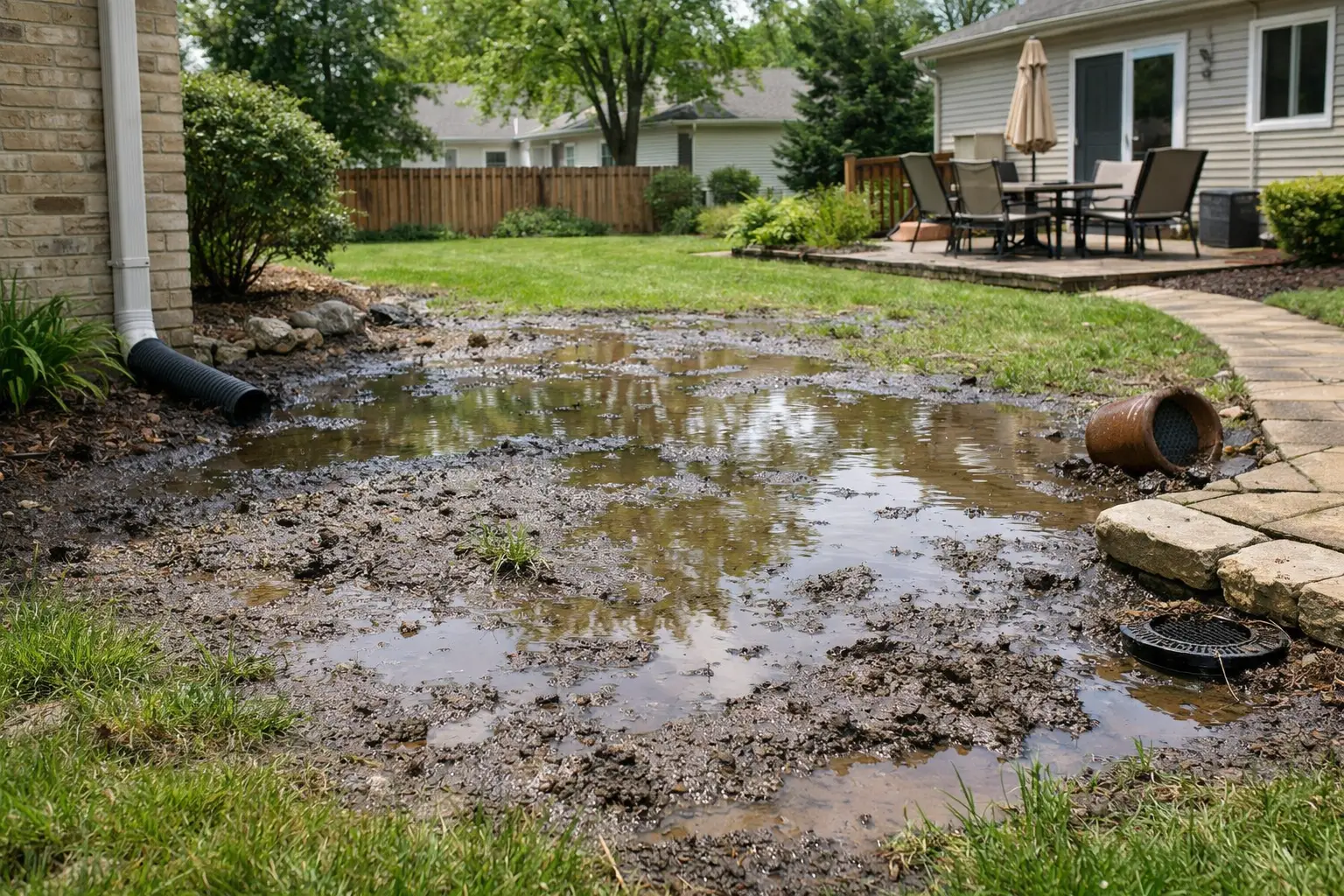
Why your lawn stays soggy after rain
Most soggy lawns come down to one or two root problems, even if the symptoms show up in several places. The first is poor drainage. The second is poor grading, which means the yard does not slope well enough to move water away from low areas or away from the house. For a wider look at the pattern, see what usually causes yard flooding in the Chicago suburbs.
In Illinois, this matters because many homes sit on compacted clay soil. Clay does not absorb water quickly. Instead of soaking in, rainwater tends to sit on top, especially when the lawn has been packed down by foot traffic, pets, lawn equipment, or years of settling. This is where many homeowners run into trouble. They assume the grass is the problem, when the real issue is the soil and drainage underneath it. That is why drainage solutions for clay soil often matter more than another bag of seed.
Downspouts can make things worse too. If roof water dumps into the same section of lawn every time it rains, that area can turn into a muddy mess fast. The same goes for yards with low spots, clogged swales, buried debris, or patio and walkway runoff. When gutters are part of the problem, gutter guards and better roof runoff routing can take a lot of pressure off the lawn.
How to inspect a soggy yard before you fix it
Before you spend money on seed, sod, or drainage work, it helps to watch what the water is doing. The best time is during a storm or right after one. You do not need to overthink it. Just walk the property and look for patterns. Our outdoor drainage inspection guide walks through that checklist in more detail.
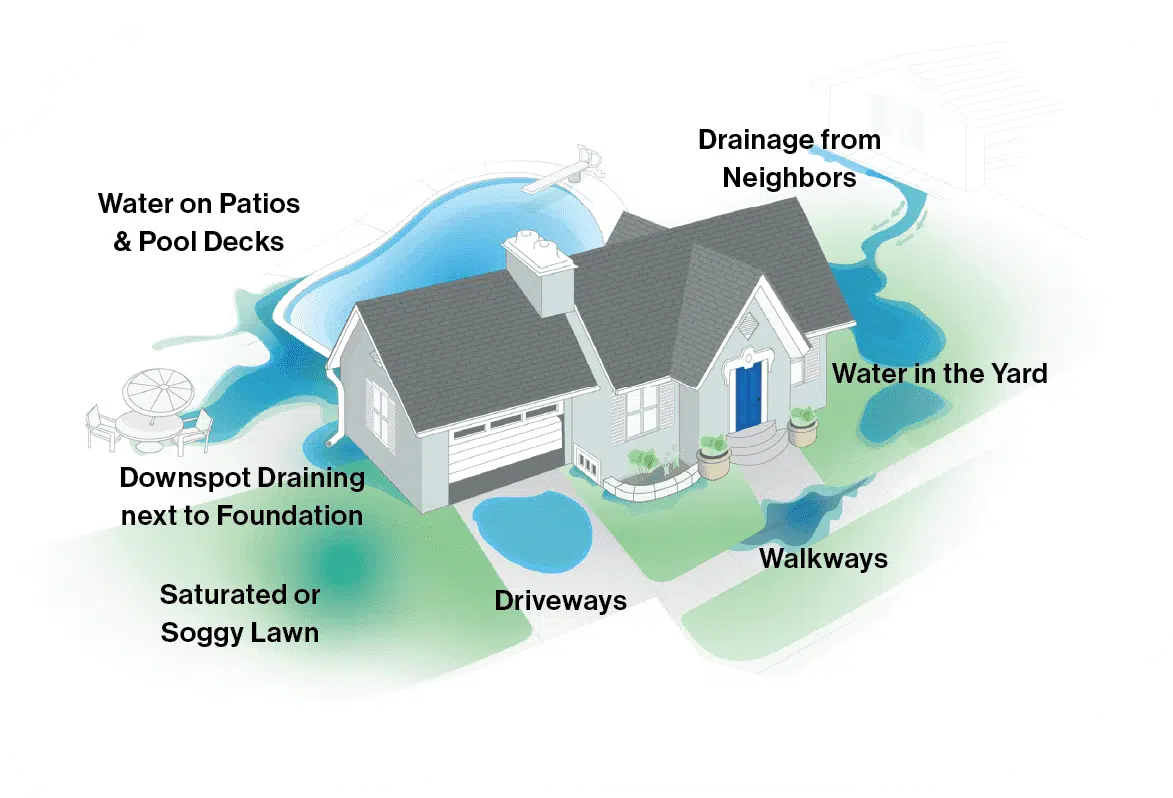
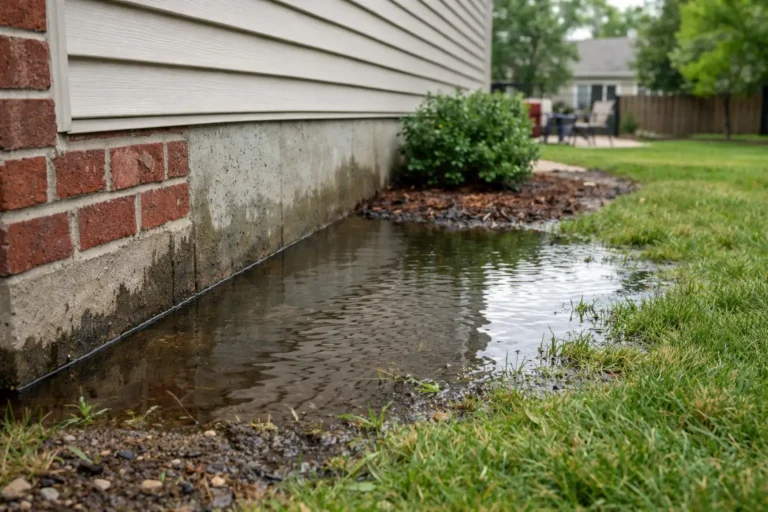
Pay attention to where puddles form, how long they stay, and whether water is moving toward the foundation, patio, sidewalk, or neighboring property. Notice whether the problem is isolated to one low area or spread across the whole lawn. Also take a look at your downspouts. If one is emptying right into a wet section of yard, that is a big clue. Water sitting against the house is a different warning sign than a soft spot farther out, which is why water pooling near foundation walls deserves its own look.
It also helps to do a quick soil check. If the top few inches are hard and dense, water may not be soaking in well. If the lawn is thin or patchy in wet spots, that is another sign the roots are struggling from too much water and not enough oxygen.
Fix soggy lawn after rain with the right solution
There is no one-size-fits-all fix, and that is the honest answer. A small low spot in the yard needs a different approach than widespread standing water near the house. If you want a broader overview of options, start with our residential drainage guide for Illinois yards or yard drainage solutions that actually work.
If the problem is minor, improve the lawn surface
Sometimes the lawn just needs help draining better at the surface. If the soggy area is small and the yard is otherwise draining fairly well, topdressing and regrading a low spot may do the job. That means adding the right soil blend to build the area up gradually so water no longer collects there.
Aeration can also help if the soil is compacted. Pulling small plugs from the lawn opens the soil and gives water a better path down into the ground. In many Chicagoland lawns, this helps when the yard feels hard in dry weather and sloppy in wet weather. It is not a cure for major drainage issues, but it can improve conditions if compaction is part of the problem. For timing, see when lawn aeration should happen in Illinois.
If the grass has been damaged, you may also need overseeding or sod after the drainage issue is addressed. A good landscape should look nice, but it also needs to work. There is no point putting in fresh turf if the same area is going to stay soaked. Once the water problem is handled, lawn maintenance can help the grass recover.
If roof runoff is part of the issue, move the water
A lot of soggy lawn problems start at the roofline. If your gutters and downspouts send water right next to the house or into one part of the yard, the lawn can get overloaded quickly.
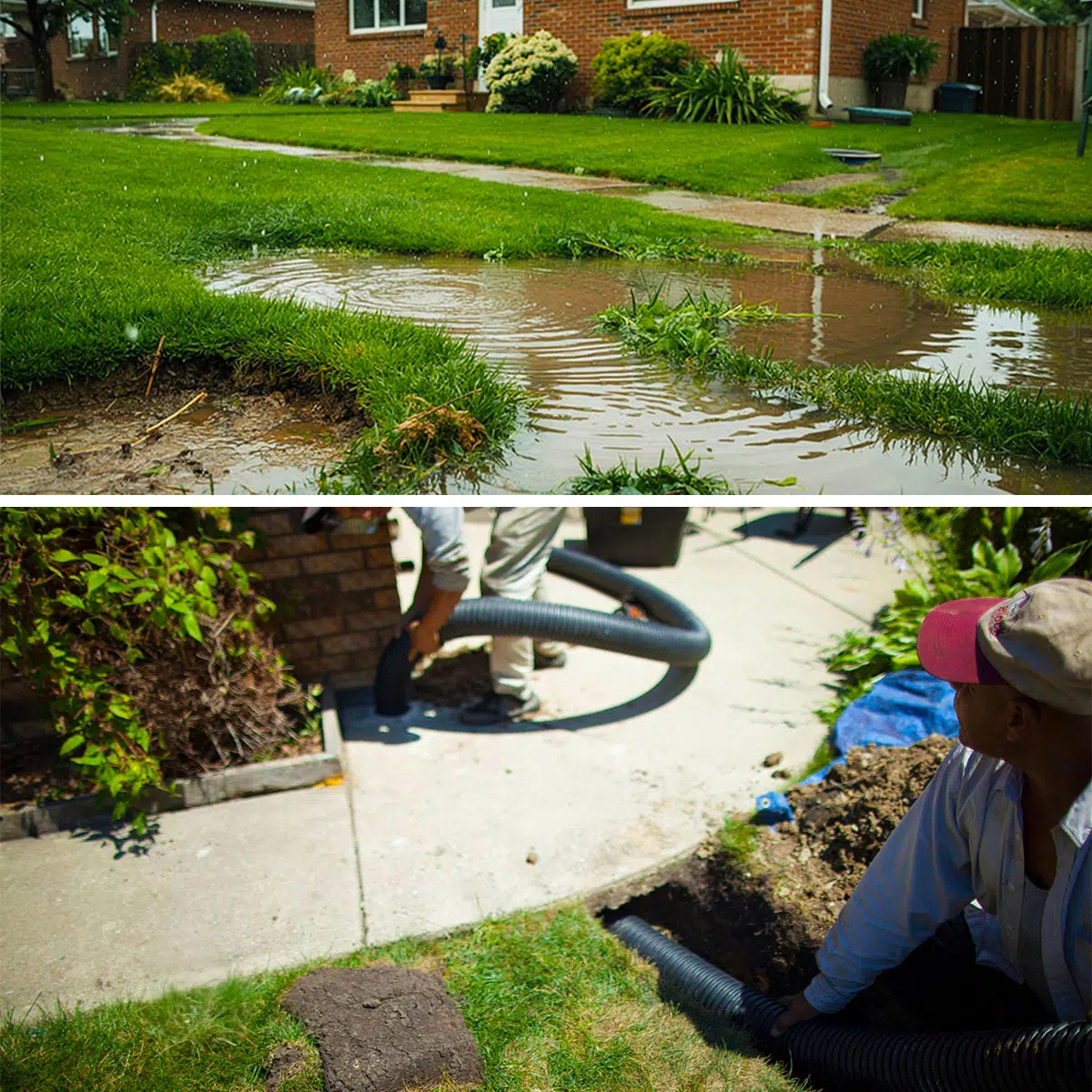
In that case, extending downspouts or tying them into a proper drainage system often makes a big difference. This helps move water away from trouble spots before it has a chance to pool. You do not want water sitting near your foundation, and you also do not want it dumping into the same patch of grass every storm.
This is one of those fixes that sounds simple, but it has to be planned correctly. Water needs a place to go. If you move it from one soggy area to another, you have not really solved anything.
If the yard is flat or sloped poorly, grading may be the real answer
When a lawn stays soggy in multiple spots, or water consistently moves the wrong direction, grading is usually part of the fix. Grading means reshaping the yard so water flows away from the home and toward a safe drainage path. On some properties, a shaped drainage swale or a plan built for a sloped yard is the missing piece.
This can be a light correction or a larger project depending on the property. In older Illinois neighborhoods, we often see settling over time that creates shallow bowls in the lawn. Those bowls catch runoff and hold it. In newer developments, the grading may have been okay at first but changed after years of landscaping, fencing, patios, or added beds.
Good grading is not just about drying out the grass. It protects the usable parts of the property too. Muddy walkways, wet corners by patios, and soft areas near air conditioners or fence gates all make the yard harder to enjoy.
If water has nowhere to go, install drainage
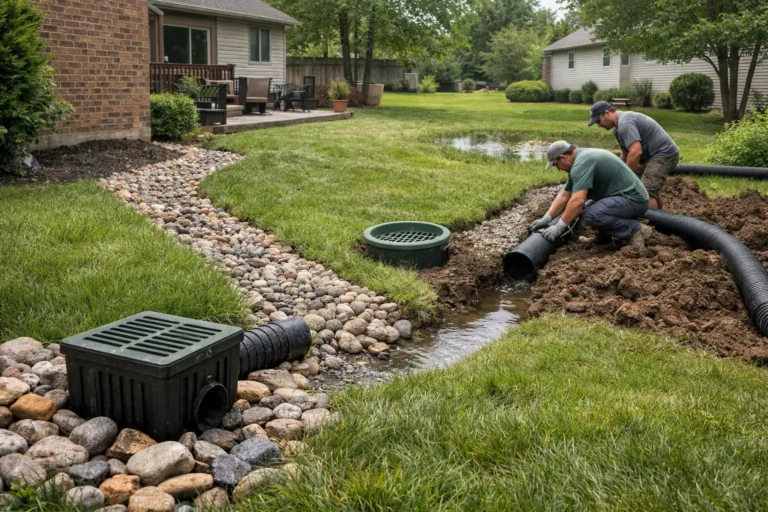
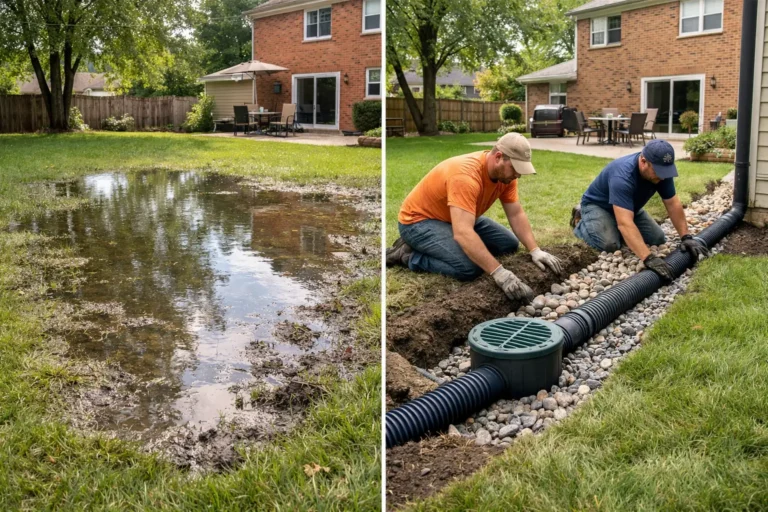
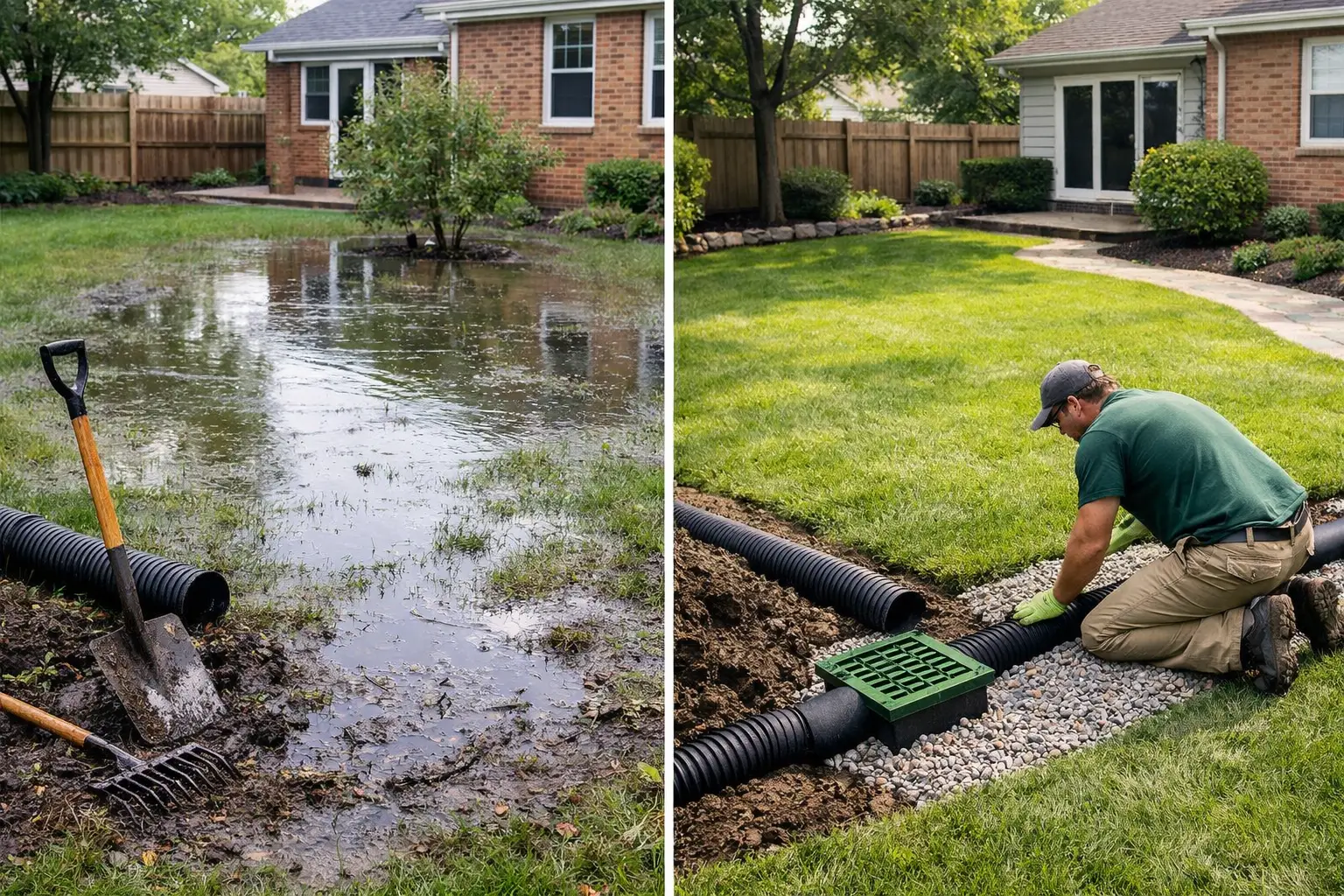
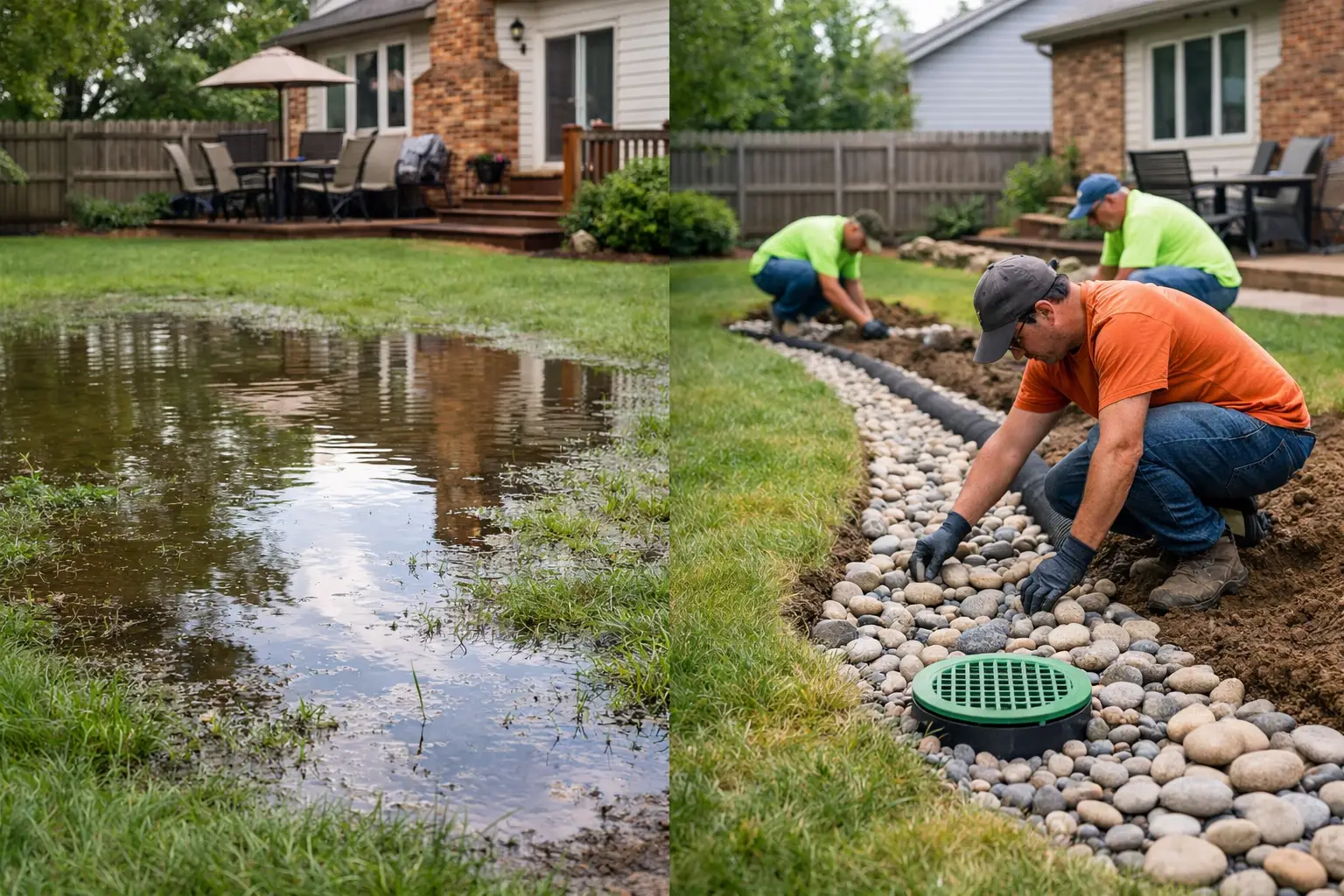
Some yards need more than surface improvements. If water repeatedly collects in the same area, a drainage system may be the best long-term fix. That could mean a French drain, a catch basin, a buried drain line, or a combination of solutions based on how your property handles water. If you are comparing options, French drain vs dry well is a useful next read, and our guide to standing water solutions covers common setups.
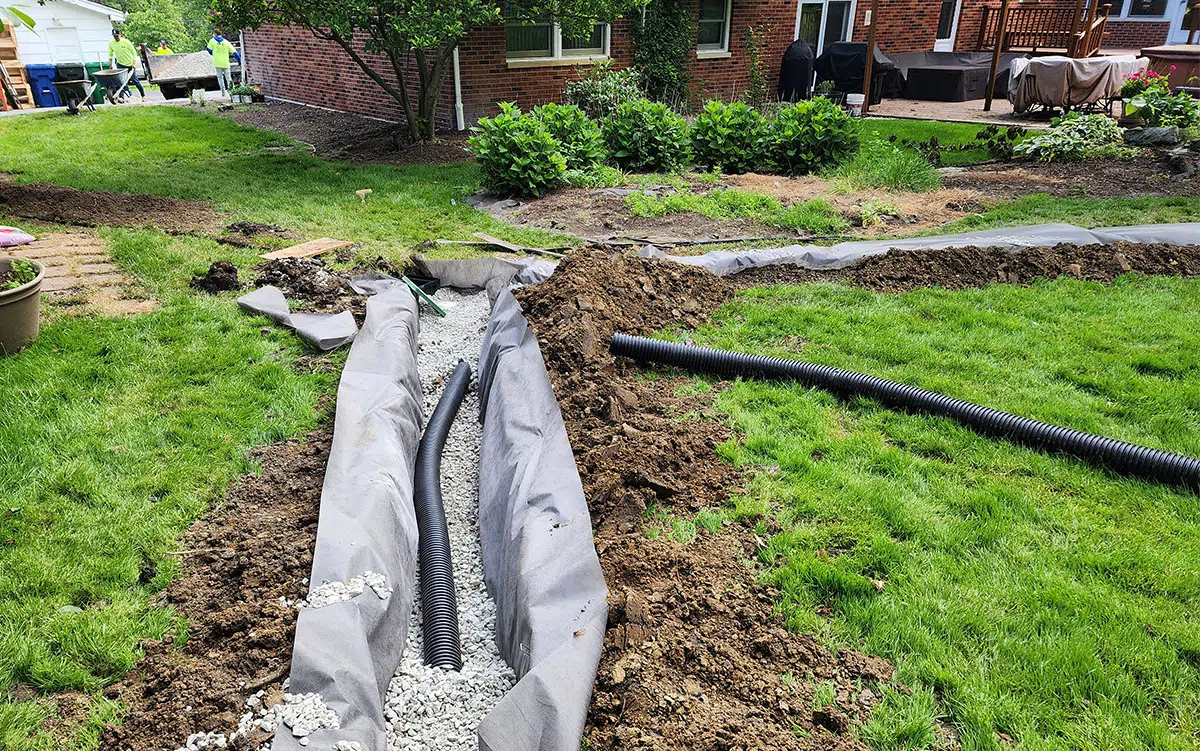
The key is matching the system to the yard. A French drain can work well when water is moving through the soil and needs to be intercepted. A catch basin can help in a low spot where surface water gathers. Sometimes the right plan includes both grading and drainage together. For backyard-specific planning, see how to fix soggy backyard drainage and our backyard drainage planning guide.
This is where many quick fixes fall short. Homeowners throw down more seed, add random soil, or cut a trench without really knowing where the water is coming from or where it should end up. The yard may look better for a few weeks, then the next hard rain brings the same problem back.
What not to do when your lawn is waterlogged
The biggest mistake is working on the yard while it is still soaked. Driving equipment over wet soil, walking on it too much, or trying to rake and level muddy ground usually makes compaction worse.
It is also smart to avoid piling on sand without a plan. People sometimes hear that sand helps drainage, but mixed into clay soil the wrong way, it can create even harder layers. The same goes for re-sodding too early. If the drainage issue is still there, new sod can fail just like the old grass did.
And if water is collecting near the foundation, do not ignore it because it seems like only a lawn problem. Wet turf is one thing. Moisture pressure against the house is another.
When to call for help with a soggy lawn
If the lawn stays wet for more than a couple of days after normal rain, if puddles keep returning in the same areas, or if water is moving toward your home, it is worth having the yard looked at by a professional who handles drainage and grading. That is especially true if you have already tried basic lawn fixes and nothing has changed. If you want help choosing who to trust, read how to choose a drainage contractor.
A good contractor should not jump straight to the biggest solution. They should look at the full property, explain what is happening in plain English, and show you where the water is coming from and where it should go. Sometimes the answer is pretty simple. Other times it takes a combination of grading, drainage, and lawn repair to really solve it.
For homeowners in the Chicago suburbs, local experience matters. Our weather, soil, and freeze-thaw cycles create drainage problems that do not always show up the same way they do in other parts of the country. A yard that looks fine in July can turn into a swamp in March. The Illinois yard drainage guide is another useful reference for local wet-lawn patterns.
If your lawn has become the part of the yard you avoid after every storm, do not just keep waiting for it to dry out on its own. Water problems usually get more expensive the longer they are left alone. The good news is that most soggy yards can be improved once you figure out what the water is actually doing and fix the cause instead of just the symptoms.
Ready to stop walking around the same muddy spot after every storm? Schedule a free drainage review, or start with our yard drainage systems page to see how French drains, catch basins, and downspout routing fit together.