
A Chicago winter can be tough on a lawn without looking dramatic at first. A few weeks of snow, thawing, refreezing, and foot traffic can leave grass thin, muddy, or covered in patches of snow mold by spring. If you are wondering how to protect lawn in winter, the answer starts before the first hard freeze. A little fall preparation helps your yard handle whatever Illinois weather decides to bring.
The goal is not to make your lawn look perfect in January. It is to help the grass go dormant in good shape, keep water moving away from problem areas, and avoid damage while the turf is resting. Here is what to look for around Chicagoland homes.
Start Winter With a Clean, Properly Cut Lawn
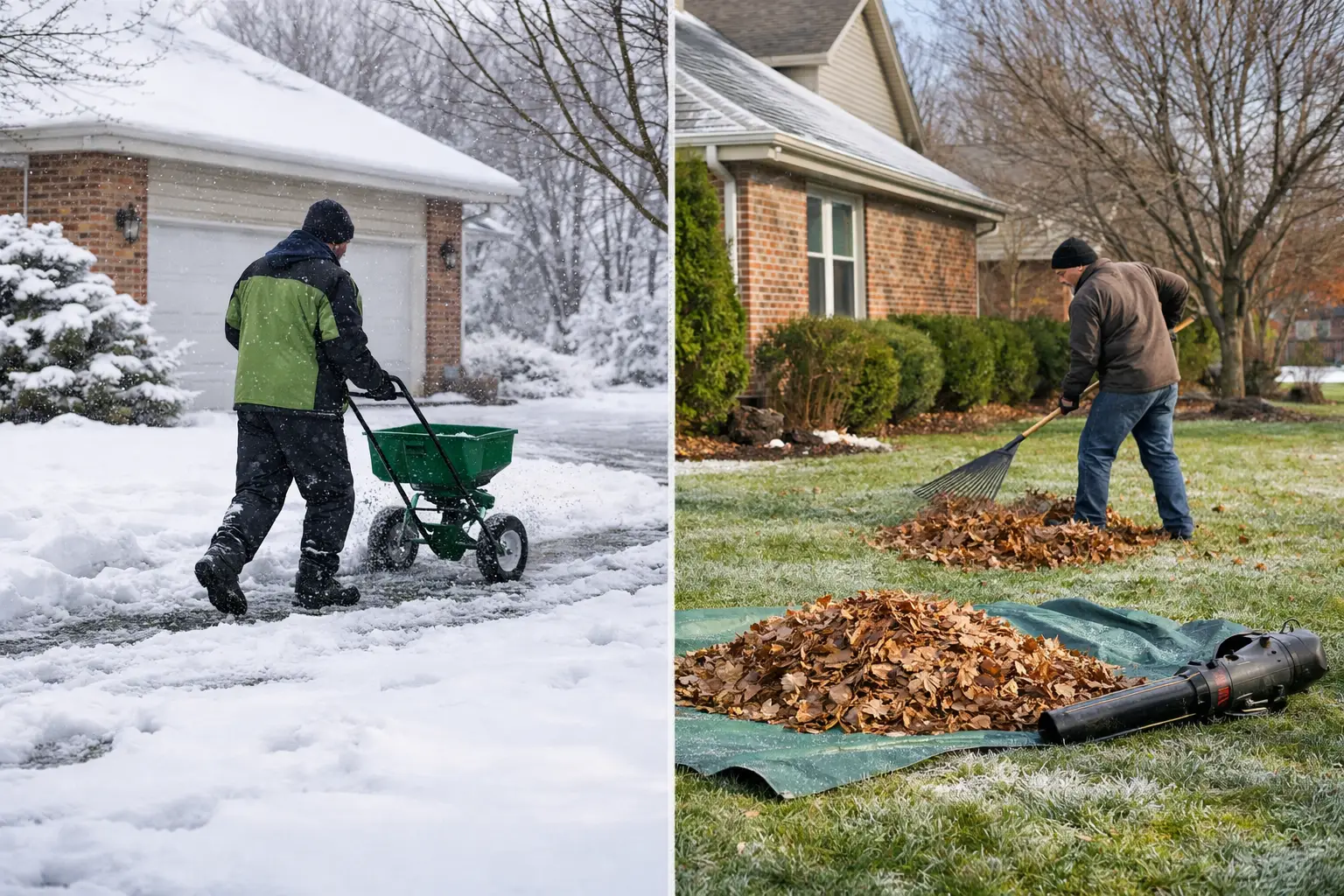
Grass under a heavy layer of wet leaves is more likely to develop disease, especially when snow arrives before the ground fully freezes. Leaves trap moisture and block airflow. They also create a hiding place for pests and can smother grass in low spots.
Keep mowing as long as the lawn is still actively growing, which often means into late fall in the Chicago suburbs. For the last cut, aim for a reasonable middle ground. Grass left too long can mat down under snow. Grass cut extremely short can be stressed before winter. For most established cool-season lawns in Illinois, a final height around 2 1/2 to 3 inches is a safe target.
Do not scalp the lawn to make it look tidy. This is where many homeowners run into trouble. Short grass has less leaf surface to store energy, and it can be more exposed to winter stress. A clean, even cut is better than a very low one.
Remove Leaves, Sticks, and Heavy Debris
A light layer of shredded leaves can break down into the lawn if conditions are dry and the pieces are small. But once leaves begin piling up, remove them. The same goes for fallen branches, toys, patio furniture, and anything else sitting on the grass for weeks at a time.
Pay extra attention to areas along fences, under mature trees, and beside the house. Those spots tend to stay damp longer. Downers Grove homeowners with shaded yards often see this problem first because snow lingers there after sunny areas have already thawed.
Take Drainage Problems Seriously Before the Freeze
Winter lawn damage is often really a water problem. Snow melts, the ground is frozen, and runoff has nowhere to go. That water can sit on turf, freeze again, and turn parts of the yard into a muddy mess when temperatures bounce around.
Walk your property after a fall rain. Look for puddles that remain after a day or two, downspouts that empty near the foundation, and low areas where water collects. You do not want water sitting near your foundation, but you also do not want it pooling across the lawn or at the edge of a patio and walkway.
Clean gutters and make sure downspout extensions direct water away from the home. If a downspout dumps onto a sloped lawn, it may create a washed-out channel or an icy patch. In some cases, changing the outlet location is enough. In others, a buried drainage line, catch basin, or grading adjustment may make more sense. It depends on the slope, soil, landscaping, and where the water has a safe place to go.
For Naperville-area homes with recurring soggy patches, winter is a good time to notice the pattern. Take a few photos when snow melts or water collects. Those pictures can be helpful when planning a drainage solution in spring.
Limit Traffic on Frozen or Dormant Grass
Dormant grass may look tough, but frozen blades can break more easily than green, growing grass. Repeated trips across the same area can leave a worn path that does not fully show up until spring.
Try to keep children, pets, delivery traffic, and guests on sidewalks, driveways, or designated paths whenever possible. This matters most during freeze-thaw weather, when the top layer of soil is soft during the day and frozen at night. Walking across a wet lawn can compact the soil and create ruts.
If you need to move trash cans or wheel equipment through the yard, vary the route instead of using one narrow strip every time. It is a small change, but it can prevent that familiar dead-looking line from the back gate to the driveway.
Keep Salt Off the Grass
De-icing salt makes winter walkways safer, but it can burn grass and damage soil along the edges of driveways and sidewalks. The trouble usually appears in spring as brown strips near pavement, especially where salty slush gets pushed during shoveling.
Use only the amount of de-icer needed for traction. Sweep up excess material instead of letting it wash into planting beds or lawn edges. When shoveling, avoid tossing salty snow onto the same patch of grass all winter. Pile snow in an area that can handle it, away from delicate shrubs, young trees, and low spots that already drain poorly.
If salt damage is common at your property, consider using a product labeled as safer for lawns and pets. These products are not harmless, and they still need to be used carefully, but they can be easier on turf than standard rock salt. The best option depends on the surface, the level of ice, and who uses the walkway.
Be Smart About Snow Piles and Plowing
Snow itself is usually not bad for grass. In fact, an even layer of snow can insulate turf from harsh wind and sudden temperature swings. The issue is where snow ends up after it is plowed or shoveled.
Huge piles along the edge of the driveway can linger for weeks. As they melt, they release road salt, sand, and debris into the lawn. Heavy piles can also flatten shrubs and create a soggy area once the thaw begins. Keep plow piles away from newly planted trees, ornamental grasses, and the lawn areas that already struggle in spring.
For commercial properties and larger suburban lots, establish snow storage areas before the first storm. A dependable snow plan should protect parking access and walkways without creating new drainage headaches when the snow melts.
Avoid Feeding or Seeding at the Wrong Time
Late fall lawn care can be helpful, but timing matters. A properly timed fall fertilizer application can support root health going into dormancy. Applying fertilizer after the lawn has fully stopped growing, or applying too much, is not a shortcut to a better lawn. It can be wasted, move with runoff, or encourage growth at the wrong time.
The same goes for grass seed. Early fall is usually the best window for seeding in northern Illinois because new grass has time to establish before winter. Winter dormant seeding can work in certain situations, but it is not a fix for every bare spot. Seed may wash away, get eaten by birds, or fail if the soil and timing are not right.
If your lawn is thin from summer stress, shade, grubs, poor drainage, or heavy foot traffic, identify the cause before adding seed. Otherwise, the same problem may return next year.
Watch for Snow Mold When Spring Starts
As snow pulls back in late winter or early spring, you may notice circular gray, pink, or straw-colored patches in the lawn. This may be snow mold, a common lawn disease that develops under prolonged snow cover, especially where leaves or heavy grass clippings were left behind.
Do not panic or start raking aggressively while the ground is wet. Let the area dry out first. Then gently rake the matted grass to improve airflow and help the lawn wake up. Many mild cases grow out as temperatures warm and the turf begins growing again.
If the same areas return year after year, look at the bigger picture: shade, drainage, mowing height, leaf cleanup, and whether snow is consistently piled in one location. A good landscape should look nice, but it also needs to work through every season.
Plan Ahead for Spring Instead of Guessing
Winter shows you where your property needs attention. Maybe the front walk becomes slippery because a downspout freezes nearby. Maybe the backyard turns into a mud pit during every thaw. Maybe plow piles are damaging the same lawn edge each year.
Make a simple note of what you see. That gives you a clear starting point for spring work, whether the answer is aeration, drainage improvements, lawn repair, new sod, a better snow-storage plan, or a walkway change. Revive Your Lawn helps Chicagoland homeowners look at the full exterior picture so lawn care, drainage, and hardscape decisions work together.
The best winter lawn protection is usually not complicated. Keep the lawn clean, keep water moving, use salt carefully, and give frozen grass a break. When spring arrives, you will have fewer surprises and a yard that is ready to come back strong.


