
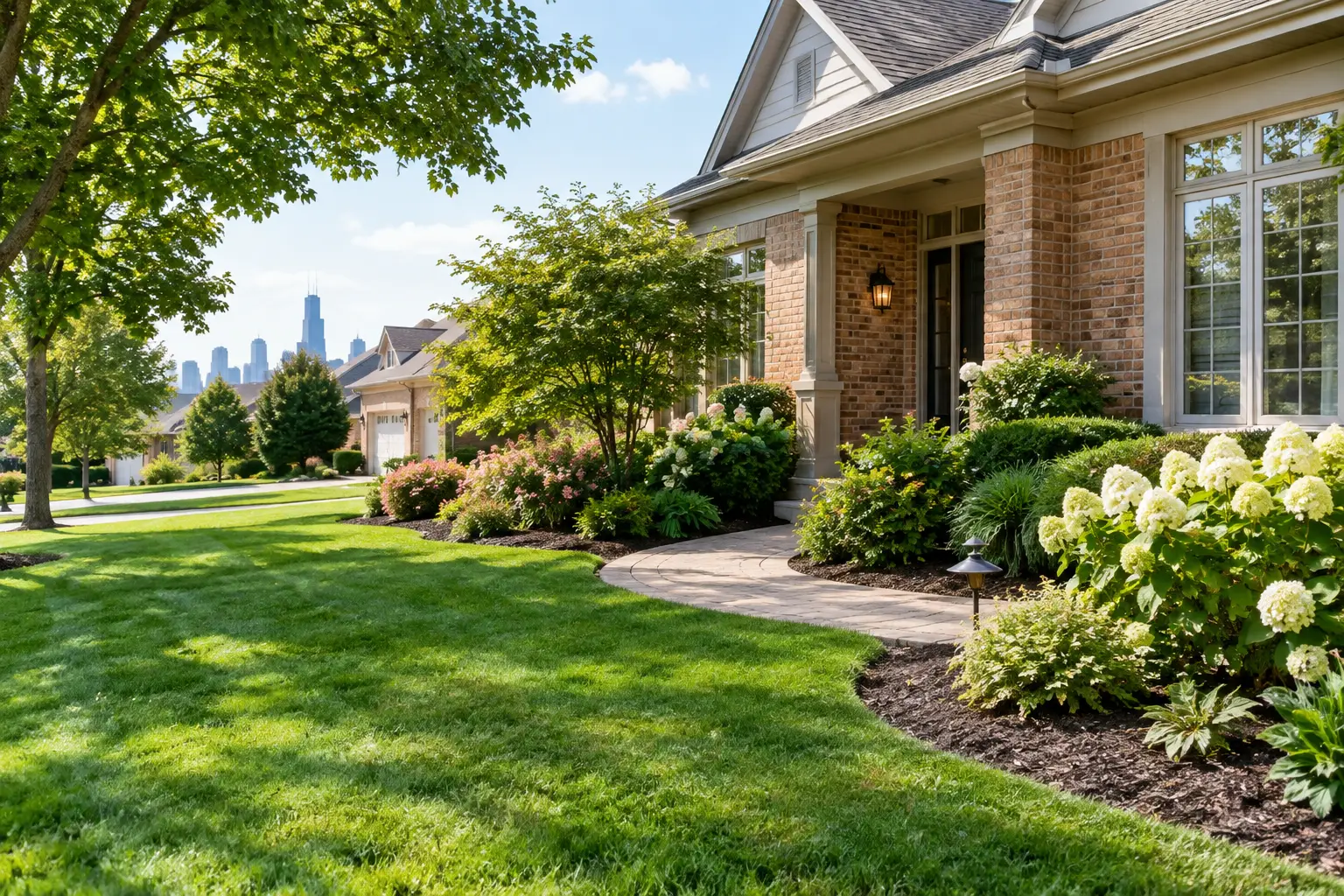
A yard in the Chicago suburbs has to handle more than a few pretty plants and fresh mulch. It has to stand up to heavy spring rain, humid summers, falling leaves, freeze-thaw cycles, and winter snow piles. This Illinois landscaping guide is built around that reality: a good landscape should look nice, but it also needs to work for your home, your family, and your weekends.
For Naperville-area homes, Downers Grove homeowners, and properties across Chicagoland, the best place to start is not always the flower bed. Start by looking at how your yard drains, how you use the space, and what problems keep coming back each season.
Illinois Landscaping Guide: Start With the Ground
Many homeowners call about a landscape refresh, then discover the bigger issue is water. A low spot that stays muddy, mulch washing out after every storm, or water collecting near the foundation can turn a nice-looking project into a recurring headache.
In Illinois, this matters because our soils often hold water, especially in newer subdivisions with compacted clay soil. Add a hard rain or melting snow, and water may have nowhere to go. You do not want water sitting near your foundation, running across a walkway, or pooling around the roots of shrubs and trees.
Here is what to look for: soggy grass that never seems to dry, downspouts emptying beside the house, mulch beds with washed-out edges, standing water after rain, or a patio that slopes toward your home. These are signs that your property may need more than routine maintenance.
The right fix depends on the yard. Sometimes extending downspouts is enough. Other times, a buried drain line, catch basin, grading adjustment, or a combination of solutions makes more sense. The goal is not to make promises that every drop of water disappears. The goal is to move water away from the house and manage it in a practical way.
Plan the Yard Around How You Actually Live
Before picking pavers, shrubs, or lighting fixtures, think about how the outdoor space gets used. A family with young kids may need open lawn space and a safer path from the driveway to the backyard. A homeowner who entertains may care more about a patio, seating area, and lighting that keeps the space usable after sunset.
This is where many homeowners run into trouble. They install a small patio, then realize there is no room for a table and chairs. Or they add a walkway that looks good from the street but does not solve the muddy shortcut everyone takes from the driveway to the front door.
A practical layout usually includes a clear entrance, walkable routes, planting beds that are easy to maintain, and enough room for the activities you enjoy. If the property has a slope, retaining areas or grade changes may also be part of the plan. A walkthrough with an experienced landscaper can help identify what fits the yard instead of forcing a design that only works on paper.
Patios and Walkways Should Solve Problems Too
Paver patios and walkways add curb appeal, but their real value is in how they improve daily life. A properly planned walkway can keep guests off wet grass. A patio can create a clean, comfortable place to sit without tracking dirt into the house. Defined edges can also make lawn mowing and bed maintenance easier.
Base preparation matters just as much as the color or pattern of the pavers. In our climate, materials move when the ground freezes and thaws. A well-built base, proper slope, and thoughtful drainage help reduce settling and standing water over time.
Choose Plants for Chicagoland Conditions
Illinois planting is not one-size-fits-all. A sunny front bed, a shaded side yard, and a wet backyard corner need different plant choices. The goal is to select plants that fit the light, soil, moisture, and space available instead of constantly fighting the conditions.
For many Chicago suburbs, a mix of hardy shrubs, perennials, ornamental grasses, and seasonal color gives a yard a clean look without making it feel overloaded. Native and regionally suitable plants can be a smart option, particularly in areas that get wet or see a lot of sun. They are not automatically zero-maintenance, but they can be better suited to local conditions than plants chosen only for a quick visual effect.
Keep scale in mind. Small plants look tidy on installation day, but shrubs and trees need room to grow. Crowding plants against a house can create trimming work, block windows, and hold moisture near siding. A good planting plan leaves space for mature growth and gives each area a purpose.
Mulch helps beds look finished and can hold moisture during dry periods, but more is not always better. Thick piles against tree trunks or house siding can create problems. A clean, even layer with defined edges usually looks better and is easier to maintain.
Build Curb Appeal That Holds Up
Curb appeal is often about the basics being done well. Trimmed shrubs, crisp bed edges, healthy turf, clear walkways, and a front entry that is visible and welcoming can make a major difference without turning the yard into a high-maintenance project.
Landscape lighting is one of the most useful additions for Illinois homes. It can highlight a front walk, help guests see steps, bring attention to a tree or stone feature, and make the house feel more finished at night. It also adds a practical layer of safety around dark paths and entry areas.
The key is restraint. Too many bright fixtures can make a yard look harsh. Well-placed lighting should guide people through the property and bring out the best parts of the landscape without shining into windows or neighboring homes.
For homeowners who enjoy seasonal decorating, permanent holiday lighting can be another practical option. It avoids ladders, tangled strings, and the annual hassle of hanging temporary lights in cold weather. It can also be used for more than holidays, with colors and patterns for events throughout the year.
Make Maintenance Part of the Design
A landscape can look great on day one and still become frustrating if it takes too much time to keep up. When planning a new yard, consider who will mow, edge, trim, remove leaves, care for beds, and handle snow when winter arrives.
For busy Chicagoland homeowners, regular lawn maintenance and seasonal cleanups can protect the investment in a new landscape. Spring cleanup clears winter debris and gets beds ready for growth. Fall cleanup is especially important around mature trees, where wet leaves can smother grass and clog drainage areas.
Aeration and dethatching may also help when lawns feel compacted or have a heavy layer of dead material near the soil surface. These services are not a cure-all for every thin or patchy lawn. If drainage, shade, pests, or poor soil are the real issue, those conditions need attention too.
Do Not Forget Gutters and Winter Access
Landscaping and exterior protection are connected. Overflowing gutters can dump water into beds, wash out mulch, and contribute to foundation-area moisture. Gutter guards may help reduce debris buildup, depending on the trees around your property and the condition of the existing gutter system.
Winter planning matters as well. Snow storage areas should not block walkways, damage delicate plantings, or send meltwater toward the house. Clear paths and safe access are especially valuable for homes with front steps, side entries, or frequently used driveways.
A Smart Way to Prioritize Your Project
If your yard needs several improvements, do not feel like everything has to happen at once. Start with the issues that protect the property and improve daily use. Drainage, unsafe walks, failing steps, and grading concerns often come before decorative updates.
After that, focus on the spaces you see and use most often. The front entry, main walkway, backyard patio, and planting beds near the house usually offer the biggest day-to-day return. From there, lighting, fencing, pergolas, and finishing details can build on a solid foundation.
At Revive Your Lawn, we often see the best results when homeowners look at the full exterior picture instead of treating every issue as a separate project. A clean landscape, proper water management, dependable maintenance, and safe outdoor access all work together.
Your yard does not need to be perfect to be enjoyable. It just needs a plan that fits your property, our Illinois weather, and the way you want to live outside. Start with what is not working, fix the problem correctly, and make the improvements that will give you more time to enjoy your home.


