
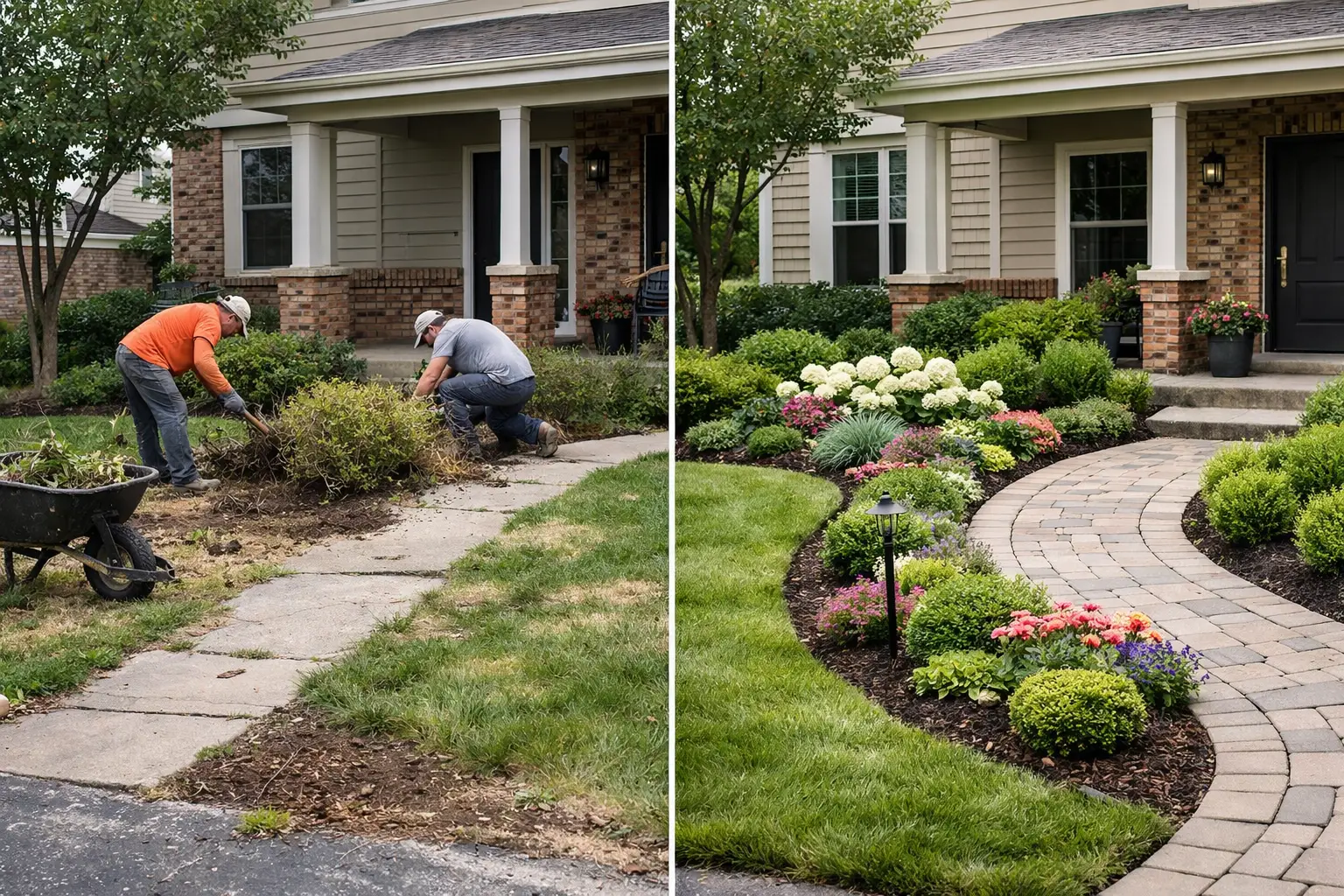
Pull up to almost any house in the Chicago suburbs, and you can tell in a few seconds whether the yard is helping or hurting the property. Maybe the lawn looks thin near the driveway. Maybe the beds are overgrown, the front walk feels plain, or water keeps washing mulch where it does not belong. That is where smart improve curb appeal landscaping ideas make a real difference. The goal is not just to add plants. It is to make the whole front of the home look cleaner, more welcoming, and easier to keep up.
A lot of homeowners think curb appeal starts with flowers. Flowers can help, but they are only one small part of the picture. A good landscape should look nice, but it also needs to work. In Illinois, this matters because our yards deal with snow, spring rain, summer heat, and falling leaves all in the same year. If your landscaping looks great for one month but turns into extra work or drainage trouble the rest of the season, it is not really an upgrade.
Improve curb appeal landscaping ideas that actually work
The best front yard improvements usually fix two things at once. They make the property look better, and they reduce the little problems that make a home feel worn down from the street.
Start with the lawn, because it takes up the most visual space. A patchy or uneven front lawn can make the whole property look tired, even if the rest of the landscaping is decent. Sometimes the fix is basic maintenance like aeration, overseeding, and better edging. Other times the bigger issue is soil compaction, poor drainage, or too much shade. This is where many homeowners run into trouble. They keep throwing seed at a problem that really needs a better plan.
Fresh bed lines also do more than people expect. Clean, crisp edges between lawn and landscape beds instantly make a yard look cared for. It is one of the fastest ways to sharpen curb appeal without changing the entire design. Pair that with fresh mulch, and the whole front of the home looks cleaner. Just do not rely on mulch alone to carry the yard. If the beds have weak plant structure or poor grading, mulch is just covering the problem for a while.
Foundation plantings are another area worth getting right. You want enough plant material to soften the front of the house, but not so much that windows disappear or everything looks crowded in two years. In many Illinois homes, a mix of evergreen shrubs, hardy perennials, and a few seasonal color accents gives the best balance. That keeps the property from looking empty in winter while still adding color during the growing season.
Where many front yards fall short
A lot of curb appeal problems come from layout, not effort. Homeowners may mow regularly and pull weeds, but the front yard still feels unfinished. Usually that happens because there is no clear visual structure.
Your walkway is a big example. If the path to the front door is narrow, cracked, or visually disconnected from the landscape, the whole entrance feels less inviting. Upgrading a front walk with pavers or better-defined borders can change that fast. It gives the yard direction and makes the home feel more polished. For Naperville-area homes and other western suburb properties, this is often one of the strongest visual upgrades because it ties together the house, lawn, and planting beds.
The driveway edge is another spot people overlook. Grass creeping over concrete, broken edging, or muddy strips along the side make the property look messy. Simple cleanup helps, but in some yards, a more durable border or grading adjustment makes a bigger difference. If water runs off the driveway and settles near the front beds, you do not want to ignore that. Standing water can hurt the lawn, wash out mulch, and create a front yard that always looks a little off.
Lighting makes a bigger difference than most people think
If you only see your home in daylight, you are missing half the picture. Landscape lighting adds depth, highlights the home’s best features, and makes walkways safer. It also helps the property feel finished after dark instead of disappearing into shadow.
The key is restraint. A few well-placed lights on the front walk, near key trees, or around entry features usually look better than overlighting everything. In the Chicago suburbs, where it gets dark early in fall and winter, this kind of upgrade is not just decorative. It helps with visibility and safety at the same time.
Drainage is part of curb appeal too
Homeowners do not always think of drainage as a curb appeal project, but they should. If you have soggy spots, erosion, or mulch constantly shifting after heavy rain, the front yard will never stay looking clean for long. In Illinois, this matters because spring storms and freeze-thaw cycles can make small grading problems turn into bigger ones.
You do not want water sitting near your foundation. You also do not want it pooling near sidewalks, front steps, or planting beds. Sometimes the right fix is subtle, like regrading a section of the yard, adding drainage where runoff collects, or adjusting downspout flow so water moves away from the home. These are not flashy changes, but they protect the property and help the landscaping hold up.
10 smart curb appeal upgrades for Illinois homes
If you are trying to decide where to start, these ideas usually give homeowners the best return in both appearance and function:
- Restore or replace struggling lawn areas so the yard looks full and healthy.
- Cut crisp bed edges to create clean lines around planting areas.
- Refresh mulch, but only after weeds, grading, and plant spacing are addressed.
- Update foundation plantings with a balanced mix of evergreens and seasonal interest.
- Add a defined paver walkway or improve the front entry path.
- Install landscape lighting along walks, entry points, and feature plants.
- Fix drainage issues that cause erosion, soggy turf, or water near the house.
- Trim overgrown shrubs and small trees so the house is visible again.
- Add simple hardscape accents like stone borders, steps, or a small front patio area.
- Use low-maintenance plant choices that can handle Illinois weather swings.
Not every home needs all ten. A Downers Grove homeowner with mature landscaping may need pruning, lighting, and drainage help more than new planting beds. A newer home with a plain builder-grade front yard may benefit most from a walkway upgrade and foundation planting plan. It depends on what is making the property feel unfinished now.
How to choose the right landscaping ideas for your home
The best approach is to look at the front yard in layers. First, check the structure. That means the lawn, bed lines, walkway, driveway edge, and grading. If those pieces are weak, adding more flowers will not solve much.
Next, look at plant balance. Are the shrubs too big for the space? Does everything bloom at once and then fade? Does the yard have any winter presence, or does it go flat by November? In Chicagoland, you want a yard that still looks intentional even when the seasons shift.
Then think about upkeep. Busy families do not always want high-maintenance front beds that need constant trimming and replanting. There is nothing wrong with wanting a clean, attractive landscape that does not eat up every weekend. In fact, that is usually the smarter plan. The best curb appeal improvements are the ones that still look good when life gets busy.
Improve curb appeal landscaping ideas with long-term value
Some projects photograph well right after installation but start slipping fast because the underlying issues were never fixed. That is why curb appeal should be planned with both looks and performance in mind.
For example, a beautiful front bed will struggle if runoff from the roof keeps soaking it. A new lawn will not thrive if compacted soil and poor drainage are left alone. A front entry can still feel dull if the walkway is dark and the landscaping hides the home’s best features. Good results come from putting these pieces together, not treating each one as a separate fix.
This is one reason homeowners in the western suburbs often prefer working with one company that can handle more than planting. When the same team understands landscaping, drainage, lighting, and exterior improvements as one full picture, the final result tends to make more sense. You are not just making the front yard prettier. You are making it work better.
If your front yard feels close but not quite right, start by looking for the one or two issues that are dragging everything down. It might be standing water, overgrown shrubs, a dull entry walk, or a lawn that never fills in. Once those are addressed, the rest of the curb appeal upgrades usually fall into place much more naturally.


