
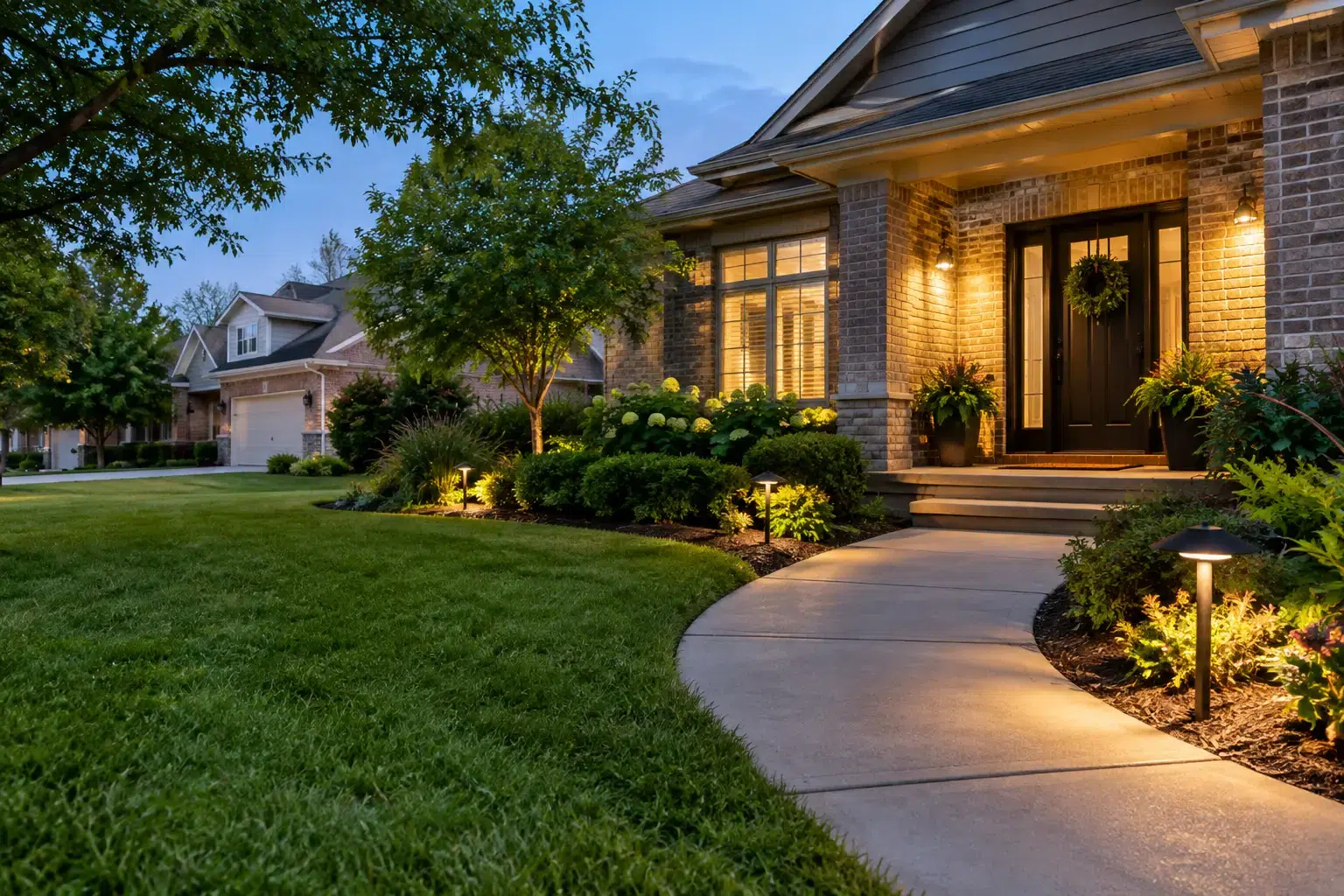
A dark front walk at 6:00 p.m. in January is more than a curb appeal issue. It is a safety issue for family, guests, delivery drivers, and anyone carrying groceries through snow or slush. That is one reason outdoor lighting trends 2026 are moving beyond a few spotlights on the house. Chicagoland homeowners are looking for lighting that makes the property safer, highlights the parts of the yard they have invested in, and is simple to control.
The best lighting plan is not about putting a fixture everywhere. It is about putting the right light in the right place. A good landscape should look nice, but it also needs to work through Illinois rain, wind, early sunsets, and winter snow.
Outdoor Lighting Trends 2026: Warm, Layered, and Useful
The biggest shift we are seeing is toward layered lighting. Instead of one bright floodlight doing all the work, homeowners are combining several softer types of light. Path lights guide people safely. Uplights bring out trees, stonework, and the front of the home. Downlights can add a gentle wash of light over a patio, seating area, or garden bed.
This approach feels more welcoming and usually looks better from the street. It also helps avoid the harsh, overlit look that can make a yard feel like a parking lot.
Warm white light remains the preferred choice for most Illinois homes. It gives brick, stone, wood, and landscaping a comfortable, natural look. Cool blue-white lighting may seem brighter, but it can make a front entry feel cold and can wash out the color of your home and plants.
There are exceptions. Some modern homes with sharp lines and darker exterior finishes can look good with a slightly cleaner white light. The key is matching the color and brightness to the home, not choosing a fixture based on a photo online.
Safety Lighting Is Becoming Part of the Overall Design
For many homeowners, the first reason to add landscape lighting is simply to see where they are walking. That still matters, especially around paver walkways, front steps, side yards, driveways, and back patios.
The difference in 2026 is that safety lighting is being planned as part of the whole property instead of added as an afterthought. Low path lights can define a walkway without shining into your neighbors’ windows. Step lights can make a change in elevation easier to see. A carefully placed downlight can cover a wider area with less glare than a row of fixtures at ground level.
This is where many homeowners run into trouble: brighter is not always safer. A strong light pointed at eye level can create glare and deep shadows, making it harder to see the edge of a step or the transition from concrete to grass. Proper fixture placement matters as much as the fixture itself.
For Downers Grove homeowners with mature trees or Naperville-area homes with long walks from the driveway, lighting can make the route into the house feel much more secure without changing the character of the yard.
Better Lighting Around Outdoor Living Spaces
Patios, pergolas, fire pit areas, and outdoor kitchens are no longer just summer features. Homeowners use them on cool spring evenings, during football season, and even on mild winter days. Lighting helps extend the time those spaces are comfortable to use.
The trend is toward functional light that still feels relaxed. Under-cap lighting on seating walls, soft lighting along patio edges, and downlighting from a pergola can make the space usable without turning it into a brightly lit room outdoors. For grilling areas, a little more direct light is useful. For a dining area, a warmer and softer approach usually works better.
Permanent holiday lighting is also becoming part of this conversation. Systems such as Trimlight give homeowners the ability to switch from everyday architectural lighting to holiday colors and team colors without climbing ladders every season. It is a practical option for homes where seasonal decorating has become a yearly chore.
Smart Controls Should Make Life Easier
Smart outdoor lighting has become more common, but the useful part is not the app itself. The value is having the lights come on when you need them and turn off when you do not.
Timers, photocells, and app-based controls can help manage a regular schedule as daylight changes through the year. That matters in the Chicago suburbs, where sunset can move dramatically from June to December. You should not have to keep adjusting a timer every few weeks just to have the front walk lit at the right time.
Some homeowners want separate zones, such as front entry lighting, backyard patio lighting, and landscape accent lighting. That gives you more control. You may want the front of the house lit every night while using the patio lights only when friends are over.
Still, smart features should be kept simple. If every fixture needs a different setting and nobody in the house knows how to run it, the system is more frustrating than helpful. A clean setup with a few dependable scenes is usually the better choice.
Fixtures Built for Illinois Weather Matter
Outdoor lighting has to handle more than a little rain. In Illinois, fixtures deal with freeze-thaw cycles, heavy summer storms, wet leaves, snowbanks, salt near driveways and walks, and shifting soil. Lower-quality fixtures often show problems quickly, including corrosion, loose connections, broken stakes, or water getting where it should not.
Metal quality, sealed connections, proper wire burial, and solid installation make a real difference. Brass and copper fixtures cost more upfront, but they tend to age well and develop character over time. Powder-coated aluminum can also work well in the right setting. The best material depends on the location, exposure, and the look you want.
A lighting system also needs a properly sized transformer, which is the part that safely lowers power for landscape lighting. If that equipment is undersized or poorly installed, lights may look dim at the far end of the property, and the system may not perform the way it should.
This is not a place to guess. Lighting wiring often crosses areas that may later be edged, mulched, planted, or repaired. Planning it with the full landscape in mind helps prevent headaches later.
Highlighting Structure, Not Just Plants
Well-placed lighting can make a property look finished even when the garden is resting for the winter. That is especially valuable in Chicagoland, where perennial beds and deciduous trees do not provide the same color year-round.
In 2026, more homeowners are using lighting to highlight permanent features: a stone retaining wall, a mature evergreen, a textured brick facade, a paver driveway, a pergola, or a specimen tree. These features give the yard shape after dark and can create strong curb appeal in every season.
The goal is restraint. A few focal points usually look better than lighting every tree and planting bed. If your property has beautiful mature maples, a simple uplight can show off the branching structure in fall and winter. If you have a new patio, gentle perimeter lighting may be more useful than several decorative fixtures competing for attention.
Plan Lighting With Drainage and Landscaping Work
Outdoor lighting works best when it is planned early, especially if you are updating a patio, installing a walkway, rebuilding beds, or correcting drainage problems. You do not want fresh landscaping disturbed later because a wire needs to be run across the yard.
In Illinois, this matters because drainage and grading often guide the entire layout. Water needs a clear path away from the home, and you do not want fixtures placed where they will sit in a low, wet spot after every storm. If a yard has standing water or muddy areas, solve that issue first or build the lighting plan around the drainage work.
At Revive Your Lawn, we look at the whole exterior picture during a lighting walkthrough: how people enter the property, where water moves, what features are worth showing off, and where a homeowner needs more usable light. That helps create a system that looks intentional instead of pieced together over several weekends.
A Good Lighting Plan Fits How You Live
The best outdoor lighting trend is not a certain fixture style or a phone-controlled color setting. It is a plan that makes coming home easier, walking outside safer, and your property more enjoyable after dark. Start with the areas you use most, then add the details that make your home feel welcoming every night of the year.


