A Chicagoland snowstorm can turn a normal morning into a mess before the coffee is finished. A driveway drifts shut, the front walk turns slick, and the snowplow ridge at the curb feels heavier than the rest of the snowfall combined. Reliable snow removal Chicagoland homeowners can count on is less about reacting after the storm and more about having a clear plan before the first flakes stick.
For busy families, older homeowners, landlords, and business owners, winter service is about more than convenience. It is about getting out safely, keeping visitors on stable footing, and avoiding the stress of waking up early to figure out who is handling the snow.
Why Chicagoland Snow Requires a Real Plan
Illinois winter weather does not follow a neat schedule. One week may bring a few inches of light snow. The next can bring wind, heavy wet accumulation, freezing rain, or a hard freeze after a daytime thaw. Those changing conditions are why a basic “we’ll get to it when we can” approach often falls short.
Here is where many homeowners run into trouble: they plan for fluffy snow but not ice. Light snow can be easy to shovel, but it can pack down quickly under tires and foot traffic. Once that layer refreezes overnight, it becomes much harder to remove and much more dangerous around steps, sidewalks, and garage entrances.
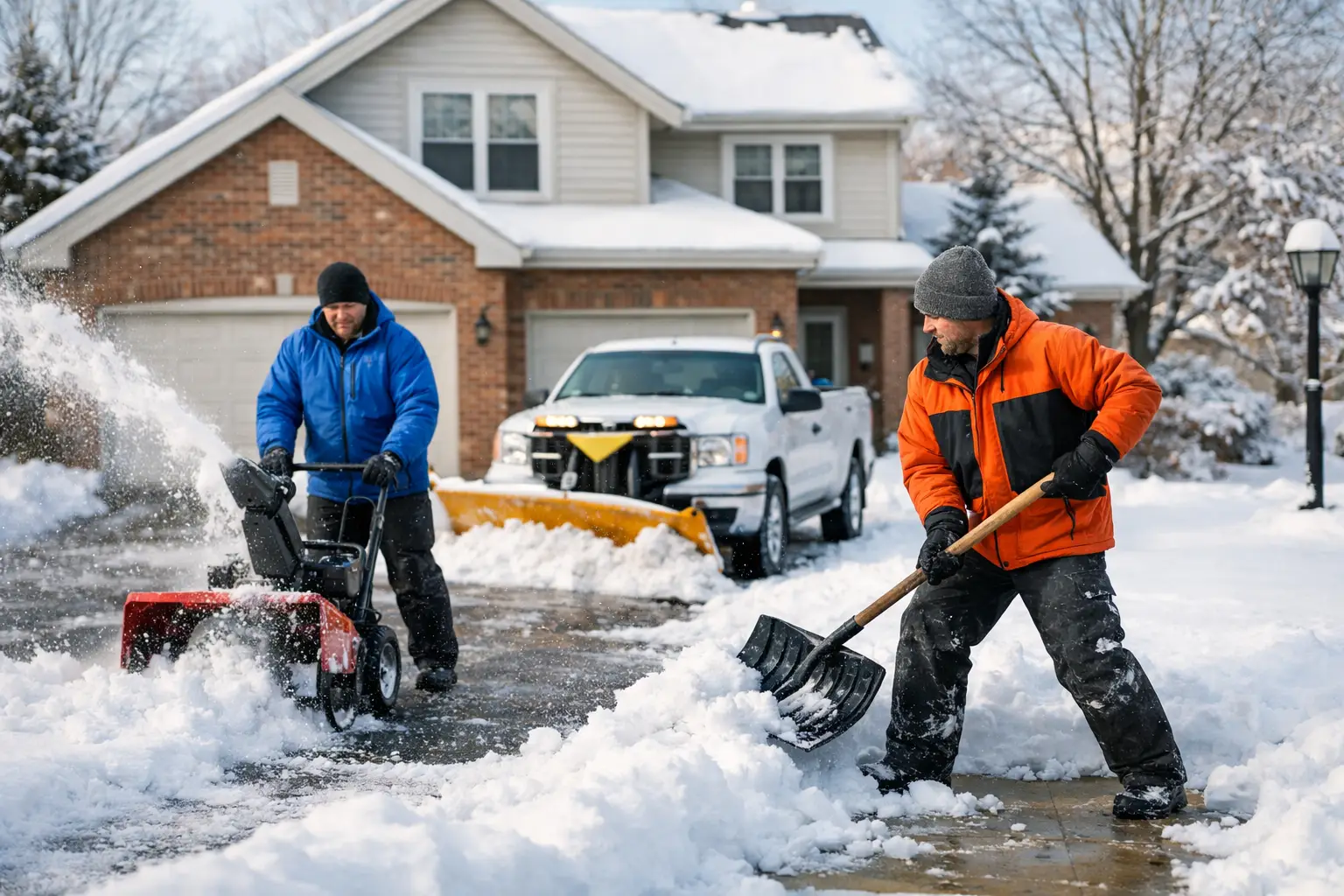
A dependable provider watches the forecast, understands local conditions, and knows that the work may involve plowing, hand shoveling, salting, or a combination of all three. The right approach depends on the property, the surface, the storm timing, and the temperature after the snow stops.
What Good Snow Removal in Chicagoland Looks Like
Good service starts with knowing where snow should go before a truck ever arrives. On a residential property, that means keeping piles away from the driveway entrance, fire hydrants, mailboxes, sidewalks, and areas where melting snow could run back across a walkway. You also do not want large piles pushed against fencing, delicate landscaping, or drainage paths.
For Naperville-area homes and other western suburb properties, driveway layouts can vary a lot. A long drive, a curved entrance, a steep section, or a shared access point may need special attention. A crew should understand those details ahead of time instead of making assumptions during a storm.
A professional snow plan usually covers the driveway, front walk, main entry, and any agreed-upon paths. For commercial properties, it may also include parking areas, sidewalks, loading areas, dumpster access, and entrances used by employees or customers. The goal is simple: make the property usable and safer without creating new problems with poorly placed snow.
Plowing handles the bulk of the work
Plowing is the practical choice for most driveways and parking areas after measurable snowfall. It clears space quickly and keeps snow from getting packed down by vehicles. But plowing alone is not always enough. A plow cannot reach every tight walkway, porch step, or narrow side entrance.
Snow placement matters just as much as snow removal. After several storms, the available space for piling snow gets smaller. An experienced crew thinks ahead so piles do not block sightlines near the street or create a thaw-and-refreeze issue at the bottom of the driveway.
Shoveling finishes the areas machines cannot reach
Hand shoveling is what makes a service feel complete. It handles the front walk, steps, gates, patios used for access, and other areas that a plow cannot safely clear. This is especially helpful for Downers Grove homeowners with narrower lots, detailed hardscaping, or entryways that need a cleaner touch.
The best time to clear these areas depends on the storm. During a long, heavy snowfall, service may need to focus first on keeping key routes open. After the storm passes, crews can return attention to detail work and ice control as needed.
Ice control is not one-size-fits-all
Salt and de-icing products help improve traction, but they are not magic. Very cold temperatures can reduce how well some materials work. Heavy ice may need mechanical removal first, and repeated salt use can affect nearby grass, plants, concrete, and pavers if it is not applied thoughtfully.
This is why the right amount matters. More product is not always better. A sensible plan treats high-risk areas such as steps, front walks, shaded spots, and commercial entrances while avoiding careless overapplication. If you have newer concrete, decorative pavers, pets, or sensitive landscape beds close to the walk, mention that before service begins.
Choosing a Snow Removal Chicagoland Service
When you are comparing snow removal Chicagoland providers, look beyond whether they own a plow truck. The real question is whether they have a process. Winter storms create a lot of calls, and clear communication can make a major difference when conditions are changing quickly.
Ask how the company monitors storms, what areas are included, and how they handle ice. Confirm whether service is based on a seasonal agreement, per visit, or a snowfall trigger. There is not one right setup for every property. A homeowner who travels often may want ongoing seasonal coverage. Someone with a small driveway and flexible schedule may prefer service only when a storm reaches a certain depth.
It also helps to walk the property before winter. Point out the location of sprinkler heads, landscape lighting, paver edges, low curbs, decorative boulders, and any drainage features that could be hidden by snow. Markers may be used to help crews see the edges of the driveway and protect important features after dark.
A good contractor will also be honest about storm conditions. During a major regional event, route timing can shift because roads need to be passable and snowfall may continue for hours. What matters is having a crew with a plan, equipment that is maintained, and responsive communication when you need an update.
Protect Your Property Before the First Storm
The easiest snow season starts in fall. Clear sticks, toys, hoses, planters, and loose materials from areas that will be plowed or shoveled. Trim back low branches that hang into the driveway or sidewalk. If your walkway has uneven pavers or a loose step, address it before ice fills the gaps and hides the hazard.
Pay attention to drainage too. Snow eventually melts, often quickly during a Chicago-area warmup. If meltwater has nowhere to go, it can pool at the bottom of a driveway, freeze across a sidewalk, or sit too close to the foundation. You do not want water sitting near your foundation in any season, and winter thaw cycles can make a known drainage issue more noticeable.
This is also a good time to check exterior lighting. A well-lit path helps your family, guests, delivery drivers, and snow crew see curbs, steps, and changes in elevation. Landscape lighting is not just for summer curb appeal. In winter, it can make a dark entry safer and easier to use.
Residential and Commercial Needs Are Different
A homeowner may mainly need a clear driveway and safe route to the front door. A business property has a wider responsibility. Customers need a safe place to park and walk, employees need reliable access, and entrances need attention before the morning rush when possible.
Commercial sites also need a plan for snow storage. Large piles can take up valuable parking spaces and block visibility at drive lanes. If the lot is tight, it may take more coordination to decide where snow can be placed without interfering with traffic or drainage.
For either type of property, consistency is the biggest benefit. You should not have to scramble for help every time the forecast changes. At Revive Your Lawn, we look at the full exterior picture because a clean driveway, safe walkway, working drainage, and visible entry all matter together.
A Safer, Easier Winter Starts Before It Snows
Snow is part of life in the Chicago suburbs, but spending every storm worried about access does not have to be. Take a few minutes now to look at your driveway, walks, drainage areas, and winter priorities. A clear plan with a dependable local crew gives you one less thing to manage when the next Illinois storm starts building.