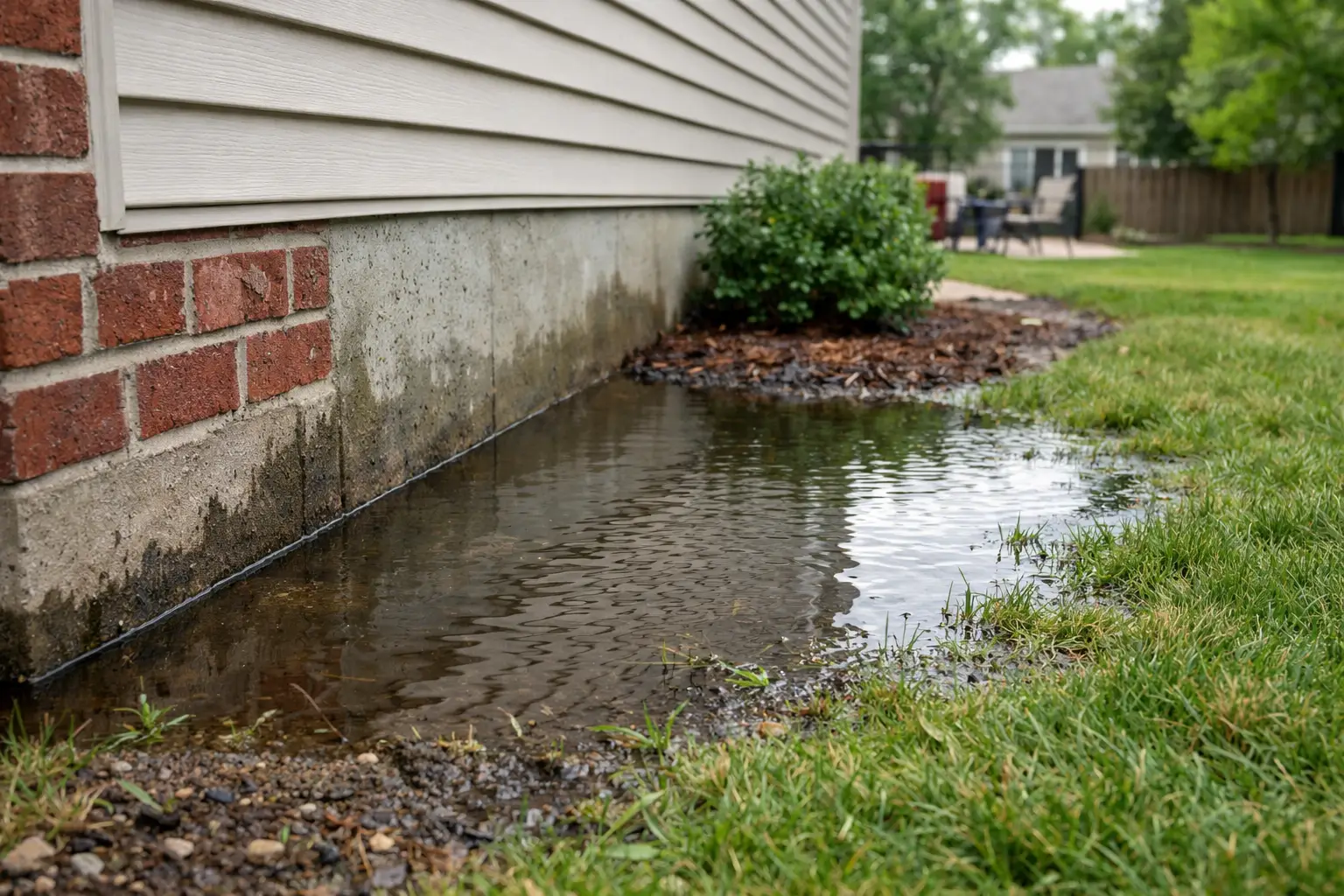
A puddle beside the house after a hard rain may seem like a yard problem. But when homeowners ask, “why is water pooling near foundation walls?” the answer can affect much more than a muddy lawn. Water that repeatedly sits against your home can work its way into basement walls, stress the foundation area, create icy walkways, and leave the yard soft and unusable.
In the Chicago suburbs, this comes up often. Heavy spring rain, fast snowmelt, dense clay soil, and flat lots can all send water toward the home instead of away from it. The good news is that pooling water usually has a clear cause. The right fix starts with figuring out where the water is coming from and where it has a safe place to go.
Why Is Water Pooling Near Foundation Walls?
Water always follows the easiest path downhill. If the ground around your home has settled, slopes the wrong direction, or gets overloaded by roof runoff, water can collect right next to the foundation.
Sometimes the issue is simple, such as a downspout that ends too close to the house. Other times, several smaller problems are working together: compacted soil, clogged gutters, a low spot along the foundation, and a yard that does not have enough drainage. This is where many homeowners run into trouble. Adding mulch or topsoil may make the area look better for a while, but it does not always correct the reason water keeps returning.
Here’s what to look for before deciding on a solution.
The grading slopes toward the house
Grading means the shape and slope of the soil around your home. Ideally, the ground should gradually fall away from the foundation so rainwater moves out into the yard or toward a planned drainage route.
Over time, soil naturally settles. This is especially common around newer construction, along patios, and where utility work disturbed the ground. A bed that once drained properly can slowly become a shallow bowl that catches water against the house.
Look at the area during or right after a rainstorm. If water appears to run toward the foundation, or if puddles form in the same strip along the house every time, poor grading may be the main issue.
Gutters and downspouts are dumping too much water nearby
Your roof collects a surprising amount of water. Even a moderate Illinois rain can send hundreds of gallons through the gutter system. If gutters are clogged, water can spill over the edge and soak the ground below. If a downspout discharges one or two feet from the house, it can create a saturated area even when the rest of the lawn is dry.
Check whether gutters overflow during rain and where every downspout ends. A downspout extension may help in the right situation, but it needs to send water somewhere useful. Extending it across a walkway, into a neighbor’s lot, or to another low spot simply moves the headache.
For many Naperville-area homes, gutter protection and properly planned downspout drainage are a practical first step. They reduce the amount of water being concentrated at the foundation in the first place.
Clay soil holds water instead of absorbing it
Much of Chicagoland has heavy clay soil. Clay can be great for holding nutrients, but it does not drain quickly. After a long storm or rapid thaw, the top layer may stay wet for days. When the soil is already full of water, the next rainfall has nowhere to go except across the surface.
That is why a solution that works well on sandy soil may not work on an Illinois property. Simply digging a shallow trench or adding a little gravel may not create enough drainage. The system needs the right slope, outlet, and depth for the property.
A patio, walkway, or landscape border is trapping water
Hardscape features can make outdoor spaces more useful and attractive, but their pitch matters. A patio or paver walkway that slopes toward the house can send runoff right to the foundation. Raised landscape edging can also act like a dam, keeping water from draining away.
This does not mean the patio needs to be removed. In some cases, sections can be adjusted, drainage can be added along the edge, or nearby grading can be improved. A good landscape should look nice, but it also needs to work when the weather turns wet.
Drainage systems are blocked, broken, or missing
Some homes already have buried drainage pipes, catch basins, or sump pump discharge lines. If those systems are clogged with sediment, crushed by roots, or no longer draining to a proper outlet, they may be contributing to the problem.
You may notice a basin that stays full, water bubbling back out of a pipe, or a wet strip in the lawn long after rain has stopped. These are signs that it is worth having the system checked instead of guessing. Drainage pipes are out of sight, so a problem can go unnoticed until water starts showing up near the home.
When Pooling Water Becomes a Bigger Concern
Not every puddle means there is foundation damage. A small amount of water after a major storm may disappear quickly without causing trouble. The concern is repeated water sitting against the home, especially if it remains for more than a day or two.
Pay closer attention if you see water stains or dampness on basement walls, a musty basement smell, peeling paint, cracks that appear to be growing, or efflorescence. Efflorescence is the white, chalky residue left behind when moisture moves through masonry. You may also notice mulch washing away, soil erosion, mosquitoes, or soft spots along the house.
In winter, the same water can freeze. That creates slippery areas near entrances and can make snow removal more difficult. Downers Grove homeowners and others across the western suburbs often see this cycle: rain or melting snow creates a wet low spot, then a quick temperature drop turns it into ice.
What You Can Check Before Calling for Help
You do not need to redesign the yard yourself to gather useful information. Walk the property during a rainstorm if it is safe, then again once the rain stops. Notice whether the water is coming from the roof, flowing from a neighboring area, collecting in one low spot, or backing up from a drain.
Make sure downspouts are connected and carrying water away from the house. Clear visible debris from the gutter outlet if you can do so safely. Also check that mulch is not piled high against siding or foundation walls. Mulch should not cover drainage paths or create a ledge that holds water against the home.
Take a few photos of the pooling area. Photos from different rain events can be very helpful because they show whether the issue happens only during extreme weather or after every ordinary shower.
Drainage Fixes That Match the Cause
The best drainage solution depends on the water source, the slope of the yard, soil conditions, and the available outlet. There is no one-size-fits-all answer, and that is a good thing. A targeted repair is usually more effective than installing a system that the property does not need.
If the soil slopes toward the house, regrading may be enough to restore a positive slope away from the foundation. This involves reshaping the ground carefully so water moves away naturally without creating a problem somewhere else.
When roof runoff is the main source, gutter guards, downspout extensions, or buried downspout lines may make sense. Buried lines can carry roof water to a suitable discharge point, away from the foundation and high-traffic areas.
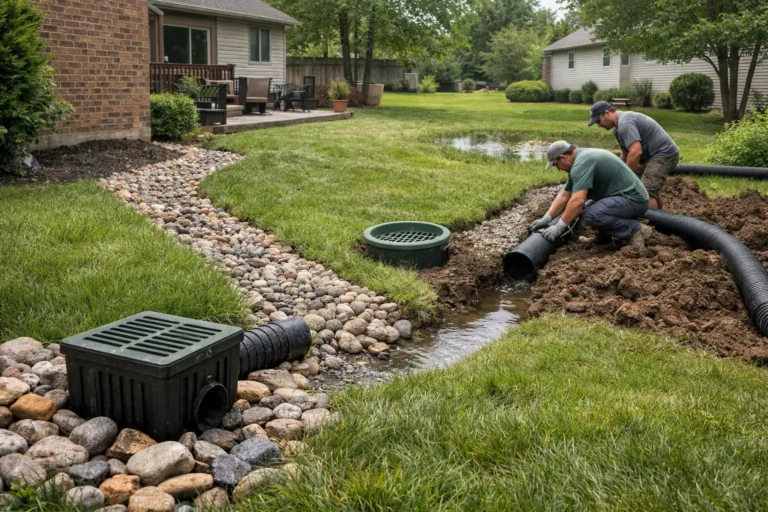
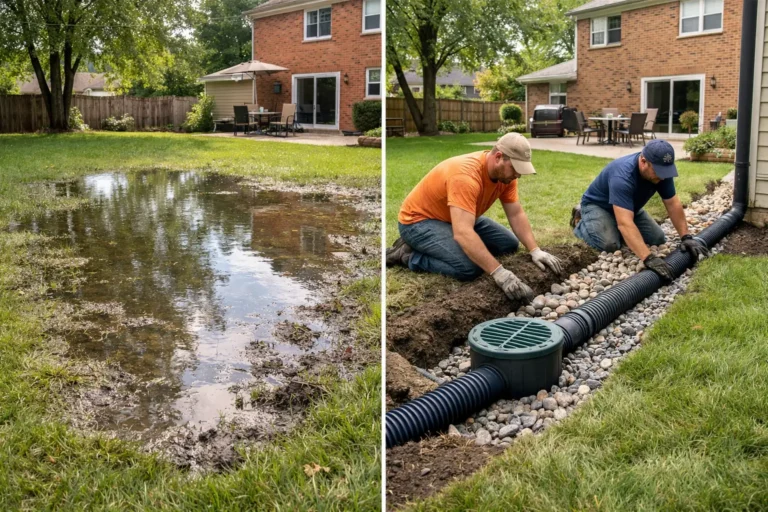
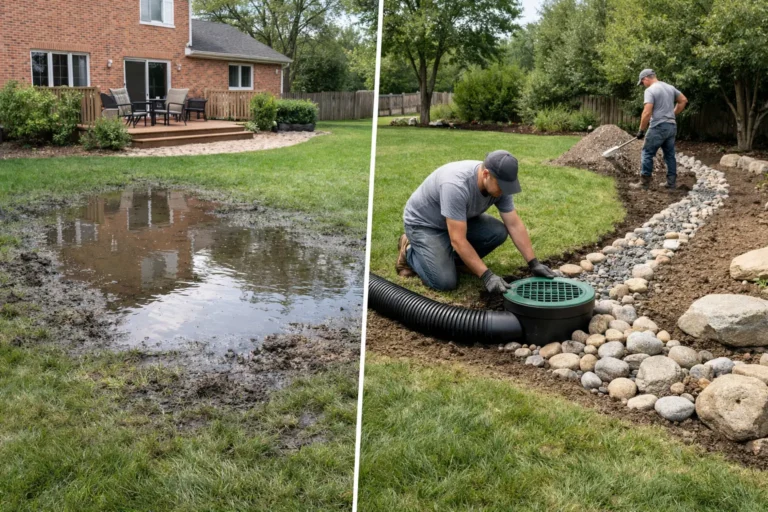
For low spots in the lawn or water moving across the property, a catch basin and underground drainage line may be the better approach. The basin collects surface water, while the pipe carries it toward an approved outlet. In other situations, a French drain may help collect water moving through saturated soil. The name sounds technical, but it is simply a gravel-filled drainage system with a perforated pipe that gathers groundwater.
Sometimes the answer is a combination of grading, downspout management, and drainage. That is common on older Illinois homes where the lot has changed over the years with patios, garden beds, fences, and settled soil.
Do Not Wait for a Perfect Storm
You do not want water sitting near your foundation, but you also do not need to panic over every puddle. The key is watching patterns. If the same area stays wet after normal rainfall, starts affecting the basement, or makes parts of the yard difficult to use, it is time to address it.
A proper walkthrough can identify the source of the water and map out a solution that fits the yard instead of just covering up the symptoms. Revive Your Lawn helps Chicagoland homeowners solve drainage issues while keeping the property clean, usable, and good-looking. The goal is simple: give rainwater a clear path away from the house so you can spend less time worrying about the next storm.