A backyard can look perfectly fine from the patio, then turn into a muddy mess the moment you step off the pavers. If you are wondering how to fix soggy backyard drainage, start by looking at where the water comes from, where it collects, and where it has a safe place to go. The right fix is rarely just adding soil or spreading mulch over the wet spot.
In the Chicago suburbs, heavy spring rain, summer storms, clay-heavy soil, and snowmelt can all leave water sitting in the yard. That standing water can kill grass, make walkways slippery, attract mosquitoes, and put unwanted moisture near your foundation. A good landscape should look nice, but it also needs to work when Illinois weather gets wet.
First, Find Out Why the Yard Stays Wet
The soggy area is usually not the real problem. It is where the problem shows up. Before choosing a drainage solution, watch your yard during a steady rain and again a day or two afterward. This tells you whether you have runoff, poor grading, compacted soil, or a low area that simply has nowhere to drain.
Here is what to look for. Does water pour over the gutters and land near the house? Does one downspout empty into a flower bed or along a walkway? Does the lawn slope toward the foundation? Is the wet area at the bottom of a hill, beside a patio, or along a fence line? These details matter because each one calls for a different approach.
Many Chicagoland homes also sit on dense clay soil. Clay does not absorb water quickly, especially when it has been packed down by construction equipment, foot traffic, or years of mowing. If the yard is wet only after major storms but dries within a day or two, the soil may be doing its job slowly. If puddles remain for several days, the yard likely needs help moving water away.
How to Fix Soggy Backyard Drainage Step by Step
The best drainage plans handle water in the right order: first at the roof, then across the yard, and finally toward an approved discharge area. You do not want to solve one wet corner by sending water to a neighbor’s property or creating a new problem near the street.
Start at the gutters and downspouts
Roof runoff is one of the biggest sources of backyard water problems. A single heavy storm can send a surprising amount of water through your gutters. If a downspout dumps that water right next to the foundation, patio, or low section of lawn, the ground can stay saturated even when the rest of the yard is dry.
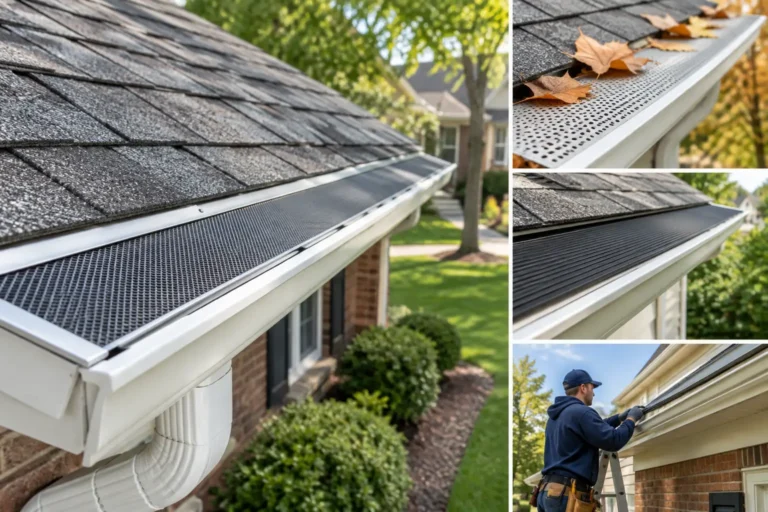
Make sure gutters are clean, pitched properly, and not overflowing. Downspouts should direct water well away from the home. In some yards, a basic above-ground extension is enough. In others, an underground solid drain line is the cleaner, longer-term answer. The pipe carries water to a suitable outlet point instead of letting it spill beside the house.
This is where many homeowners run into trouble. They install an extension, but it ends right before a low spot. Water has moved farther from the house, but it still has not been given a useful destination.
Correct the slope around the home
The ground around your foundation should gently slope away from the house. When soil settles over time, that slope can reverse. Rainwater then rolls back toward the foundation rather than away from it.
Adding soil can help, but it has to be done carefully. Soil should not be piled against siding, window wells, or brick weep holes. It also needs to blend gradually into the existing yard so it does not create a new low spot several feet away. For a small settling issue, regrading may be simple. For a yard with a patio, retaining wall, fence, or multiple drainage concerns, it takes a broader plan.
Give low areas a path to drain
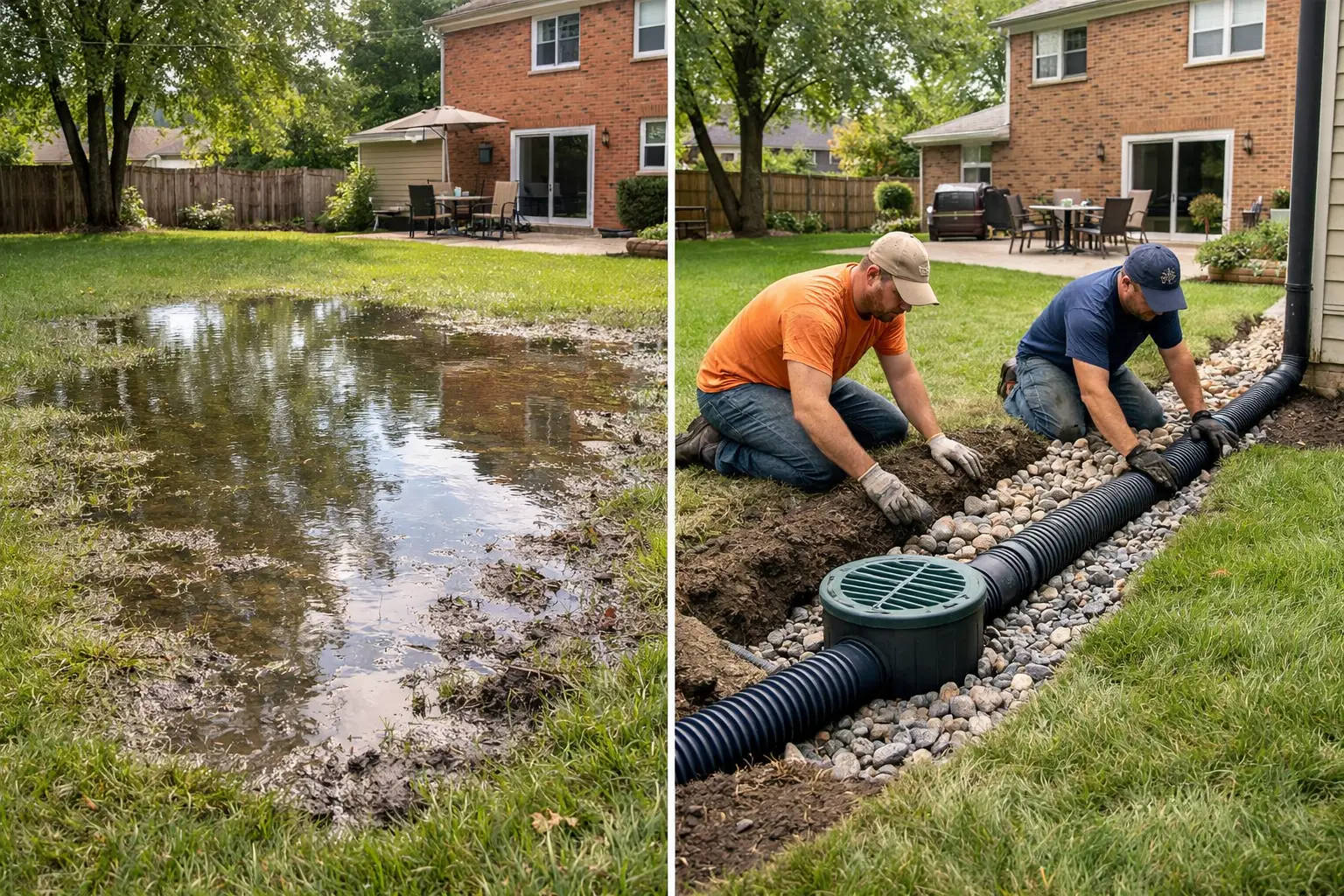
A French drain is often a good solution when water repeatedly collects in one section of the yard. It is a gravel-filled trench with a perforated pipe inside. Water enters through the gravel and pipe, then moves underground toward a proper outlet.
French drains work well for wet lawn edges, areas below a slope, and spots where groundwater tends to rise after rain. They are not magic, though. The system still needs enough slope and a place to discharge the collected water. Installing a perforated pipe in a flat trench with no outlet can leave you with an expensive underground puddle.
For surface water that rushes across a patio, driveway edge, or paved walkway, a channel drain or catch basin may make more sense. These systems collect water from the surface before it can pool, then connect to a drain line. The right choice depends on whether water is sitting on top of the ground or coming up through saturated soil.
Improve compacted lawn soil where it makes sense
If the yard is generally firm but water takes too long to soak in, core aeration can help. Aeration removes small plugs of soil, opening pathways for air, water, and roots. It is especially helpful in established lawns that get a lot of use from kids, pets, or regular foot traffic.
Aeration is not a replacement for grading or drainage piping. It will not fix a backyard that is shaped like a bowl or receives roof runoff from several downspouts. But as part of a larger lawn care plan, it can improve how the turf handles normal rainfall and reduce surface puddling.
Consider a dry creek bed or drainage-friendly landscape feature
Not every drainage solution has to look like a utility project. A dry creek bed can direct occasional runoff through a landscaped area using stone, proper grading, and carefully selected plants. When it is dry, it looks like an intentional landscape feature. During a storm, it gives water a controlled route across the property.
This can be a practical fit for Naperville-area homes and other western suburb properties with a slope toward the backyard. It is usually best for managing visible surface flow, not for correcting water that is trapped deep in clay soil. A dry creek bed also needs to be designed with the rest of the landscape in mind so stone, mulch, and planting beds do not wash out during a hard rain.
Drainage Mistakes That Can Make the Problem Worse
Covering a muddy area with more mulch is a common short-term move, but it can hold moisture against the soil and hide the issue rather than solve it. Adding topsoil without checking the grade can also push water toward the house or neighboring property.
Another mistake is assuming every wet area needs a French drain. Sometimes the actual issue is a clogged gutter, a disconnected downspout, or a sunken section beside the foundation. Other times, the yard needs surface grading before any pipe goes in the ground.
Avoid routing water directly onto a neighbor’s lot, across a public sidewalk, or into a place where it can freeze in winter. Illinois drainage work may also involve local rules, easements, or utility locations. That is why a plan should start with the whole property, not just the puddle you can see.
When It Is Time to Bring in a Drainage Professional
A homeowner can often spot simple gutter and downspout issues. But repeated standing water, wet foundations, soggy grass that will not recover, and patio drainage problems are worth a professional evaluation. These issues can overlap, and the wrong fix can mean digging twice.
A drainage walkthrough should include the roofline, downspouts, foundation grade, hardscape areas, lawn slopes, and likely discharge points. It should also consider how the yard performs during spring thaw and heavy summer rain. Downers Grove homeowners and other Chicagoland property owners know that a yard can behave very differently in April than it does during a dry August week.
At Revive Your Lawn, we look at drainage as part of the complete outdoor picture. The goal is not to add pipe for the sake of adding pipe. It is to protect the home, keep the lawn usable, and leave you with a clean-looking yard you can enjoy.
Water problems rarely improve by waiting them out. If one section of your backyard stays wet after every storm, take a closer look while the evidence is still there. A clear plan now can save your lawn, protect your foundation, and make the next rainy weekend a lot less frustrating.