
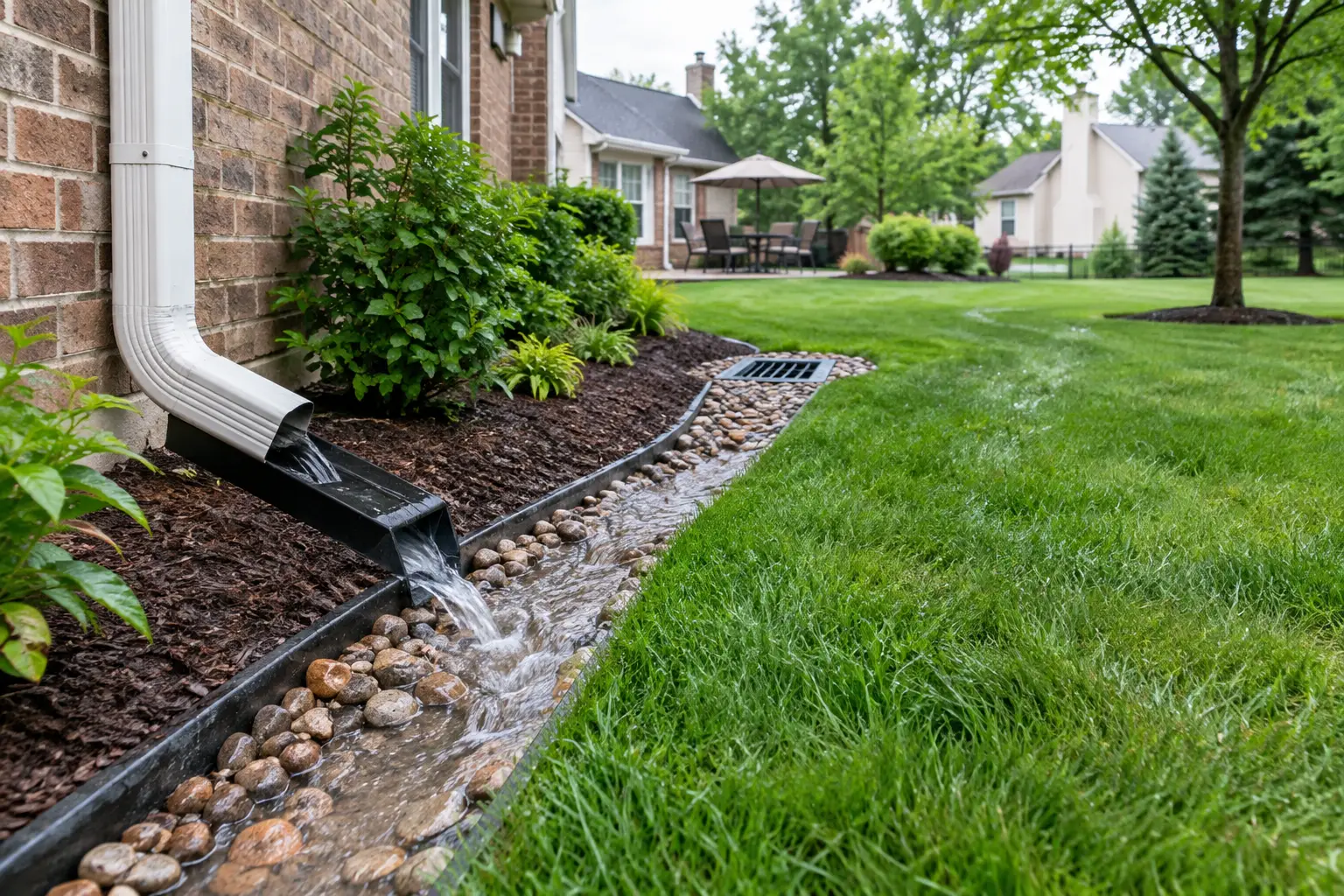
A wet spot in the yard is rarely just a wet spot. After a hard Illinois rain, water can travel toward a foundation, wash mulch out of beds, turn grass into mud, or freeze into a slick patch by the walkway. That is why yard drainage solutions Chicagoland homeowners choose should start with finding out where the water comes from and where it can safely go.
In the Chicago suburbs, drainage problems are common because many properties have heavy clay soil, flat areas, mature landscaping, and homes built close together. Add spring rain, summer storms, snowmelt, and frozen winter ground, and water has plenty of chances to collect where it should not.
A good drainage plan is not about installing the biggest pipe possible. It is about moving water away from the house, protecting the yard, and keeping the finished landscape looking clean and natural.
Why Chicagoland Yards Hold Water
Illinois clay soil is a big part of the issue. Clay can hold water for a long time, especially after repeated rain. A yard may look dry on top but stay soft and saturated underneath. That makes it harder for grass to grow, creates ruts from foot traffic, and can leave kids and pets tracking mud into the house.
Grading also matters. Grading is simply the direction the ground slopes. Water should generally move away from your home, not settle along the foundation or drain back toward it. On Naperville-area homes and other established suburban properties, years of mulch, landscaping changes, patio work, settling soil, and additions can gradually change those slopes.
Downspouts are another frequent source. Gutters may do their job well, but if the downspout empties too close to the house, all that roof water still lands in the wrong place. During a heavy storm, one roof can send a surprising amount of water into a small section of yard.
Signs You Need Yard Drainage Solutions in Chicagoland
Here is what to look for. One rainy weekend does not always mean there is a major problem, but repeated patterns deserve attention.
- Water stands in the same area for more than a day or two after rain.
- The ground near the foundation stays damp, soft, or muddy.
- Mulch washes out of planting beds or collects on sidewalks and patios.
- Grass thins out in low spots, while moss starts showing up in areas that should be lawn.
- Water pools beside a patio, driveway, basement stairwell, or garage.
- Downspout outlets create trenches, bare spots, or puddles.
This is where many homeowners run into trouble. They add more seed, more mulch, or a few stepping stones, but the water issue remains underneath it all. A good landscape should look nice, but it also needs to work.
Start With the Water Source
Before recommending a drain, a contractor should walk the property and look at the full picture. Where does water collect? Does it come from the roof, a neighboring slope, a patio, poor grading, or a low area in the lawn? Is the issue happening in light rain, only during major storms, or during spring thaw?
The answer changes the solution. For example, a soggy section near a downspout may need an underground downspout extension. Water running across a patio may call for a channel drain or a change in surrounding grade. A broad low area in the lawn may need a catch basin, drainage pipe, and a proper outlet point.
It also matters where the water can legally and practically discharge. Water cannot simply be sent toward a neighbor’s yard or onto a sidewalk where it can freeze. Local conditions, lot layout, municipal rules, and existing utilities all need to be considered before work begins.
Common Drainage Fixes and When They Make Sense
Regrading for Better Flow
Regrading is often the first thing to consider when the soil is pitched toward the home or a low spot has developed. This means carefully adding, removing, and shaping soil so surface water follows a better path.
Regrading can be a smart choice for smaller drainage issues, especially near foundations, patios, and planting beds. It may also be part of a larger project when installing new sod, a paver walkway, or refreshed landscaping. The trade-off is that grading alone will not solve every problem. If a large amount of roof water keeps landing in one area, that water may still need to be collected and carried away.
Downspout Extensions
A downspout extension moves roof runoff farther from the foundation. Some extensions sit above ground, while others run underground to a pop-up outlet or another approved discharge point.
For many Illinois homes, this is one of the simplest and most useful improvements. It keeps concentrated roof water from eroding beds and soaking the soil beside the house. Underground extensions usually look cleaner, but they need the right slope and a place for water to exit. A buried pipe with nowhere to drain will not help much.
Catch Basins and Drainage Pipe
A catch basin is a small collection box with a grate on top. It is placed where water naturally gathers, such as the bottom of a slope or a low section near a patio. The basin collects the water and sends it through buried pipe to a safe outlet.
This can work well for standing water in a defined area. It is especially helpful when surface water needs to be picked up quickly before it reaches a structure or hardscape. The basin must be set at the true low point, though. If it is even a little too high, water will continue to pool beside it.
French Drains
A French drain is a trench filled with stone and perforated pipe. It is designed to collect water moving through the soil, not just water sitting on top of the lawn. These systems are often useful in persistently wet areas or along a slope where underground water keeps saturating the ground.
French drains are not a one-size-fits-all answer. They require enough slope, proper fabric and stone, and a reliable discharge plan. Installing one without addressing roof runoff or bad grading can leave the original problem partly unsolved.
Channel Drains Near Hardscapes
Water that runs across a driveway, patio, or walkway needs a different approach than a soggy lawn. A channel drain is a narrow grated drain set into or along the edge of a hard surface. It catches runoff before it reaches a garage, basement entrance, or lower patio area.
For Downers Grove homeowners with older patios or homes with basement walkouts, this can be a practical way to protect an area that sits lower than the rest of the yard. It should blend into the hardscape and connect to a properly planned drainage route.
Drainage and Landscaping Should Be Planned Together
Drainage work does not have to leave a yard looking torn up. In fact, it is often the right time to improve the look and function of the space. Once the water path is corrected, a project can include new sod, refreshed beds, stone borders, grading around a patio, or a better walkway route.
The order matters. It does not make sense to install fresh landscaping and then dig it up later to solve a water issue. Address drainage first, then finish the yard with materials and plantings that fit the new layout.
This is also a good time to look at the full exterior. If water is causing muddy traffic areas, a paver walkway may make sense. If runoff is washing out mulch, edging and proper bed grading can help hold everything in place. If gutters overflow or clog often, gutter guards may reduce the debris that makes roof runoff worse.
What Homeowners Can Do Before a Drainage Walkthrough
You do not need to diagnose the whole system yourself. Still, a few simple observations help make an on-site conversation more productive. Take photos during or shortly after rain, note how long water stays in problem areas, and pay attention to whether the issue is worse during snowmelt or summer storms.
If you can, look at where each downspout releases water. Also notice any recent changes, such as a new patio, fence, landscaping bed, or neighboring construction. Those details can point to why the problem started.
Avoid filling a low spot with random topsoil or covering it with mulch before the cause is clear. That may make the area look better for a short time, but it can also redirect water somewhere else. You do not want water sitting near your foundation, and you do not want to trade one muddy area for another.
A Better Way to Handle Water in Your Yard
The best drainage solution is the one built around your property, not a standard package pulled from another yard. A small grading adjustment may be enough for one home. Another may need downspout drainage, a catch basin, and landscape restoration to make the yard usable again.
At Revive Your Lawn, we look at drainage as part of the whole outdoor picture: how the water moves, how the yard is used, and how the finished space should look. If your lawn stays soggy or water keeps collecting near the house, a straightforward walkthrough can give you a clear starting point and help you protect the property before the next heavy Illinois rain.


