A front yard can look great in April and become a full-time job by July. That is usually the point when homeowners start asking what the best low maintenance front yard really looks like for an Illinois home. The short answer is this: less grass, smarter planting, better drainage, and materials that hold up through our weather.
In the Chicago suburbs, low maintenance does not mean empty or boring. It means building a yard that still looks clean and welcoming without needing constant mowing, trimming, watering, and fixing. A good landscape should look nice, but it also needs to work.
What makes the best low maintenance front yard?
The best low maintenance front yard is not just a yard with a few shrubs and a pile of mulch. It is a front yard designed to reduce the chores that eat up your weekends. That usually means shrinking high-maintenance lawn areas, choosing hardy plants that can handle Illinois weather, and making sure water moves away from the home instead of turning beds into mud.
This is where many homeowners run into trouble. They focus only on what looks simple at install time. Then a year later, they are dealing with patchy grass, weeds in every bed, mulch washing out, or plants that were never a good fit for the site.
A low-maintenance yard works best when you look at the full picture. Sun exposure matters. Drainage matters. The slope toward the street or the house matters. Even how you use the front walk matters if you want it to stay safe and easy to shovel in winter.
Start by reducing the parts of the yard that need the most work
For most Illinois homes, the biggest maintenance burden is turf grass. Grass can look great, but it also needs mowing, edging, feeding, watering during dry spells, and repair after a rough winter. If your whole front yard is lawn, you are signing up for regular work.
That does not mean you need to remove all the grass. In many front yards, the better move is to keep a smaller, cleaner lawn area and replace awkward sections with landscape beds, decorative stone, or hardscape features. Narrow strips near the driveway, steep slopes, and shaded corners are often the first places worth rethinking because they are usually the hardest to keep looking good.
When you reduce lawn in the right places, the yard often looks more polished. It also becomes easier to mow and maintain because there are fewer tight turns, edges, and problem spots.
Use plants that fit Illinois weather, not plants that need babysitting
If you want the best low maintenance front yard, plant selection has to be practical. In Chicagoland, we deal with freeze-thaw cycles, hot summers, wet springs, and stretches of dry weather. Plants that look good at the garden center are not always the best long-term choice for a front yard that needs to stay attractive with less effort.
A strong low-maintenance planting plan usually includes hardy shrubs, dependable perennials, and groundcover in the right places. You want plants that hold their shape fairly well, come back reliably, and do not need constant pruning. You also want enough spacing so plants can fill in over time without turning into a crowded mess.
This is one of the easiest mistakes to make. People plant too much, too close together, because they want the bed to look full right away. Two or three seasons later, everything is overgrown, airflow is poor, and trimming becomes constant. A cleaner design with fewer, tougher plants often ends up looking better and taking far less work.
Evergreens can help with year-round structure, especially during an Illinois winter when everything else goes flat. Perennials add color and texture without the replanting cycle of annual flowers. Groundcover can help cut down on open soil where weeds love to show up. The exact mix depends on sun, soil, and how formal you want the front of the home to feel.
Mulch helps, but only if the bed is built right
Mulch is useful in a low-maintenance front yard, but it is not magic. It helps hold moisture, slows down weed growth, and gives beds a finished look. But if the bed edging is poor or the yard has drainage issues, mulch can end up in the lawn, on the sidewalk, or washed against the foundation.
In Illinois, this matters because spring rains and summer storms can move a lot of water fast. If water runs through the bed, you need to solve that first. Otherwise, you will keep redoing the same area.
Defined bed edges, proper grading, and the right amount of mulch make a big difference. Too much mulch can actually create problems around plants and make the beds look bulky. A neat, contained mulch bed with healthy plant spacing is much easier to maintain than a bed that is oversized and constantly shifting.
Drainage is a big part of a low-maintenance yard
A lot of front yard frustration is really a drainage problem wearing a landscaping disguise. If water sits near the house, collects by the walk, or keeps a bed soggy, that area will never be truly low maintenance. You do not want water sitting near your foundation, and you also do not want muddy spots where grass thins out and weeds move in.
For Chicagoland homeowners, front yard drainage can be affected by downspouts, compacted soil, low spots, and improper grading. Sometimes the fix is simple, and sometimes it takes a more complete plan. The important thing is not to build a pretty front yard on top of a water problem and hope it works itself out.
This is where a lot of nice-looking projects fail early. The plants struggle, the mulch shifts, the lawn gets soft, and the walkway stays messy. A good low-maintenance design handles both appearance and performance from the start.
Hardscaping can cut down on upkeep if it is used well
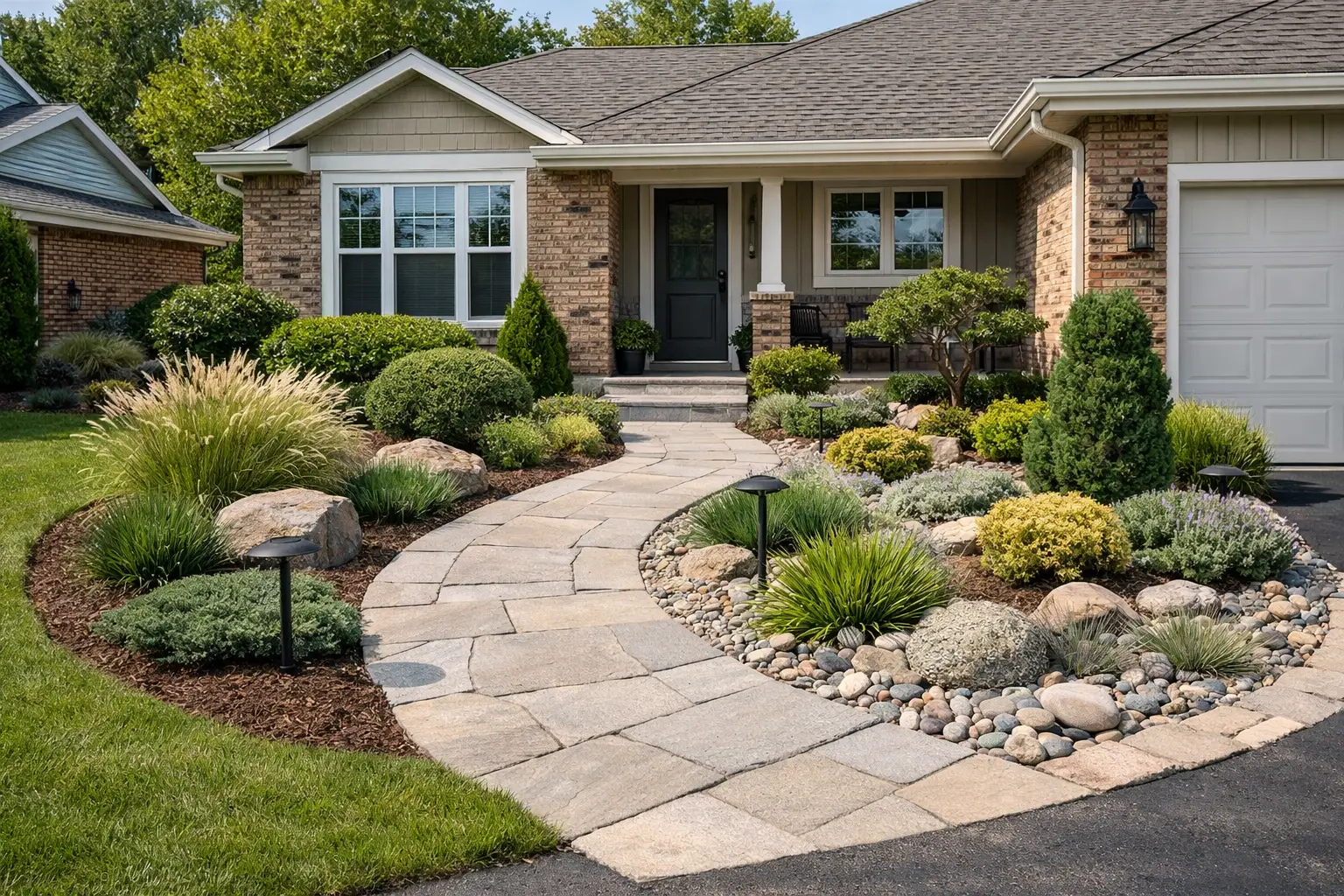
One of the smartest ways to lower maintenance is to add hardscape in the right places. Paver walkways, edging, small front patios, and decorative stone areas can reduce mowing and help keep the yard looking structured. They also hold up well through the season when installed correctly.
That said, hardscaping is not automatically maintenance-free. Poor base prep can lead to settling. Bad layout can create awkward snow removal paths. Too much stone without enough soft landscaping can make a front yard feel harsh. It really comes down to balance.
For many homes in the western suburbs, the sweet spot is a front yard with a defined walkway, a few strong planting areas, and less lawn in the trouble spots. That kind of layout usually looks intentional, stays cleaner through the seasons, and asks less of the homeowner.
Keep the design simple enough to stay clean
A simple front yard is usually easier to maintain than one packed with little details. Too many plant varieties, too many bed lines, or too many decorative elements can make the yard feel busy and create more trimming, weeding, and cleanup.
Clean lines tend to age better. Repeating the same plant group in a few places often looks sharper than using one of everything. Wider, smoother bed curves are easier to edge than tight zigzags. Fewer materials usually means a more cohesive look and less maintenance confusion over time.
Homeowners sometimes worry that simple means plain. It does not. A yard can be simple and still have character, especially when texture, lighting, and structure are done well.
Do not overlook lighting and seasonal upkeep
Landscape lighting is not the first thing people think of when they picture a low-maintenance front yard, but it can make a big difference. Good lighting improves curb appeal, helps define walkways, and keeps the front of the home looking finished even when the planting is more streamlined.
It is also one more way to get a strong look without relying on lots of flowers or fussy features. In many front yards, a cleaner landscape with quality lighting feels more upscale and easier to live with than a busier design that needs constant attention.
Seasonal upkeep still matters too. Low maintenance does not mean no maintenance. Beds need occasional weeding. Shrubs may need some trimming. Leaves have to be cleared. But the idea is to cut the workload down to manageable, predictable upkeep instead of constant repair.
The best front yard is the one that fits your house and your routine
There is no one-size-fits-all answer. A shaded older lot in Downers Grove will not need the same plan as a newer, sunnier property in Plainfield or Naperville. Some homeowners want a crisp, formal front yard. Others want something softer and more natural. Both can be low maintenance if they are planned well.
The best results usually come from being honest about how much upkeep you actually want to do. If you do not want to spend weekends trimming, watering, and fighting problem spots, the yard should be designed around that from the beginning.
That is how we look at it at Revive Your Lawn. A front yard should boost curb appeal, but it should also make life easier. If the layout, drainage, planting, and materials all work together, you end up with a yard that looks sharp without demanding constant attention.
If you are thinking about changes to your front yard, start with the trouble spots first. The areas that stay wet, grow poorly, or take the most work usually tell you exactly what needs to change.