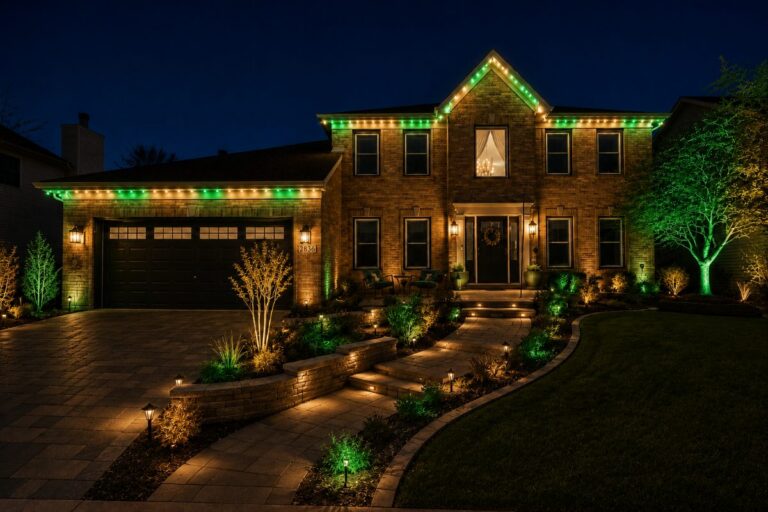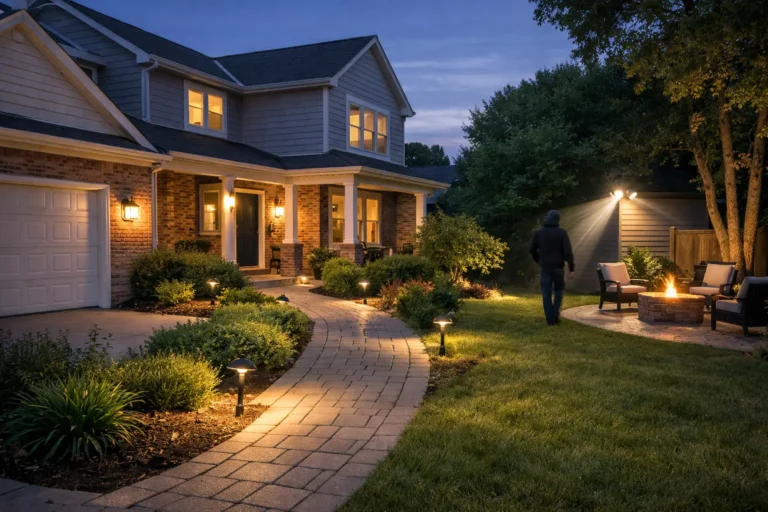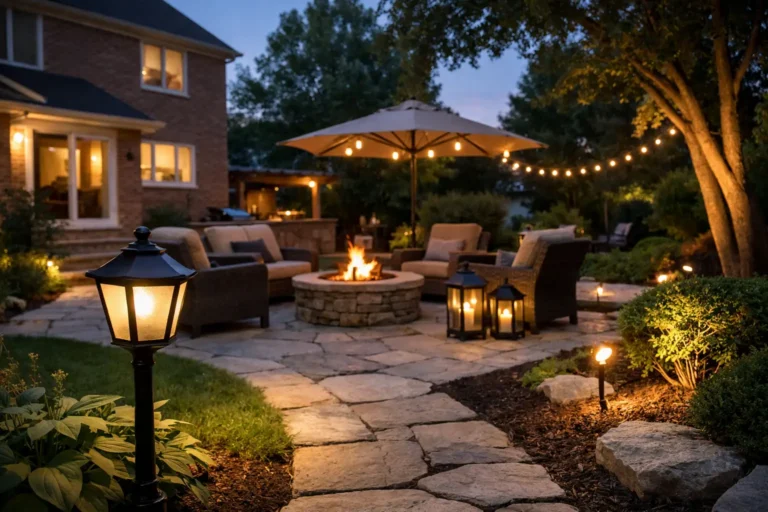
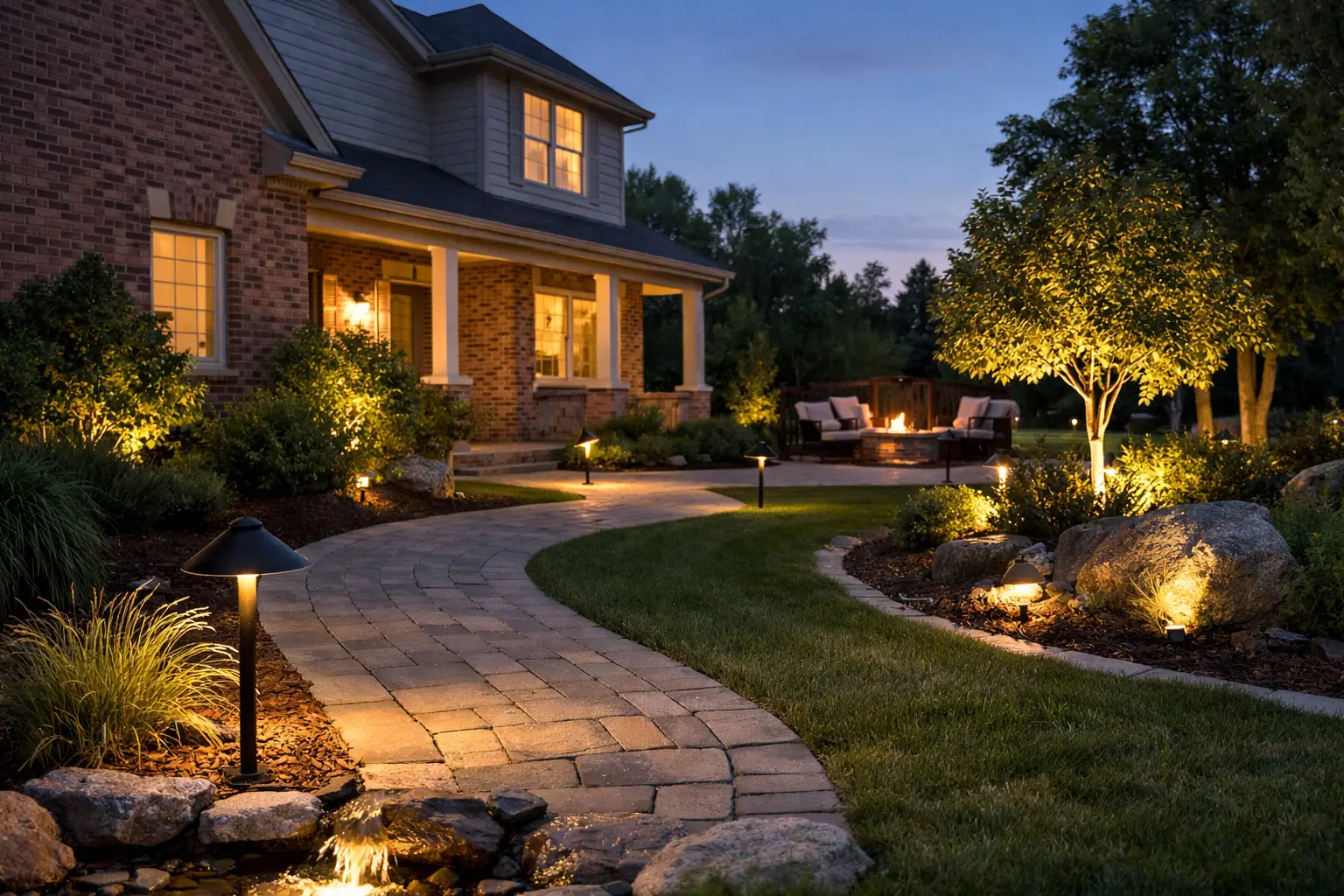
A front walk can look completely different after dark. Without the right lighting, guests may be stepping around uneven pavers, the front entry can disappear into the shadows, and all the landscaping work you put into your home goes unseen. This landscape lighting planning guide will help Chicagoland homeowners make smart choices before fixtures go into the ground.
Good outdoor lighting is not about putting a bright light on every tree or lining every walkway like a runway. It is about making the property safer, more welcoming, and easier to enjoy at night. A thoughtful plan also helps avoid the common problems we see around the Chicago suburbs: glare in the windows, exposed wires, poorly placed fixtures, and lights that do not hold up through a wet spring and a tough Illinois winter.
Start With What You Want the Lighting to Do
Before picking out fixtures, walk outside around dusk and look at the property the way a visitor would. Where do people enter? Which paths, steps, and changes in elevation are hard to see? What part of the house or landscape do you want to show off?
Most homeowners are trying to solve a mix of three needs: safety, curb appeal, and outdoor living. The priority matters because it guides the layout. A home with a long paver walkway may need more path and step lighting. A Naperville-area home with mature trees and stonework may benefit more from subtle accent lighting. A patio used for family dinners needs enough usable light to move around comfortably without making the space feel like a parking lot.
This is where many homeowners run into trouble. They buy fixtures based on how they look in a box, then try to decide where they belong. Planning should work the other way around. First decide what needs light. Then choose the fixture that does that job.
Map the Areas That Need Attention First
You do not need to light every inch of the yard. In fact, leaving some darker areas creates contrast and gives the property a more natural look. Start with the places where lighting makes the biggest difference.
For most Illinois homes, that includes the front entry, walkways, driveway edges where people get in and out of cars, patio steps, retaining walls, and transitions between the house and yard. If your property has a side gate, a detached garage, or a route used to take out the trash, those areas deserve attention too.
Next, identify the features worth highlighting. This could be a large oak, an ornamental tree, a stone column, a pergola, a water feature, or the texture of a brick or stone facade. One or two well-lit focal points usually look better than trying to light every shrub bed.
Take photos at dusk from the street, driveway, and patio. They can show where the property gets too dark and where existing porch or garage lighting already does enough work. During a professional walkthrough, we also look for things that affect installation, such as irrigation lines, drainage outlets, downspouts, buried utilities, and areas that stay wet after rain.
Use Layers Instead of One Type of Light
A balanced lighting plan uses different types of fixtures for different jobs. Think of it as layers rather than a row of matching lights.
Path lights provide a low, downward glow that helps people follow a walkway. They should light the walking surface, not shine directly into someone’s eyes. Spread them out based on the path and the fixture’s output. Placing one every few feet often creates too much glare and can make the yard look cluttered.
Step lights are useful on stairs, raised patios, and retaining walls. They improve safety while keeping the light close to where it is needed. For a dark set of front steps, this can be more effective than adding a stronger porch bulb.
Uplights are aimed upward to highlight trees, columns, walls, and architectural details. They add depth and bring attention to the best parts of the landscape. The trade-off is that a poorly aimed uplight can send light into a bedroom window or create harsh shadows. Fixture placement and aiming make a big difference here.
Downlights are mounted higher up, often in trees, pergolas, or structures, to cast a soft wash of light below. On a patio, this can feel more comfortable than several bright fixtures at ground level. It depends on whether there is a safe, practical mounting location and enough mature structure to support the plan.
Choose Warm Light and Fixtures Built for Illinois Weather
For most homes in the western suburbs, warm white light gives the best result. It makes brick, stone, and planting beds look natural and welcoming. Very cool, blue-white light can make a nice property feel stark, especially in winter when the lawn, trees, and sky already look cooler.
Fixture quality matters just as much as color. Chicagoland lighting needs to handle rain, snow, freeze-thaw cycles, soil movement, and the occasional hit from a mower or snowblower. Plastic fixtures may cost less at the start, but they can fade, crack, or shift out of position sooner than a better-built metal fixture.
Brass and copper fixtures are popular because they hold up well and develop a natural finish over time. Powder-coated aluminum can also work well in the right application. The best choice depends on your style, soil conditions, and where the fixture will be installed. A fixture near a busy driveway or along a heavily used path needs to be especially durable.
Plan the Power and Wiring Before Landscaping Is Finished
Low-voltage landscape lighting is a practical choice for many residential properties. It uses a transformer to reduce standard household power to a lower voltage for the lighting system. That makes it well suited for fixture layouts around planting beds, trees, patios, and walkways.
The transformer needs a properly located exterior power source, and the system needs enough capacity for the lights you plan to install now and possibly later. This is worth thinking through early. If you know you may add lighting around a future patio, fence, or backyard landscape bed, planning for expansion can save time and disruption later.
Wire runs should be routed carefully and buried at an appropriate depth. They should not be laid where edging crews, aeration equipment, drainage work, or future planting will easily damage them. You also want the wire and connections protected from wet areas. You do not want water sitting near your foundation, and you do not want electrical connections sitting where water regularly collects either.
If you are installing a new patio, paver walkway, pergola, drainage system, or landscape bed, bring up lighting during the design stage. Coordinating these projects creates a cleaner finished result and helps avoid tearing into completed work later.
Avoid the Most Common Lighting Mistakes
The biggest mistake is using too much light. More fixtures do not automatically mean a better-looking yard. Overlighting creates glare, wastes energy, and takes away from the calm feel homeowners usually want outside.
Another issue is putting fixtures in the wrong place for maintenance. A light hidden behind a fast-growing shrub may look fine on installation day but disappear by midsummer. Fixtures should be positioned with future trimming, mowing, mulch, and plant growth in mind.
Homeowners also sometimes forget to consider views from inside the house. Stand in the kitchen, living room, and bedrooms after dark. An uplight that looks great from the street may be distracting if it shines toward a window. Small adjustments in angle and placement can solve this.
Finally, do not overlook controls. A timer, photocell, or smart control can make the system easier to manage. You should not have to remember to turn lights on every evening or leave them running until morning. The right schedule gives you the benefit of lighting when you need it without adding unnecessary use.
A Landscape Lighting Planning Guide for Long-Term Results
A good lighting system is not a one-time set-it-and-forget-it project. Fixtures may need occasional straightening after winter, lenses can collect dirt, and growing plants may change how the light falls. A spring checkup is a good time to inspect the system, replace any failed components, adjust aiming, and make sure wires are still protected.
It also helps to think about the property as a whole. Lighting works best when it supports a well-kept lawn, healthy planting beds, safe hardscaping, and proper drainage. A beautifully lit walkway is even better when the pavers are level, the beds are clean, and water is moving away from the home the way it should.
For homeowners who want a plan built around their actual yard, Revive Your Lawn can walk the property, talk through the areas you use most, and recommend lighting that fits the home instead of forcing a one-size-fits-all layout. The goal is simple: when you pull into the driveway after dark, your property should feel safer, easier to use, and like it is being cared for year-round.