A gutter problem usually shows up at the worst time: during a hard rain, after a windy fall weekend, or when melting snow starts dripping where it should not. When homeowners ask about gutter guards vs gutter screens, they are usually looking for one thing: a reliable way to keep water moving away from the house without climbing a ladder every few weeks.
That is a smart goal, especially around the Chicago suburbs. Leaves, helicopter seeds, pine needles, roof grit, snow, and freeze-thaw cycles can all put a gutter system to work. The better choice is not always the product with the biggest promise. It is the one that fits your roof, the trees around your property, and the condition of your existing gutters.
Gutter Guards vs Gutter Screens: The Basic Difference
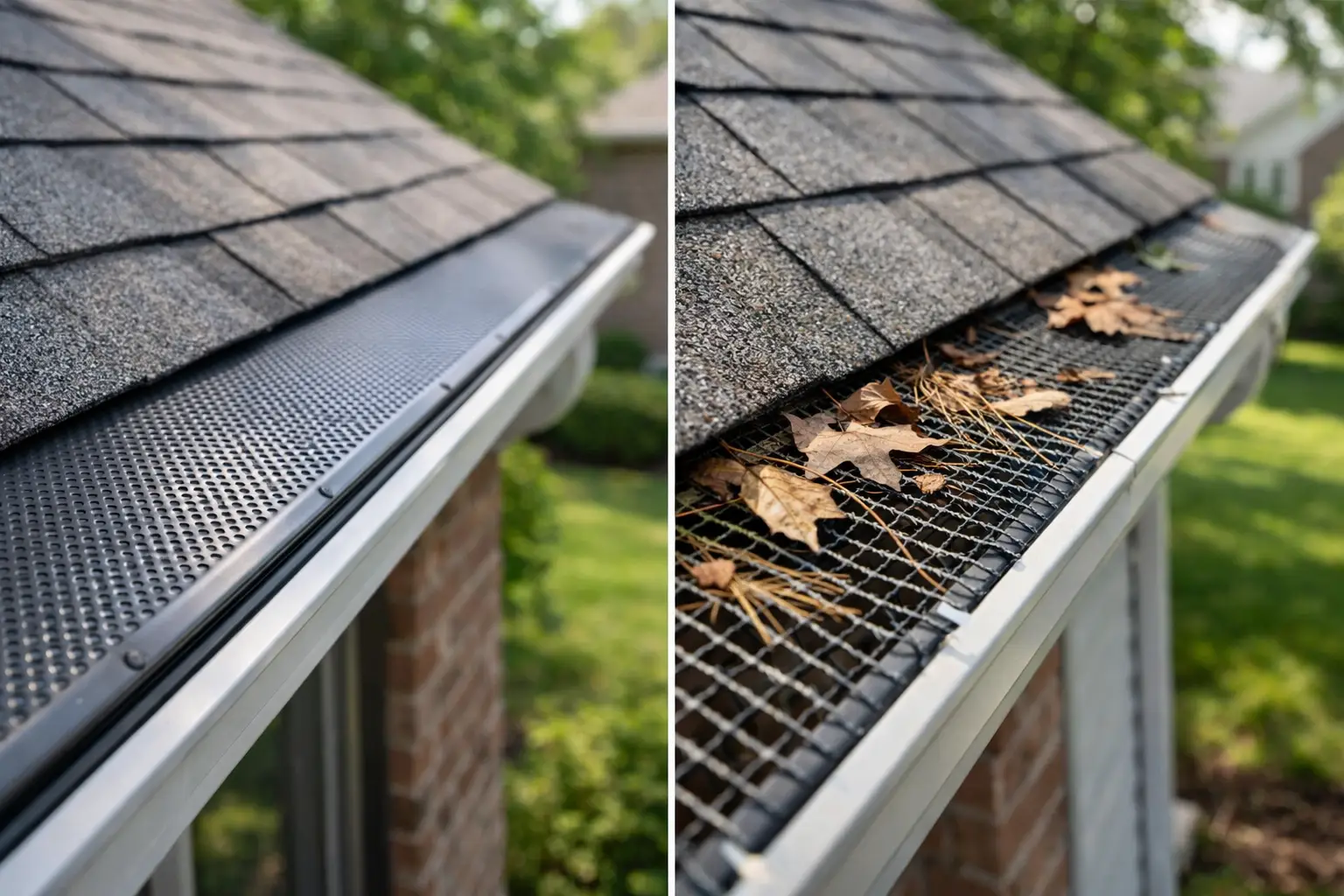
The terms can get confusing because a gutter screen is technically one type of gutter guard. “Gutter guard” is the broad name for any cover or system designed to keep debris out while allowing water into the gutter. Gutter screens are usually a more open, perforated panel that sits over or inside the gutter.
A screen has larger openings than a fine mesh guard. It can stop larger leaves, twigs, and seed pods from filling the gutter, while allowing rainwater to pass through. A gutter guard, depending on the style, may use finer mesh, a solid surface with a small water channel, or another design intended to filter out smaller debris.
Here is what matters most: neither option makes a gutter system completely maintenance-free. A good system should greatly reduce the amount of debris that gets inside the gutter, but some cleaning and inspection are still part of responsible home care.
When Gutter Screens Make Sense
Gutter screens can be a practical option for homes with mostly larger leaves and relatively low debris volume. They are commonly made from aluminum, steel, or plastic, and their simple design can make them an accessible choice for some properties.
For a home in a newer Naperville-area neighborhood with few mature trees hanging over the roofline, a quality screen may do a perfectly good job. It can keep big leaves out of the gutter and reduce the chance of a heavy clog at the downspout.
Screens also allow plenty of water into the gutter because their openings are larger. That can be helpful during the heavy summer storms we get in Illinois. If the gutters are properly pitched and the downspouts are clear, water has a straightforward path away from the house.
The trade-off is that smaller material can still get through. Maple seeds, pine needles, shingle grit, and small bits of broken-down leaves may enter the gutter through a standard screen. Debris can also collect on top of the screen, especially if the roof sits under big oak, maple, or pine trees.
A screen can reduce cleaning, but it may not reduce it enough for every property.
Where Many Homeowners Run Into Trouble With Screens
The biggest issue with some gutter screens is not the screen itself. It is the debris sitting on top of it. Wet leaves can mat together and block the openings. When that happens, rainwater may roll over the edge of the gutter instead of entering it.
This is where many homeowners run into trouble during a downpour. They see water spilling over the front of the gutter and assume the gutter is too small. Sometimes that is true, but a blocked screen, clogged downspout, or poorly pitched gutter may be the real cause.
Screens can also be more likely to struggle under fine debris. If your property has pine trees, mature maples, or several trees close to the roof, larger openings may not offer enough filtering. Downers Grove homeowners with heavily wooded lots often need to think beyond basic leaf protection.
Material matters, too. Thin plastic screens can become brittle over time in Illinois weather. A screen that shifts, cracks, or pulls away from the gutter can create more work than it saves. A sturdier metal option is generally a better fit when a screen is the right style for the home.
Why Fine-Mesh Gutter Guards Are Often a Better Fit
Fine-mesh gutter guards are designed to block smaller debris while allowing water through tiny openings. For homes surrounded by mature trees, they are often the stronger long-term choice. They can keep out leaves, seed pods, needles, and much of the gritty material that makes gutters messy.
That extra filtering can make a real difference in the western suburbs, where older neighborhoods often have large established trees. It can also help protect downspouts. Once debris makes its way down a downspout, it is harder to spot and more difficult to clear than a clog sitting in an open gutter.
Fine mesh is not automatically the right answer for every home, though. It needs to be installed correctly, with attention to the roof edge, gutter condition, and water flow. If the mesh is installed poorly or the gutter is already sagging, overflowing water can still be a problem.
The best guard system works with the entire setup. That includes the gutters, hangers, downspouts, extensions, and the grade around the foundation. You do not want water sitting near your foundation simply because the gutter looks clean from the ground.
Illinois Weather Changes the Conversation
In Illinois, this matters because gutters are not dealing with leaves alone. They are also handling spring rain, summer storms, fall debris, snow, and repeated freezing and thawing through winter.
Gutter guards and screens do not prevent ice dams. An ice dam forms when snow melts on a warm roof and refreezes near the colder roof edge. Attic insulation, ventilation, roof heat loss, and outdoor temperatures all play a role. A guard may keep some debris out, but it cannot solve a roof heat issue.
Still, clean, free-flowing gutters are helpful when temperatures rise and accumulated snow begins to melt. Water needs a clear path through the gutter and downspout. If the system is packed with old leaves and sludge, melting water can spill over near walkways, landscaping beds, and the foundation.
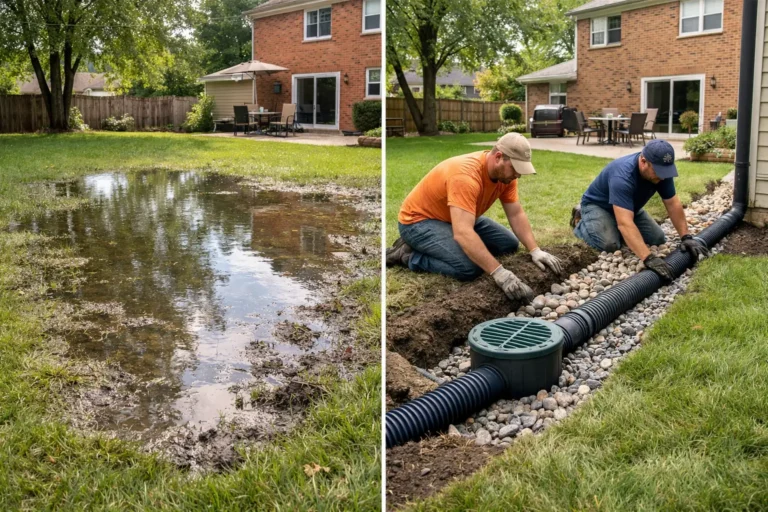
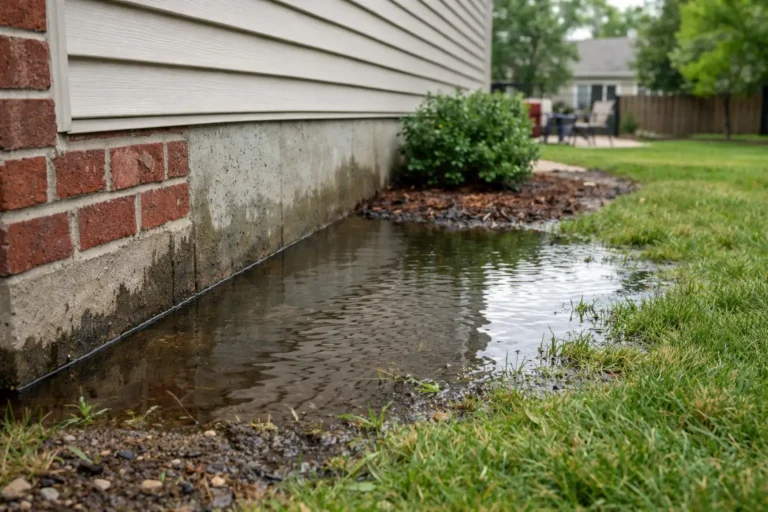
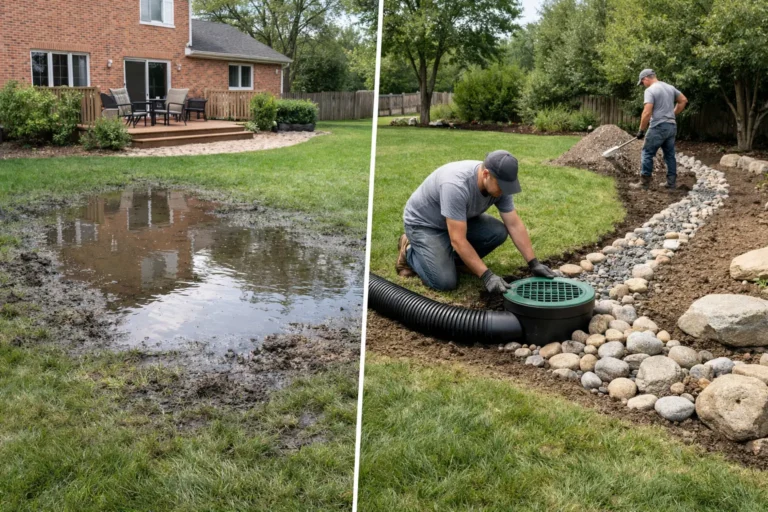
That can lead to slippery areas, washed-out mulch, muddy spots, and unwanted water around the home. For Chicagoland homeowners, gutter protection is part of the larger drainage picture.
Your Roof and Trees Should Guide the Choice
Before choosing between a screen and a finer guard, look at what is actually landing on your roof. Large oak leaves create one type of challenge. Pine needles create another. Small maple helicopters and shingle grit create another altogether.
Roof shape matters just as much. A simple, low-pitch roof with one or two straight gutter runs is different from a steep roof with multiple valleys. Roof valleys send a concentrated rush of water into one area of the gutter. That section may need special attention, even if the rest of the home has light debris.
Also take an honest look at the gutters already in place. If they are pulling away from the fascia, sagging, rusting, or holding standing water, adding a cover will not fix the underlying problem. The gutter system should be repaired and securely fastened before a guard or screen goes on top.
What to Look for Before You Install Anything
A quality gutter protection project starts with an inspection, not a product pitch. The goal is to understand how water moves across your roof and away from your home.
Look for overflowing sections during rain, water marks on the siding, mulch washing out below a downspout, and puddles near the foundation. Check whether downspout extensions carry water far enough away from the house. If a lower roof dumps water onto a higher gutter section, that should be addressed as well.
Ask what the guard or screen is made of, how it attaches, and whether the installer will clean and inspect the existing gutters first. You also want to know how future service will work. A good installation should not make it impossible to inspect the gutters or address a repair later.
Be careful with the idea that any product means “never clean your gutters again.” Even the best system can collect debris on top, especially after a windy fall storm. The difference is that a good guard can turn frequent, messy gutter cleanings into simpler periodic inspections.
So, Which Option Is Right for Your Home?
Gutter screens are often a reasonable fit for properties with light debris and mainly large leaves. They can be effective when they are made from durable material and installed on gutters that are already in good shape.
Fine-mesh gutter guards are usually a better choice for homes with pine needles, maple seeds, heavy tree cover, or homeowners who want the greatest reduction in gutter cleaning. They tend to offer more complete debris control, but the installation quality is especially important.
The right answer depends on your property. A home in Hinsdale with mature trees and several roof valleys may need a different approach than a newer Plainfield home with open exposure and fewer trees. That is why a walkthrough is more useful than choosing a gutter product from a photo.
If you are tired of watching water pour over the gutter edge or spending weekends on a ladder, start by looking at the whole system. At Revive Your Lawn, we help Chicagoland homeowners think through gutter protection alongside drainage and exterior upkeep, so the solution supports the way your property actually works.