An ice dam often starts with a small strip of ice along the roof edge. Then a few warm days, another round of snow, and a hard overnight freeze turn it into a thick ridge that traps melting water behind it. For Chicagoland homeowners, learning how to stop ice dams is less about one quick fix and more about keeping the roof, attic, gutters, and snow working the way they should.
This matters because trapped water does not always stay outside. It can work under shingles, stain ceilings, damage insulation, loosen gutters, and create a slippery mess below. Here is what to look for and what actually helps.
Why ice dams form on Illinois homes
Ice dams form when snow on the upper part of a roof melts, runs down toward the colder roof edge, and refreezes. The ice builds up at the eaves, which are the lower edges of the roof that extend past the heated part of the home.
The biggest cause is usually uneven roof temperature. Heat escaping from the house warms the roof deck above it. Snow melts there, but the water reaches the unheated overhang and freezes. More meltwater follows, and the ice ridge gets larger.
In Illinois, this cycle is common because winter weather rarely stays steady. We can get several inches of snow, a sunny 35-degree afternoon, and a night well below freezing. Older homes, homes with complex rooflines, and homes with attic insulation gaps are often more likely to have trouble.
A clogged gutter can make the situation worse, but gutters are not usually the root cause. This is where many homeowners run into trouble. They clear the gutter, only to see the same ice dam return after the next storm because the attic heat issue is still there.
How to stop ice dams before the next storm
The long-term goal is simple: keep the roof surface as close to the outdoor temperature as possible. That means reducing heat loss into the attic while allowing the attic to breathe properly.
Start with air leaks in the attic
Warm air can leak into an attic through small openings around recessed lights, plumbing stacks, bathroom fans, attic hatches, wiring holes, and wall tops. Each gap may seem minor, but together they can warm areas of the roof enough to melt snow.
Air sealing should come before adding more insulation in many cases. If insulation is added over air leaks without sealing them, warm indoor air can still move upward and create moisture problems. A qualified insulation or roofing professional can identify the trouble spots safely, especially around electrical fixtures and vent pipes.
Check insulation depth and coverage
After air sealing, insulation helps hold heat inside the living space where it belongs. Attic insulation should be even and continuous, without thin spots along exterior walls or areas where it has been pushed aside for storage.
The right amount depends on the home, the attic layout, and the existing material. The important point is that insulation should cover the attic floor properly without blocking the intake vents near the eaves. If soffit vents are buried under insulation, airflow suffers and the attic can become warmer and wetter than it should be.
Make sure attic ventilation can work
A properly designed attic ventilation system brings in cold, dry air near the soffits and lets warmer air leave near the roof ridge or through other exhaust vents. Ventilation is not a substitute for air sealing and insulation, but it supports both.
Look for blocked soffit vents, crushed vent channels, damaged screens, or insulation packed tight against the roof edge. If your home has a finished attic, vaulted ceilings, or several additions, the ventilation path may be more complicated. Those homes are worth having checked rather than guessing at a solution.
Remove snow safely after heavy accumulation
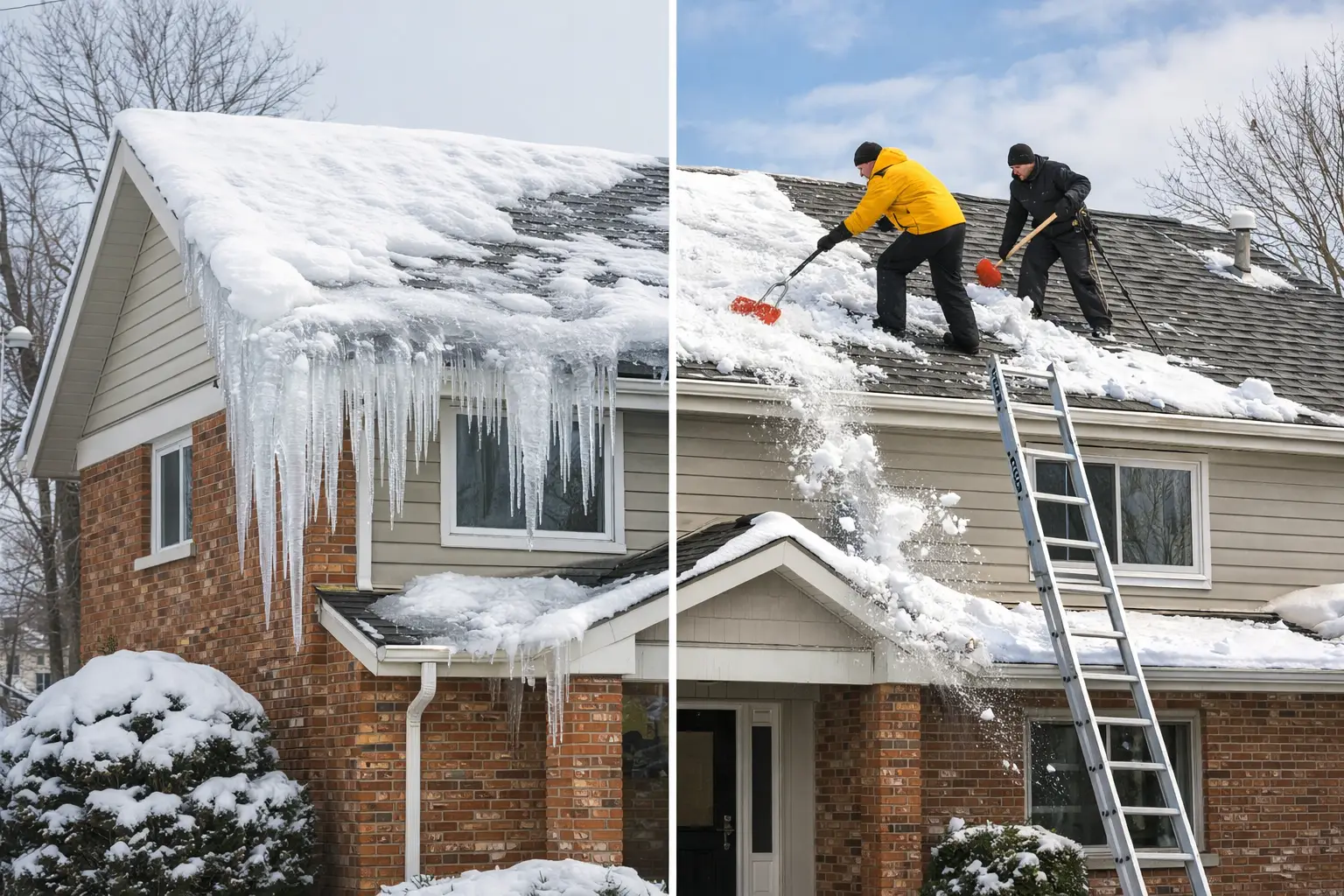
Reducing snow on the lower part of the roof can help limit the water that feeds an ice dam. A roof rake with a long extension handle lets you pull loose snow down while staying on the ground. Work from the edge upward and do not scrape hard against the shingles.
You do not need to clear the entire roof. Removing a few feet of snow along the eaves can make a meaningful difference after a major snowfall. Be careful around landscaping, windows, parked cars, and walkways. The snow and ice coming down can be heavy.
Do not climb onto an icy roof. It is not worth the risk. If snow is deep, the roof is steep, or ice is already built up, call a properly equipped professional. Chicago suburbs winters can make even a simple-looking roof job dangerous in a hurry.
What not to do with an existing ice dam
It is tempting to attack the ice with a shovel, hammer, chisel, or ice pick. That can crack shingles, puncture flashing, bend gutters, and create a roof leak where there was not one before. Avoid putting rock salt or regular salt on the roof, too. It can damage roofing materials, gutters, plants, and nearby concrete.
Some homeowners use calcium chloride in fabric tubes placed across the ice to create channels for water to drain. This can be a short-term emergency measure when done carefully, but it does not fix why the dam formed. It also needs to be kept away from metal surfaces and landscaping as much as possible.
If water is actively coming into the house, move furniture and valuables out of the area, contain drips with buckets, and contact a roofing professional. Staining or bubbling drywall means moisture may already be sitting above the ceiling.
Keep gutters clear, but do not expect gutters alone to solve it
Clean, well-pitched gutters help meltwater move away from the house when temperatures allow. Before winter, remove leaves, twigs, and debris from gutters and downspouts. Make sure downspout extensions direct water away from the foundation. You do not want water sitting near your foundation when the ground is frozen or beginning to thaw.
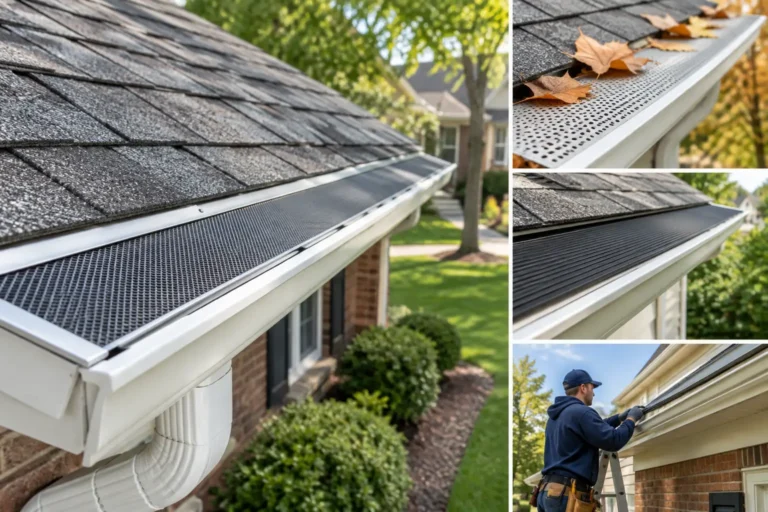
Gutter guards can reduce the amount of debris that gets into a gutter system, which makes seasonal upkeep easier for many Illinois homes. They can be a smart part of an overall exterior protection plan, especially under mature trees. But no gutter guard can correct attic heat loss, poor roof insulation, or blocked ventilation. Be cautious of anyone who presents guards as a guaranteed ice-dam cure.
Also check that gutters are firmly attached and pitched correctly. Heavy ice can pull on weak fasteners and expose existing problems. If a gutter is already sagging, leaking at seams, or overflowing during rain, it is better to address it before winter makes the issue harder to manage.
Watch for warning signs inside and outside
Large icicles are not always proof of an ice dam, but they deserve a closer look when paired with ice buildup at the roof edge. Outside, watch for thick ice ridges, gutters pulling away from the fascia, water backing up above the gutter, or meltwater freezing onto entry walks.
Inside, look for brown ceiling spots, damp insulation, peeling paint near exterior walls, musty attic smells, or frost on nails and roof framing. Frost in an attic can point to warm, moist indoor air leaking upward. When that frost melts, it can create moisture damage that looks a lot like a roof leak.
A good inspection looks at the whole picture: roof edge, gutters, attic insulation, ventilation, and the way snow melts across the roof. The visible ice is only one part of the story.
When it is time to bring in help
Call for professional help when ice dams keep returning, water is entering the home, gutters are damaged, or the roof is unsafe to reach. Repeated ice dams are usually a home performance issue, not bad luck. Finding the source can protect your roof, attic, and interior finishes over the long run.
For Downers Grove, Naperville, and other Chicago-area homes, winter maintenance works best when it is planned before the first major snow. Clean gutters, protected downspouts, a clear drainage path, and a closer look at attic conditions can prevent a lot of midwinter stress.
The best time to deal with an ice dam is before it becomes a leak. Take note of where snow melts first on your roof this winter. That pattern can tell you a great deal about where your home is losing heat and where a practical fix should begin.