A lot of yard drainage problems start at the roofline, not in the lawn. If you have soggy mulch beds, water pooling near the foundation, or muddy spots by your downspouts, the right roof runoff solutions can make a big difference. Here in the Chicago suburbs, we get heavy spring rains, summer storms, and freeze-thaw cycles that put extra stress on Illinois homes. Water has to go somewhere, and if it is not directed properly, it usually ends up exactly where you do not want it.
Why roof runoff becomes a yard problem
When rain hits your roof, it comes down fast and in a concentrated way. A large roof can send a surprising amount of water into just a few downspout areas. That is where many homeowners run into trouble. The grass gets beat up, mulch washes out, planting beds erode, and the soil near the house stays wet longer than it should.
In Illinois, this matters because a lot of homes in the western suburbs deal with clay-heavy soil. Clay does not drain quickly. So even if your gutters are doing their job, the ground below may not be able to keep up. Water can sit near the foundation, creep into low spots, and leave parts of the yard too wet to use.
This is also why a quick fix does not always hold up. Splash blocks help in some situations, but they often are not enough for bigger roof sections or stronger storms. A good drainage plan should move water away from the home and release it in a place that can handle it.
Common signs you need roof runoff solutions
Sometimes the problem is obvious. You see water pouring over the gutter edge or puddles forming right away. Other times, the warning signs show up more slowly.
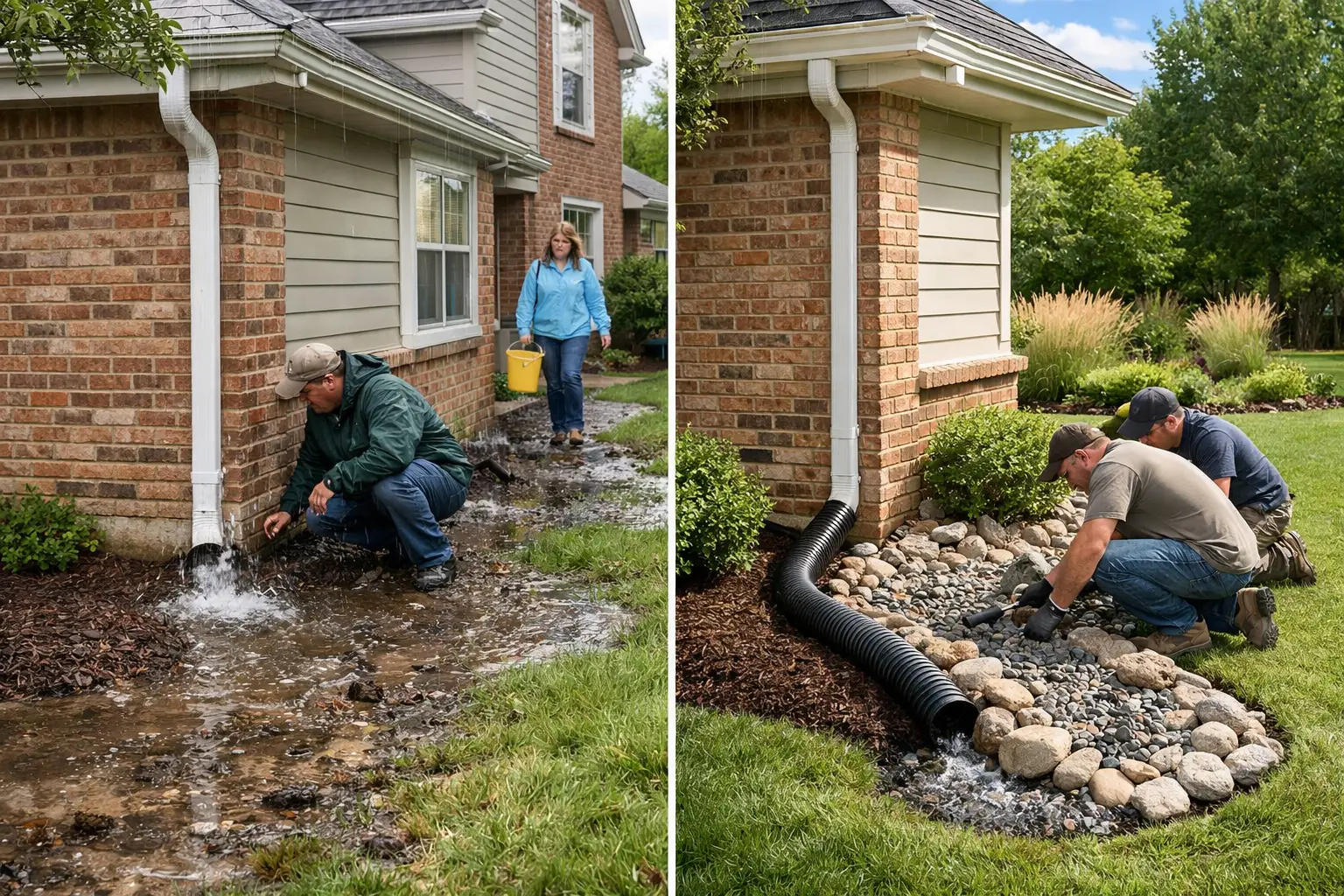
You may notice trenches worn into mulch beds, grass that never seems to dry out, downspout areas that turn muddy after every rain, or basement dampness that gets worse during wet weather. In some yards, the issue shows up as settled pavers, stained siding, or icy walkways in winter where runoff refreezes.
Here is what to look for. If the same spots stay wet again and again, if water sits near your home for more than a day, or if the yard slopes back toward the house, you likely need more than a basic downspout extension.
Best roof runoff solutions for Chicagoland homes
The right answer depends on your lot, grading, roof size, and where the water can legally and safely go. There is no one-size-fits-all fix, which is why a walkthrough matters.
Downspout extensions
This is often the first step and sometimes the simplest one. Extending the downspout farther from the house helps reduce foundation saturation and keeps water from dumping right into a mulch bed or along the edge of a patio.
That said, extensions work best when the yard already has decent slope. If the extension sends water into another low area, you are just moving the problem. Some homeowners also do not like the look of above-ground extensions running across the lawn, especially near walkways or front beds.
Buried drain lines
For many properties, buried downspout lines are a cleaner and more effective solution. These pipes carry roof water underground and release it farther from the home. They help protect curb appeal because you are not looking at plastic tubes across the yard, and they reduce the chance of trip hazards.
The key is proper pitch and a good outlet point. If the line is too flat, too short, or tied into a bad discharge area, it can back up. In Illinois, installation also needs to account for winter conditions and long-term maintenance. A buried system should be built to work in real weather, not just on paper.
Pop-up emitters and discharge points
A buried line still needs somewhere to send the water. One common option is a pop-up emitter placed in a lower part of the yard. When enough water flows through the pipe, the emitter opens and releases it over the lawn.
This can work well when the yard has room and positive grade away from the house. It is less effective if the outlet sits in a soggy area already or if the lawn remains frozen and saturated for long stretches. That is where planning matters.
Dry creek beds and drainage swales
If runoff moves across the surface, a dry creek bed or swale may be part of the answer. A swale is a shallow, shaped channel that guides water where it should go. A dry creek bed does the same job but uses decorative stone to help slow water down and control erosion.
These are useful when homeowners want drainage that also looks intentional. A good landscape should look nice, but it also needs to work. The best versions do both. Still, these features have to be placed correctly. If they are too shallow or set in the wrong path, they will not keep up in a heavy storm.
Catch basins and area drains
Some yards have trouble spots where water collects fast, especially near patios, walkways, garage aprons, or low lawn sections. In those cases, catch basins or area drains may help collect surface water and move it into a drain line.
This is usually not the first thing we look at for roof runoff alone, but it can be part of a larger fix when roof water is overloading the yard. If your downspouts are feeding water toward hardscaped areas, drainage around those surfaces may need attention too.
Gutter improvements and gutter guards
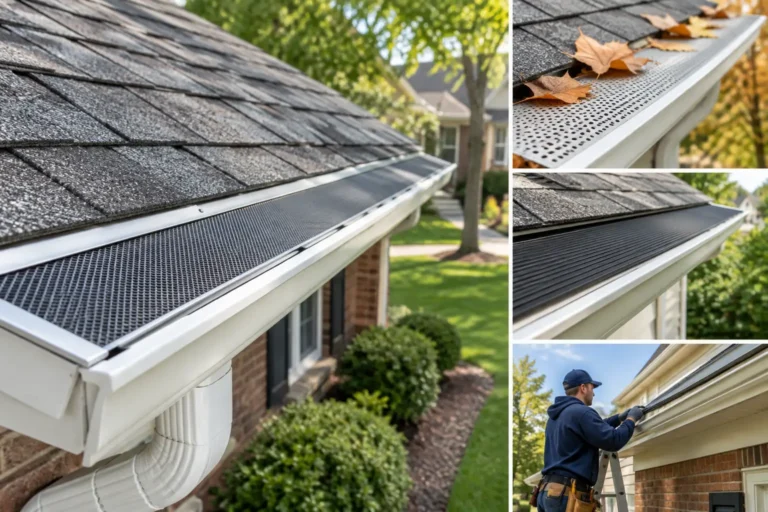
Sometimes the roof runoff problem starts with clogged or undersized gutters. If water spills over the sides during rain, it is hard for anything below to perform well. Gutter guards can help reduce buildup and keep water moving through the system more consistently.
That does not mean guards solve every drainage issue. They help your gutters function better, but they do not replace proper grading or drainage piping. Think of them as one part of the system, not the whole answer.
Roof runoff solutions and grading work together
This is where many homeowners run into trouble. They install a drain line but ignore the slope around the house. Or they regrade part of the yard without fixing where the downspouts discharge. Water management works best when both pieces support each other.
If the soil next to the foundation slopes the wrong way, even a good gutter system can struggle. If the downspouts empty into a low side yard, grading alone will not solve it. Roof runoff solutions need to match the shape of the property.
For many Chicagoland homes, especially older properties, the best fix is a combination approach. That might mean extending or burying downspouts, adjusting grade near the home, and protecting vulnerable planting beds or lawn edges from erosion.
What works best for different yard layouts
A smaller lot in a place like Downers Grove or La Grange may not have much room to spread water out. In that case, buried lines and carefully chosen outlet points are often more useful than simple surface fixes. On a larger property in the western suburbs, you may have more flexibility with swales, drainage channels, or stone features that guide water naturally.
Corner lots, homes with walkout basements, and properties with patios or pool areas all bring different challenges. So do homes where neighboring yards sit higher. This is why the right solution depends on where the water starts, how fast it collects, and what sits in its path.
When to address the problem
If you are already planning landscape work, patio improvements, or foundation planting updates, that is a smart time to deal with drainage. It is easier and more cost-effective to plan roof runoff solutions before new sod, mulch, lighting, or hardscaping goes in.
You also do not want to wait until a small issue turns into a bigger repair. Erosion around beds, washed-out mulch, and saturated soil around the house tend to get worse over time, not better. In winter, bad runoff can also create icy patches on driveways and walkways, which becomes a safety issue.
A practical way to think about the fix
The goal is not just to move water. The goal is to move it without damaging your lawn, stressing your foundation, or creating another mess somewhere else. That usually means looking at the full exterior picture – gutters, downspouts, grading, drainage paths, beds, lawn areas, and hardscapes.
For Illinois homeowners, the smartest roof runoff solutions are the ones built for the way this region actually gets weather. Heavy rains, compacted soils, snowmelt, and freeze-thaw cycles all affect how drainage performs. A system that looks fine during a dry week can fail quickly during a strong storm.
If your yard keeps getting muddy near the house or your downspouts dump water where it does not belong, it is worth taking a closer look. A clean, usable yard starts with water going where it should, and that is one outdoor problem well worth solving.