A new landscape can make a home feel finished, but the best projects do more than add fresh mulch and colorful plants. A good landscape design installation guide starts with how your yard actually works: where water goes, how people move through the space, what needs upkeep, and what you want to enjoy when you step outside.
For Chicagoland homeowners, that practical side matters. Our heavy spring rain, clay soil, freeze-thaw cycles, hot summers, and snowplows can all affect a landscape. The goal is not just a nice-looking yard on installation day. It is a property that stays useful, safe, and attractive through Illinois weather.
Start With the Problems You Want to Solve
Before choosing pavers, plants, or lighting, walk your property and make note of what is not working. This is where many homeowners run into trouble. They focus on the front bed or patio color first, then find out later that the yard has drainage issues, the walkway is too narrow, or the new plants need more sun than the area receives.
Look for standing water after rain, downspouts that dump water near the foundation, muddy spots, bare lawn areas, worn paths, uneven walkways, and areas that feel too dark at night. Think about daily life, too. Maybe the kids cut across the lawn to reach the driveway. Maybe guests have to walk through a dark side yard. Maybe you have a patio but no shade or privacy.
A good landscape should look nice, but it also needs to work. Fixing the biggest functional issues first helps protect your investment and keeps you from tearing out new work later.
Build the Design Around the Way You Use the Yard
A design should fit the home, the lot, and the people living there. A formal brick home in Hinsdale may call for a more structured layout, while a newer Naperville-area home may look best with clean lines, simple planting beds, and a patio that opens into the backyard.
Start by dividing the yard into practical areas. The front yard is usually about curb appeal, a clear path to the door, and a welcoming first impression. The backyard may need room for grilling, dining, play, relaxing, pets, or entertaining. Side yards often need better access, drainage help, or a cleaner transition between the front and back.
Do not try to fit every possible feature into one project. A larger patio, pergola, fire feature, retaining wall, lighting plan, and new beds can all be great additions, but the best combination depends on the property and how you plan to use it. Sometimes a well-built paver walkway and improved lighting make a bigger difference than a crowded backyard full of features.
Plan Traffic Flow Before Hardscaping
People naturally take the shortest route. If everyone walks from the driveway to the back gate along the same strip of grass, that is a good place for a path. If you regularly carry groceries from the driveway to the front door, the walkway should be wide enough and level enough to feel comfortable.
Paver walkways, patios, and steps need careful base preparation in Illinois. Our ground freezes and moves during winter, so proper grading, compacted base material, and edge restraint matter. A patio that looks level in October can become uneven after a few seasons if it was installed on a weak base.
This is also the time to think about snow removal. Avoid creating tight turns, awkward steps, or surfaces that make shoveling harder than it needs to be. Safer walkways are a benefit you appreciate every winter.
Handle Drainage Before It Damages the Design
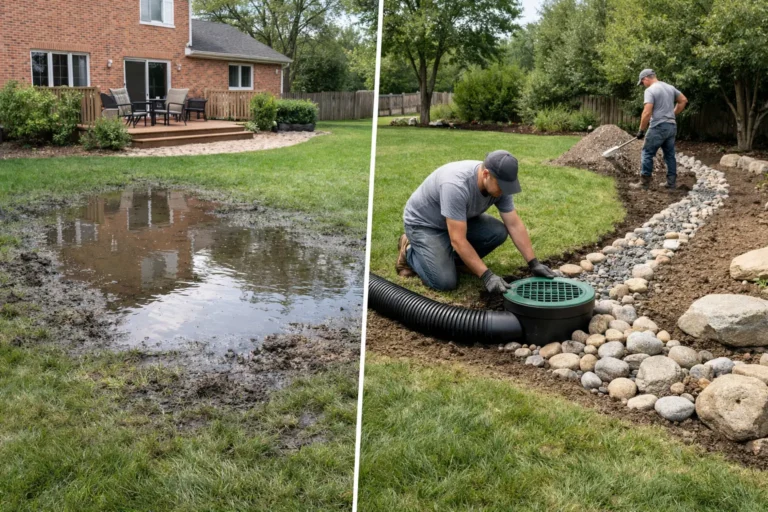
Water is one of the first things we look at during a property walkthrough. You do not want water sitting near your foundation, running across a walkway, or pooling at the bottom of a new planting bed.
Drainage solutions can include adjusting the grade, extending downspouts, installing underground drain lines, adding catch basins, or creating a properly placed swale. A swale is simply a shallow channel that guides water toward a safe drainage area. The right approach depends on the slope of the yard, soil conditions, downspout locations, and where the water can legally and safely go.
In the Chicago suburbs, clay-heavy soil often drains slowly. That means a landscape plan that works well on a sandy lot may not work the same way in Downers Grove, Western Springs, or other nearby communities. Planting beds also need to be graded correctly. If mulch is piled too high against the house, it can hold moisture where you do not want it.
Drainage work is not always the most exciting part of a project, but it is often the part that protects everything else. It makes sense to complete it before installing sod, plants, patios, or decorative stone.
Choose Materials That Fit Illinois Weather
Your material choices affect both appearance and long-term upkeep. Natural stone, concrete pavers, brick, decorative gravel, mulch, and edging all have a place, but they perform differently and create different maintenance needs.
For patios and walkways, choose a surface that fits the home and has a solid installation plan underneath it. For planting beds, use edging that gives the bed a clean line and helps keep mulch where it belongs. Mulch is a good finishing material, but it should not be treated as a fix for poor soil, poor drainage, or weak plant selection.
Plant choices should match the amount of sun, soil moisture, and available space. In Illinois, we often use a mix of hardy shrubs, perennials, ornamental grasses, and seasonal color. The best plan usually includes enough evergreen structure to keep the property from looking empty in winter, along with plants that provide color and texture through spring, summer, and fall.
Give plants room to mature. A shrub that looks small at installation can outgrow a narrow bed in a few years. Crowded plants mean more pruning, less airflow, and a landscape that starts to look messy faster.
Include Lighting From the Beginning
Landscape lighting is easier to install when it is planned alongside the rest of the project. It can make a front walk safer, highlight a mature tree, define a patio edge, and make the home look cared for after dark.
The key is restraint. You do not need a light on every plant or along every inch of a walkway. A few well-placed fixtures can create a warm, useful result without making the yard look overlit. Focus first on steps, changes in elevation, entry paths, and dark areas around the home.
Lighting also makes an outdoor space more usable. If your family enjoys sitting outside after dinner, the right lighting extends that time without the glare of a floodlight.
Know What Happens During Installation
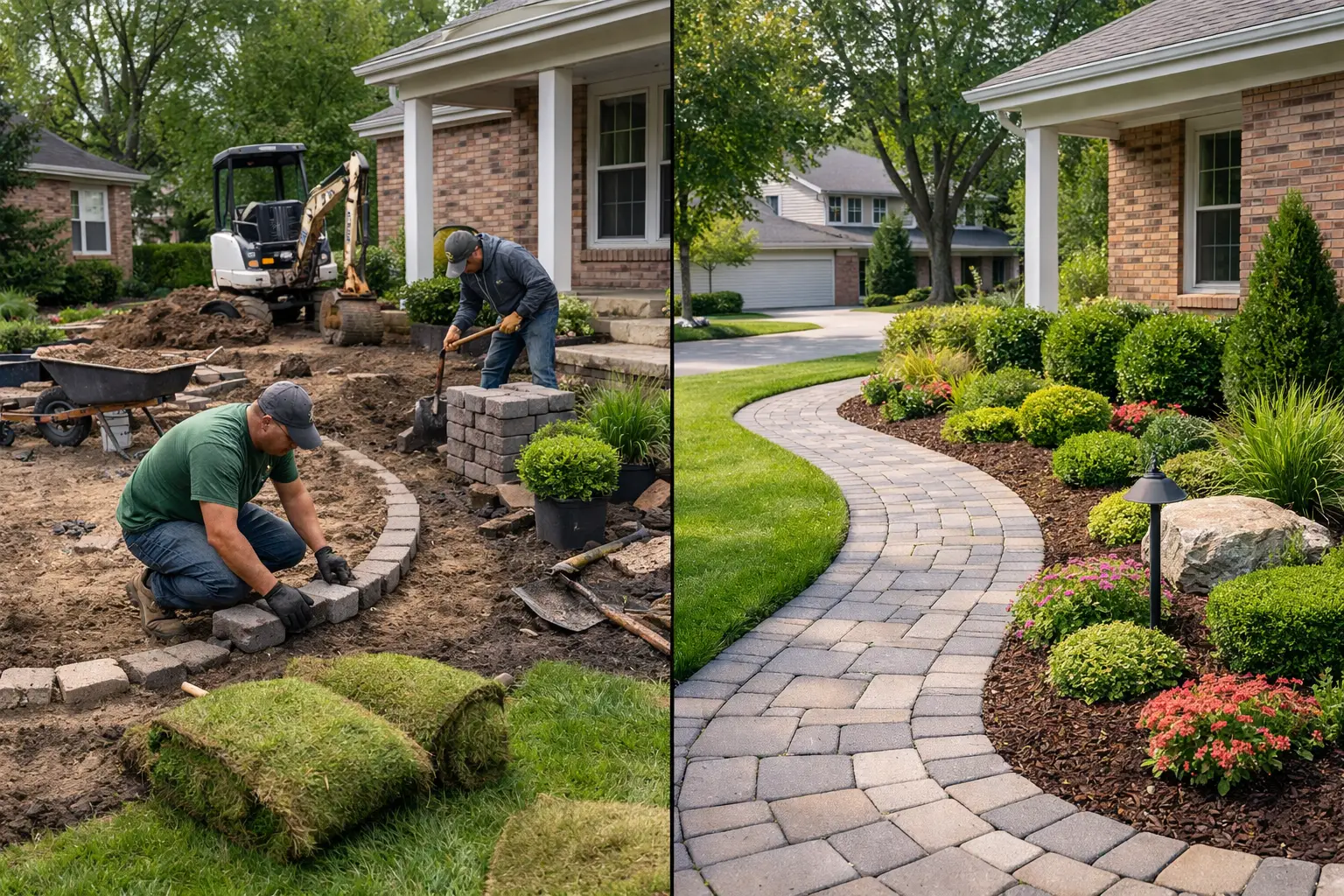
A professional installation usually begins with site preparation. That may include removing old shrubs, damaged sod, outdated edging, or failing hardscape materials. The crew then handles grading and drainage work before installing base materials for patios, walkways, or other hardscape features.
Once the structural work is in place, the landscape takes shape with soil preparation, plantings, edging, mulch, sod, and lighting. The order can change based on the project, but the general rule is simple: complete the work below ground and the heavy construction first, then install the finishes that make the space look complete.
Ask your contractor how the property will be protected during the work, where materials will be staged, how access will be handled, and what cleanup looks like at the end of each day. Clean crews and clear communication make a big difference, especially when work is happening around a busy household.
Plan for Care After the Project Is Done
No landscape is completely maintenance-free, especially in the western suburbs where weather changes quickly from season to season. New plants need regular watering while their roots establish. Mulch may need refreshing, shrubs need pruning at the right time, and lawns benefit from routine care.
The good news is that a properly planned landscape should reduce unnecessary work. Correct plant spacing, smart material choices, drainage improvements, and defined bed edges all make the yard easier to maintain. You can also set up a seasonal maintenance plan for cleanups, trimming, lawn care, and snow service so the property stays in good shape without taking over your weekends.
If you are considering a project, start with a walkthrough of the whole yard, not just the area that bothers you most. At Revive Your Lawn, we find that the best ideas often come from looking at curb appeal, drainage, access, lighting, and maintenance together. A thoughtful plan gives you a yard that feels better every time you pull into the driveway or step out the back door.