A paver patio can look great on the day it is installed and still cause trouble a year later if the ground underneath was rushed. In the Chicago suburbs, our freeze-thaw weather, heavy spring rain, and clay soil can move a poorly built patio fast. This patio paver installation guide explains what makes the difference between a patio that stays level and one that starts collecting water, sinking at the edges, or rocking underfoot.
A good patio is more than a pattern of attractive pavers. It is a working outdoor surface built to handle water, foot traffic, patio furniture, and Illinois winters. Here is what homeowners should understand before the first paver goes down.
Start With How You Want to Use the Patio
The best patio size and shape depend on how your family will use it. A small sitting area may be perfect for morning coffee, while a dining table, grill, and outdoor seating can need much more room than people expect. It helps to place chairs, a table, or even cardboard outlines in the yard before settling on a layout.
Think about access, too. A patio right outside the back door is convenient, but it should not crowd the doorway, block a walkway, or create a drainage problem near the house. If you are adding a pergola, landscape lighting, a fire feature, or a paver walkway later, planning for those pieces now usually gives the whole yard a cleaner look.
The material choice matters, but it comes after the layout and function. Concrete pavers are popular because they come in many colors, shapes, and textures. Natural stone can offer a different look, but it may require a different installation approach. A quality paver that is properly installed will usually serve a home better than a premium-looking material placed on a weak base.
A Patio Paver Installation Guide Starts Below Ground
This is where many homeowners run into trouble. The pavers are what you see, but the excavation, base, and grading are what carry the load. If the base is too shallow or uneven, the patio can shift as the soil freezes and thaws.
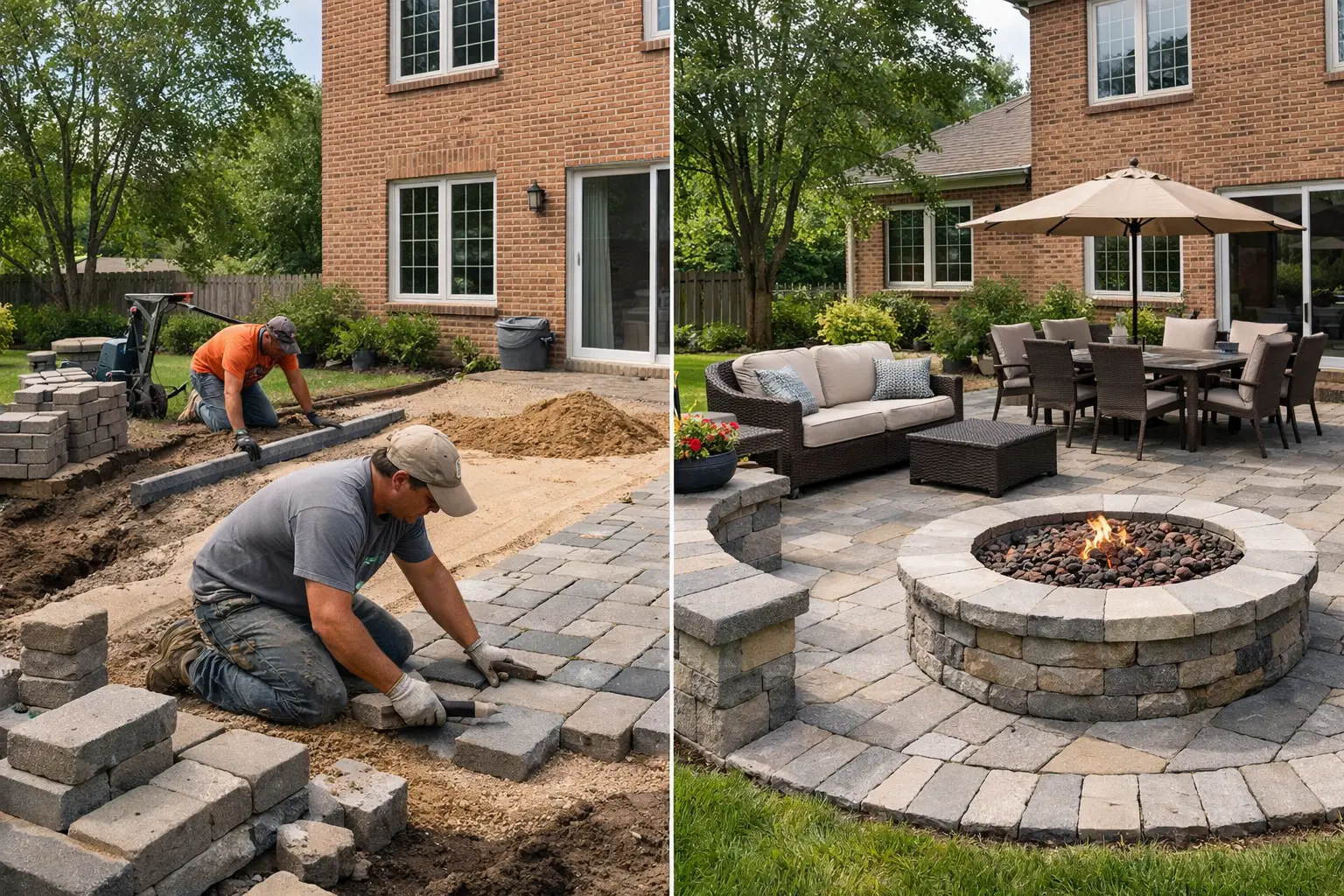
For most Illinois homes, the work begins by marking the patio footprint and calling for utility locating before digging. The crew then excavates enough depth for the compacted stone base, bedding layer, and the paver thickness. The needed depth depends on the site, soil conditions, intended use, and the materials selected. A pedestrian patio does not need the same build-up as a driveway or an area supporting heavier features.
The exposed soil should be shaped and compacted before stone is added. In some locations, especially where the ground is soft or mixes with clay, a separation fabric may help keep the soil and crushed stone from blending together over time. This is not a shortcut product. It is one part of a system and should be used where site conditions call for it.
Why Compacted Stone Matters
A patio base is typically made from crushed aggregate installed in lifts, or layers. Each layer is spread, leveled, and compacted before the next is added. That step takes time, but it creates a firm foundation that helps the patio resist settling.
Dumping all of the base material into one deep layer and compacting only the top is not the same thing. The upper surface may look flat at first, while the material below remains loose. Over time, that can lead to low spots and uneven pavers.
Once the base is built, a thin bedding layer is screeded smooth. This layer helps set the pavers at a consistent height. It is not meant to make up for a base that is out of level. If the foundation is wrong, adding more bedding material is only hiding the problem.
Drainage Has to Be Part of the Design
You do not want water sitting near your foundation, and a new patio should never direct water toward the house. The finished surface needs a gentle pitch away from the home so rain can move where it belongs. The exact direction depends on the yard, nearby landscaping, downspouts, and existing drainage patterns.
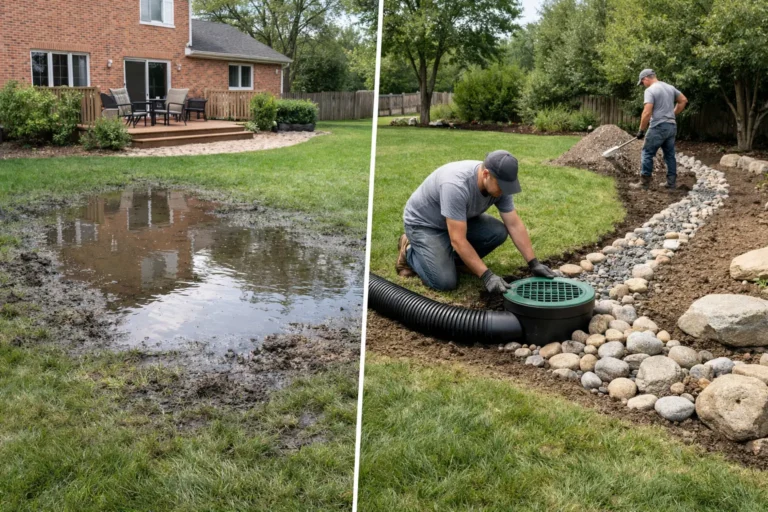
In Naperville-area homes and across the western suburbs, we often see flat backyards where there is nowhere obvious for water to go. A patio project may need to work with a downspout extension, buried drainage line, catch basin, swale, or another drainage solution. It depends on the property. The goal is not simply to make water disappear from the patio. It is to move it safely without creating a soggy lawn, flooding a neighbor’s yard, or sending it back toward the foundation.
Pay attention to where roof water lands. A downspout dumping directly beside a patio can wash out joint sand, stain pavers, and overload the edge of the base. It is much easier to address that before installation than after the patio is finished.
Setting Pavers With Strong Edges and Clean Lines
Once the base and bedding layer are ready, the pavers are placed according to the chosen pattern. Straight lines, consistent joint spacing, and frequent checks for level all matter. Patterns such as running bond, herringbone, and basketweave can create very different looks, and some patterns handle movement and traffic better than others.
Edges deserve extra attention. Pavers need edge restraints to keep the field of pavers from slowly spreading apart. Without solid edging, the outside pieces can drift, joints can open, and the patio may lose its crisp shape. The restraint is normally secured around the perimeter and concealed by surrounding soil, mulch, or landscaping.
After the pavers are cut and set, joint sand is swept into the spaces between them. Some patios use polymeric sand, which firms up when activated with water and can help reduce weed growth and insect activity in the joints. It is useful, but it still needs proper installation. Too much water, poor cleanup, or applying it in the wrong conditions can leave a haze on the paver surface.
Plan for the Details That Make a Patio Easier to Enjoy
The patio itself is only one piece of the outdoor space. A well-planned project considers how people will move through the yard after the work is done. A paver walkway can keep muddy shoes off the lawn. Low-voltage landscape lighting can make steps and edges safer after dark. Planting beds can soften the patio border without trapping water against it.
Furniture placement should not be an afterthought. Leave enough room to pull out chairs, walk around a grill, and open a patio door comfortably. If the patio will include a fire pit, check local requirements and keep a safe distance from structures, fences, and low branches.
Color deserves a practical conversation as well. Lighter pavers can feel cooler in direct sun but may show stains more easily. Darker pavers can hide dirt better but may feel hotter on bright summer days. Blended tones often work well with brick, siding, and stone commonly found on Chicagoland homes, and they can be more forgiving when leaves, pollen, and everyday outdoor use leave their mark.
Know When a Professional Installation Makes Sense
A simple, small patio on well-draining ground may seem manageable, but larger projects usually involve more than setting pavers. Grading, excavation, compaction equipment, drainage connections, material hauling, cuts around steps, and access through a tight side yard all affect the finished result.
Professional help is especially worth considering when the patio is close to the home, the yard holds water, there is a slope, or you want the patio to connect with landscaping, lighting, fencing, or a pergola. Those details need to work together. A good landscape should look nice, but it also needs to work.
Before hiring anyone, ask how the base will be prepared, how water will be directed, what will hold the edges in place, and how the crew will protect the rest of the property during construction. Clear answers are a good sign. So is a contractor who looks at the full yard instead of treating the patio as an isolated rectangle.
A patio should give you a place to sit outside, host friends, and enjoy the yard without adding a new drainage headache. If you are considering a paver patio at your Illinois home, a walkthrough with Revive Your Lawn can help turn the ideas in your head into a plan that fits your property and how you actually live outside.