A fence can change how your whole yard feels. It can give the kids a safer place to play, make a patio feel more private, keep a dog contained, and clean up the view from the street. But when homeowners ask us about wood fence vs vinyl, they are usually trying to answer a bigger question: which one will still look good and work well after a few Chicago winters?
There is no one right answer for every property. A wood fence brings a natural look and more design flexibility. Vinyl is cleaner-looking over time and asks less of you on weekends. The better choice comes down to your style, your maintenance tolerance, your lot, and how you use the space.
Wood Fence vs Vinyl: The Big Difference
The simplest difference is this: wood needs ongoing care, while vinyl asks for less upkeep. That does not automatically make vinyl the better fence. Many homeowners in the western suburbs prefer wood because it feels warmer, can be customized more easily, and fits naturally with mature trees, gardens, brick homes, and classic neighborhood styles.
Vinyl, on the other hand, is a good fit for homeowners who want consistent privacy without planning to stain or seal a fence every few years. It comes in clean, uniform panels and can hold its color well when it is properly installed and cared for.
In Illinois, both materials need to stand up to freeze-thaw cycles, strong wind, heavy wet snow, summer storms, and the occasional wayward lawn mower. The material matters, but the installation matters just as much. A fence with weak posts, poor drainage around the post holes, or uneven layout can become a problem no matter what it is made from.
Upfront Cost and Long-Term Value
Wood fencing often has a lower starting cost than vinyl, especially for a standard privacy fence. That can make it appealing when you are fencing a large backyard or working through several outdoor projects at once, such as a patio, drainage fix, or landscape refresh.
However, the lower initial cost is only part of the picture. A wood fence needs periodic staining, sealing, repairs, and occasional board replacement. Over many years, those maintenance costs add up. If you are comfortable doing some upkeep or hiring it out as needed, wood can still be a strong value.
Vinyl generally costs more to install upfront. In return, you avoid painting, staining, and most routine repairs related to rot or insect damage. For busy families in Naperville, Downers Grove, and nearby suburbs, that reduced maintenance can be worth the higher initial investment.
Here is what to look for when comparing estimates: make sure they cover the same fence height, style, gate setup, post depth, and removal of any old fence. A lower number can look attractive until you find out it does not include tear-out, gate hardware, or proper posts for Illinois soil conditions.
How Wood Holds Up in Illinois Weather
A properly built wood fence can last for many years, but it needs attention. Wood is a natural material. It expands and contracts as moisture and temperature change. Over time, boards may fade, warp, split, or shrink slightly. This is normal, especially after repeated Illinois winters.
Moisture is the biggest concern. When wood stays wet near the ground, it is more likely to deteriorate early. Poor drainage can speed that process up. If your yard has standing water along the fence line or runoff from a neighboring property, solve that issue before or during the fence project. You do not want water sitting near your foundation, and you do not want it sitting around your fence posts either.
A wood fence benefits from regular visual checks. Look for loose pickets, leaning posts, cracked rails, and areas where mulch or soil is piled against the bottom boards. Keeping vegetation trimmed back also helps air move around the fence and reduces trapped moisture.
For many Chicago suburbs homes, cedar is a popular wood choice because it has a more refined look and natural resistance to decay. Treated lumber can also be practical, particularly when durability and budget both matter. The best material depends on the fence design and the finish you want.
How Vinyl Performs Through Winter and Summer
Vinyl does not rot, and it does not need stain or paint. That is its biggest advantage. A quick rinse and mild cleaning are usually enough to remove dust, grass clippings, and normal outdoor buildup.
Still, vinyl is not indestructible. Extreme cold can make it less flexible, so a hard impact in winter can crack a panel or rail. A snowblower bump, a fallen branch, or a heavy object pushed against the fence can cause damage. Quality materials and solid installation reduce the risk, but homeowners should know that a damaged vinyl section may need to be replaced rather than simply repaired like a single wood board.
Wind is another consideration. Privacy fencing catches wind because it has few gaps. This matters on open lots and properties that back up to fields, retention areas, or wide side yards. Properly set posts, correct spacing, and the right fence layout make a major difference. A fence should look nice, but it also needs to work when a strong storm rolls through Chicagoland.
Vinyl may also show dirt, mildew, or lawn treatment splash more clearly than a weathered wood fence, especially in lighter colors. It is easy enough to clean, but “low maintenance” does not mean “never clean it.”
Appearance and Curb Appeal
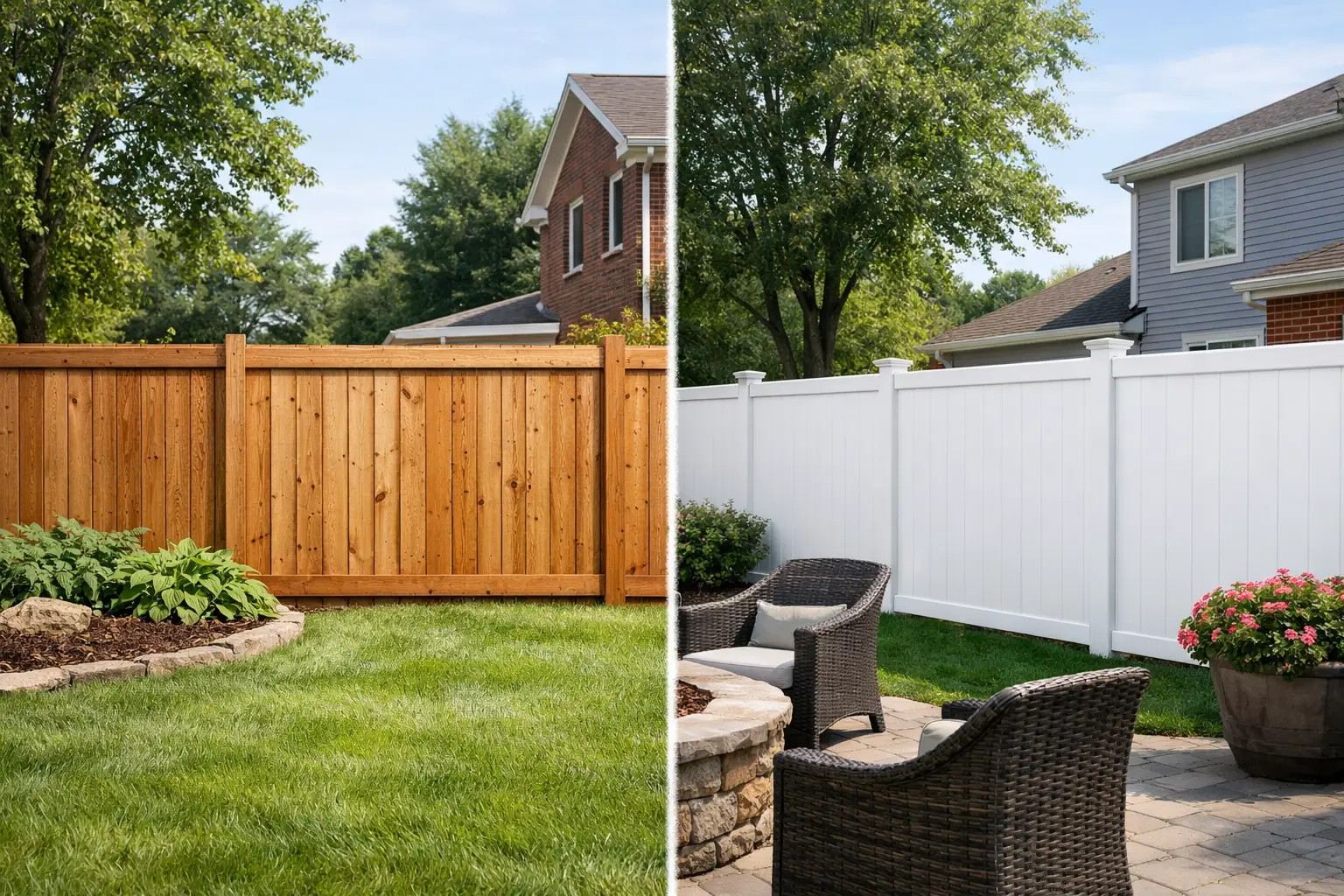
This is where the decision often becomes personal. Wood has texture, variation, and a more natural presence. It can be stained in a range of tones, painted to coordinate with trim, or built in styles that feel more custom. A horizontal cedar fence, for example, can give a backyard a modern look while still working nicely with landscaping and paver patios.
Vinyl has a crisp, orderly appearance that works well on many newer homes and traditional suburban properties. White vinyl privacy fencing remains a common choice, but tan, gray, and wood-look options are also available. It can create a clean border around a yard without competing with the landscaping.
Think about the full exterior picture before deciding. If you have a natural stone patio, mature evergreens, or a more traditional home, wood may feel like the better match. If your priority is a tidy, consistent look with little seasonal work, vinyl may make more sense.
Also consider what your neighbors see. Side-yard fencing and rear fencing often have different visual priorities than a fence facing a street or visible from a main outdoor entertaining area.
Privacy, Security, and Pets
Both wood and vinyl can provide excellent privacy. A solid-board wood fence and a vinyl privacy fence can each create a comfortable backyard boundary. The details matter more than the material alone.
Fence height may be limited by local rules, particularly in front yards, corner lots, or areas near sidewalks. Some communities and homeowner associations also have rules about materials, colors, and finished sides. Check these requirements before settling on a design. This is where many homeowners run into trouble after they have already picked a fence style.
For dogs, pay close attention to the bottom edge of the fence, gate latches, and gaps between panels or pickets. A handsome fence does not help much if a small dog can squeeze underneath it. If the yard slopes, the layout may need to step with the grade or be adjusted carefully to avoid large openings.
Maintenance: What You Will Actually Be Doing
With wood, plan on inspecting the fence each spring and fall. Depending on the product and exposure, staining or sealing may be needed every few years. South- and west-facing sections often take more sun and weather than shaded areas. Replacing one damaged board is usually straightforward, which is one reason wood remains popular.
With vinyl, your work is lighter. Wash it when it looks dirty, inspect the gate hardware, and check for cracks or loose components after winter storms. If a panel gets damaged, matching the exact color and style years later can sometimes be more involved than replacing a wood picket. Keep any paperwork from the original installation so the fence style is easy to identify.
Neither choice is maintenance-free. The practical question is whether you would rather do smaller, regular maintenance tasks with wood or pay more upfront for vinyl and keep the ongoing work to a minimum.
Which Fence Is Right for Your Yard?
Choose wood if you value a natural look, want more custom design options, prefer the ability to repair individual boards, and do not mind routine care. It is often a good fit for older homes, landscaped yards, and homeowners who want the fence to feel less manufactured.
Choose vinyl if your top priority is low upkeep, consistent color, and a clean privacy fence that does not need staining. It can be especially appealing for busy households, rental properties, and yards where you want a polished look with less weekend work.
Before making the call, walk your property with the bigger plan in mind. Look at drainage, grade changes, patios, trees, gates, and where snow gets piled in winter. At Revive Your Lawn, we see fences as part of the entire outdoor space, not just a line around the yard.
A good fence should give you privacy and peace of mind without creating a new maintenance headache. Pick the material that fits the way you want to live in your yard, then make sure it is built to handle the Illinois weather that comes with it.