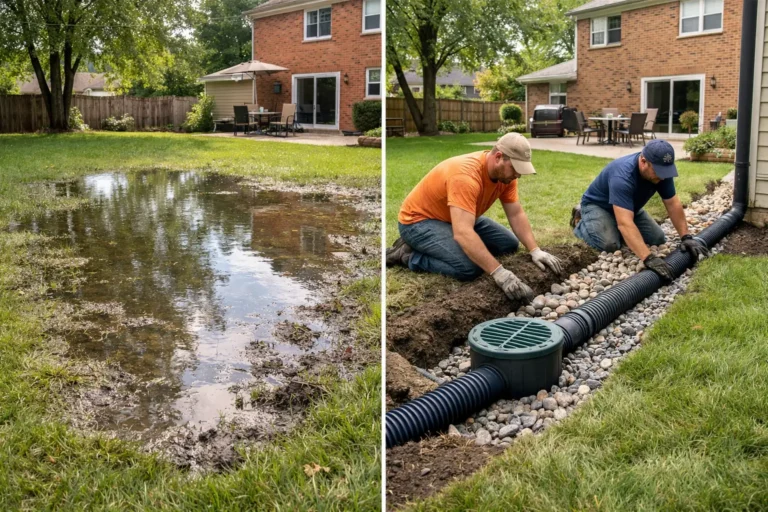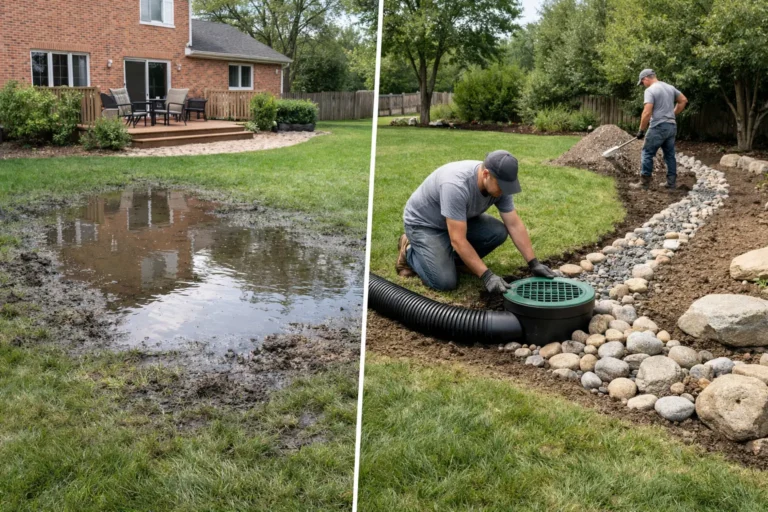
A wet spot in the lawn is more than an eyesore when it keeps coming back. In the Chicago suburbs, a few days of spring rain, heavy summer storms, snowmelt, and dense clay soil can leave water sitting where it should not. The best drainage systems for yards are the ones that address where the water starts, where it travels, and where it can safely end up.
That last part matters. You do not want water sitting near your foundation, pooling by a patio, running across a walkway, or turning the kids’ play area into mud. A good drainage plan protects the home first, then helps the yard become usable again.
Why Illinois yards need a real drainage plan
Many Chicagoland properties have clay-heavy soil. Clay holds water instead of letting it soak in quickly, so low areas can stay soft long after a storm. Flat lots can have the same problem because there is very little natural slope to move water away.
This is where many homeowners run into trouble. They add topsoil to a low spot, patch the grass, or put down mulch around a wet planting bed. Those steps may improve the look for a while, but they do not fix a downspout that dumps water in the wrong place or a yard that slopes back toward the house.
Before choosing a system, look at the pattern. Does water appear only after rain, or also after snow melts? Is it coming from roof runoff, a neighbor’s higher yard, a patio, or the ground itself? The answer helps determine the right solution.
The best drainage systems for yards depend on the problem
There is no single best system for every Naperville-area home or Downers Grove backyard. A French drain can be a great fit for a soggy lawn, but it is not always the first answer for a foundation issue. Here are the systems we most often consider during a yard walkthrough.
Grading and swales for broad surface water
Grading means reshaping the soil so water moves away from the house and toward a safe outlet. A swale is a shallow, gently sloped channel in the lawn that guides surface water through the yard without looking like a ditch.
This is often the right starting point when the lawn is generally flat or water flows back toward the foundation. Proper grading can also support a new landscape installation, patio, or paver walkway, because the finished surfaces need to shed water correctly.
The trade-off is that grading may affect portions of the lawn, beds, or existing landscape. It is worth doing carefully, though. A pretty yard that directs rainwater toward the home is not doing its job.
French drains for soggy lawns and planting beds
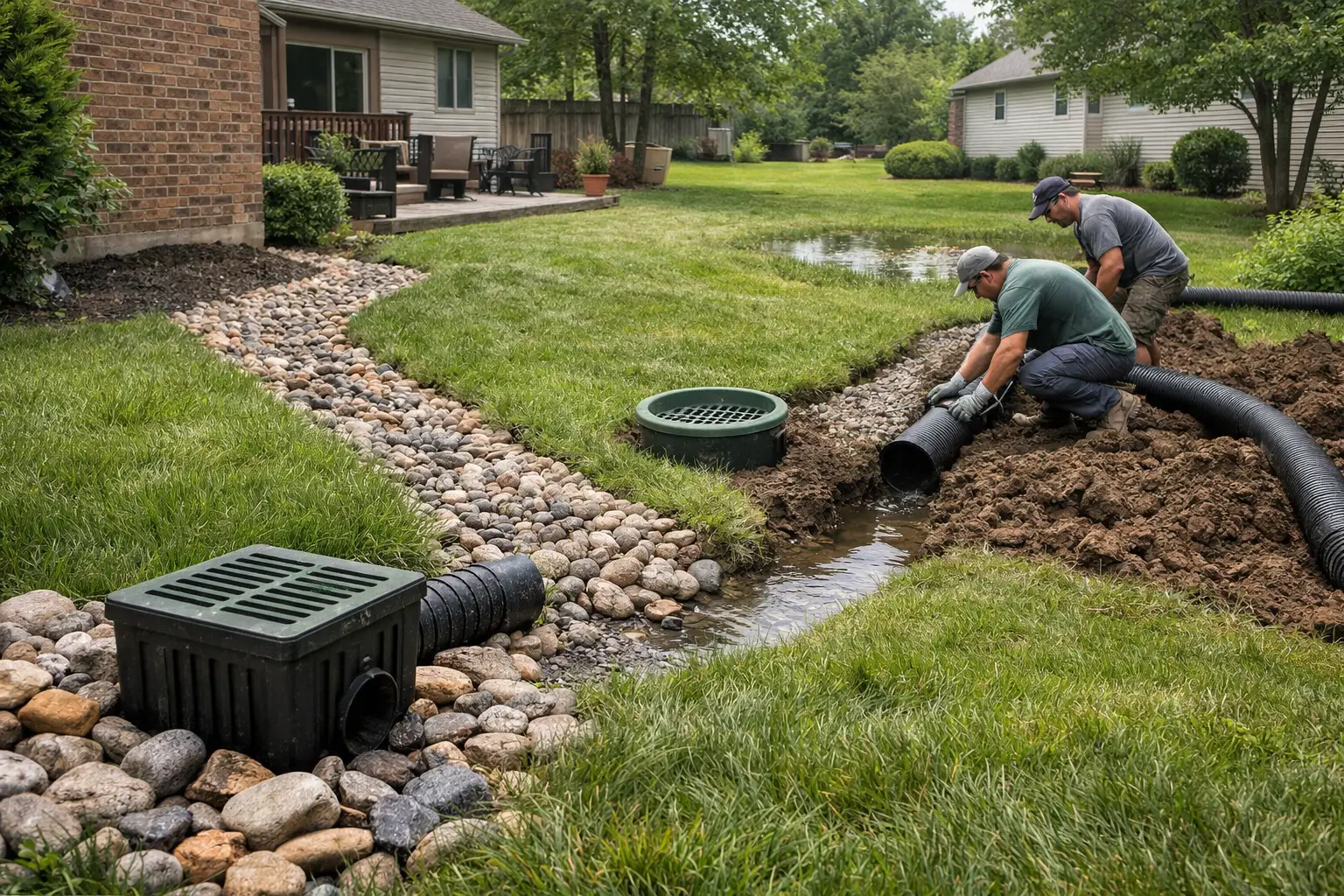
A French drain is a trench filled with clean drainage stone and a perforated pipe. Water enters through the stone, reaches the pipe, and is carried to an approved discharge point. It works below the surface, which makes it useful for lawn areas that stay wet and soft.
French drains are a strong option when water is trapped in a low area, along a fence line, beside a patio, or in a planting bed. They can also help intercept water moving downhill from another part of the property.
They need the correct depth, slope, fabric, stone, and outlet to work well. If the pipe has nowhere to send the water, the system is only storing the problem underground. In Illinois, installation depth and outlet planning also need to account for freeze-thaw conditions and the layout of the property.
Solid downspout extensions for roof runoff
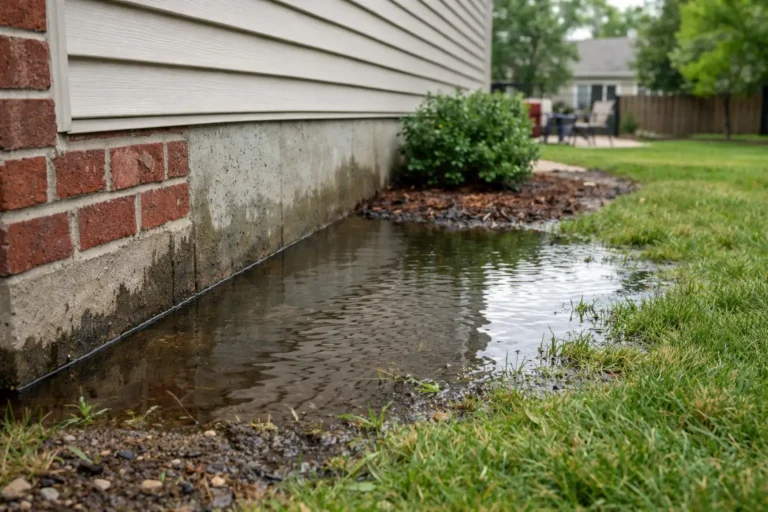
Roof water is one of the most common sources of drainage trouble. During a heavy storm, a roof can send a surprising amount of water through just one downspout. If that downspout releases beside the foundation, it can oversaturate the soil and create a muddy trench near the house.
A buried solid pipe carries that roof water farther from the home to a suitable outlet. Unlike a French drain, solid pipe is designed to move water from one point to another, not collect groundwater along the way.
This is a simple concept, but placement matters. The discharge point should not create a new puddle, wash out a landscape bed, send water toward a neighbor, or freeze across a sidewalk. A good plan looks at the whole property, not just the downspout.
Catch basins for low spots and hard surfaces
A catch basin is a box with a grate at ground level that collects surface water. It connects to solid drainage pipe and is especially useful where water gathers quickly, such as at the bottom of a driveway, between a patio and a foundation, or in a defined low spot.
Catch basins are helpful when water is visible on the surface and needs a direct path away. They are also commonly paired with paver patios and walkways, where a clean finish and safe footing matter.
The grate does need occasional cleaning. Leaves, mulch, and lawn debris can block it, especially in fall. That is a small maintenance task compared with dealing with repeated standing water or slippery pavement.
Channel drains for patios, walkways, and driveways
A channel drain is a narrow, grated drain installed across a hard surface. It catches water before it crosses a patio, enters a garage, or flows toward the house. You may see these at the edge of a driveway or where a patio meets a step or retaining wall.
This option is usually chosen for a specific hardscape problem rather than a wet lawn. It can be a smart addition when installing a new patio, because drainage is much easier to build in before the pavers are finished.
For existing concrete or pavers, installation can be more involved. Still, if water repeatedly crosses the same walking path, a channel drain may be safer and more effective than trying to redirect it with surface changes alone.
Often, the right answer is a combination
The most effective yard drainage projects often use more than one method. For example, a home may need downspouts tied into solid pipe, a catch basin at the patio, and light regrading to keep surface water moving. A wet side yard may benefit from a French drain along with a swale that prevents extra runoff from entering the area.
That is why a quick look from the curb is not enough. Drainage needs to be planned around rooflines, lot lines, existing trees, fence locations, utilities, patios, and the natural slope of the ground. For western suburbs with closely spaced homes, the available outlet can be the deciding factor.
What to look for before calling a drainage contractor
You do not need to diagnose the whole system yourself. A few observations will make the conversation more productive. Take note of where water stands, how long it stays, and whether it appears during rain, after snowmelt, or both. Photos and short videos during a storm can be especially useful.
Also watch for warning signs near the home: mulch washing away, downspout water splashing against the foundation, damp areas next to the basement wall, settling pavers, or ice forming on a walkway in winter. These do not automatically mean a major project is needed, but they are worth addressing before they become more expensive repairs.
A dependable contractor should explain the proposed water path in plain language. You should know where the water will be collected, how it will travel, and where it will discharge. Ask how the installation will affect your lawn and landscape, and what cleanup or restoration is included.
Choose a system that works with your property
The goal is not to install the biggest drainage system. It is to move water in a controlled way while keeping the yard attractive and practical. That may mean a discreet buried downspout line, a carefully placed catch basin, or a larger grading and drainage plan before new landscaping goes in.
For Chicagoland homeowners, acting early can save a lot of frustration. If your lawn stays muddy, water collects near the house, or a patio becomes unusable after every storm, a professional site review can identify the cause. At Revive Your Lawn, we look at drainage as part of the full exterior picture, so the solution protects your property and still leaves you with a yard you enjoy using.