
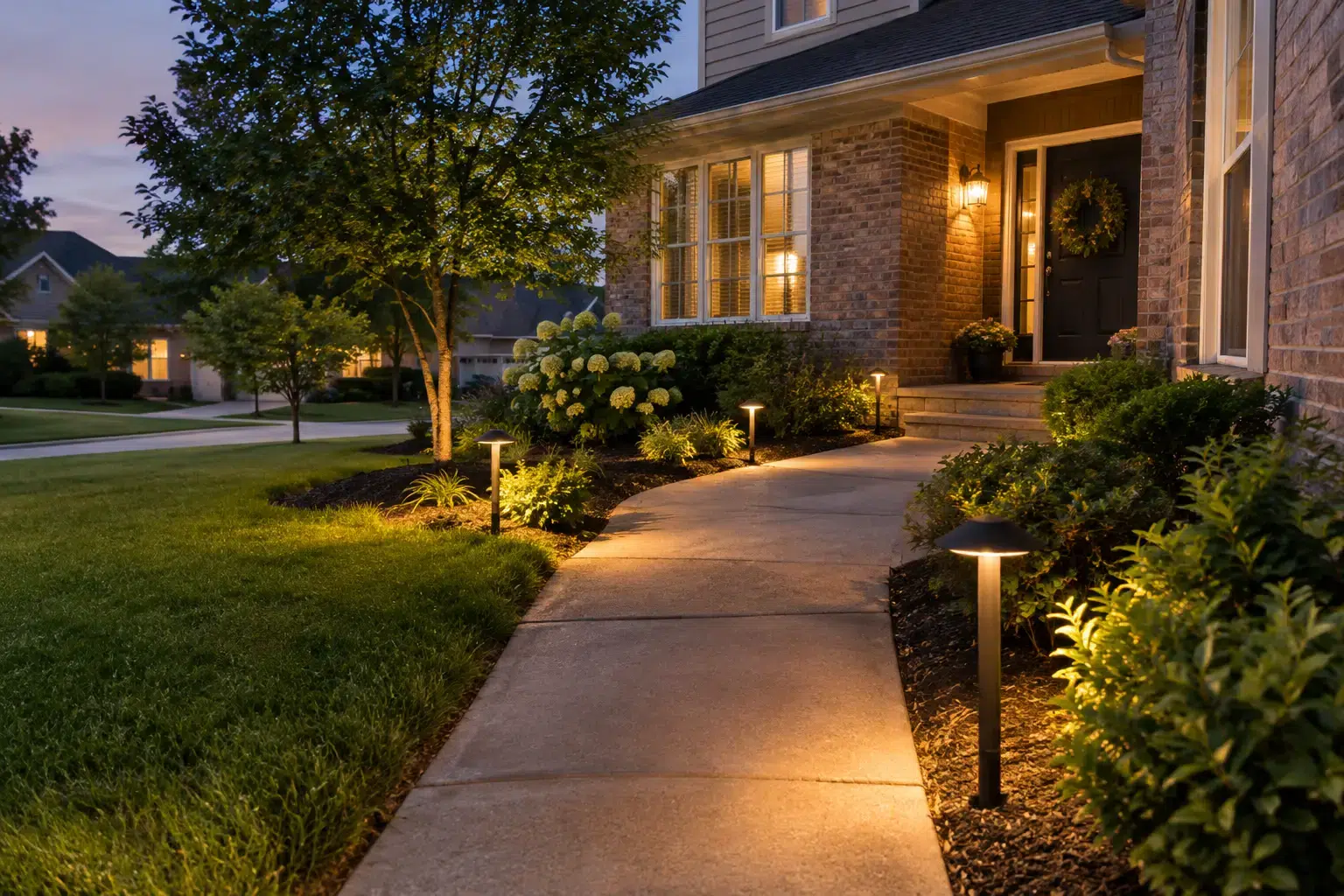
A front walk can look perfectly fine at 3:00 in the afternoon and become hard to see by 7:00 p.m. in late fall. That is where thoughtful landscape lighting earns its place. It helps people see where they are walking, makes your home feel more welcoming, and brings out the parts of your property you already invested in.
For Chicagoland homeowners, outdoor lighting is not just a finishing touch. Our long winter nights, wet spring weather, and busy evenings make a well-planned system practical. The goal is not to make your house look like a stadium. It is to create a clean, comfortable light level that works for your family, guests, and property.
Start With How You Use the Property
The best lighting plan starts with a simple question: where do you need to see and spend time after dark?
For some homes, the priority is a safer route from the driveway to the front door. For others, it is a patio where the family eats dinner, a backyard path leading to a gate, or steps that become slippery when Illinois weather turns wet or icy. A good plan follows the way people actually move through the yard.
During a walkthrough, we look at entrances, grade changes, walkways, stairs, driveways, patios, decks, and darker corners of the lot. We also look at what should be seen from the street. A nice stone facade, a mature tree, a paver walk, or a well-shaped planting bed can disappear after sunset without the right lighting.
This is where many homeowners run into trouble. They choose a few bright fixtures without a plan, then end up with dark gaps between lights or glare shining into windows. More fixtures do not automatically mean better results. Placement matters more.
What Landscape Lighting Should Do
A balanced system usually handles three jobs: safety, curb appeal, and outdoor enjoyment. Those goals overlap, but they are not exactly the same.
Light the Areas That Need Safe Footing
Paths, stairs, front entries, and transitions between a driveway and walkway deserve attention first. You want enough light to see the edge of a step or a change in surface, especially when rain, leaves, snow, or ice are involved.
The fixture should guide the eye without putting a bright bulb directly in someone’s face. Low path lights can work well along a walk, while small directional fixtures may help define steps, walls, or a change in grade. The right approach depends on the layout. A narrow side yard needs a different plan than an open front walk in Naperville or Downers Grove.
Lighting also helps guests feel more comfortable. Nobody wants to use a phone flashlight while trying to find the front door or walk around a dark backyard after a gathering.
Show Off the Features Worth Seeing
Your landscape does not disappear at night. It just needs a little help.
A soft upward light on a mature tree can add depth to a front yard. Gentle lighting along a paver walkway can show off its shape. A carefully aimed fixture can bring attention to stonework, a pergola, or an attractive front entry. These details create curb appeal without making the property feel overdone.
The key word is soft. A home should look warm and finished, not washed out. We generally prefer layers of light from several subtle fixtures instead of one powerful fixture aimed at the house. The effect is more natural, and it is easier on your neighbors as well.
Make the Backyard Useful After Sunset
Many Illinois homeowners spend good money creating patios, seating areas, outdoor kitchens, fire pits, and pergolas. Lighting helps those spaces work beyond daylight hours.
Patio and deck lighting should support conversation, meals, and movement. You need enough light to see a grill, a set of steps, or the edge of a seating area, but not so much that everyone feels like they are sitting under a porch floodlight. Warm lighting around the perimeter often feels better than placing one harsh light overhead.
If you have a larger backyard, lighting can also help define zones. The patio may need practical lighting, while a tree line or garden bed can receive subtle accent lighting for depth. It depends on how much of the yard you use at night and how close nearby homes are.
Choose Fixtures Built for Illinois Weather
In the Chicago suburbs, outdoor equipment needs to handle real weather. That includes summer heat, heavy rain, freeze-thaw cycles, snow cover, and the occasional bump from a mower or snow shovel.
Low-voltage LED landscape lighting is a strong fit for many homes. LEDs use less energy than older bulb styles, produce dependable light, and generally require less ongoing attention. Low-voltage systems also give you flexibility when a landscape changes over time. If you add a planting bed, patio, or walkway later, the lighting plan may be able to grow with it.
Fixture material matters, too. Better-built metal fixtures tend to hold up better than lightweight plastic options that can crack, fade, or shift out of position. The right choice depends on the setting and overall project, but this is not a place where the lowest upfront cost always saves money.
You should also think about color temperature, which simply means whether the light looks warmer or cooler. For most homes, a warmer white light feels more inviting and works well with brick, stone, siding, and plant material. Cooler light can look harsh in a residential setting unless there is a specific reason for it.
Avoid the Common Lighting Mistakes
A few simple decisions can make the difference between a polished system and one that feels distracting.
First, do not line every walkway with fixtures placed at identical distances like runway lights. Often, fewer lights placed at key points look better and give people clearer guidance. Second, keep fixtures aimed away from windows, the street, and neighboring yards. Light should stay on your property where it is useful.
Another mistake is ignoring seasonal changes. Shrubs grow. Perennials fill in. Mulch gets added. Snow piles up near a drive. A fixture that looks great in June may be blocked by foliage in August or buried after a January storm. Proper placement and occasional adjustment help keep the system performing as intended.
Finally, do not treat lighting as a separate project if you are already planning drainage work, new landscaping, a patio, fencing, or a pergola. Coordinating these improvements at the same time can prevent unnecessary disruption later. It also gives the whole property a more intentional look.
A Good Installation Is More Than Placing Fixtures
Quality landscape lighting involves planning the wire routes, selecting fixture locations, making clean connections, setting the transformer, and testing the system after dark. The nighttime check matters. A light can appear fine during the day but create glare, shadows, or uneven coverage once the sun goes down.
For properties with drainage concerns, it is especially helpful to coordinate the plan before work begins. You do not want wires placed where future excavation may be needed, and you do not want standing water around parts of the system. A good landscape should look nice, but it also needs to work.
At Revive Your Lawn, we look at outdoor lighting as part of the full exterior picture. That means considering the walkways, planting beds, hardscape, drainage needs, and how your family uses the space, not simply adding a few fixtures near the front door.
Keep the System Looking Its Best
Landscape lighting is low-maintenance, not no-maintenance. A seasonal check is usually enough to catch small issues before they become frustrating.
After winter, look for fixtures that shifted from frost movement or snow removal. In spring and summer, trim back plants that have grown over the lights. Clean dirt or mulch off fixture lenses, and make sure the timer or controls match the earlier and later sunsets through the year.
If a section stops working, the issue may be a loose connection, a damaged wire, or a fixture that needs attention. It is usually better to have the system checked than to keep replacing bulbs or moving fixtures without finding the real cause.
A well-lit property does not need to be flashy. It should simply make it easier to come home, welcome people in, and enjoy the yard you have worked hard to create. Walk outside after dark and notice where your property disappears, where footing feels uncertain, and where a little warm light would make the space feel more like home.


