A new lawn can completely change how your property feels. It covers bare dirt, softens the look of new landscaping, and gives kids and pets a cleaner place to play. But when homeowners ask about sod versus seed, the answer is rarely as simple as “one is better.” In the Chicago suburbs, the right choice depends on your timeline, yard conditions, budget, and willingness to keep up with watering during the first few weeks.
Here is the straight answer: sod gives you a finished-looking lawn right away, while seed costs less upfront and can be a great fit when conditions are right. Both can produce a healthy, attractive lawn. The difference is in how you get there and what the yard needs from you along the way.
Sod Versus Seed: The Main Difference
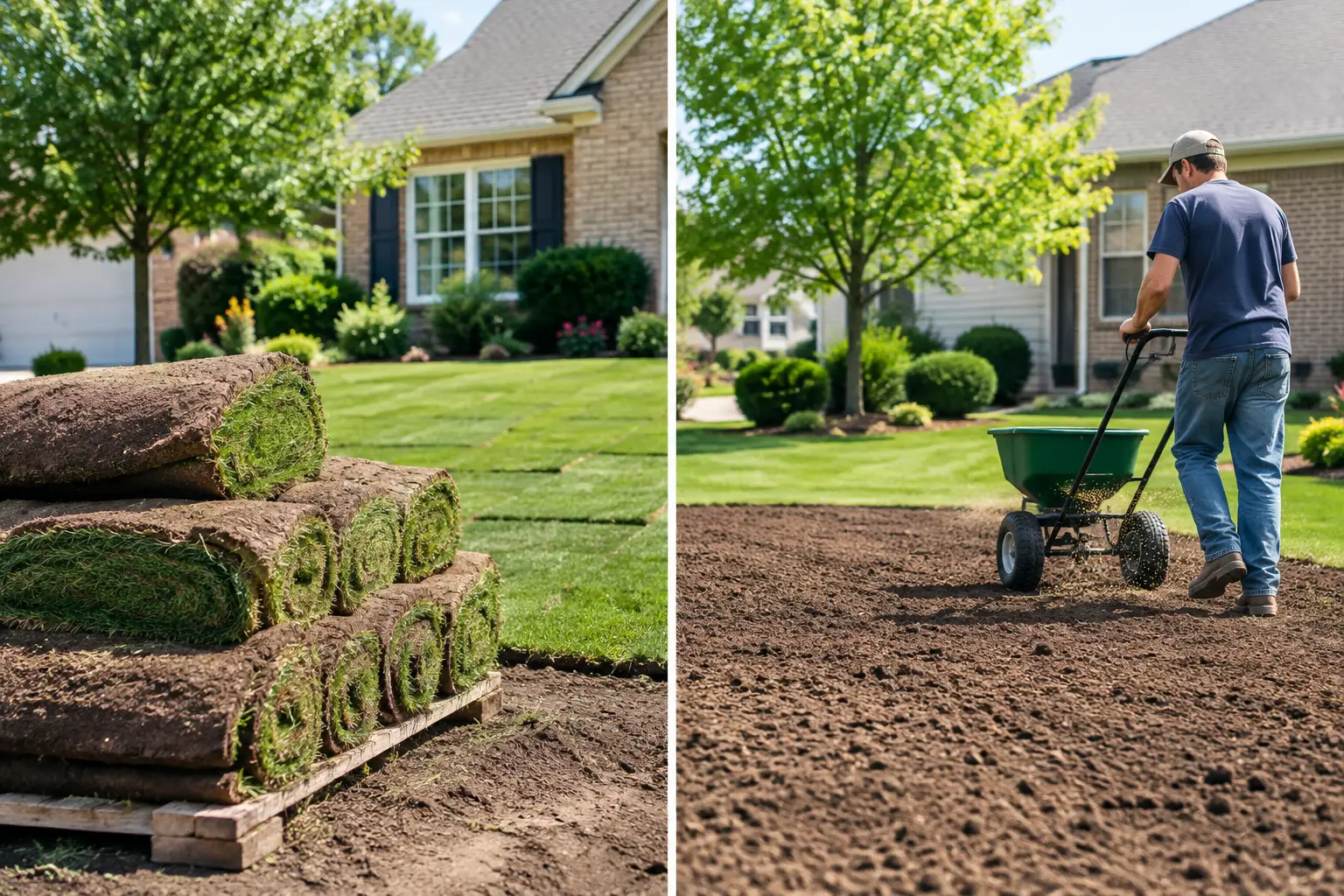
Sod is mature grass that has been grown on a farm, cut into rolls, delivered, and installed over prepared soil. Once it is laid correctly and watered consistently, your yard looks green almost immediately. It is a popular choice for Naperville-area homes, new construction projects, and lawns that need to look finished quickly.
Grass seed is spread directly into prepared soil. It takes time to germinate, establish roots, and fill in. A seeded lawn can look thin at first, especially if weather turns hot, dry, or unusually wet. That does not mean it is failing. It simply needs more patience and careful early care.
The most important part of either option is the preparation underneath. Good grass cannot make up for compacted soil, poor grading, standing water, or a yard full of construction debris. A good landscape should look nice, but it also needs to work.
When Sod Makes the Most Sense
Sod is usually the better fit when you need immediate coverage. Maybe you just installed a patio, removed old landscaping, repaired a drainage area, or finished a home project that left bare soil behind. Sod helps tie the property together quickly and gives the lawn a clean, finished appearance.
It also helps hold soil in place on slopes. Heavy Illinois rain can wash loose soil and seed downhill before the lawn has a chance to establish. Sod is not a cure for a major erosion or drainage problem, but it provides more protection than seed on a properly prepared slope.
For busy homeowners, sod can also feel more manageable. It still needs regular watering, especially during the first two to three weeks, but you are not waiting for tiny sprouts to appear or wondering whether birds, wind, or a hard rain moved your seed around. You can see the coverage right away.
That said, sod is not instant and maintenance-free. The roots still need time to grow into the soil below. Walking on it too soon, skipping watering, or mowing it incorrectly can create problems. Fresh sod should stay consistently moist while it establishes, but it should not sit in puddles. If water is collecting in parts of the yard, that issue needs attention before or during installation.
Sod is often a good choice if you:
- Want a green, finished lawn quickly
- Need to stabilize bare soil after landscaping or construction work
- Have a slope where loose seed could wash away
- Are preparing for a gathering, sale, or move-in date
- Prefer predictable coverage over a longer grow-in period
When Grass Seed Is the Better Choice
Seed is a smart option for homeowners who are not in a rush and want to keep the upfront project cost lower. It works especially well for larger open areas, lawn repairs, and overseeding an existing lawn that has become thin over time.
Fall is usually the sweet spot for seeding in Chicagoland. The soil is still warm enough for germination, but cooler air puts less stress on new grass. Weed pressure is often lower than it is in spring, and there is more time for roots to develop before summer heat arrives.
Spring seeding can work too, but this is where many homeowners run into trouble. Spring weather in the western suburbs can change fast. One week may be chilly and wet, followed by early heat or long dry stretches. New seed needs steady moisture, and spring weeds can compete with young grass before it has a chance to fill in.
Seed also gives you flexibility. A lawn professional can select grass varieties that fit a sunny yard, a partly shaded area, or the cooler conditions common around Illinois homes. That matters when you are trying to improve sections under mature trees or fill in patches near a fence line.
The trade-off is that seed needs more attention early on. It must be kept moist, protected from foot traffic, and given time before regular mowing begins. You may also need a second pass in thin areas. A homeowner who wants results by next weekend will usually be happier with sod.
Illinois Weather Changes the Decision
Our weather is one reason there is no one-size-fits-all answer. Chicago suburbs lawns deal with freezing winters, spring rain, humid summers, clay-heavy soil, and occasional dry spells. Those conditions affect both sod and seed.
Fresh sod installed during a mild stretch of spring or fall often has a strong start because it can root without extreme heat. Summer sod installation is possible, but it requires more watering and closer attention. If a hot week arrives and the sod dries out, it can quickly become stressed.
Seed is also most reliable in late summer and early fall. Seeding during the peak of summer is more difficult because young grass is vulnerable to heat and drying out. Winter dormancy can work for certain situations, but it is not the same as a standard seeding plan and should be timed carefully.
Soil is another big factor. Many Downers Grove and Hinsdale homeowners have areas where water lingers after rain. If the ground stays saturated, neither sod nor seed will perform the way it should. You do not want water sitting near your foundation, and you also do not want it sitting under a new lawn. In some yards, correcting the grade or adding a drainage solution is the first step before installing grass.
The Cost Question: More Than the Initial Price
Seed is generally less expensive upfront because you are paying for seed, soil preparation, and installation rather than mature turf. Sod costs more because it is grown, harvested, transported, and installed in a short window.
But the lowest starting cost is not always the best value. If a yard needs to look complete right away, repeatedly reseeding thin areas can become frustrating. On the other hand, installing sod over poorly prepared soil can be a costly mistake if the turf struggles to root or drains poorly.
The better question is: what does your property need to look and function the way you want? A small front-yard repair may be a great seed project. A full backyard renovation after a patio or drainage project may be better suited for sod. The size of the area, access to water, sun exposure, and how soon you need to use the space all matter.
What Both Sod and Seed Need to Succeed
Whether you choose sod or seed, the first few weeks set the tone for the lawn. Watering is the biggest responsibility. New grass needs moisture near the surface until roots become established. With sod, that means keeping the turf and soil beneath it moist. With seed, that usually means lighter, more frequent watering so the surface does not dry out.
Mowing matters too. Do not cut new grass too short. Let it reach a healthy height, then remove only a portion of the blade when mowing. Sharp mower blades make a cleaner cut and reduce stress on young grass.
It is also wise to keep pets, kids, and heavy equipment off new turf as much as possible. A backyard may look ready because it is green, but the roots may still be shallow. Give it time before treating it like an established lawn.
Finally, pay attention to the reason the lawn failed in the first place. If bare spots keep returning in the same area, the issue may be shade, compacted soil, drainage, tree roots, or too much foot traffic. Adding more seed or sod without addressing the cause usually leads to the same problem again.
A Practical Choice for Your Yard
If you want fast curb appeal and a usable-looking lawn sooner, sod is often worth considering. If you have more time, a larger area, or a lawn that simply needs thickening up, seed can be a sensible and effective choice. Many properties benefit from both – sod in highly visible or heavily used areas and seed for broader repairs or overseeding.
At Revive Your Lawn, we look at the whole property before recommending a direction. That includes the condition of the soil, where water moves after a storm, sun and shade patterns, and how you want to use the yard. The right lawn plan is not just about getting grass to grow. It is about creating an outdoor space that looks clean, holds up to real life, and gives you one less thing to worry about on the weekend.
If you are weighing sod against seed, start with an honest look at your yard and your schedule. The best choice is the one that gives your Illinois home a healthy lawn you can realistically care for from day one.