A dark front walk is easy to ignore until someone misses a step coming home after work. The right exterior lighting Chicagoland homeowners choose does more than make a house look sharp at night. It helps people move safely, shows off the parts of the property you have invested in, and makes the yard feel usable long after the sun goes down.
In the Chicago suburbs, lighting has to handle a lot. We get early winter sunsets, wet spring weather, hot summer evenings, snow, ice, and plenty of tree cover in established neighborhoods. A good lighting plan accounts for all of it instead of simply placing a few fixtures along the driveway.
Start With How You Use the Property
The best outdoor lighting plans are built around real life. During a walkthrough, we usually start with simple questions: Which door does the family use most? Where do guests park? Is there a dark side yard where the garbage goes out? Do you spend time on the patio after dinner?
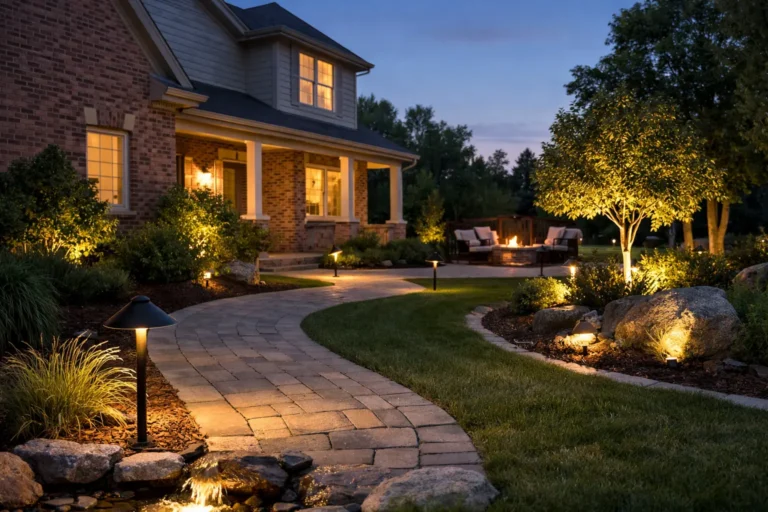
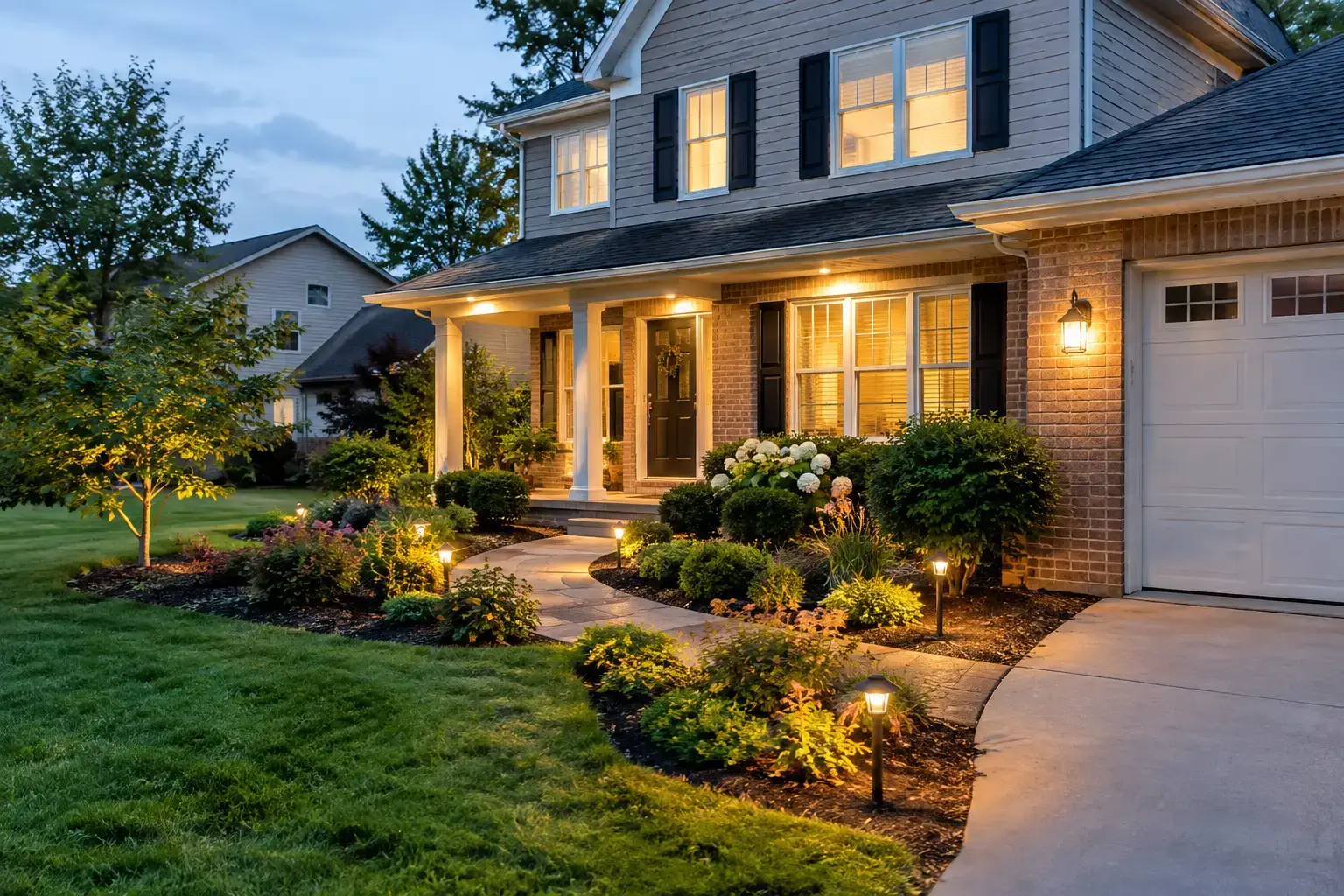
For many Naperville-area homes, the front entry and walkway come first. Those are the areas visitors see, delivery drivers use, and family members walk through in the dark. A softly lit path and clear front steps make a home more welcoming without turning the front yard into a bright runway.
The backyard often needs a different approach. A patio may need enough light to see food, steps, and seating, while the rest of the yard should stay relaxed. Too much light can make a nice outdoor space feel flat and harsh. The goal is to create comfortable visibility, not light every inch of grass.
Safety Lighting Should Feel Intentional
Steps, grade changes, retaining walls, and walkways deserve special attention. This is where many homeowners run into trouble. A fixture that looks fine during the day may cast a shadow right where someone needs to see the edge of a step at night.
Low path lights, downlighting from trees or structures, and carefully placed wall lighting can help make these areas easier to navigate. The right choice depends on the layout. For example, a narrow paver walk may benefit from lighting that shines across it rather than fixtures crowding both sides.
Driveways and side yards matter too, especially in winter. Illinois snow piles, slick pavement, and an early 4:30 p.m. sunset can make a familiar route feel different. Lighting will not remove ice, but it gives you a better view of the conditions underfoot.
Exterior Lighting in Chicagoland Should Be Layered
A strong lighting design usually combines a few types of light instead of relying on one bright fixture. Think of it like a good landscape: there should be a clear overall picture, with details that make it feel complete.
Path and step lighting handles movement. Accent lighting brings attention to features such as stonework, ornamental trees, entry columns, or a well-built pergola. Soft wash lighting can add depth to a home’s front elevation or a fence line. Each layer has a job, and they work better together than they do alone.
Downers Grove homeowners with mature trees often have a great opportunity for subtle downlighting. When installed correctly, light from above can create a natural look on a patio, walkway, or planting bed. It can be especially useful where ground fixtures would be difficult to place because of roots, mulch beds, or snow removal patterns.
Uplighting is another popular option for highlighting a brick facade, a specimen tree, or a stone feature. It looks impressive, but placement matters. Fixtures aimed too high or installed without adjusting for windows can create glare inside the home or shine into a neighbor’s yard. A professional plan should look good from the street and feel comfortable from inside the house.
Choose Fixtures Built for Illinois Weather
Outdoor fixtures live outside year-round. That sounds obvious, but it is why material quality and installation details matter. Cheap fixtures can fade, crack, corrode, or shift after a few seasons of freeze-thaw weather and lawn maintenance.
For Chicago suburbs properties, we recommend fixtures designed for outdoor use with durable metal construction and dependable LED components. LEDs use less energy than older bulbs, last longer, and make it easier to keep the color of the lighting consistent across the property. Warm white light is usually the best fit for homes because it feels inviting and works well with brick, stone, siding, and landscaping.
The wiring matters just as much as the fixture. Lines need to be routed carefully so they are protected from normal yard work, mulch refreshes, edging, and future landscape changes. Connections should be secure and accessible for service if needed. This is not the place for temporary-looking wiring tucked under a loose layer of mulch.
A timer, photocell, or smart control can make the system easier to live with. Some homeowners want lights to come on at dusk and shut off at a set time. Others prefer app control for different zones. There is no single best option. A simple automatic schedule is often perfect for a front-yard safety plan, while a patio and entertaining area may benefit from more flexibility.
Do Not Light the Yard Like a Parking Lot
More brightness does not automatically mean more safety or better curb appeal. In fact, overly bright exterior lighting can create glare that makes it harder for your eyes to adjust. It can also wash out the texture of your home and make neighbors feel like their windows are under a spotlight.
A well-designed system uses controlled, downward-facing light where people walk and targeted accent light where you want attention. The darker spaces between fixtures are part of the design. They help define the lighted areas and keep the property feeling calm.
This is especially important in close-knit western suburbs neighborhoods, where homes may sit closer together. Your lighting should improve your own property without spilling heavily into the house next door. Careful aiming and the right fixture shields make a noticeable difference.
Plan Lighting With the Rest of the Landscape
Lighting works best when it is considered alongside landscaping, drainage, hardscaping, and outdoor structures. If you are adding a paver patio, new front walk, retaining wall, pergola, or planting beds, that is a good time to think about wiring and fixture locations.
Installing lighting before or during a larger project can reduce the need to disturb finished areas later. It also lets the design feel more natural. A light can be built into a wall, set beside a new walkway, or planned around the mature size of a tree rather than squeezed in after everything else is complete.
Drainage should be part of that conversation too. You do not want water sitting near your foundation, and you also do not want a low-voltage connection or fixture placed where water repeatedly collects. A good landscape should look nice, but it also needs to work through a heavy Illinois rain.
At Revive Your Lawn, we look at the full exterior picture because the details connect. Lighting can make a new patio more enjoyable, help define a driveway, and bring attention to landscape work that would otherwise disappear after sunset.
Common Exterior Lighting Mistakes to Avoid
The most common mistake is placing fixtures without viewing the property at night. Daytime installation is necessary, but final adjustments should account for actual shadows, sight lines, and glare after dark. A fixture may need to be turned slightly, moved a few inches, or dimmed to get the right effect.
Another mistake is lighting only the front of the house. The front entry is a smart starting point, but a dark rear step or side gate can still be a daily nuisance. Think through the routes your household uses, not just the view from the street.
Finally, avoid designing only for the current season. Summer foliage can block light that looked perfect in early spring, while bare branches change the effect in winter. A thoughtful layout allows for those changes and focuses first on the areas that need dependable year-round visibility.
A well-lit property does not need to shout for attention. It should simply make coming home easier, walking outside safer, and the best parts of your Illinois home visible when the day is done.