A front yard can look tired for reasons that go well beyond a few overgrown shrubs. Maybe the entry walk is cracked, mulch keeps washing out, the lawn stays muddy after rain, or the front of the house simply does not match the care you put into the rest of your home. A thoughtful before after front yard renovation addresses the whole picture: how the property looks, how people move through it, and where water goes when Illinois weather turns wet.
For Chicagoland homeowners, the best transformations are rarely just about adding flowers. They start by looking at the real problems in the yard, then building a landscape that is clean, welcoming, and easier to live with year after year.
What Changes in a Before and After Front Yard Renovation
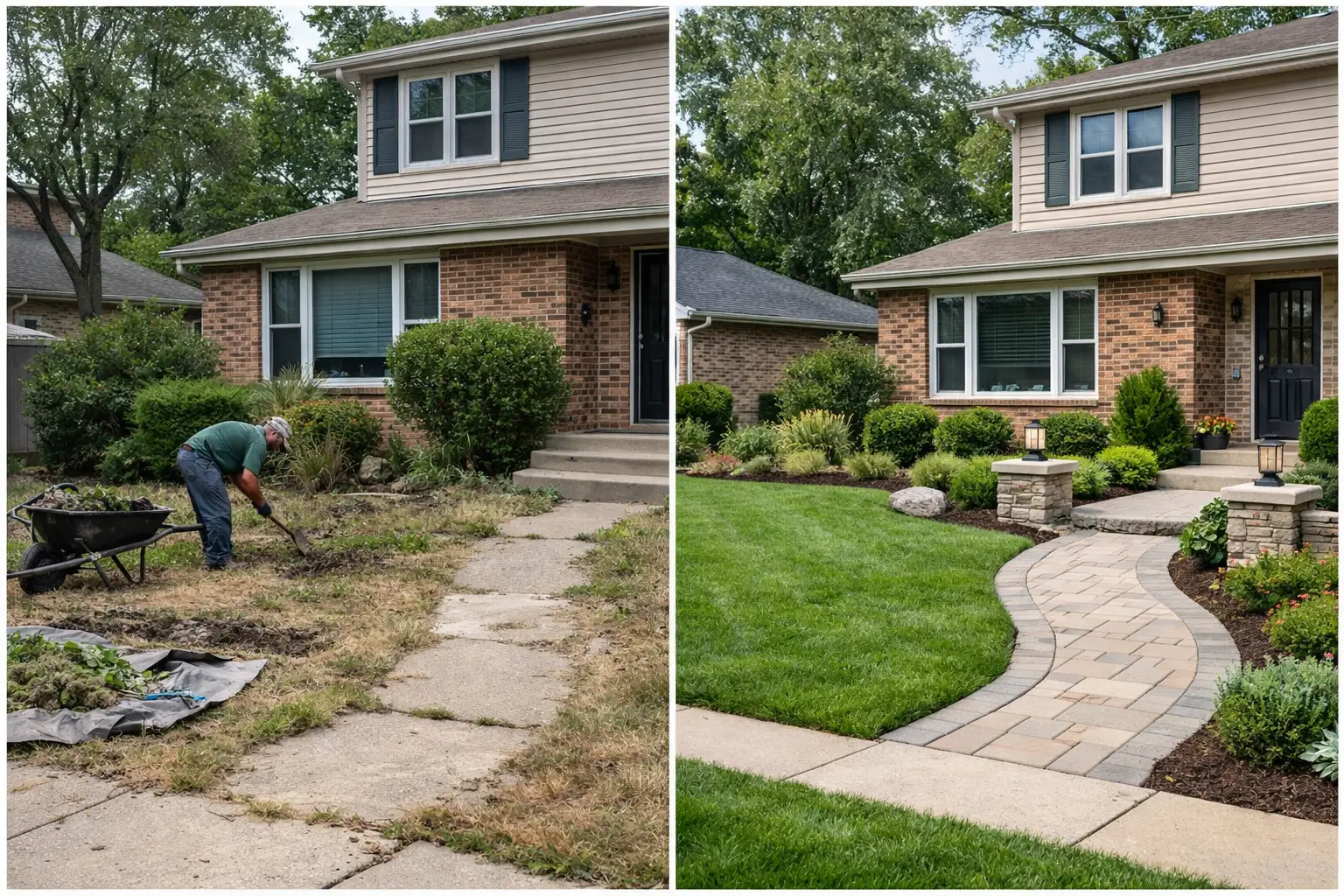
The “before” side of a front yard renovation often has a familiar look. Thin grass sits beneath mature trees. Old foundation plants have grown too large for the space. The front walk has settled or feels narrow. Water collects near a downspout, leaving a soft spot in the lawn and sending mulch into the driveway.
The “after” should feel more intentional, not overdone. A refreshed bed line can make the house look sharper. A wider paver walkway can create a safer, more welcoming route to the door. Proper grading and drainage can move water away from the foundation. Low-voltage landscape lighting can make the entry easier to see on dark winter evenings.
That is the difference between a yard that merely looks new for a few weeks and one that works better for the homeowner. A good landscape should look nice, but it also needs to work.
Start With the Problems You Cannot Ignore
It is tempting to begin with plant colors or mulch, but the first conversation should be about what is not working. Here is what to look for: standing water after a normal rain, soil washing out of beds, downspouts emptying beside the house, slippery or uneven walks, exposed tree roots, and plants that block windows or crowd the front entry.
In Illinois, this matters because our yards deal with heavy spring rain, summer storms, freeze-thaw cycles, falling leaves, and snowmelt. Water that sits near a foundation is not just a landscaping issue. It can become a property protection issue. Likewise, a walkway that heaves, sinks, or stays icy deserves more attention than a fresh layer of mulch.
Sometimes the right answer is a simple extension for a downspout and a revised bed edge. Other properties need more involved drainage work, such as buried downspout lines, a catch basin, or regrading. It depends on the slope of the lot, soil conditions, roof runoff, and where water can safely discharge. A yard should be assessed before anyone promises a one-size-fits-all fix.
The Front Entry Deserves a Closer Look
Your front entry is where guests, delivery drivers, and neighbors get their first impression of the property. If the path feels cramped, uneven, or disconnected from the driveway, a new paver walkway can make a major difference without rebuilding the entire yard.
Pavers are a popular choice around Naperville-area homes and throughout the western suburbs because they offer a finished look while allowing flexible design options. The base preparation matters most. A beautiful walkway installed over a poor base can shift with our winter weather. Proper excavation, compacted aggregate, edging, and drainage planning are what help it hold up.
Build the Renovation in the Right Order
A clean before-and-after result comes from doing work in the right sequence. Drainage and grading should come before final planting and mulch. If a walkway, retaining edge, or new lighting wiring is part of the plan, those elements should be handled before the lawn and beds are finished.
This is where many homeowners run into trouble when they hire separate crews for separate pieces of the project. One company installs plants, another later digs through the beds for drainage, and a third adds lighting after everything is complete. The result can mean duplicate work, damaged landscaping, and extra frustration.
Planning the full exterior picture at the start helps avoid that. A practical renovation sequence usually includes removing worn-out materials, correcting drainage concerns, installing hardscape features, placing lighting, preparing planting beds, then completing sod, mulch, and final cleanup. The exact order can change based on the property, but the principle stays the same: solve the hard-to-reach issues before finishing the pretty parts.
Choose Plants for Chicago Suburbs Conditions
Planting is still an important part of the transformation. The key is choosing plants that fit the space, not filling every open area with whatever looks good at the garden center that day.
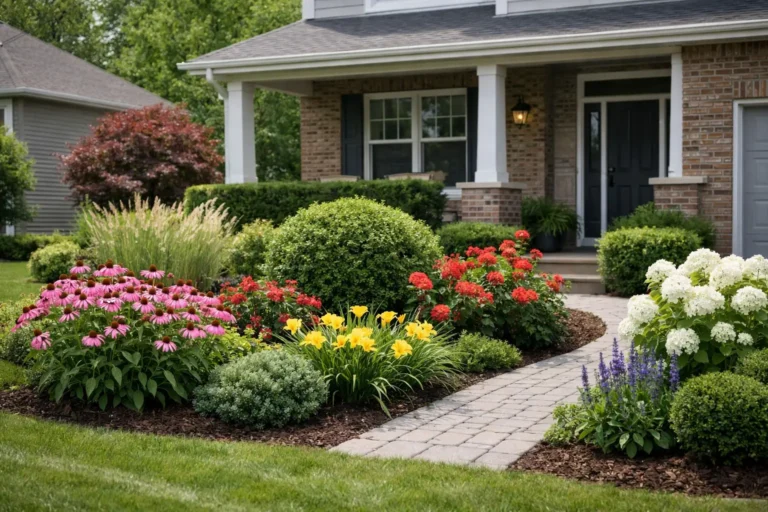
A front yard needs a mix of structure and seasonal interest. Evergreens can give the landscape shape during a gray Illinois winter. Shrubs and ornamental grasses can soften the foundation and add texture. Perennials can bring color without requiring a complete replanting each year. The goal is to keep plants at a reasonable mature size, so they do not swallow the windows, block the walk, or demand constant trimming.
Sun exposure matters as much as appearance. A bed that gets strong afternoon sun needs a different plant plan than a shaded entry beneath a mature maple. Deer pressure, soil moisture, and how much maintenance you want also matter. Downers Grove homeowners with a heavily shaded lot may need a very different design from a newer, open property in Plainfield.
Mulch helps finish the look and supports plant health, but it should not be used to hide poor bed preparation or drainage issues. Too much mulch piled against the foundation or tree trunks can create problems of its own. Clean edges and an appropriate mulch depth usually look better than a thick, uneven layer.
Use Lighting to Extend the Value of the Yard
Landscape lighting is often the feature homeowners appreciate most after the project is done. It adds more than a nice glow. Well-placed fixtures can make steps, changes in elevation, and walkways easier to see. They can also highlight a front tree, architectural details, or a new planting bed without making the property look overly bright.
The best lighting plans are selective. You do not need a fixture on every plant. A few path lights where people walk, gentle uplighting on a focal tree or the home, and lighting near the entry can create a warm result. The fixtures and wire placement should be planned alongside the landscape so they are not an afterthought.
For homeowners who enjoy decorating during the holidays, permanent holiday lighting can also be considered as part of a broader exterior improvement plan. It keeps seasonal setup off the ladder and allows the home to look polished without temporary clips and extension cords along the roofline.
Do Not Forget the Lawn Around the New Work
A front yard renovation can make existing lawn problems more noticeable. Once the beds and walkways look fresh, thin turf, bare patches, and compacted soil stand out right away.
Depending on the condition of the lawn, the finishing step may include sod installation, overseeding, aeration, dethatching, or simply repairing areas affected by construction. Sod gives an immediate green result, but it needs proper soil preparation and regular watering as it establishes. Seeding costs less up front and can work well in the right season, but it takes more patience. There is no single best option for every yard.
If mature trees create deep shade, trying to force thick turf into that area may lead to repeated disappointment. In some cases, expanding a mulch bed or using shade-friendly planting is the better long-term choice. That is an honest trade-off worth discussing before the work begins.
Plan for the Yard You Want to Maintain
The strongest before-and-after front yard renovation is one you can keep looking good without giving up every weekend. That does not mean maintenance-free. No Illinois landscape is truly maintenance-free. It means making smart choices about bed size, plant variety, lawn area, edging, lighting, and drainage so routine care is manageable.
For busy families, that may mean fewer high-maintenance annuals, more dependable shrubs and perennials, crisp bed edges, and a lawn maintenance plan that keeps the property looking cared for. For a homeowner focused on curb appeal before selling, the priority may be a clean entry, healthy lawn, fresh mulch, trimmed shrubs, and repaired walkways. Both are valid goals, but the design should match the reason for the project.
A front yard renovation is not about making your property look like everyone else on the block. It is about making the outside of your home feel cared for, safe, and welcoming from the curb to the front door. If you are unsure where to begin, a walkthrough with a local team such as Revive Your Lawn can help separate the must-fix issues from the nice-to-have upgrades, so you can make a plan that fits your home and your priorities.