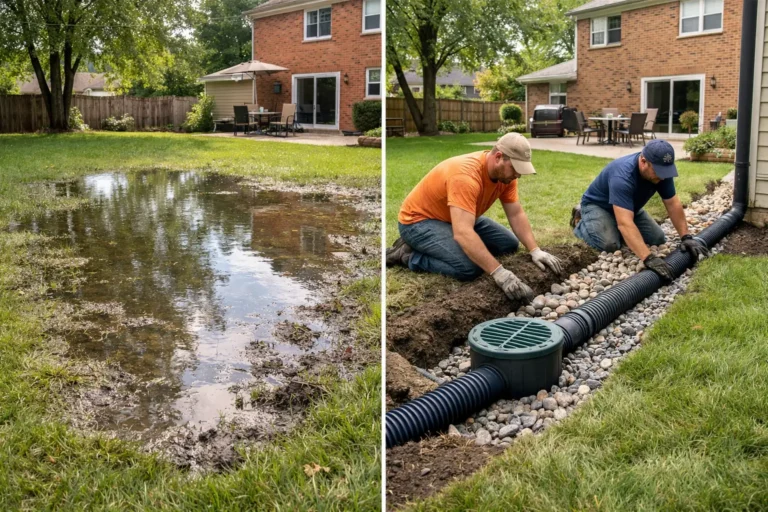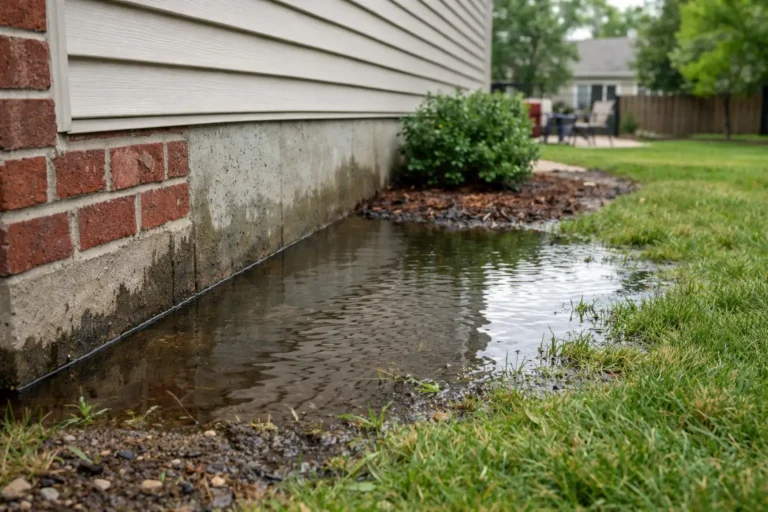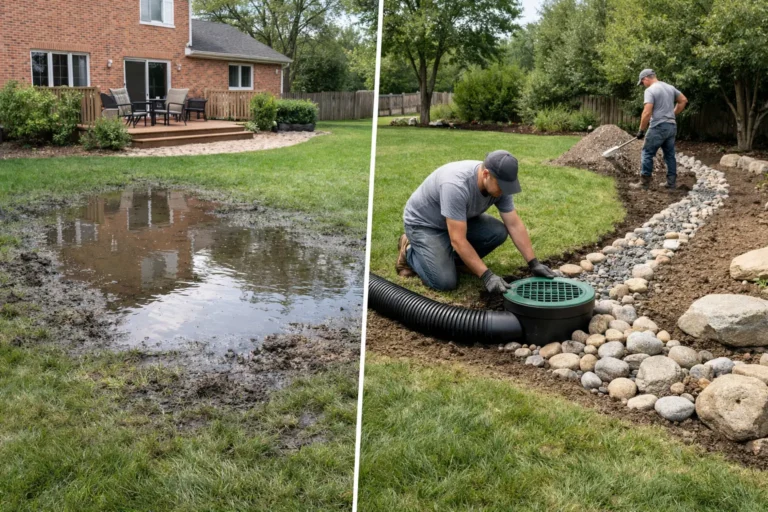
Water problems usually show up the same way around Cook County homes: a soggy lawn that never dries out, mulch washing into the sidewalk, puddles near the foundation, or a backyard that turns into mud every time it rains.
That is when many homeowners start searching for a drainage contractor. The hard part is figuring out who actually understands the problem and who is just guessing.
A drainage issue is not just about getting rid of water fast. It is about moving water the right way so your yard works better, your landscaping holds up, and your home stays protected.
Quick Answer
The best drainage contractor in Cook County is not always the cheapest one. Look for a contractor who walks the property, explains where the water is coming from, shows where it should go, provides a clear written scope, and understands local issues like clay soil, flat lots, heavy storms, and freeze-thaw cycles.
If water is sitting where it should not, curb appeal takes a hit. So does your lawn, your landscaping, and sometimes even your basement or foundation. Guides like how to fix a soggy lawn after rain and what causes yard flooding in the Chicago suburbs can help you spot the pattern before you hire anyone.
Here is how to choose a drainage contractor in Cook County with more confidence.
Why Drainage Problems Are So Common in Cook County
Cook County and the surrounding Chicago suburbs can be tough on yards. We get spring downpours, summer storms, frozen winter ground, and plenty of freeze-thaw cycles. Add in clay-heavy soil, older homes, mature trees, flat lots, and downspouts that dump too close to the house, and it is easy to see why drainage problems keep coming back. That is also why drainage solutions for clay soil show up so often in local estimates.
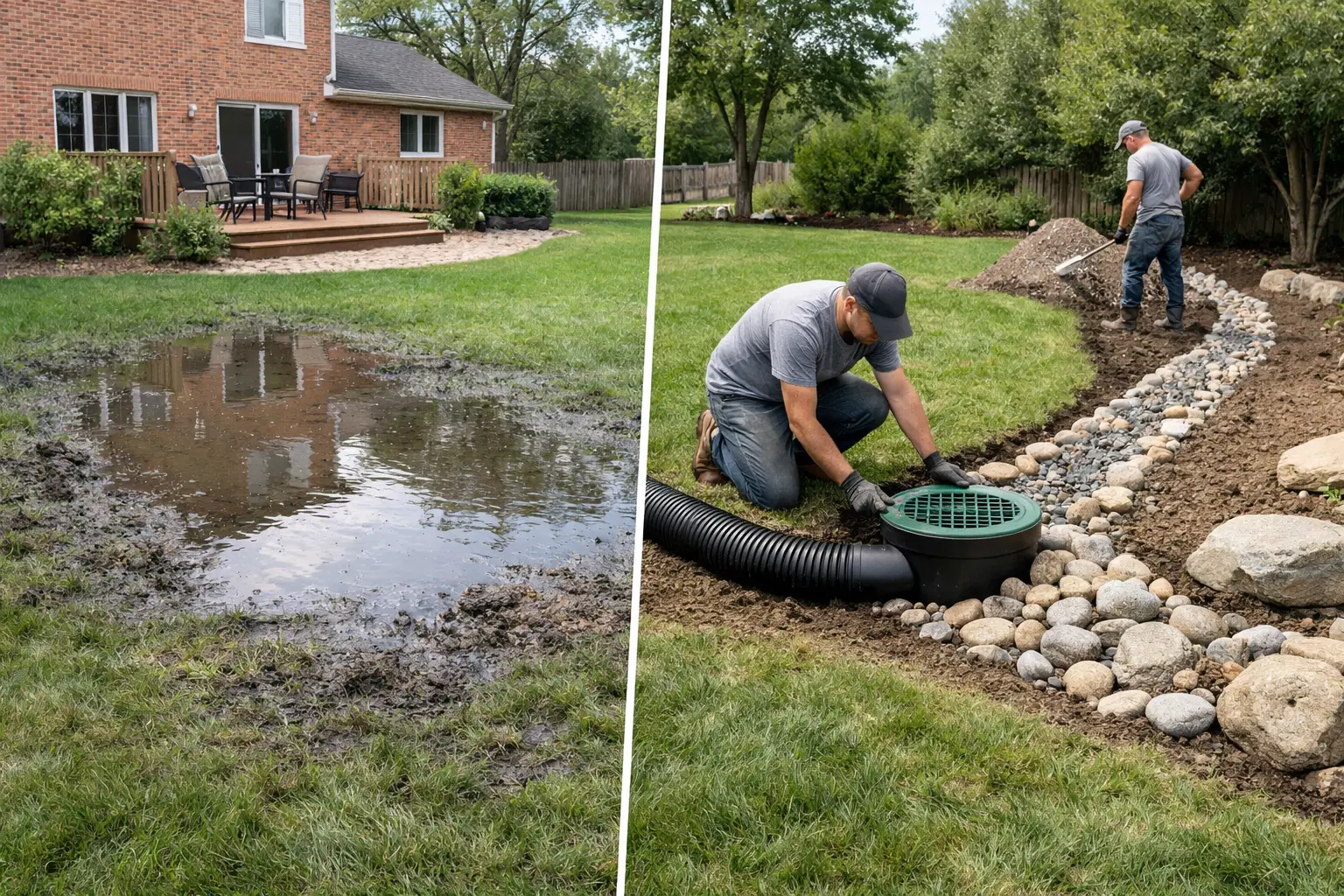
In areas like Western Springs, Hinsdale, La Grange, Burr Ridge, Brookfield, Riverside, Oak Park, Berwyn, and the nearby western suburbs, many properties also have mature landscaping and older grading patterns. That means water may not move the way it should anymore.
Sometimes the issue is obvious. Other times, the yard looks fine until one hard rain exposes every low spot. Our Illinois yard drainage guide covers those local patterns in more detail.
Cook County Drainage Risk Factors

Heavy Rain
Fast storms can overwhelm low areas, patios, and lawn depressions.

Clay Soil
Clay drains slowly, so water often sits longer than homeowners expect.

Freeze-Thaw
Poor drainage can turn wet walkways and low spots into icy hazards.

Older Grading
Settled soil can send water back toward the house instead of away from it.
Signs You May Need a Drainage Contractor
Some drainage problems are easy to spot. Others build slowly and become expensive later. If you notice any of the signs below, it may be time to have a drainage contractor walk the property. For a homeowner checklist, see our outdoor drainage inspection guide.
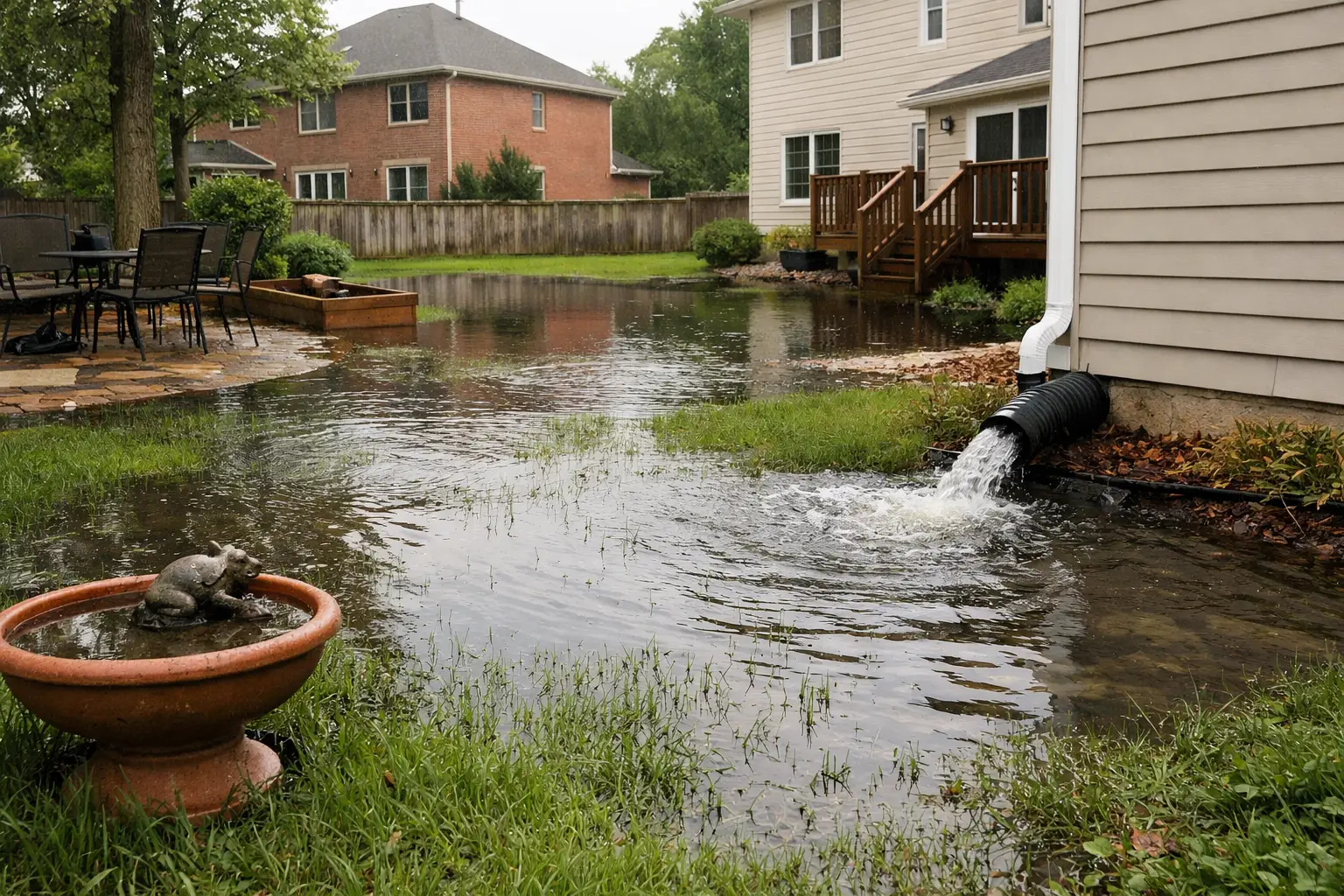
Is This a Drainage Problem?
- Water pools for more than 24–48 hours after rain.
- Your lawn feels soggy or muddy in the same area over and over.
- Water sits near your foundation, crawl space, or basement walls.
- Your basement smells musty or shows signs of seepage.
- Mulch, soil, or stone washes out of landscape beds.
- Grass keeps dying in the same wet spot.
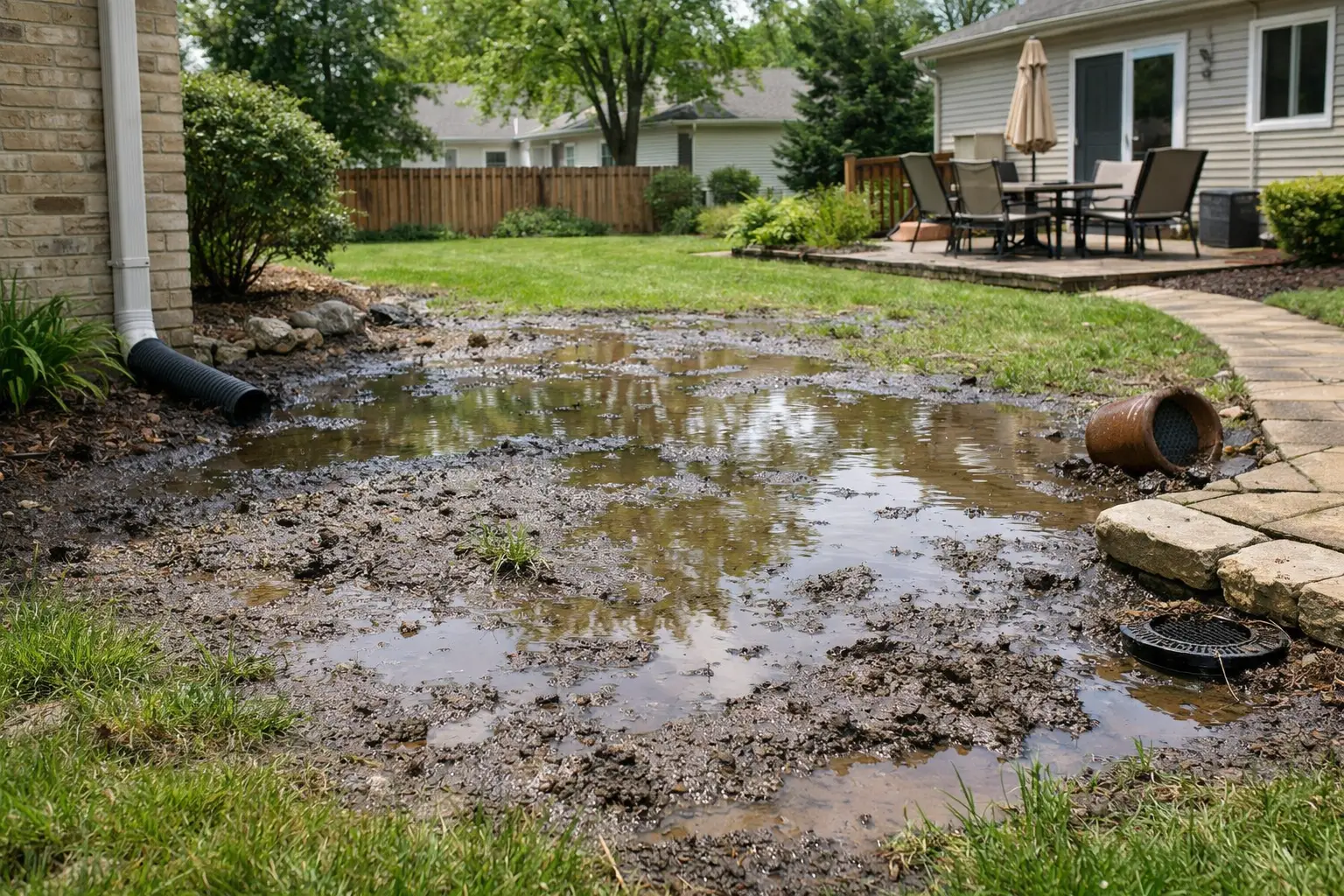
- Your sump pump discharge creates a swampy strip in the yard.
- Walkways, patios, or driveway edges stay slick or icy.
- Mosquitoes show up around standing water.
One small puddle after a major storm does not always mean you need a large drainage system. But repeated standing water, erosion, basement moisture, or water pooling near the foundation should be taken seriously.
What a Good Drainage Contractor Should Actually Do
A good drainage contractor does more than recommend a pipe and call it a day.
They should look at the whole property and ask three simple questions:
- Where is the water coming from?
- Where is it collecting?
- Where can it safely go?
That means looking at your yard slope, downspout locations, hardscape edges, patio pitch, sump discharge, soil conditions, low spots, and nearby structures.
The right contractor should explain the issue in plain English. Maybe your downspouts are dumping too close to the house. Maybe the yard pitches back toward the foundation. Maybe one low corner of the lawn is holding water because the grade is off by just a few inches.
Small changes in elevation can make a big difference. So can sending the water to the wrong place.
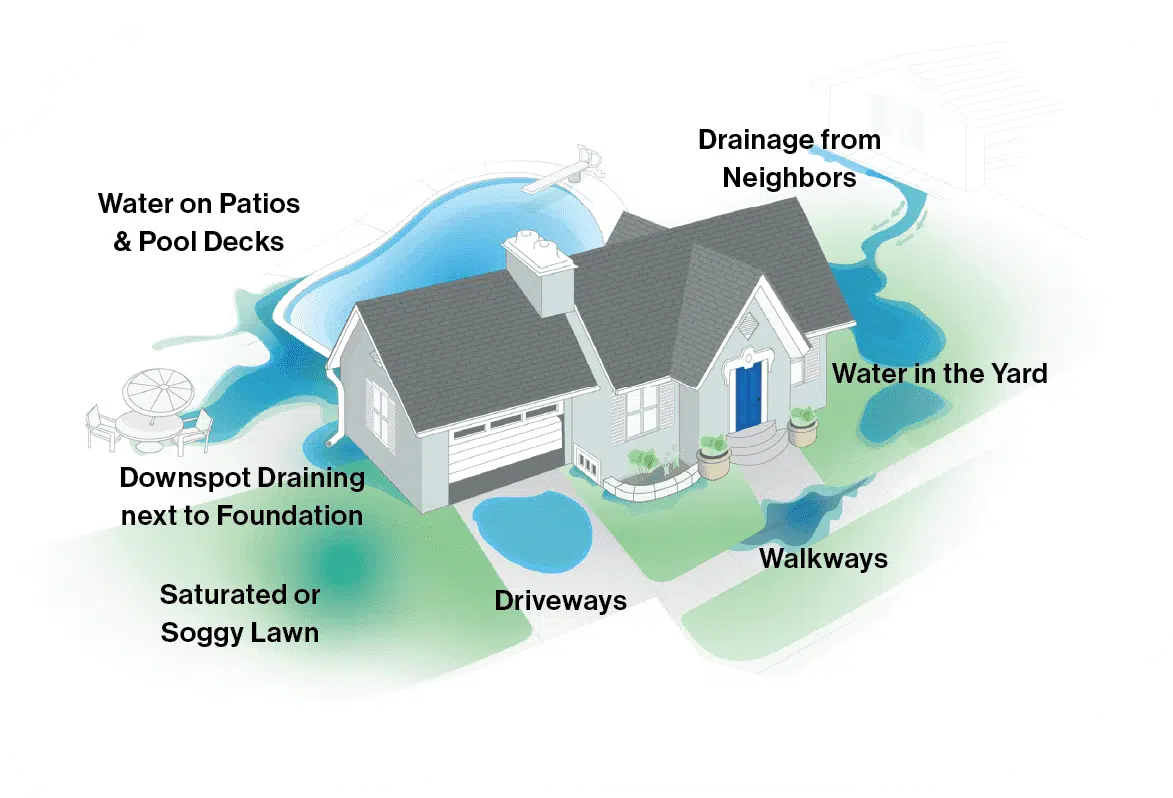
The Best Drainage Contractor Starts With Diagnosis
This is where many homeowners run into trouble.
They get one quick recommendation before anyone has really studied the yard. Maybe someone pushes a French drain right away. Maybe someone says everything needs to be regraded. The truth is, drainage is not one-size-fits-all.
A solid contractor should walk the property with you and explain what they see. They should pay attention to roof runoff, hard surfaces, neighboring properties, existing drainage, lawn health, and any areas where water has already caused damage. If roof water is part of the picture, roof runoff solutions often belong in the conversation early.
If the problem is coming from multiple sources, one simple fix may not be enough.
For example, a French drain can work well in the right setting, but it is not the answer to every puddle. Regrading may help if water is trapped because of slope. Downspout burial can make a big improvement if roof runoff is the main problem. Sometimes the best result comes from combining solutions instead of relying on one big fix. Comparing French drain vs dry well options is one way to pressure-test a recommendation.
Common Drainage Solutions for Cook County Homes
Most residential drainage projects fall into a few common categories. The right fit depends on how water moves across your property. For a broader overview, see our residential drainage guide and yard drainage solutions that actually work.
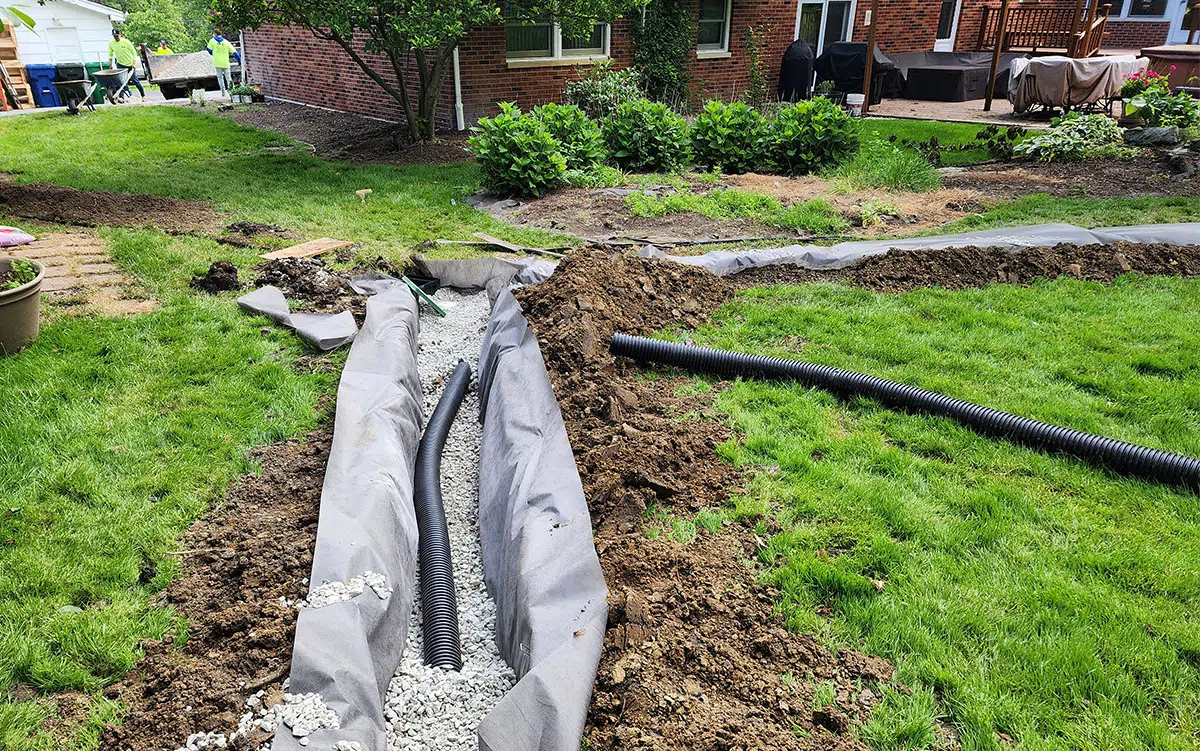
For a deeper look at professional yard drainage options, visit our drainage systems service page. If the wet area is mainly in the backyard, how to fix soggy backyard drainage and our backyard drainage planning guide are useful next reads.
Red Flags When Hiring a Drainage Contractor
Most homeowners are not drainage experts. That is okay. You should not have to be one to avoid a bad hire.
Contractor Red Flags
- They recommend a solution before walking the property.
- They cannot explain where the water will be redirected.
- The estimate is vague or missing a clear scope.
- They do not discuss utilities, access, or possible site limitations.
- They ignore downspouts, grading, hardscapes, or neighboring runoff.
- They promise a “cheap fix” without explaining trade-offs.
- They do not explain what your lawn will look like after trenching.
- They pressure you to sign before you understand the plan.
A good contractor should be comfortable explaining the “why” behind the recommendation. If you feel rushed, confused, or brushed off, that is usually a sign to slow down.
Questions to Ask Before Hiring a Drainage Contractor
You do not need to become a drainage expert before getting an estimate. But asking a few smart questions can tell you a lot.
Drainage Contractor Question Checklist
- What is causing the water problem?
- How do you know that is the source?
- Where will the water be moved?
- Will this help protect my foundation or basement?
- Do my downspouts or gutters need to be addressed?
- Will utility marking be handled before digging?
- How will this affect my lawn, beds, patio, or walkways?
- What is included in the estimate?
- What could change the price?
- How will the yard be restored after the work?
A trustworthy contractor should be willing to walk you through trade-offs. One option may solve the issue with less yard disruption. Another may be more involved but give a better long-term result.
You want clear answers, not vague promises.
How to Compare Drainage Estimates
When comparing drainage estimates, do not look at price alone. A lower estimate may leave out restoration, discharge planning, materials, or the actual source of the problem.
Instead, compare the full plan.
| What to Compare | Contractor A | Contractor B | Contractor C |
|---|---|---|---|
| Walked the full property | ☐ | ☐ | ☐ |
| Explained the water source | ☐ | ☐ | ☐ |
| Showed where water will discharge | ☐ | ☐ | ☐ |
| Provided written scope | ☐ | ☐ | ☐ |
| Included lawn or landscape restoration | ☐ | ☐ | ☐ |
| Explained what could change the price | ☐ | ☐ | ☐ |
The best estimate is usually the one that makes the most sense, not the one with the lowest number at the bottom.
Good Contractor vs. Risky Contractor
A Good Drainage Contractor
- Walks the full property
- Explains the source of the water
- Shows where the water will go
- Gives a written scope
- Discusses lawn restoration
- Explains trade-offs clearly
A Risky Contractor
- Recommends one fix for every yard
- Cannot explain the water source
- Skips the discharge plan
- Uses vague pricing
- Ignores downspouts and grading
- Pushes you to decide fast
Why Local Experience Matters in Cook County
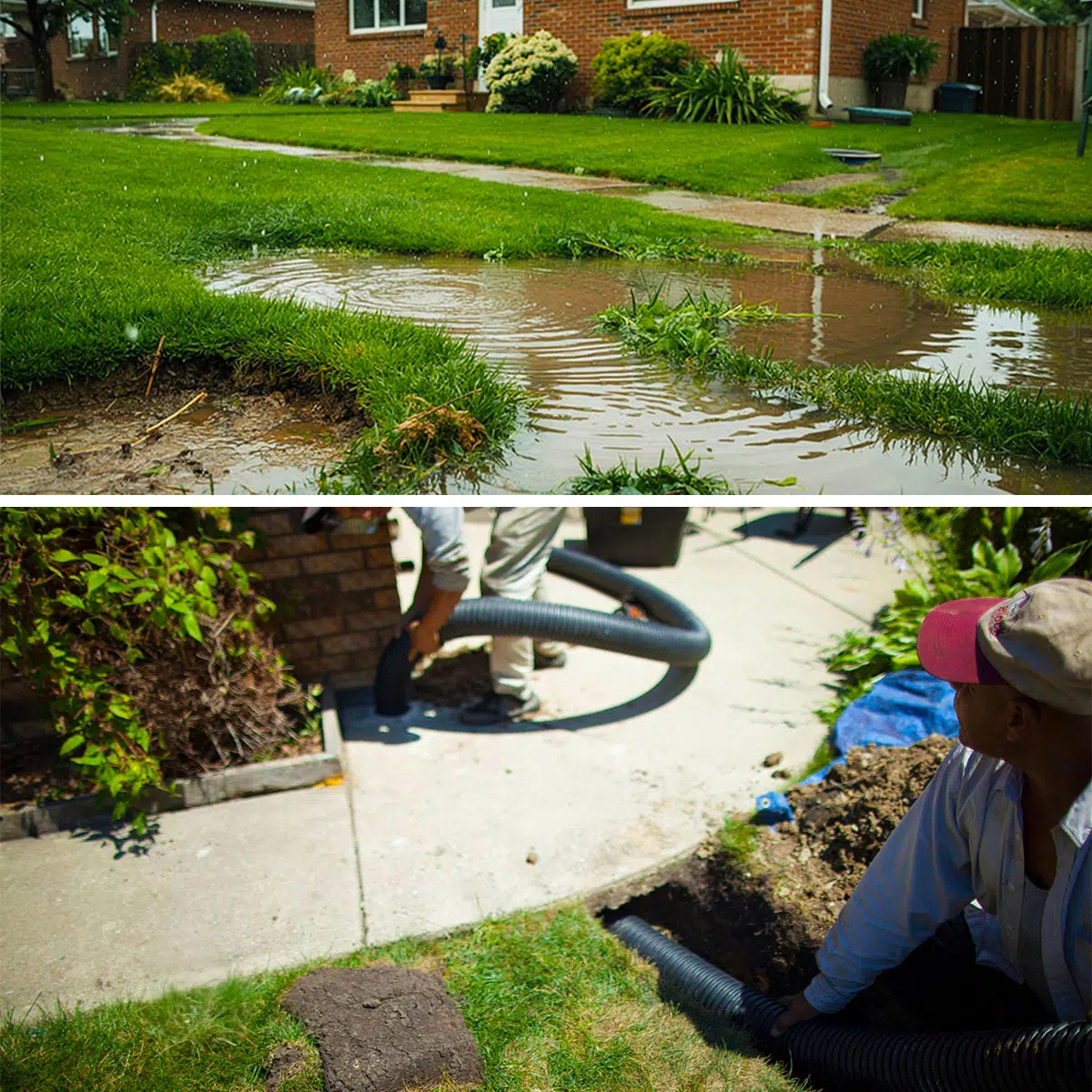
A drainage contractor who works regularly in Cook County and the Chicago suburbs understands local conditions in a way a generic contractor may not.
Illinois freeze-thaw cycles, spring saturation, summer cloudbursts, and clay-heavy soil all affect how a drainage system should be designed. So do older neighborhoods, tight side yards, mature trees, patios, sidewalks, and neighboring properties.
Water cannot just be sent anywhere. A local contractor should understand how runoff moves without creating a new problem for the next property over.
This is also why it helps to work with a company that sees the full exterior picture. Drainage touches landscaping, lawn health, hardscaping, gutters, and even winter safety.
If your yard needs restoration after drainage work, services like landscaping or lawn maintenance may be part of the bigger plan. If roof runoff is part of the issue, gutter guards may also be worth discussing.
Cheap Fixes Often Cost More Later
It is tempting to go with the fastest or lowest quote, especially when the problem seems small. But drainage mistakes have a way of sticking around.
Water finds weak spots.
If the source is misread or the outlet is poorly planned, you may end up paying twice. That does not mean every drainage project needs to be big or expensive. Sometimes a simple correction solves the issue. The key is whether the contractor is making decisions based on how your property actually drains.
Clean workmanship matters too. Homeowners care about results, but they also care about how the yard looks after the job is done. A dependable contractor should respect the property, communicate clearly, and leave things in good shape.
When to Call Revive Your Lawn
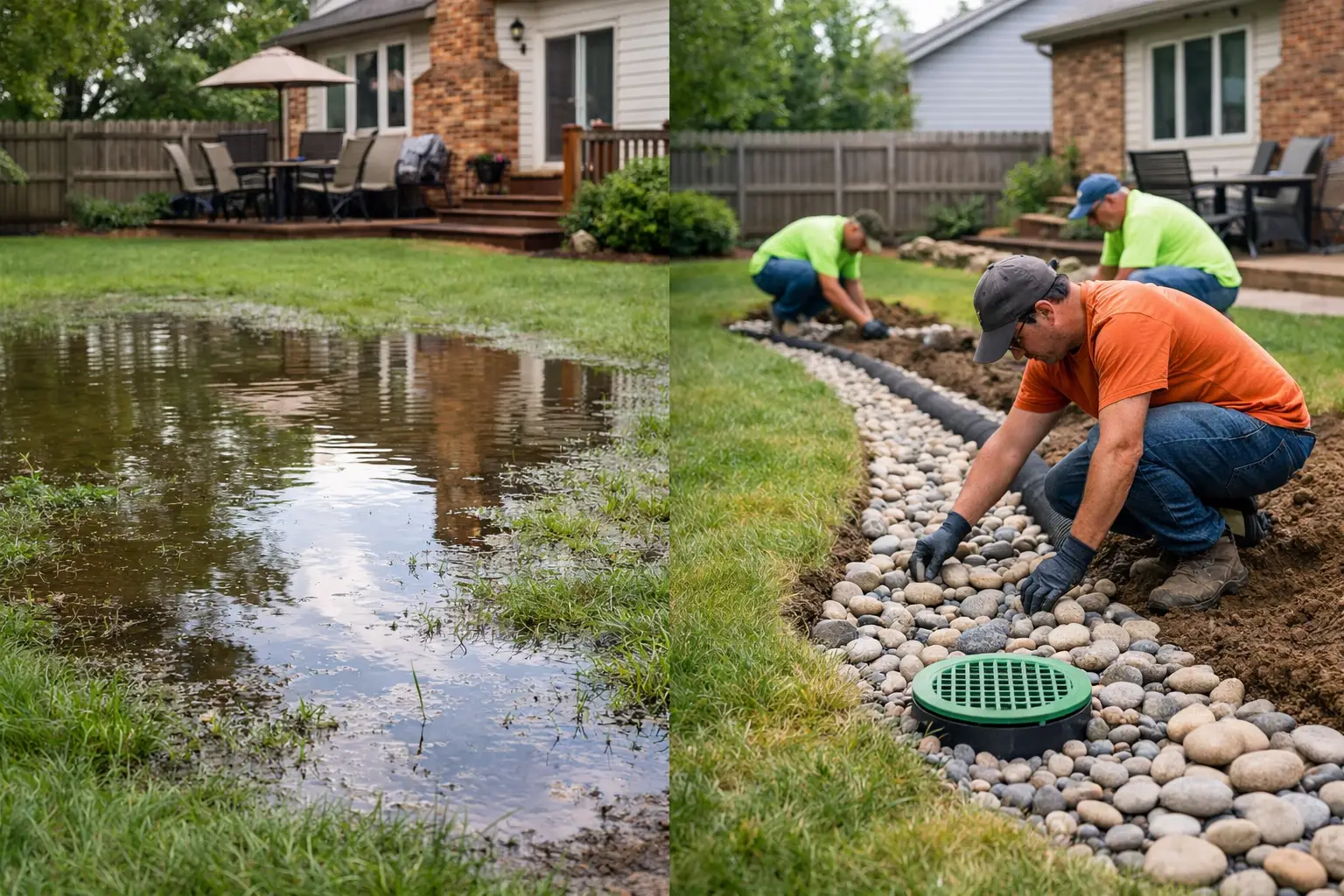
If you are dealing with muddy grass, pooling water, runoff near the house, or a sump discharge that keeps turning part of your yard into a swamp, it may be time to have someone look at it. Related reads like why is my yard muddy can help you prepare for that walkthrough.
At Revive Your Lawn, we help Chicagoland homeowners figure out what the water is doing, where it should go, and what solution makes sense for the property.
That may include drainage systems, grading corrections, downspout drainage, catch basins, lawn restoration, gutter improvements, or landscaping changes. The right answer depends on the yard.
Not Sure What Is Causing the Water Problem?
Have Revive Your Lawn walk the property with you, point out what the water is doing, and explain the options before the next heavy rain does the talking.
Schedule a Free Drainage ConsultationFrequently Asked Questions About Hiring a Drainage Contractor in Cook County
How do I know if I need a drainage contractor?
You may need a drainage contractor if water sits in your yard for more than 24–48 hours, your lawn stays soggy, water collects near the foundation, mulch washes out, or you notice basement moisture after rain.
Is a French drain always the best solution?
No. A French drain can be a great solution in the right situation, but it is not the answer to every drainage problem. Sometimes regrading, downspout burial, catch basins, or a combination of fixes makes more sense.
What should a drainage estimate include?
A drainage estimate should include the recommended solution, where the water will be moved, what materials are being used, what areas will be disturbed, how the yard will be restored, and what could change the final price.
Can poor drainage damage my foundation?
Water sitting near a foundation can contribute to basement moisture, seepage, soil movement, and other problems over time. Not every puddle means foundation damage, but repeated water near the house should be inspected.
Do downspouts really affect yard drainage?
Yes. Roof runoff adds up quickly during a storm. If downspouts dump water next to the foundation or into a low spot, they can make yard drainage problems much worse.
What areas does Revive Your Lawn serve?
Revive Your Lawn serves homeowners across Chicagoland, including Cook County, DuPage County, and nearby suburbs such as Hinsdale, Western Springs, Burr Ridge, La Grange, Brookfield, Riverside, Berwyn, and surrounding communities.
Choosing a Drainage Contractor With Confidence
If you are dealing with muddy grass, pooling water, or runoff near the house, do not wait for the problem to grow.
A good drainage contractor should help you understand what is happening, what the options are, and what makes the most sense for your yard.
For Cook County and Chicagoland homeowners, the right fit is usually a contractor who knows Illinois conditions, explains things clearly, and treats drainage as part of a bigger plan for protecting and improving the property.
That is the kind of approach we believe in at Revive Your Lawn. You should feel like the person walking your yard sees both the problem and the end result you want: a cleaner, safer, better-working outdoor space you can actually enjoy.
Ready to get answers? Schedule a free consultation with Revive Your Lawn and let’s take a look at what the water is doing on your property.